
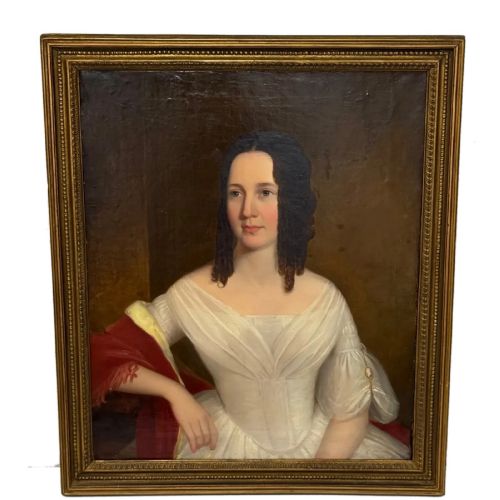
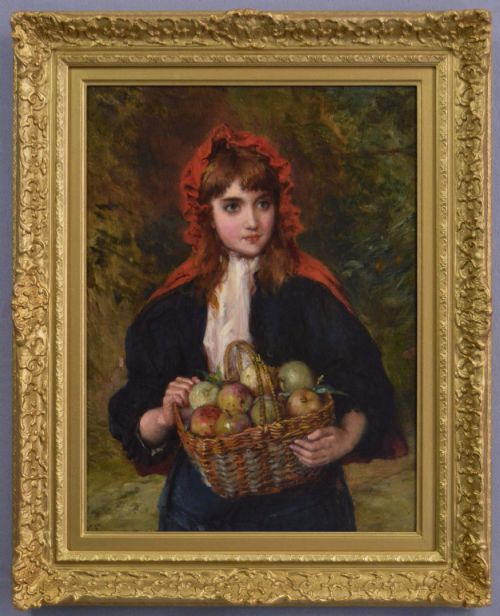
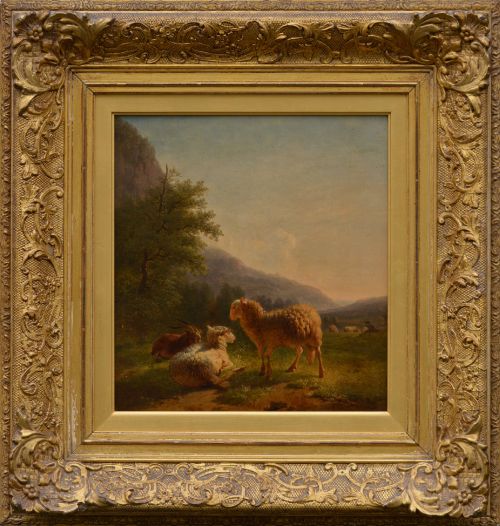
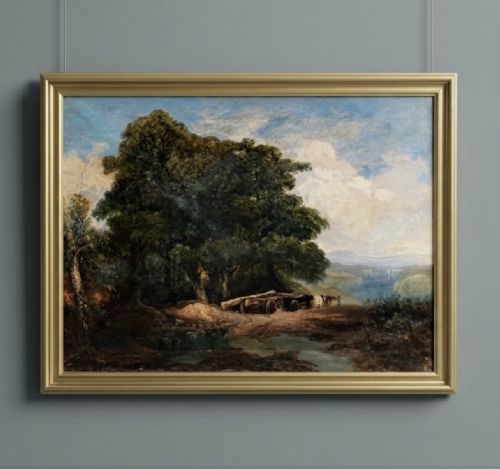

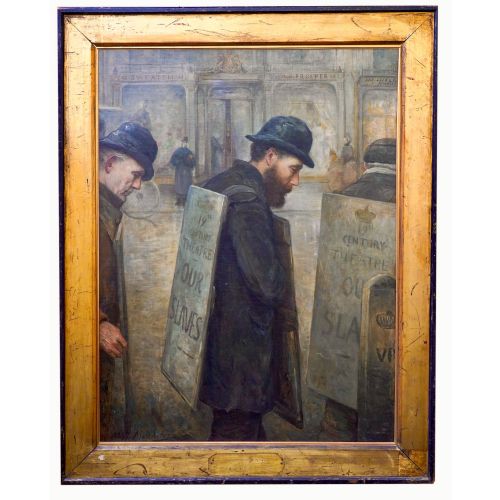
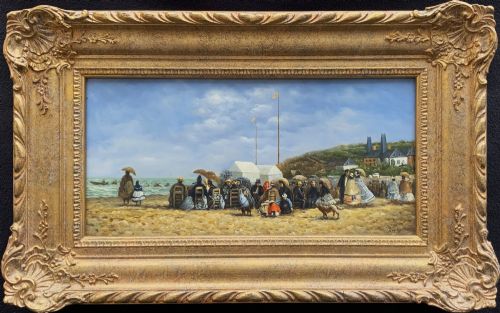


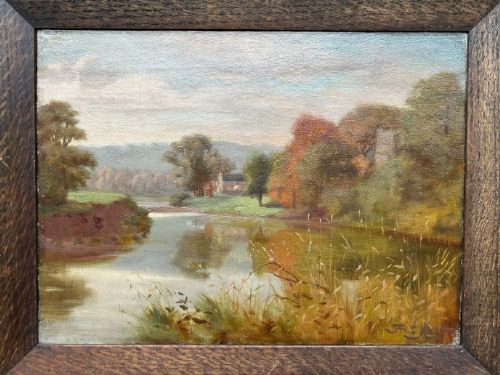
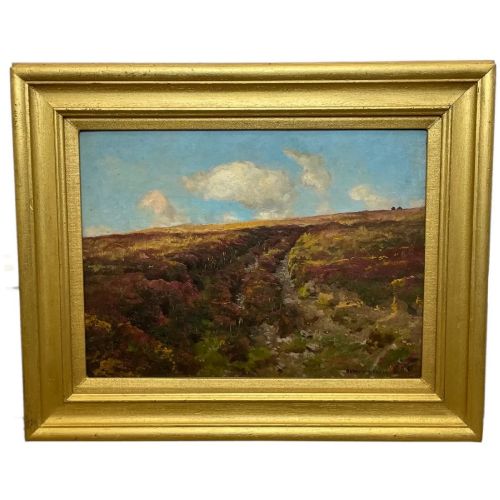
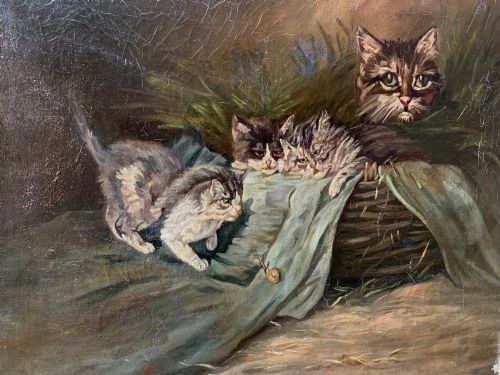
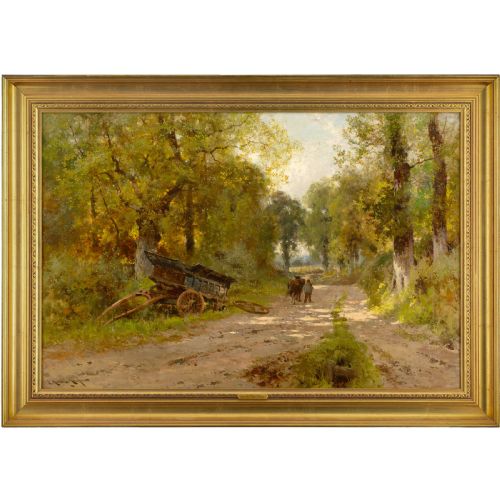
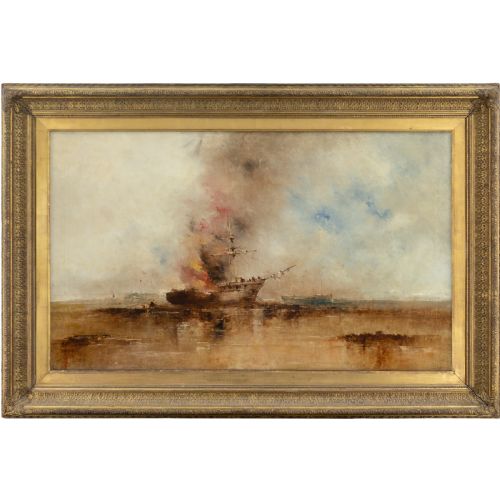
Framed Victorian Oil Canvas
When you choose a framed victorian oil canvas, you bring home a piece of nineteenth-century artistic heritage designed to anchor a room.
Framed Victorian Oil Canvas
A framed victorian oil canvas typically presents portraits, landscapes, or genre scenes executed in oil paint on stretched woven fabric, housed in period timber enclosures. The items found here span the broader nineteenth century alongside related academic and realist expressions.
Landscapes and domestic portraits dominate the works encountered on this page, reflecting the artistic priorities of British and European schools from the eighteen-fifties onward. These paintings range from intimate cabinet pieces to monumental canvases depicting historical or sporting subjects.
Buyers will also discover marine views, animal studies, and architectural compositions that demonstrate the breadth of academic training during the period. Each work retains the physical evidence of its studio origin, often accompanied by the original gesso and giltwood mount.
Materials and Construction
These works rely on oil paint applied to prepared canvas, stretched tightly over wooden frames to provide a stable painting surface. The interaction of linseed oil binders with ground pigments allows for deep tonal gradations and luminous colour application that survives across the decades.
The accompanying frames are constructed from wood, frequently embellished with moulded gesso and finished with layers of gold leaf or giltwood. This combination protects the perimeter of the fabric while providing the visual weight necessary for nineteenth-century display conventions.
Assessing Artistic Merit
Quality rests upon the artist's command of anatomy, perspective, and light handling within the oil medium. Works by formally trained academicians display a surety of brushwork and compositional balance absent in unsigned provincial studies.
The integrity and preservation of the original giltwood frame contribute significantly to the standing of the piece. Frames exhibiting intact gesso moulding and original gilding elevate the historical completeness of the canvas.
William Oliver·Eugène Verboeckhoven·Richard Sebastian Bond·William Beattie-Brown·Felix Stone Moscheles·Valentine T. Garland·John Maler Collier·Frederick Marriott·Arthur Wardle·John Horace Hooper·William McAlpine·Alfred Fontville de Breanski Jr·Thomas W Lascelles·Mark William Langlois·David Bates·Albert Clark·Alfred Lyndon Grace·Vittorio Reggianini
The Framed Victorian Oil Canvas Glossary
- Gesso
- A plaster-like mixture applied to wooden frame mouldings to create a smooth surface for gilding. This material allows intricate decorative reliefs to be carved or cast around the edge of the canvas.
- Giltwood
- Timber coated with a thin layer of gold leaf or metallic powder. It provides the reflective border characteristic of nineteenth-century picture frames.
- Genre Painting
- Artwork depicting scenes from everyday life, including domestic interiors and social gatherings. These works capture the domestic habits and social narratives popular among Victorian collectors.
- Academic
- Art produced under the influence of European academies of fine art, adhering to strict standards of composition and finish. Such works demonstrate rigorous draughtsmanship and historical grounding.
- Canvas
- A heavy woven fabric stretched across a wooden strainer to support oil paint applications. Its texture frequently shows through thin layers of pigment.
Framed Victorian Oil Canvas: Frequently Asked Questions
Are these paintings signed by the artist?
Many works bear visible signatures, monograms, or studio inscriptions, while others remain unattributed examples of regional schools. Signatures typically appear in the lower corners of the composition.
Documentation on the reverse of the canvas or frame often provides additional clues regarding the original exhibition history or sitter identity.
How do I identify a period frame?
Period frames feature hand-carved or moulded gesso ornament built over wooden foundations, showing shrinkage cracks and wear consistent with age. Modern replacements lack the authentic layering and material density of nineteenth-century joinery.
The presence of old framer labels or tax stamps on the reverse further supports the period authenticity of the mounting.
Where should I hang an oil painting?
Paintings require stable indoor environments away from direct sunlight, heating vents, and damp exterior walls. Consistent humidity prevents the canvas from slackening and protects the wooden stretcher.
Secure picture hooks rated for the combined weight of the canvas and heavy gilt frame must be used to ensure safe wall mounting.