




Isle of Man Landscape
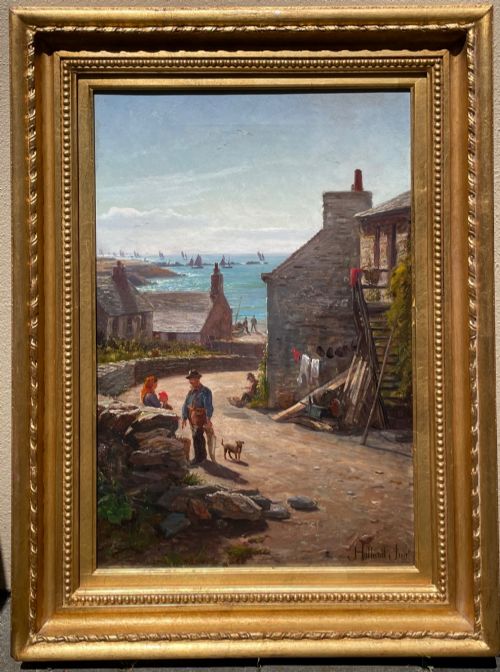
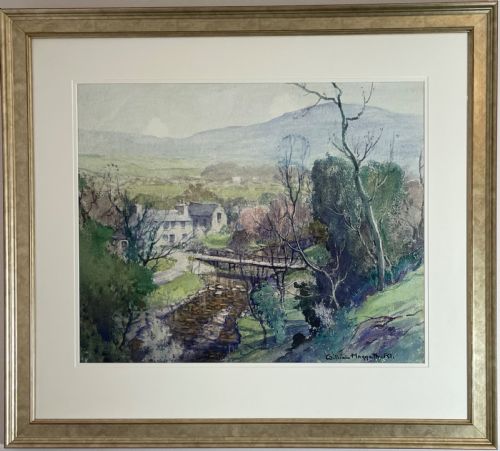
An isle of man landscape captures the distinct light, rugged coastlines, and quiet valleys of the island through Victorian and twentieth-century brushwork.
Isle of Man Landscape
An isle of man landscape depicts the topography, harbours, and coastal views of the island, originating primarily from the nineteenth and twentieth centuries. These works record specific local sites such as Port Erin, Peel Harbour, Douglas Harbour, and various glens and valleys.
Buyers will encounter these subjects realised mainly as watercolour paintings on paper or oil paintings on canvas and board. Framed artworks from this category frequently span Victorian realism, British Impressionism, and mid-century British styles.
The creators of these works range from local artists to visitors drawn to the island's distinctive scenery, working across periods from the Victorian era through the Edwardian years and into the 1960s.
Materials and Technique
Artists rendering an isle of man landscape employed traditional media including watercolour on paper and oil paint applied to canvas or board. These were housed in frames of wood and giltwood, preserving the surface against environmental changes.
The technical approach varies between the fluid, transparent washes typical of watercolour watercolours and the heavier impasto or smooth application found in oil paintings. Pastel work also appears among the examples from this region, offering a softer textural quality.
The archive and current selection of an isle of man landscape span canvas, paper, and board using watercolour, oil paint, and pastel across the 19th and 20th centuries.
Assessing Quality
Quality in an isle of man landscape rests upon the artist's handling of coastal light, atmospheric conditions, and topographical accuracy. Works by established regional names command greater attention for their confident brushwork and precise compositional balance.
The preservation of the medium, whether watercolour paper free from foxing or canvas stable within its original wooden frame, dictates the visual integrity of the piece. Stronger examples demonstrate a clear command of colour and perspective that brings the Manx terrain vividly into view.
John Holland·William Edward Webb·William Hoggatt·John Hobson Nicholson·Thomas Rose Miles·John McDougal·Owen Bowen·Arthur H Enock·James Aitken·Franz Hoepfner·John Lynas Grey·Gladys M Aitken
The Isle of Man Landscape Glossary
- Watercolour
- A paint consisting of pigment suspended in a water-based solution, typically applied to paper to create luminous transparent washes of colour.
- Oil on Canvas
- A painting technique using pigments bound with a drying oil, applied to a stretched fabric surface that allows for rich texture and blending.
- Giltwood
- Wood that has been treated with a thin layer of gold leaf or gold paint, commonly used to finish picture frames from the Victorian period.
- Pastel
- A dry drawing medium composed of powdered pigment and a binder, producing velvety marks that capture soft atmospheric light in landscape studies.
Isle of Man Landscape: Frequently Asked Questions
What periods do these paintings date from?
The works span from the nineteenth century, including Victorian and Edwardian periods, through to the mid-twentieth century around the 1960s.
Most pieces cluster around the late Victorian era and the early decades of the twentieth century.
Where were these scenes painted?
Artists painted specific Manx locations including Port Erin, Peel Harbour, Douglas Harbour, Spanish Head, and various inland parishes and glens.
Many works document recognisable coastal viewpoints and rural landscapes across the island.
How should I frame and display them?
Watercolours require framing behind glass with acid-free mounts to protect the paper from moisture and light damage.
Oil paintings on canvas or board benefit from stable indoor environments away from direct sunlight and excessive temperature shifts.
What materials are most common?
The primary mediums are watercolour on paper and oil paint on canvas, often presented in wood or giltwood frames.
Pastel on paper also appears among the available nineteenth and twentieth-century works.