




Blue Mountain Landscape
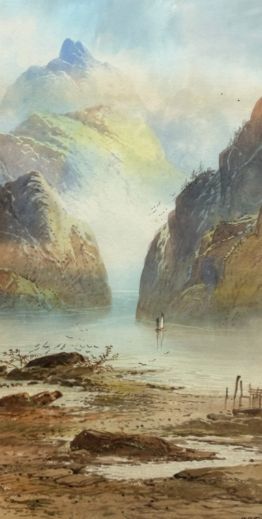
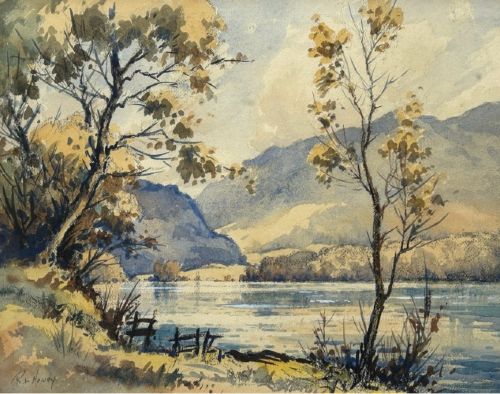
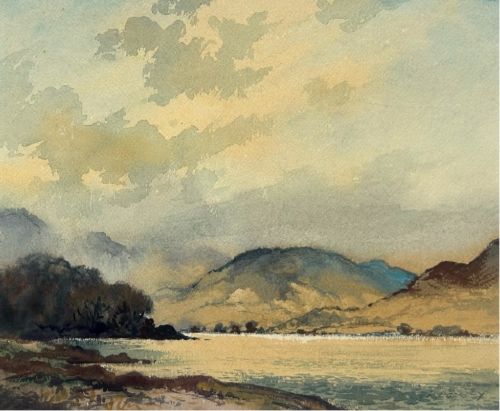
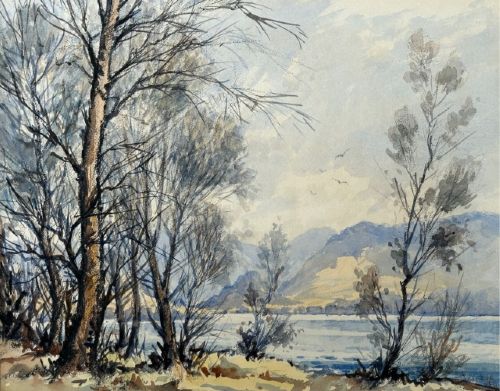
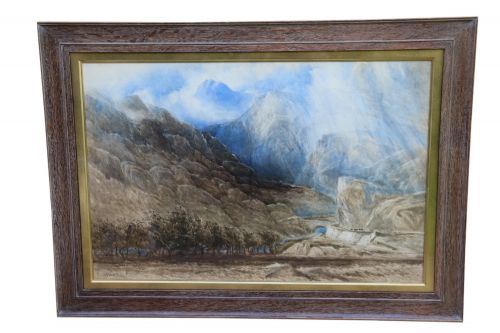
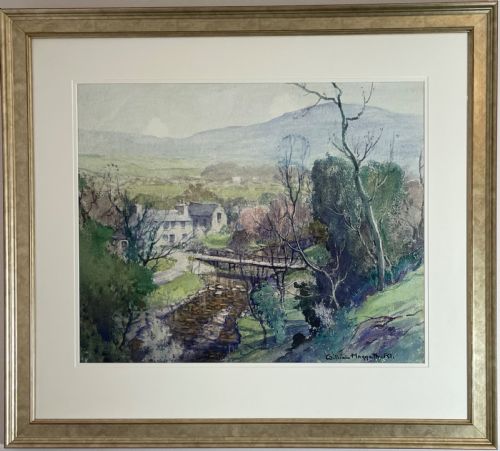
A blue mountain landscape brings distant peaks and wide valleys indoors, capturing rugged terrain through watercolour and oil.
Blue Mountain Landscape
A blue mountain landscape depicts elevated terrain and distant ranges, focusing on atmospheric blue tones that suggest altitude and distance. These works capture rugged topography, winding streams, and quiet valleys across various regions.
The most common examples on this page are nineteenth-century and mid-twentieth-century watercolours on paper. Painters focus on British, Welsh, Scottish, and continental European topography.
Compositions range from intimate valley scenes with figures to wide panoramas of peaks and lakes. Smaller watercolours sit alongside larger framed oil paintings on canvas.
Materials and methods
Artists apply watercolour pigment onto paper to build translucent washes for distant skies and mountains. Heavier opaque bodycolour or gouache appears alongside watercolour to highlight foreground details and water reflections.
Oil painters layer pigments onto prepared canvas or wood panels, working wet-on-wet or in glazes to capture deep shadows and shifting light on rock faces.
Finished watercolours receive protective paper supports and mounts, while oil paintings utilise wooden stretchers and heavy gilt or plain frames.
The listings on this page span from the mid-nineteenth century through the mid-twentieth century, featuring watercolours, oils, and gouache.
Assessing quality
Quality rests upon the artist's handling of atmospheric perspective, where subtle tonal shifts convey vast distance and moisture in the air. Strong works balance fine topographical detail with confident, fluid brushwork in the skies and mountain ranges.
Paper preservation and pigment stability dictate the longevity of watercolours, as excessive exposure to light alters delicate washes. Oil paintings on canvas rely on the integrity of the paint layer and the stability of the underlying support.
William Henry Earp·Robert Leslie Howey·Henry Martin Pope·John Grenville Fennell·William Hoggatt·C Caldwell·John Syer·Thomas Lound·James H Hulse·Hirst Walker·Noel Harry Leaver·Samuel Towers·Milton Drinkwater·J D Walker·Willie Stephenson·John William Gilroy·Percy Lancaster·Hubert Sattler
The Blue Mountain Landscape Glossary
- Watercolour
- A painting method where fine pigment is suspended in a water-soluble binder and applied to paper. Artists use washes to create translucent effects.
- Gouache
- An opaque water-soluble paint containing pigment and a binding agent, often mixed with white to create solid highlights. It produces a dense, matte surface.
- Oil on canvas
- A technique using pigments bound in drying oil applied to a woven fabric stretched over a wooden frame. This medium allows for rich texture and blending.
- Gilt
- A thin layer of gold leaf or gold paint applied to wooden frames or decorative elements. It provides a reflective border for the artwork.
- Impressionism
- A style emphasising loose brushstrokes and natural light rather than rigid detail. Painters capture the immediate visual impression of a scene.
Blue Mountain Landscape: Frequently Asked Questions
What subjects appear in these mountain scenes?
These works depict natural vistas featuring elevated peaks, steep valleys, lakes, and coastal mountains. Common locations include Scottish, Welsh, and English lake districts alongside continental European ranges.
Artists frequently include small figures, bridges, paths, or distant encampments to provide a sense of scale against the massive landscape.
How do watercolours differ from oil paintings here?
Watercolours utilise pigment on paper supports, creating light, transparent effects suited for atmospheric mists and pale skies. They require protective glass framing to prevent moisture damage.
Oil paintings use thick pigments on canvas or wood, offering richer textures and deeper colours that stand without glass protection.
Where should I hang a framed landscape?
Select an interior wall with stable lighting away from direct sunlight to protect delicate watercolours and paper supports from fading. Room humidity should remain moderate to preserve both paper and canvas.
Pair the frame with traditional or mid-century interior spaces where natural wood and landscape subjects complement the room.
How can I identify the age of a painting?
Examine the framing materials, paper backing, and visible signatures or artist inscriptions on the front or reverse of the work. Nineteenth-century pieces often feature heavier gold leaf frames and heavier rag paper.
Mid-century works display cleaner mounting styles and modernist influences in the handling of colour and form.