
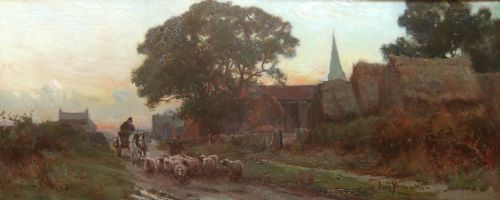


Rustic Countryside Painting
A rustic countryside painting brings pastoral quiet indoors, capturing fields, cottages, and farm life across canvases and watercolours.
Rustic Countryside Painting
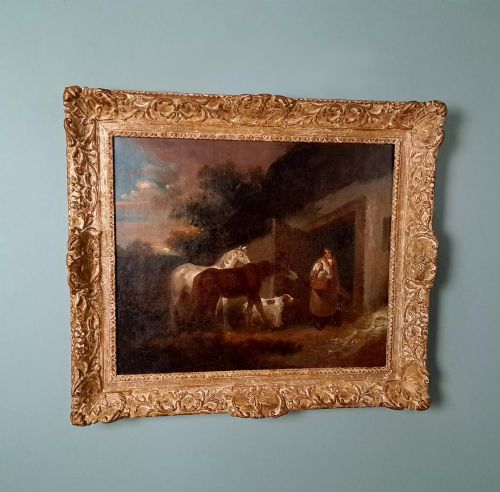
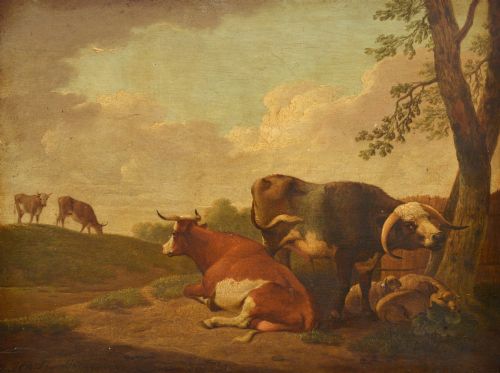
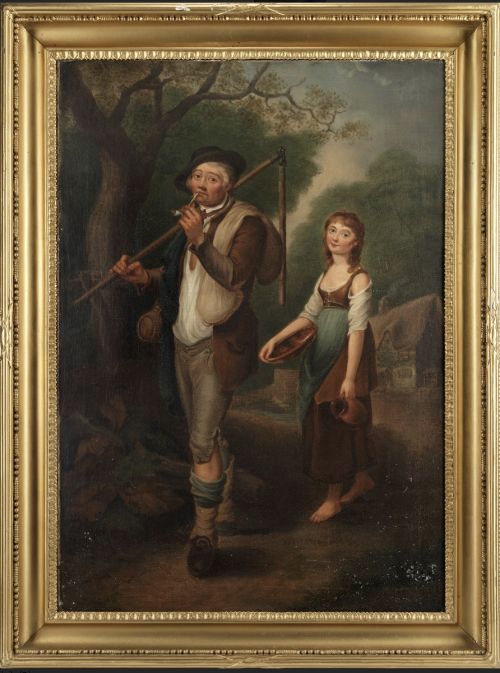
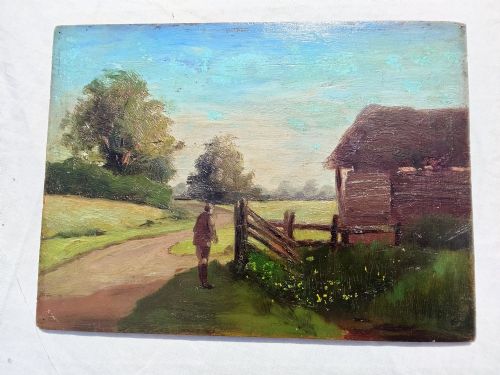
A rustic countryside painting depicts rural scenes, farming landscapes, and quiet cottages through oil and watercolour mediums. Buyers searching this phrase encounter pastoral views populated by figures, farm animals, and thatched houses.
The selection spans from the eighteenth century through the twentieth century, with nineteenth-century works forming a prominent share. These pieces range from intimate watercolours to large landscape oils framed in wood or giltwood.
How They Were Made
Artists painted primarily in oil or watercolour, applying pigment onto stretched canvas, paper, or wooden boards. Canvases provided a durable surface for rich oil paint layers, while paper suited detailed watercolour application.
Works often feature traditional giltwood or wooden frames that complement the pastoral subject matter. Technique varied from the precise brushwork of the English School to broader impressionist strokes.
Several paintings include stray donkeys and carts lingering patiently by farm gates.
What Varies in Quality
Quality rests upon the artist's handling of light, atmosphere, and composition within the rural scene. Works by recognised painters or established regional schools demonstrate superior draughtsmanship and depth.
The preservation of the pigment and the integrity of the original support material distinguish finer examples. Stronger pieces capture movement in figures and animals with confident brushwork rather than rigid static forms.
William Joseph Shayer Senior·Hendrik Willem Schweickhardt·Thomas Barker of Bath·Owen Bowen·Charles Vickers·J Barclay·James William Booth·John Wright Oakes·Kershaw Schofield·Abraham Hulk Junior·Thomas Spinks·Henry Sylvester Stannard·John R K Duff·George Hamilton Constantine·Thomas Nicholson Tyndale·Ernest Higgins Rigg·T B Garvie·Arthur Walker Redgate·Nora Munro Summers·Yeend King·Willie Stephenson·G R Vaughan·George Soper·Joseph Paul
The Rustic Countryside Painting Glossary
- Canvas
- A heavy woven fabric stretched across a wooden frame to serve as a painting surface. It provides the tensile strength needed for oil paint layers.
- Watercolour
- A paint consisting of water-soluble pigments applied to paper. It yields translucent washes well suited for lighter atmospheric effects.
- Giltwood
- Wood carved and coated with a thin layer of gold leaf. Frames made from this material frequently enclose nineteenth-century pastoral oils.
- English School
- A term denoting artists working within British artistic traditions rather than a formal academy. Many rural landscape paintings originate from this broad grouping.
- Pastoral
- A genre focusing on rural life, shepherds, and agricultural scenes. These compositions emphasise a harmonious relationship between people and the countryside.
Rustic Countryside Painting: Frequently Asked Questions
What periods do these paintings cover?
The available works span from the eighteenth century through the mid twentieth century. Nineteenth-century pieces represent a significant portion of the collection.
Later works extend into the nineteen twenties, thirties, and nineteen sixties. Each period brings distinct framing and stylistic choices to the rural theme.
What subjects appear in these scenes?
Common subjects include thatched cottages, farming landscapes, river views, and harvest fields. Figures often tend livestock, carts, or gardens.
Encampments and pastoral gatherings also feature prominently across both oils and watercolours.
How do oils differ from watercolours here?
Oils are painted on canvas, wooden board, or stretched fabric, offering rich textures and deep tones. Watercolours utilise paper supports for lighter, more translucent effects.
Both mediums capture rural scenery but produce very different visual weights on the wall.
Where were these artists active?
Many painters belong to regional British schools or worked in specific locales such as North Wales, Cumberland, and Somerset. British and continental European artists are represented.
Their work reflects local countryside traditions and rural life across specific regions.
How are these paintings framed?
Surviving pieces frequently retain period wooden or giltwood frames that suit their age. These frames range from ornate gilded moulding to simpler wooden profiles.
Original framing enhances the historical context of each canvas or watercolour.