




Earthy Tone Watercolour
An earthy tone watercolour brings natural warmth and quiet depth to a room through pigments washed across paper.
Earthy Tone Watercolour
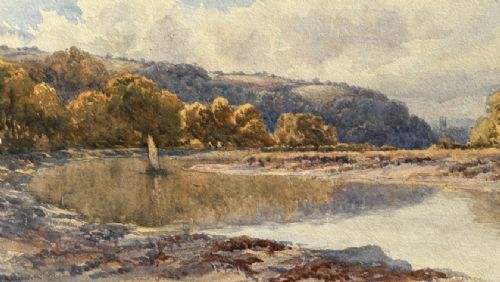
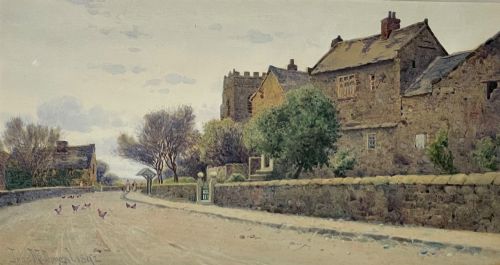
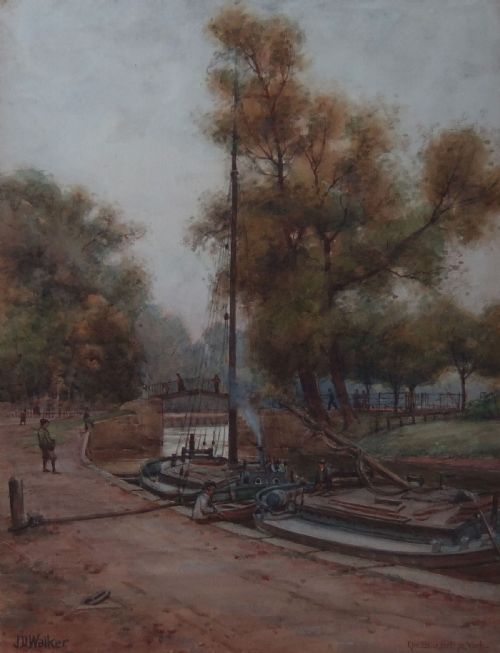
An earthy tone watercolour focuses on subdued ochres, umbers, muted greens and dusty browns captured by British and European artists across several decades. The selection spans the nineteenth century, Victorian era, Edwardian period, and into the nineteen-forties.
Buyers will find landscape scenes, village views, and rustic farmyards executed in washes of pigment on paper. These works document rural life, foreign travels, and quiet domestic moments with understated hues.
Framed watercolours on this page range from nineteenth-century river landscapes to nineteen-forties wartime still lifes. Each piece relies on the natural absorbency of paper to hold delicate tones.
How they were made
Artists applied watercolour paint and pigment, often supplemented with ink for definition, directly onto paper sheets. The fluid medium allowed for subtle gradations of colour, building up earthy tones through successive washes.
Finished works received protection beneath glass within wooden frames, preserving the delicate paper surfaces from moisture and atmospheric dust over the decades.
Donkeys, carts, and garden walls share these pages with quiet British meadows and bustling foreign marketplaces.
What varies in quality
Skill in handling pigment determines the strength of a composition, where confident brushwork brings vitality to a rustic landscape or village scene. The interplay of light and shadow across muted tones reveals the hand of a capable artist.
Condition plays a part in preservation, particularly how well the paper retains its original tone without excessive fading from light exposure. Original framing and the stability of the paper support add to the integrity of the piece.
David Law·John McDougal·James Hayllar·James Tower·John Atkinson·Charles H Poingdestre·Rowland Henry Hill·Francis William Topham·Maurice Asselin·Fred C Jones·John D Walker·William Kay Blacklock·Fred Lawson·George Soper
The Earthy Tone Watercolour Glossary
- Watercolour pigment
- Finely ground colour particles mixed with a binder for painting on paper. This medium allows light to reflect through translucent washes.
- Wash
- A thin, fluid layer of diluted watercolour paint spread evenly across paper. It creates smooth areas of tone in skies and backgrounds.
- Still life
- An artwork depicting inanimate subject matter, such as flowers in a jug or fruit in a bowl. Artists use these compositions to study form and muted colour.
- Impressionism
- An art style focused on capturing the visual impression of a moment, paying attention to light and atmosphere. British and European practitioners applied these principles to landscape subjects.
Earthy Tone Watercolour: Frequently Asked Questions
How should I hang an earthy tone watercolour?
Keep watercolours away from direct sunlight to protect the pigments from fading over time. Position them on interior walls where room temperature remains stable.
Ensure the frame stays secure and the glass protects the paper surface from environmental moisture.
What subjects do these watercolours show?
The works depict rural landscapes, village streets, farmyards, and domestic still life arrangements. Artists recorded scenes from Britain, France, Spain, Italy, and Kashmir.
These subjects reflect a deep interest in everyday topography and natural light during the nineteenth and early twentieth centuries.
How do I identify a Victorian watercolour?
Victorian watercolours often feature detailed brushwork and atmospheric landscape compositions characteristic of the nineteenth century. Subject matter frequently includes rural life, coastal views, or architectural studies.
Signatures, framing styles, and artist biographies help confirm the period of execution.
Are these watercolours framed?
Most pieces on this page come framed and glazed with glass to protect the delicate paper support. The wooden frames complement the era of each painting.
Buyers should examine the listing details to confirm the current framing condition of a specific artwork.