

Cottage Landscape Art
Cottage landscape art captures rural dwellings and pastoral scenes through historical paintings and watercolours that bring traditional countryside charm into interior spaces.
Cottage Landscape Art
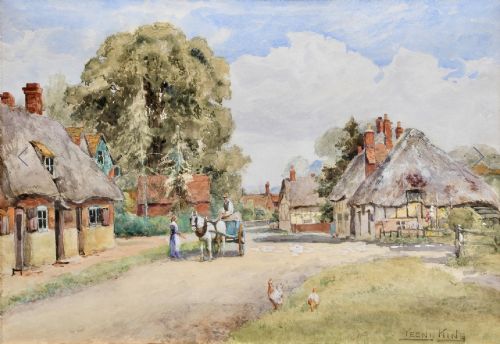
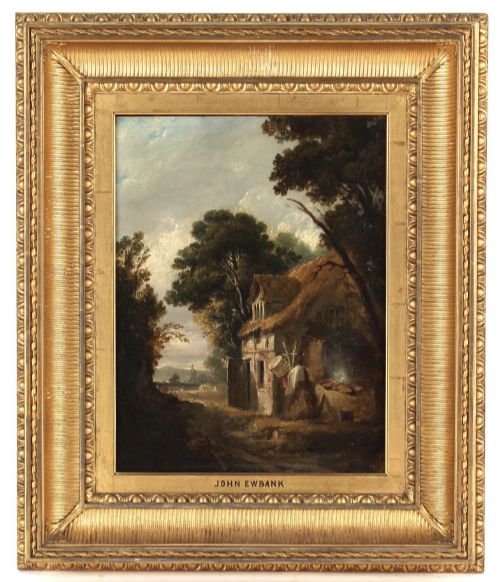
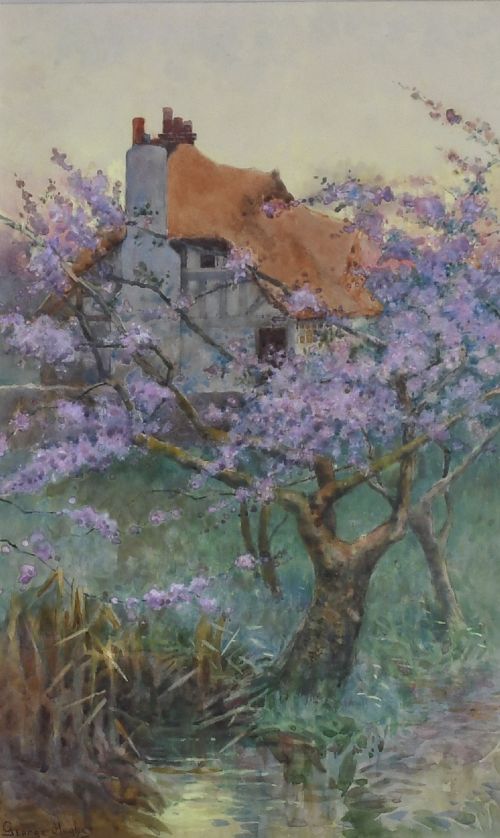
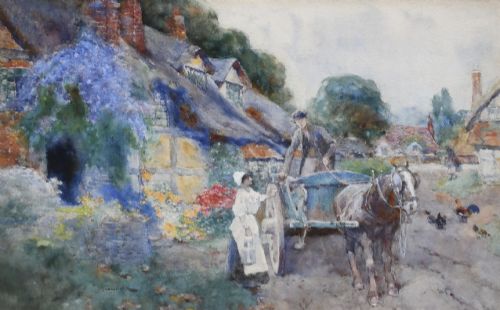
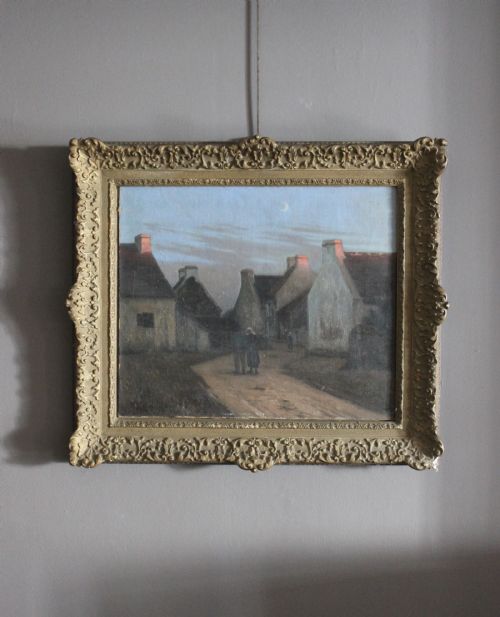
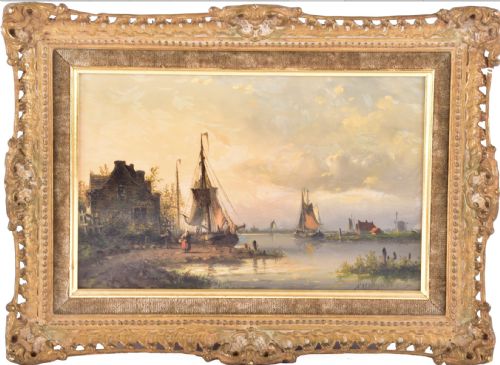
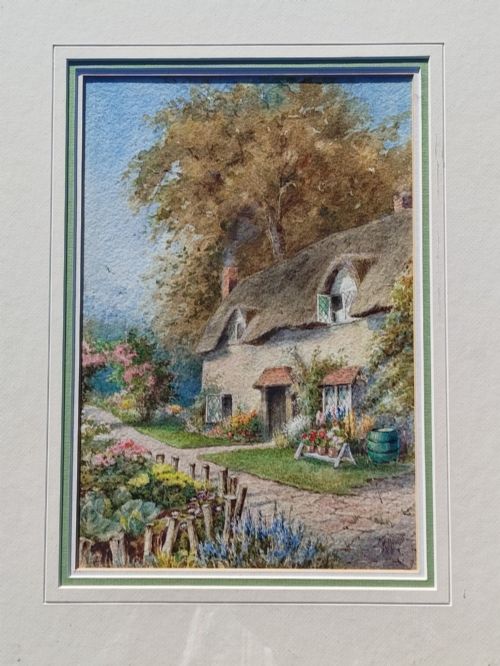
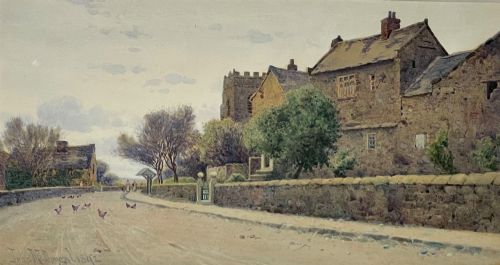
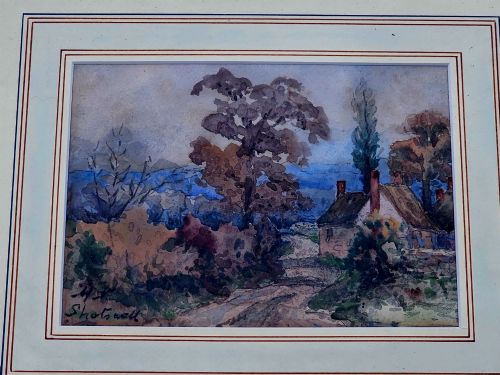
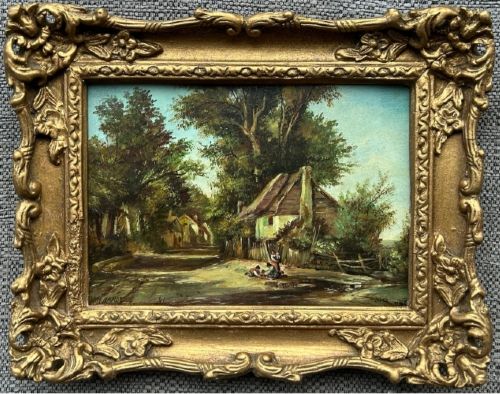
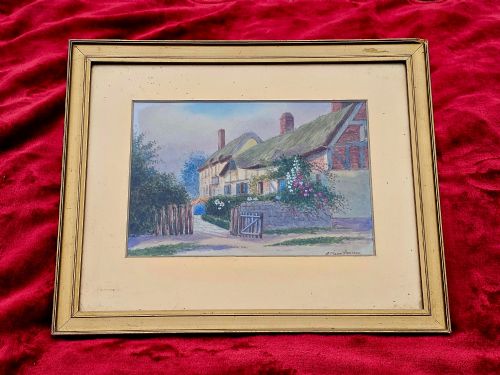
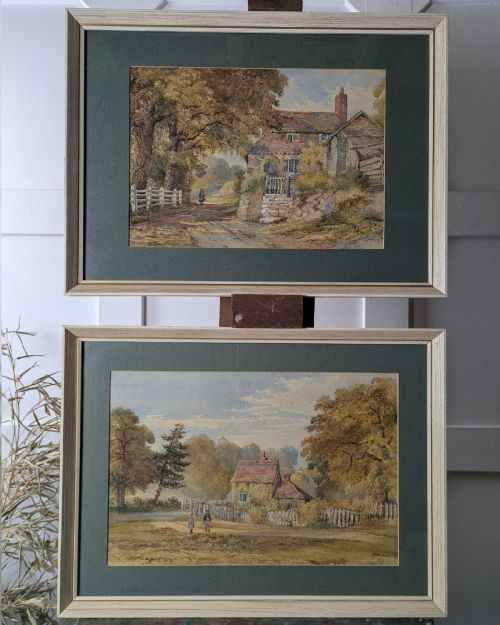
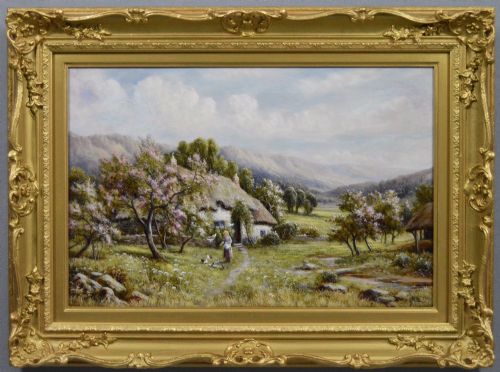
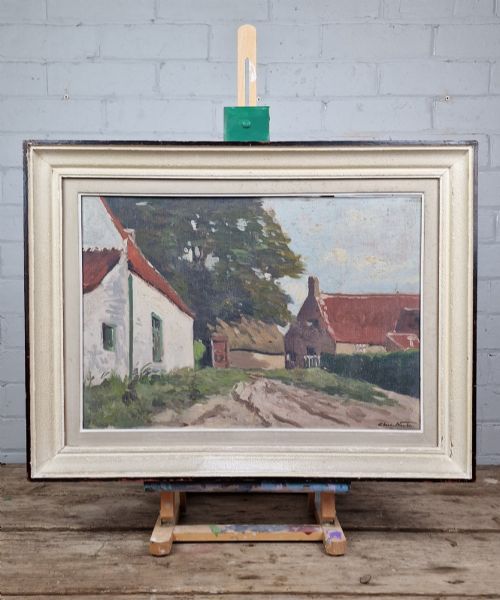
Cottage landscape art comprises framed paintings, watercolours and works on paper depicting rural scenes, farmsteads and countryside dwellings. These works capture pastoral life from the nineteenth century through the mid-twentieth century, recording vernacular architecture and rural settings.
The selection on this page centres on original works by named and English school artists spanning Victorian, Edwardian and mid-century periods. Buyers typically encounter watercolours on paper and oil paintings executed on canvas, board or panel.
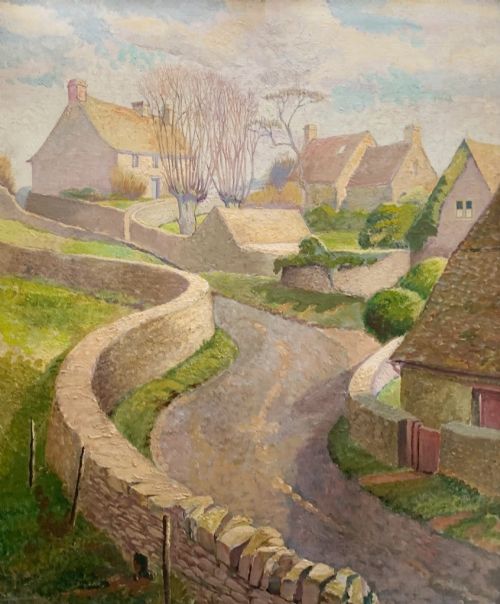
Subjects range from thatched cottages and farmyards to figures outside rural homes and riverside settings. The pieces reflect shifts from nineteenth-century realism towards impressionist and post-impressionist handling in later decades.
Materials and methods
Artists painted these scenes using oil paint or watercolour applied to supports such as canvas, wooden panel, card and heavy paper. Oil mediums allowed for textured brushwork and depth, while watercolour washes provided transparent light effects.
Works frequently retain period framing in wood or gilt wood, which complements the painted surface. Pigments and application methods varied according to whether the maker favoured studio finishing or plein air impressionist sketching.
Cottage Landscape Art Retail Price Guide 2026
Typical asking prices for cottage landscape art among the pieces listed under this phrase on Sellingantiques today, from the lower quarter to the upper quarter. They describe what is for sale here now, not the wider market.
Materials documented across the works include oil on canvas, watercolour on paper, gilt wood frames and wooden panels.
Assessing quality and execution
Quality rests upon the artist's handling of light, brushwork confidence and compositional balance within the landscape. Finer pieces demonstrate assured command of tone and atmospheric perspective rather than mere topographical recording.
The preservation of the original paint surface or watercolour pigment, alongside the condition of the paper or panel support, determines the overall integrity of the piece. Period framing also contributes to the historical completeness of the artwork.
William Howard Hardy·A. Marie Parsons·John McDougal·Robert A. Nottingham·Robert John Hammond·Charles Houben·John Lowrie Morrison·Donald McIntyre·Percy Lancaster·George Morland·Charles Edward Wilson·John Horace Hooper·Mario Pinetti·Reginald Grange Brundrit·Fred Lawson·Arthur Tucker·J S Ainley·William Hoggatt·James Hardy Junior·Frederick James Knowles·William Greaves·Charles Vickers·Theresa Stannard·Robert Finley McIntyre·David Woodlock
The Cottage Landscape Art Glossary
- Watercolour
- A painting method where fine pigment is suspended in a water-based, translucent solution. It is typically applied to paper to achieve luminous washes of colour.
- Impressionism
- A nineteenth-century painting style characterised by relatively small, thin, yet visible brush strokes and an open composition. It prioritises accurate depiction of light and its shifting qualities.
- Oil on Board
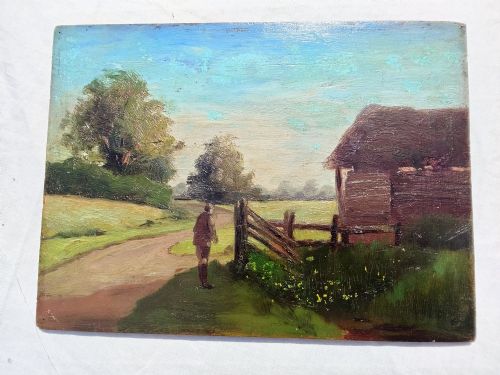
- A painting technique where oil paint is applied directly to a rigid wooden or cardboard substrate. This method was frequently utilised for outdoor studies and smaller landscape works.
- Gilt Wood
- Timber framing finished with a thin layer of gold leaf or metallic gilding. It is commonly found surrounding period paintings from the Victorian and Edwardian eras.
Cottage Landscape Art: Frequently Asked Questions
What is cottage landscape art?
Cottage landscape art consists of historical paintings and watercolours depicting rural homes, farmyards and countryside views. These works document pastoral life and vernacular architecture primarily from the nineteenth and twentieth centuries.
Created by academic painters and regional artists alike, these pieces utilise mediums such as oil on canvas and watercolour on paper. They offer a window into historical rural environments.
How do I date a cottage painting?
Dating relies upon stylistic markers, artist biographical dates, framing materials and the type of support used. Victorian and Edwardian pieces often exhibit different brushwork techniques compared to mid-century works.
Examining signatures, inscriptions on the reverse, and the physical composition helps place the artwork within a specific period. Historical clothing or architectural details also provide chronological clues.
Where should I hang these artworks?
These pieces suit traditional and contemporary interiors, particularly living rooms, hallways or studies where intimate pastoral scenes can be appreciated. Proper placement avoids direct sunlight to protect watercolours and oil pigments from fading.
Pairing the artwork with a suitable wall colour enhances the tones within the painting. Ensuring stable indoor humidity preserves both the canvas or paper and any period wooden frame.
What is the difference between oil and watercolour?
Oil paintings utilise pigment suspended in drying oils applied to canvas, board or panel, offering rich textures and opaque coverage. Watercolours employ water-soluble pigments on paper, creating translucent effects and lighter luminosity.
Oils are generally more durable and traditionally required protective framing behind glass less frequently than watercolours. Both mediums captured the British and European countryside through distinct aesthetic approaches.