



Rural Village Painting
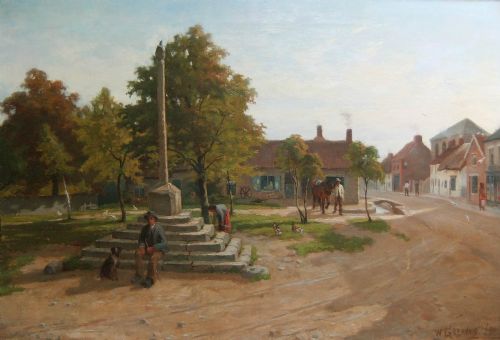
A rural village painting captures country life and quiet streets through the observant eyes of artists working across the nineteenth and twentieth centuries.
Rural Village Painting
A rural village painting depicts domestic country life, agricultural settlements, and country lanes through various historical lenses. These works range from early Victorian watercolours to mid-twentieth-century post-impressionist canvases.
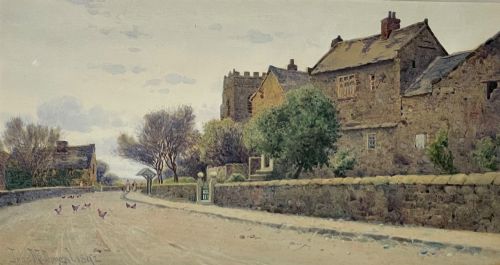
The subjects on this page include English village scenes, French farmyards, and Yorkshire landscapes. Artists record specific locations like Bidston, Thornton le Dale, and Widecombe, alongside unnamed rural streets.
Most pieces date from the nineteenth and twentieth centuries, employing either oil paint or watercolour upon canvas, paper, or panel. Buyers encounter everything from detailed realist topography to looser impressionist interpretations of village life.
Materials and methods
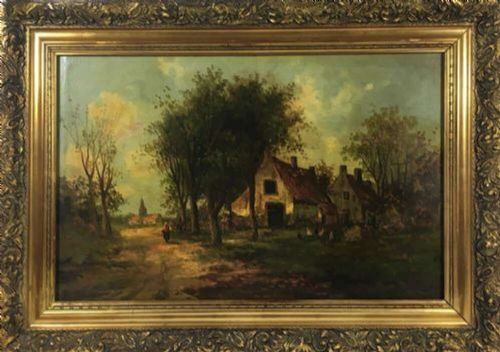
Painters utilised oil on canvas or applied watercolour to paper, frequently mounting works within gesso and gilt frames. Supports range from stretched canvas to card and panel.
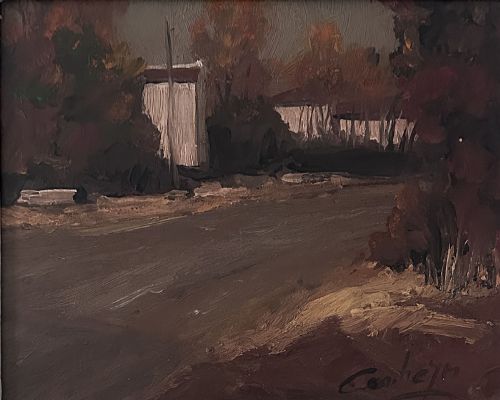
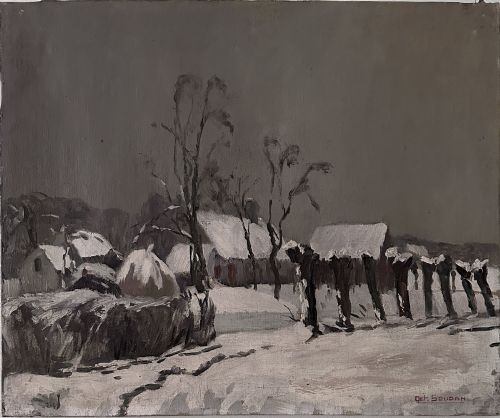
Pigments were worked with brushes and occasionally palette knives to build texture, particularly in oil compositions depicting autumn and winter scenes.
Framing often includes period gilt wood mouldings that complement the palette and protect the paper or canvas surfaces.
Evaluating quality
Quality rests upon the artist's handling of light, atmosphere, and spatial depth within the rural setting. Stronger pieces demonstrate confident brushwork and a coherent sense of place rather than mere topographical recording.
Condition of the medium matters, particularly the stability of oil paint on canvas or the absence of foxing on nineteenth-century watercolours. Original frames matching the period of the painting also add integrity.
John McDougal·William Greaves·Fred Lawson·Charles Vickers·Helena Maguire·John Edward Bale·Robert Hollands Walker·Robert McGregor·B W Leader·Kershaw Schofield·Henry Charles Bryant·Maurice Asselin·Jeffrey Pratt·Georgina Lara·Eugene Battaille·Joseph Thors·David Heward·Joseph Hughes Clayton·Stephanie Cooper·John Holland Snr·Thomas Pyne
The Rural Village Painting Glossary
- Oil on canvas
- Pigment mixed with drying oil applied to a woven fabric stretched across a wooden frame. This medium allowed artists to build rich textures and deep tones.
- Watercolour
- Pigments suspended in a water-soluble vehicle, traditionally painted on paper. It provides transparent washes and delicate detail.
- Barbizon School
- A nineteenth-century French movement focused on plein air landscape painting and rural realism. Artists prioritized natural light and ordinary country scenes.
- Gesso
- A plaster-like mixture applied to wood or canvas as a base for painting or used in relief on picture frames. Gilding is often applied over this layer.
- Genre painting
- The pictorial representation of scenes from everyday life, including figures working or gathering in village streets.
Rural Village Painting: Frequently Asked Questions
What periods do these paintings cover?
The works span from the nineteenth century through the mid-twentieth century. Victorian pieces sit alongside later impressionist and post-impressionist interpretations.
Dates recorded in the listings stretch from the 1850s to the 1950s, reflecting changing artistic approaches to the countryside.
How were these village scenes framed?
Many works retain their period frames, frequently constructed from wood with gesso ornamentation and gilt finishes. These frames often match the approximate date of the artwork.
Original framing helps preserve the piece and offers context regarding how the painting was displayed in past decades.
Are these paintings signed by the artists?
Several pieces feature clear signatures or attributions to known painters of the nineteenth and twentieth centuries. Other works remain unsigned or carry indistinct signatures.
Attributions rely on stylistic evidence, historical records, and occasionally accompanying documentation tied to specific regions.
What mediums are used in these works?
Artists worked primarily in oil paint and watercolour. Supports include stretched canvas, board, and heavy paper.
Oil paintings offer heavier texture and depth, whereas watercolours provide lighter, transparent washes suited to delicate landscapes.