
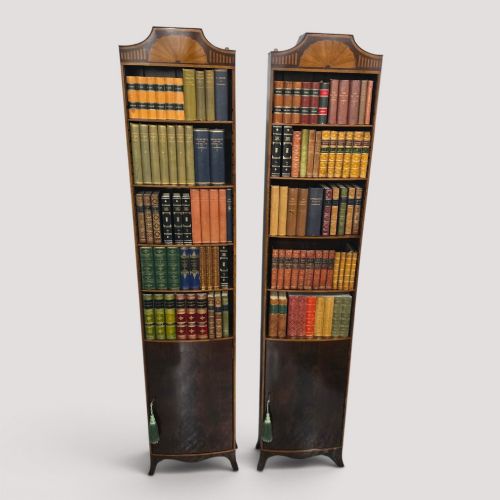
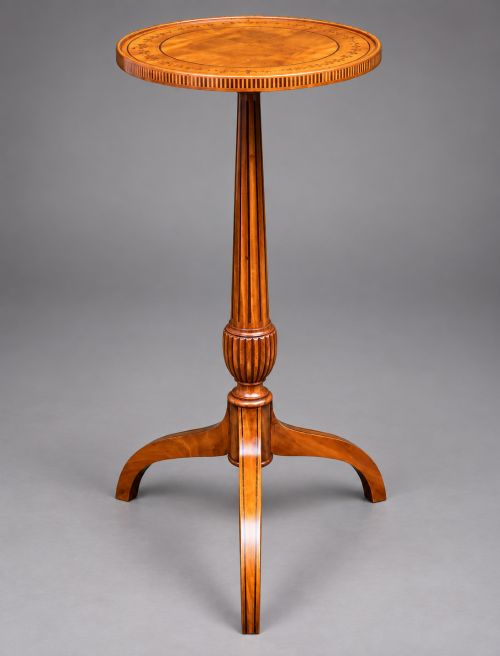
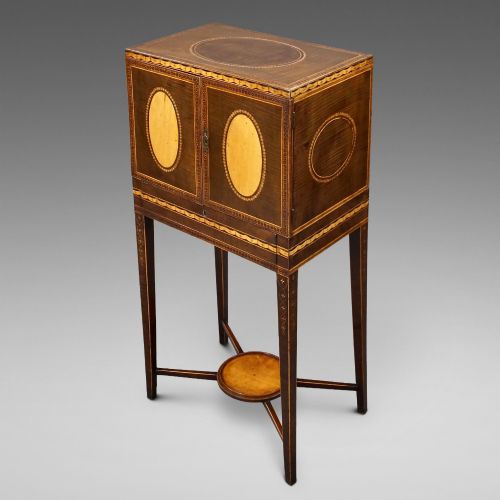
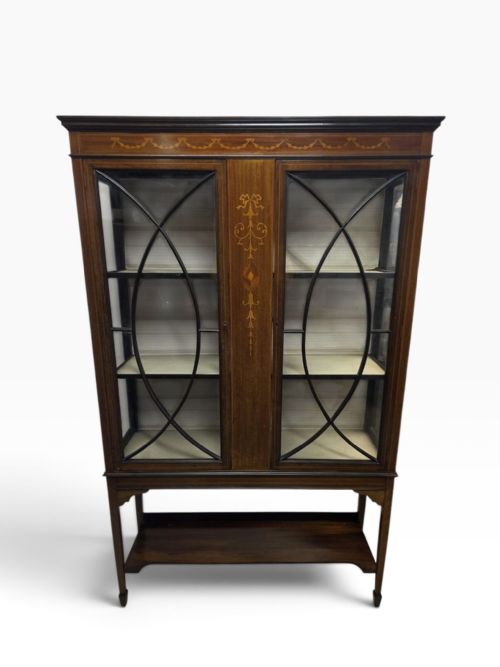
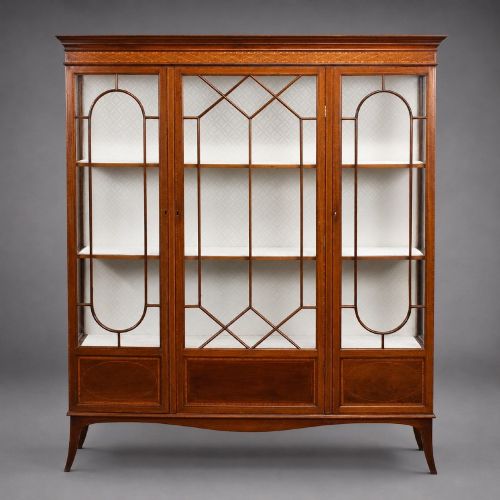
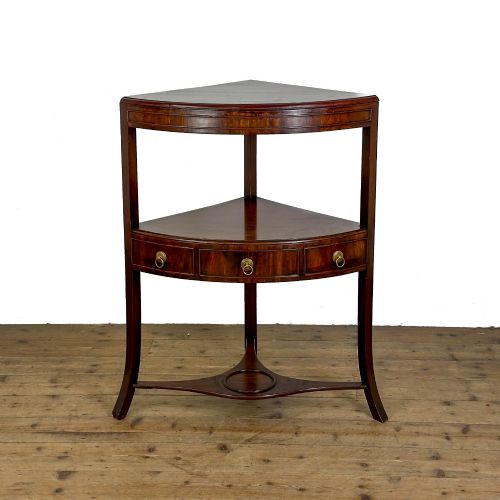

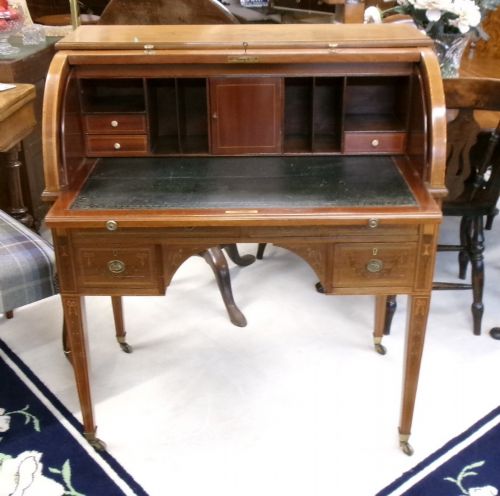
Sheraton Style Stand
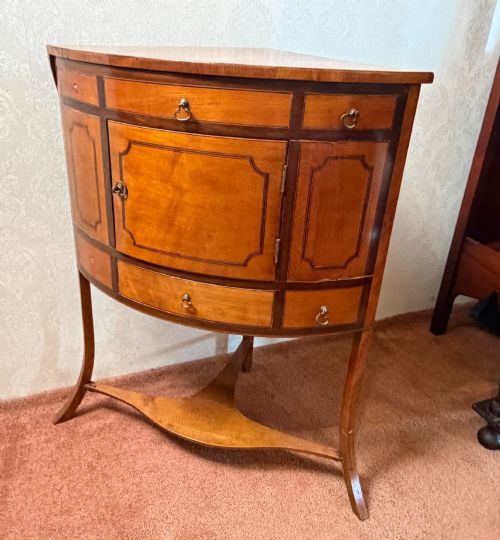
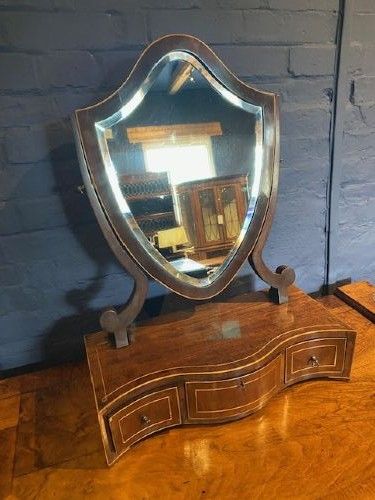
These pieces known as a sheraton style stand combine light timbers with classical geometry, offering a refined stage for display or service.
Sheraton Style Stand
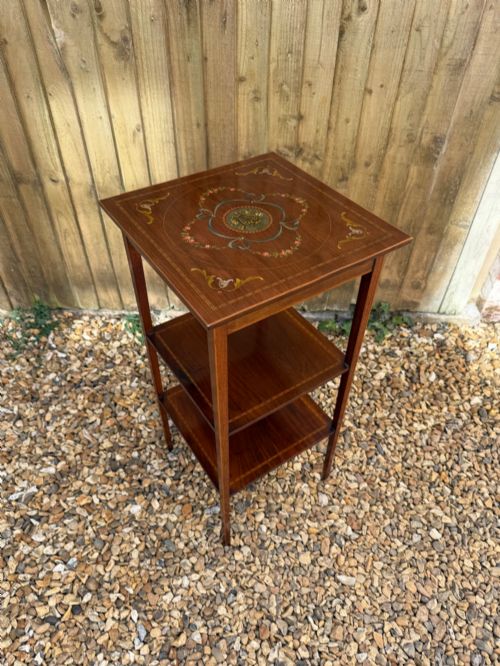
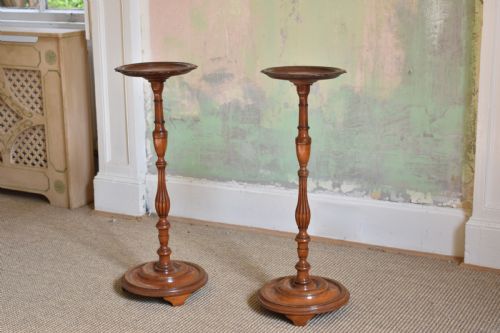
A sheraton style stand encompasses various elevated furniture forms, including small occasional tables, lamp tables, urn stands, and plant stands designed for domestic display. These pieces frequently emerge from the Edwardian era and the Sheraton Revival period, alongside examples originating in the 18th century and Georgian times.
The most common formats met on this page are occasional tables, plant stands, and candle stands constructed in mahogany or satinwood. Makers across the Georgian, Victorian, and Edwardian periods adapted these lighter proportions for drawing rooms and parlours.
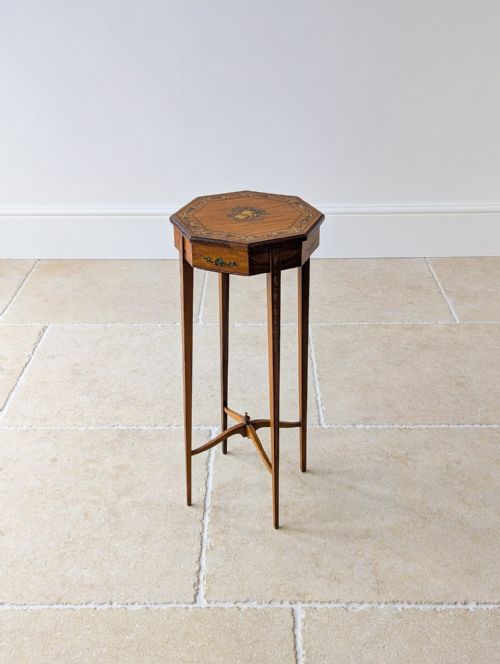
Originating from classical design principles, these stands often feature slender legs and geometric tops, such as octagonal or serpentine shapes. The selection spans from utilitarian wash stands to decorative display pieces and lamp tables.
Materials and technique
Construction relies heavily on primary timbers such as mahogany and satinwood, frequently paired with contrasting veneers like harewood, boxwood, and kingswood. Cabinetmakers utilised precise boxwood and satinwood inlay to create delicate borders, swags, and classical motifs on flat surfaces.
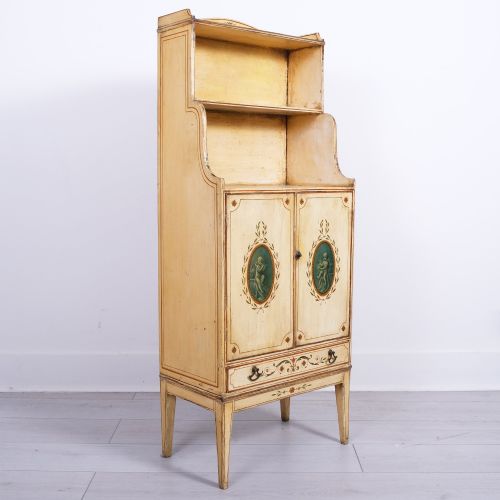
Surface treatment often involves hand-painted decoration directly onto the timber or polished finishes that highlight the natural grain of flame mahogany. Structural joinery supports slender tapering legs, sometimes connected by low stretchers or brass fittings.
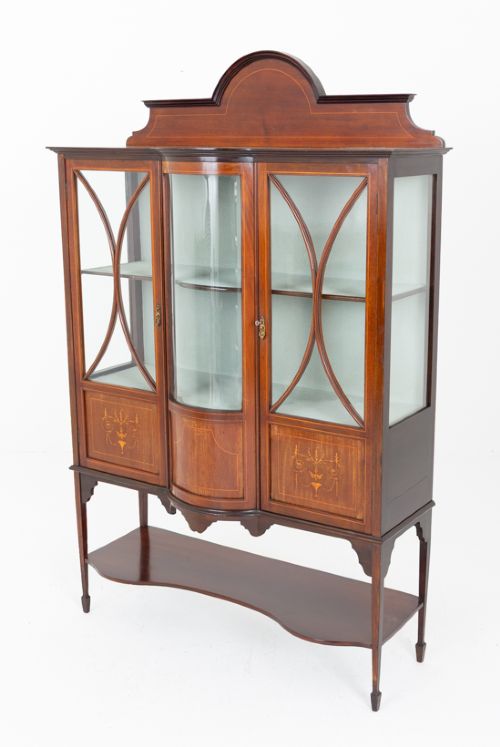
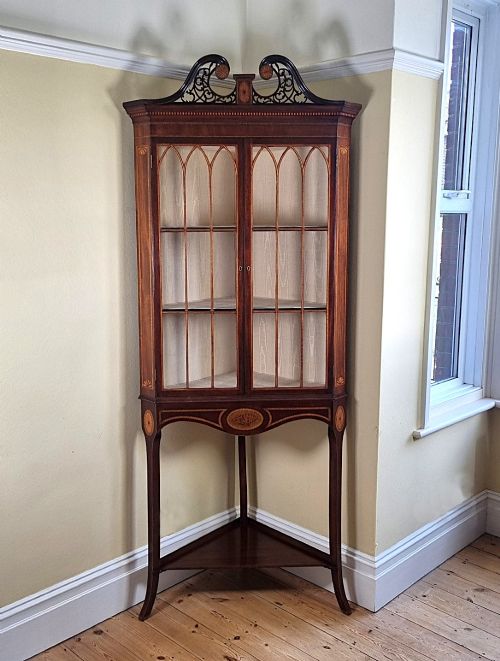
The archive shows a distinct preference for multi-functional forms, pairing stands with jardinieres, trays, and display cabinets.
Craftsmanship and design execution
The distinction between tiers of quality rests on the precision of the marquetry and the choice of timber figurations, such as matched flame mahogany or finely figured satinwood. Superior examples display crisp hand-painted details and intricate inlay work rather than simpler transfer decoration.
Proportion and structural harmony separate standard production from exceptional work, particularly in the taper of the legs and the integration of brass or glass elements. Finer pieces maintain balanced geometry and clean lines across complex shapes like octagonal tops and serpentine edges.
Waring & Gillow·Edwards & Roberts
The Sheraton Style Stand Glossary
- Sheraton Revival
- A late 19th and early 20th century design movement emulating the lighter neoclassical furniture forms of the late 18th century. It frequently employs satinwood, inlay, and painted details.
- Satinwood
- A lustrous, hard timber of a golden-yellow colour used extensively for fine veneers and stringing. It forms the pale contrasting panels seen on many classical stands.
- Harewood
- Sycamore timber that has been stained grey, often utilised in marquetry and crossbanding on high-end 18th century and revival pieces. This material provides a muted, sophisticated tone.
- Boxwood
- A dense, pale wood used traditionally for fine stringing, inlay lines, and contrasting details around cabinet borders. It creates sharp visual boundaries against darker timbers.
- Neoclassical
- A style drawing inspiration from classical antiquity, featuring symmetrical forms, straight tapering legs, and restrained decorative motifs. It governs the architectural silhouette of these stands.
Sheraton Style Stand: Frequently Asked Questions
What is a sheraton style stand used for?
These pieces serve as elevated surfaces for lamps, plants, candles, or decorative items within domestic interiors. Their compact footprints allow them to occupy corners or spaces beside seating.
Historically, specific variations accommodated wash basins, urns, or writing accessories, adapting classical elegance to daily household requirements.
How do I identify a revival piece from an 18th-century original?
Dating relies on examining the secondary timbers, construction methods, and the crispness of the inlay. Revival pieces often display Edwardian or late Victorian manufacturing traits beneath the surface.
Original 18th-century examples exhibit period-specific timber shrinkage, hand-cut joinery, and patination that develops naturally over centuries of use.
Are these stands suitable for daily use?
Most occasional tables and lamp stands remain sturdy enough for everyday placement of lightweight objects. Care must be taken with delicate painted surfaces and satinwood veneers.
Placing them away from direct heat sources and strong sunlight preserves the polished finish and prevents timber movement in modern homes.
What timber types are most common?
Mahogany forms the structural core of many surviving examples, appearing in both solid form and figured veneers. Satinwood provides a pale, golden alternative favoured for decorative table tops.
Secondary woods like boxwood and harewood appear primarily as contrasting stringing and marquetry elements rather than main structural components.