


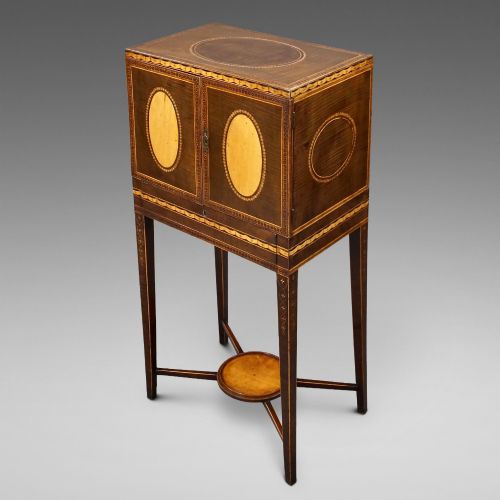
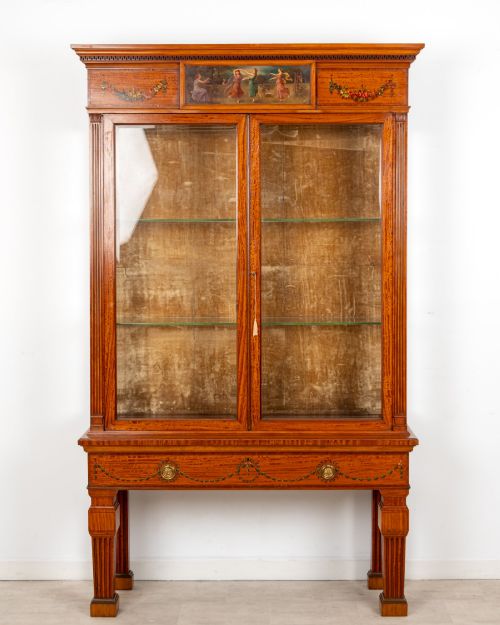
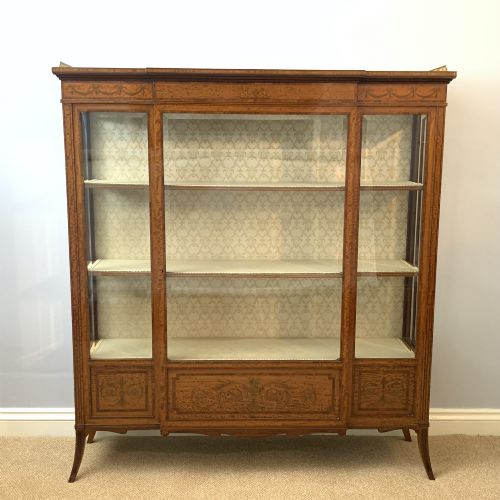
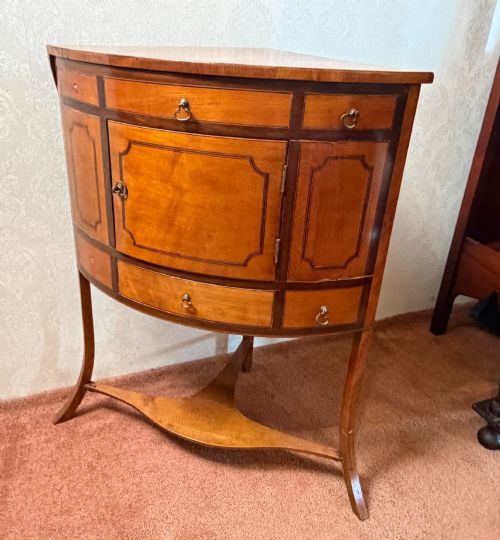
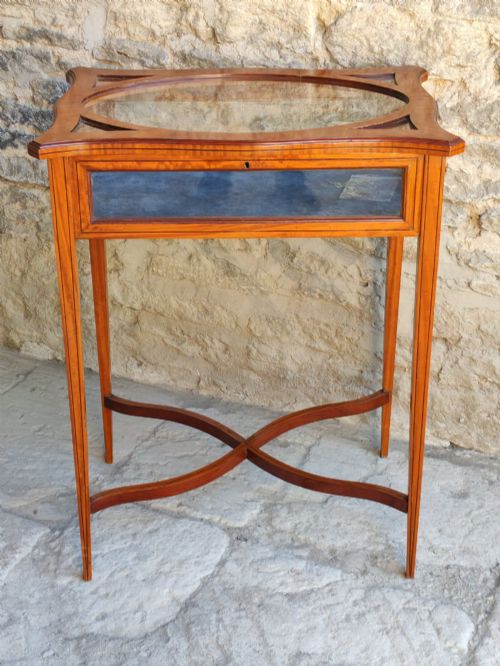
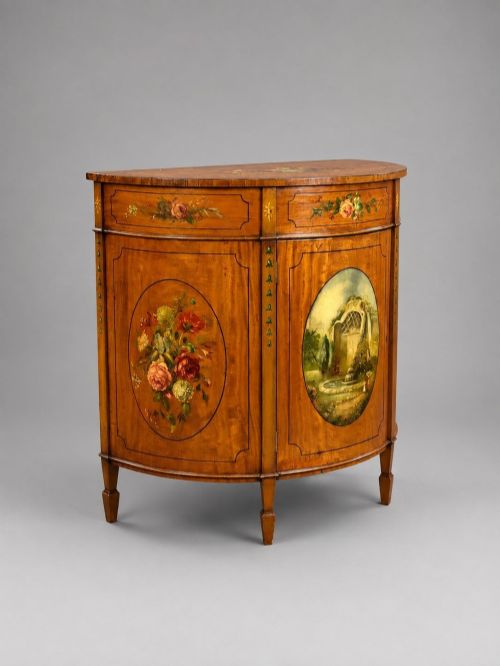
Sheraton Satinwood Cabinet
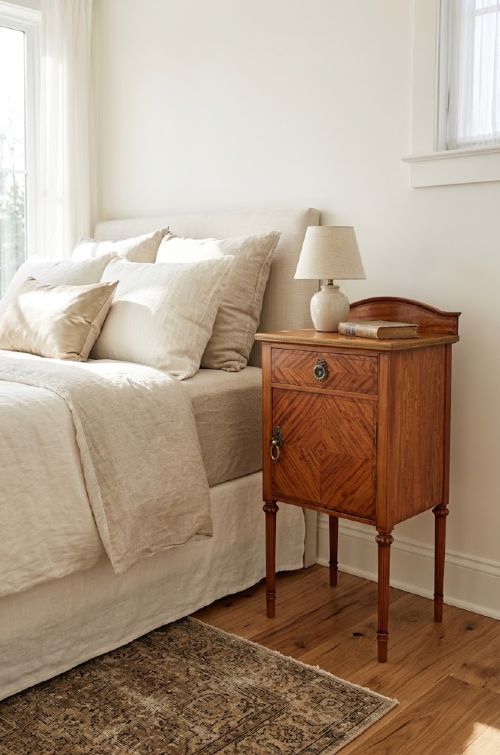
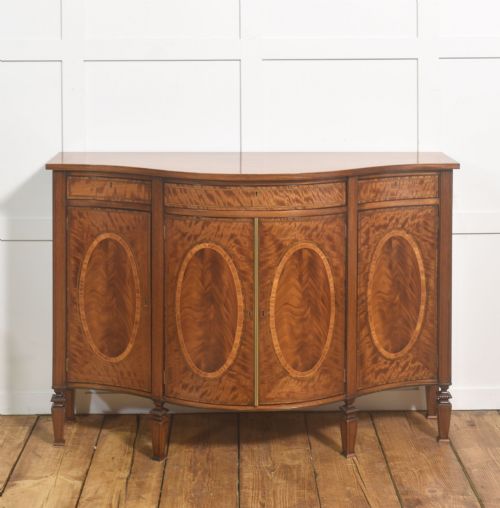
These pieces bring light, proportion and classical refinement into a room, offering a functional surface wrapped in golden timbers.
Sheraton Satinwood Cabinet
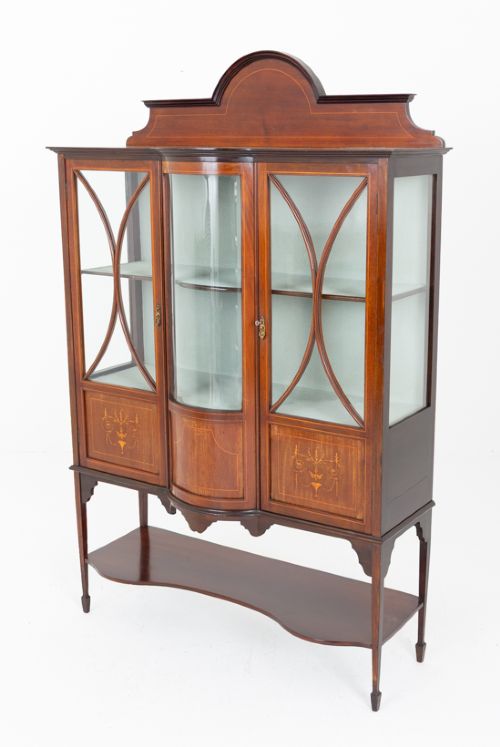
When you search for a sheraton satinwood cabinet, you encounter disciplined geometric forms alongside lighter revival interpretations spanning the Georgian era to the early twentieth century.
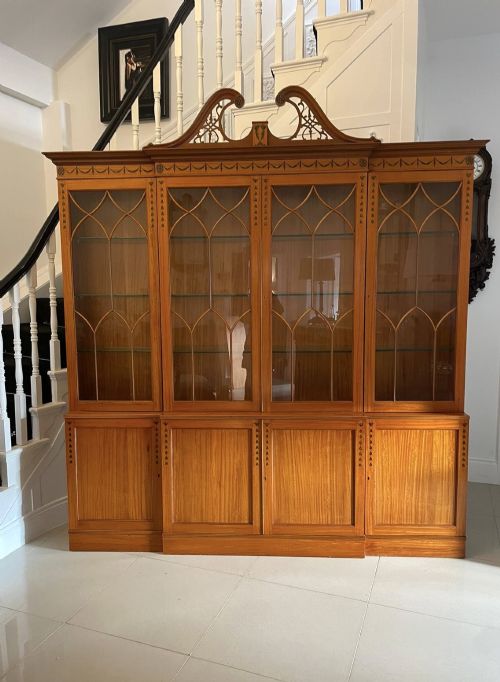
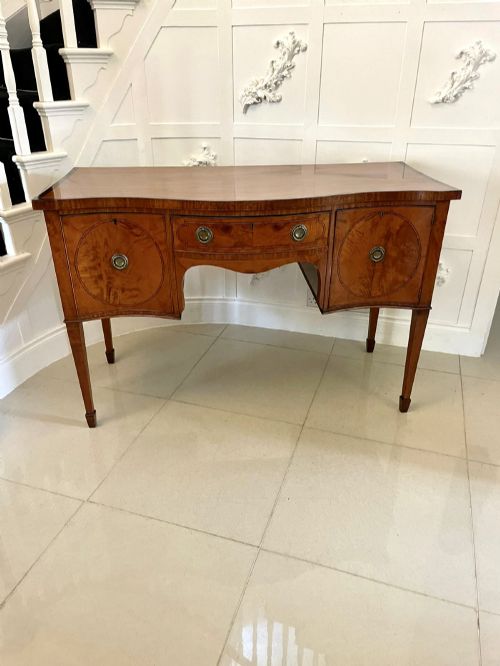
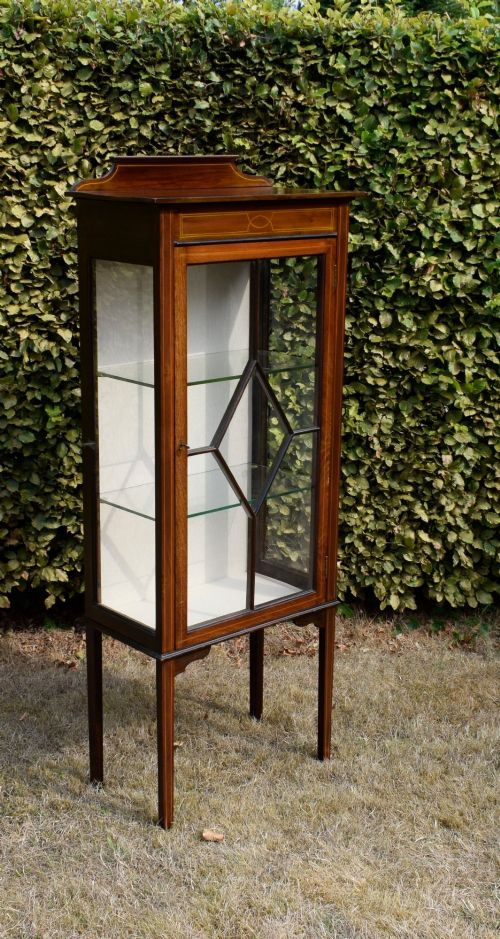
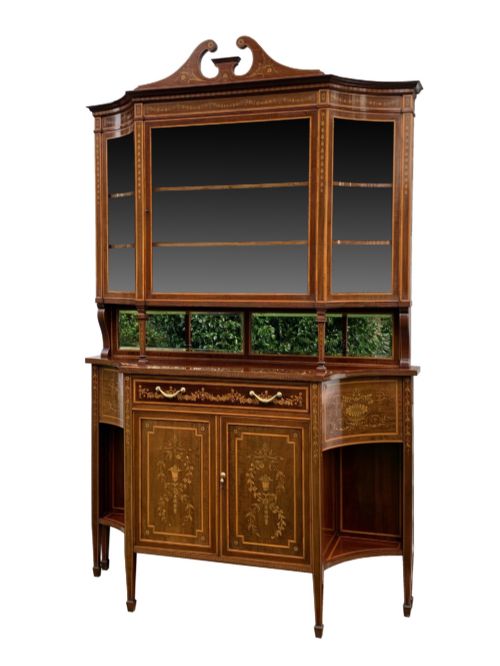
The selections on this page lean heavily toward Edwardian Sheraton Revival display cabinets and sideboards alongside original eighteenth-century pieces.
Makers utilised satinwood veneers for its luminous yellow grain, pairing the primary timber with mahogany, boxwood and detailed painted decorations.
Construction and material techniques
Cabinet makers built these pieces using solid mahogany or pine carcases lined with finely figured satinwood veneers and delicate boxwood stringing.
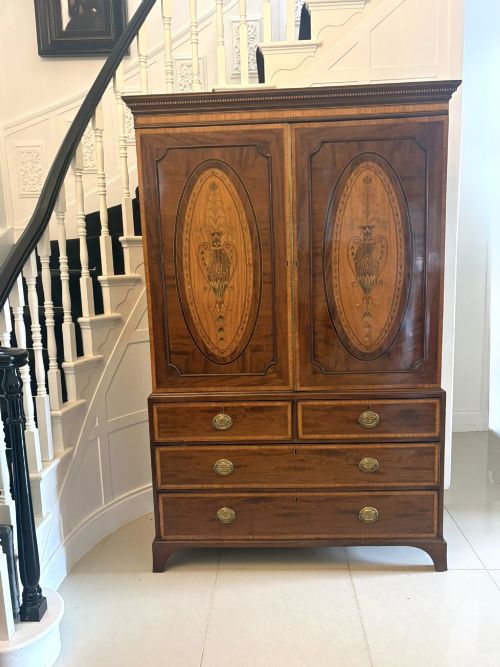
Surface ornament relied heavily on hand-painted floral panels, polychrome details and contrasting wood inlays arranged in symmetrical neoclassical motifs.
Materials span satinwood, mahogany, and boxwood enhanced by glass doors, hand-painted decoration, and intricate wood inlay.
Judging execution and finish
Quality rests on the crispness of the wood inlay, the depth of figure in the satinwood veneer and the integration of hand-painted panels.
Subtle details such as original brass hardware, finely glazed astragal doors and balanced proportions separate standard production from exceptional examples.
Edwards and Roberts·Hampton and Sons·Maple and Co·Druce and Co
The Sheraton Satinwood Cabinet Glossary
- Satinwood
- A dense tropical timber known for its lustrous, light-reflecting grain. Cabinet makers prized it for creating bright, decorative veneer surfaces on high-status furniture.
- Astragal
- A moulded strip of wood dividing panes of glass in a cabinet door. These delicate bars formed geometric lattices across display cases.
- Marquetry
- The art of forming decorative patterns using fitted pieces of coloured veneers. Craftsmen applied this technique to create floral and classical motifs.
- Crossbanding
- A border of veneer laid perpendicular to the grain of the main panel. This framing technique added visual contrast to table tops and cabinet doors.
- Demi-lune
- A half-moon shape characteristic of side cabinets and console tables. This curved form suited smaller reception rooms and hallways.
Sheraton Satinwood Cabinet: Frequently Asked Questions
What is a sheraton satinwood cabinet?
A sheraton satinwood cabinet is a refined storage or display piece featuring the light, classical geometry associated with late eighteenth-century design. These pieces often incorporate contrasting wood inlays and painted decorative panels.
They range from original Georgian items to later Edwardian revival pieces produced around the turn of the twentieth century.
How do I identify a revival piece?
Revival pieces date primarily from the late Victorian and Edwardian periods rather than the eighteenth century. They utilise similar satinwood veneers and classical motifs but show construction methods and secondary timbers typical of later workshops.
Examining the drawer linings, backboards and interior hardware usually clarifies the true age of the piece.
Where should I place a display cabinet?
Display cabinets suit principal reception rooms, dining areas or studies where their glazed doors can showcase collections while protecting contents from dust. Placing them away from direct sunlight preserves the delicate satinwood grain and painted panels.
Their balanced proportions also work well in hallways as striking focal points.
How do I care for satinwood surfaces?
Satinwood requires gentle maintenance using a soft cloth and occasional applications of microcrystalline wax to nourish the timber. Avoid placing these cabinets near heat sources or in fluctuating humidity to prevent veneer lifting.
Regular polishing protects the original finish and maintains the distinctive golden sheen.