
Sheraton Mahogany Buffet
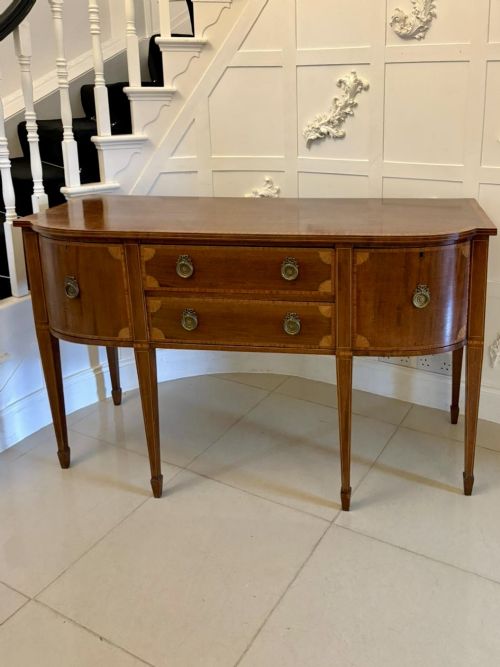
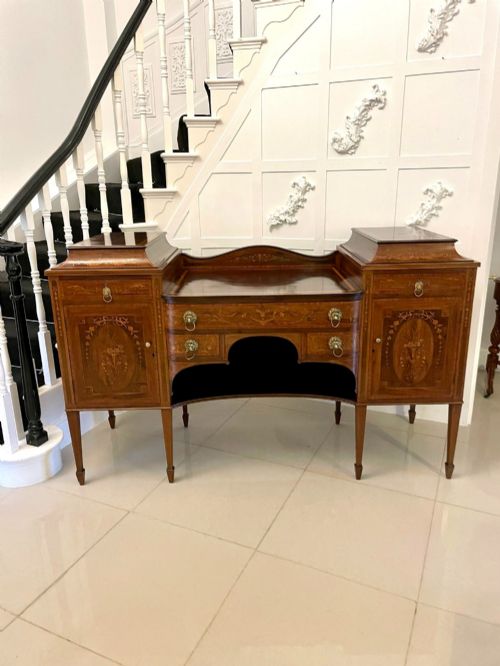
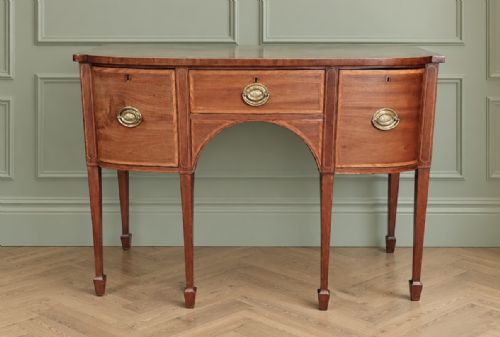
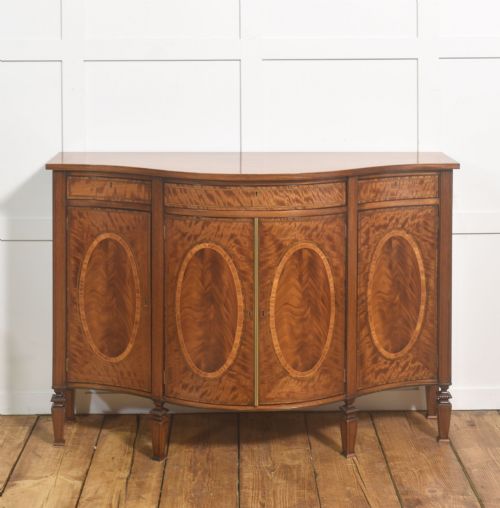
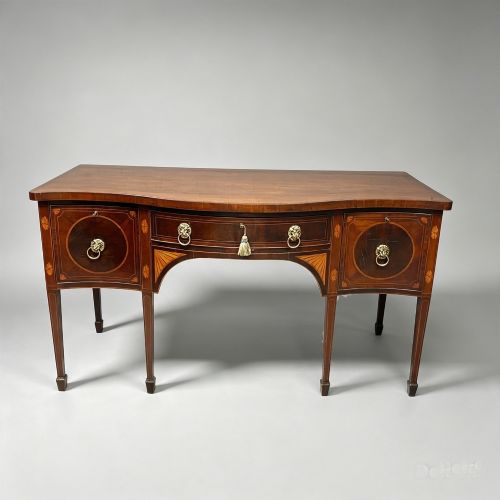
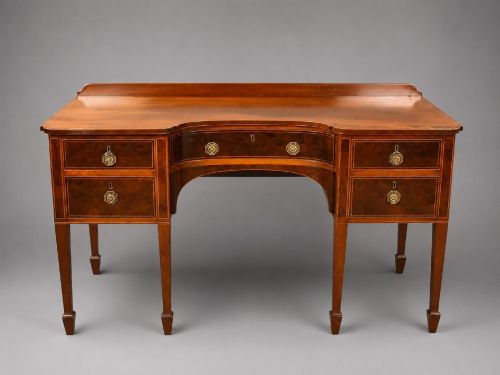
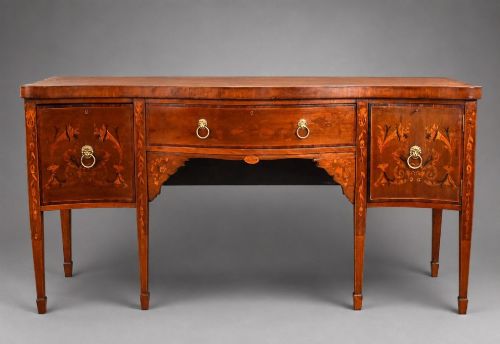
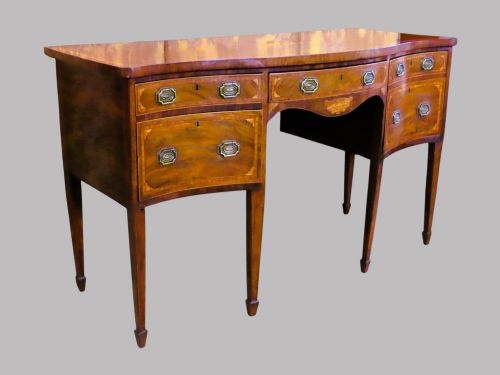
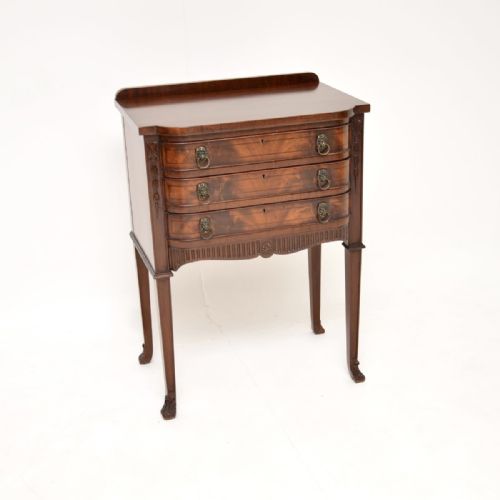
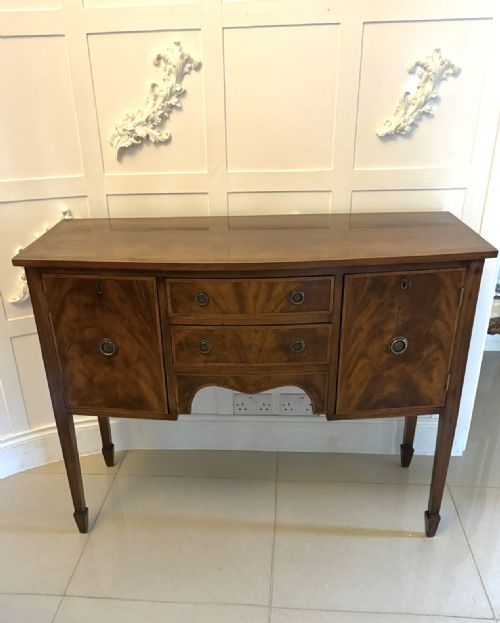
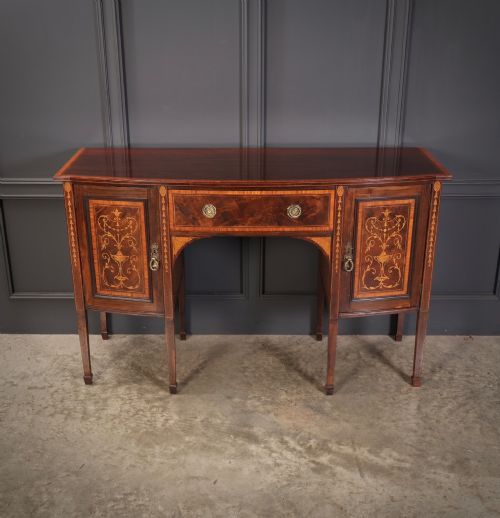
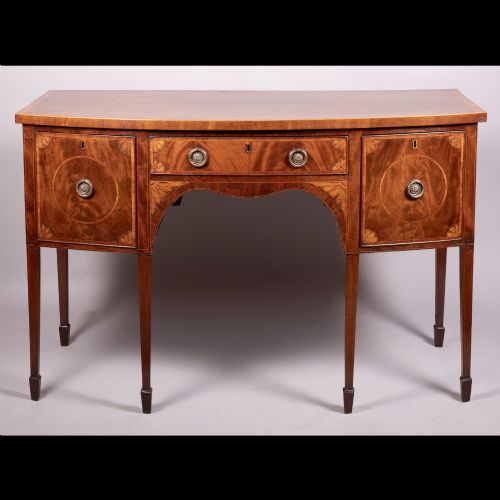
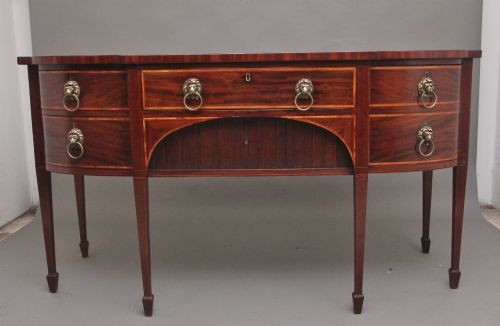
These sheraton mahogany buffet pieces are refined formal dining room furniture built to serve food and display silver with elegance.
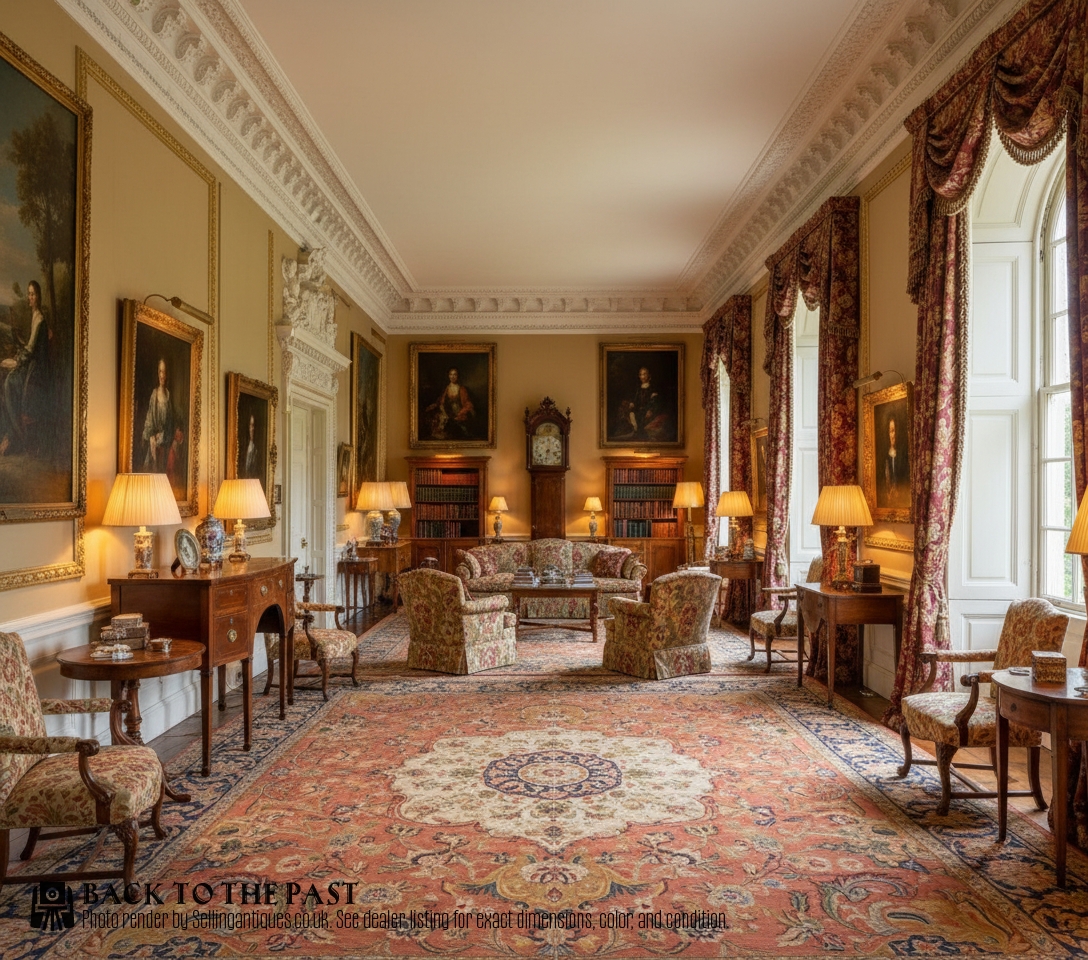
Sheraton Mahogany Buffet
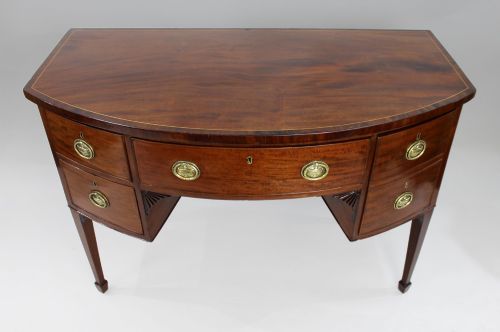
A sheraton mahogany buffet encompasses dining room furniture produced across several distinct eras, spanning late eighteenth century Georgian workshops through nineteenth century interpretations and twentieth century Edwardian revivals. You encounter bow front, serpentine, and straight front sideboard forms designed for dining spaces.
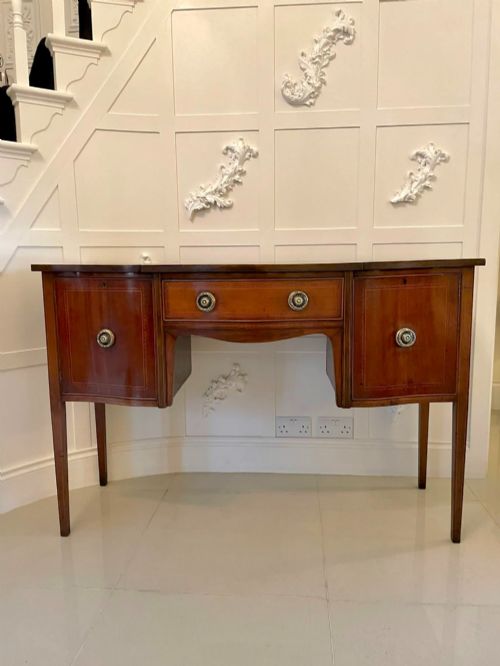
The pieces on this page include server tables, side cabinets, and pedestal sideboards alongside traditional sideboards. The material palette centres on rich mahogany, often accented with lighter wood details that define the aesthetic.
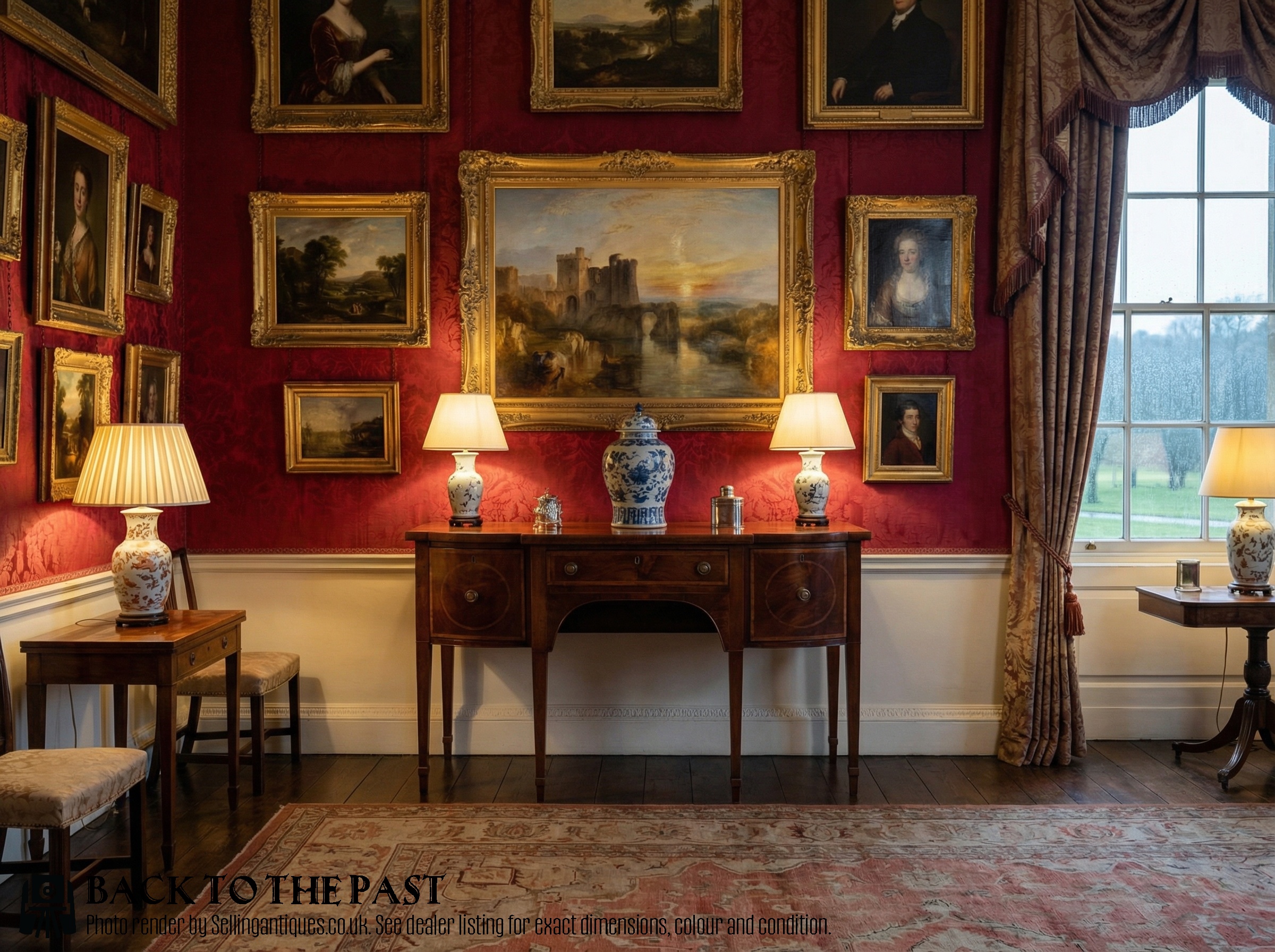
Judging quality
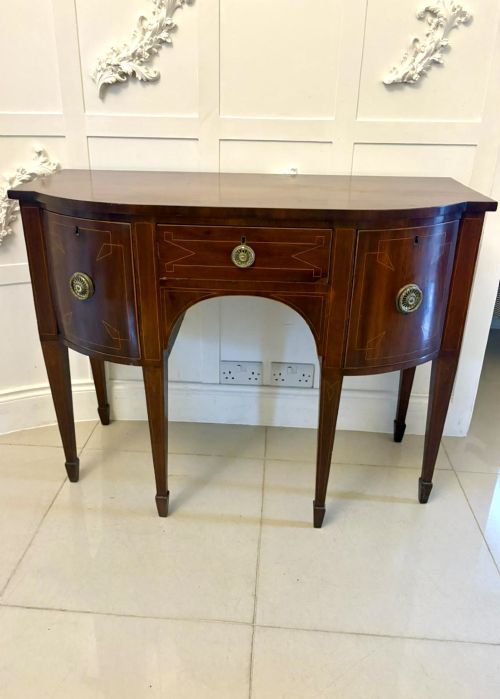
Quality rests in the precision of the timber selection and the crispness of the inlay work. Finer examples display carefully matched grain patterns across curved drawer fronts and cabinet doors, showing deliberate control over the visual composition.
The skill of the cabinetmaker dictates the harmony of the proportions and the refinement of the secondary wood inlays. Superior pieces maintain structural integrity alongside intricate decorative details that remain integrated with the architectural form.
Some sideboards contain concealed cellaret drawers once lined with lead to chill wine bottles for Georgian dinner parties.
Hewetsons London
The Sheraton Mahogany Buffet Glossary
- Bow-front
- A curved front that bulges outwards in the centre, common in late eighteenth and nineteenth century dining furniture. This shape softens the room's geometry.
- Serpentine
- A front contour characterised by a convex centre flanked by concave curves. It requires advanced woodworking skill to execute properly.
- Satinwood inlay
- Contrasting pale yellowish timber inserted into mahogany surfaces to create geometric or floral borders. It provides a bright visual accent.
- Crossbanding
- A border of veneer laid with the grain running perpendicular to the surrounding wood. This technique frames the primary panels.
- Marquetry
- Elaborate decorative patterns formed by fitting together small pieces of various coloured woods. It decorates the primary cabinet surfaces.
Sheraton Mahogany Buffet: Frequently Asked Questions
How do I date a sideboard?
Dating relies on timber characteristics, construction methods, and decorative styles visible across the piece. Georgian and Sheraton examples display eighteenth century cabinetmaking traits.
Later Edwardian revival pieces show twentieth century manufacturing marks and standardised construction techniques. Comparing the secondary woods helps confirm the period of production.
Where were these pieces used?
These pieces belonged primarily in formal dining rooms, serving as functional furniture for meals. They held silver, linen, and serving dishes during feasts.
Today they function effectively in dining rooms, living areas, or hallways as storage consoles. Their surface provides space for lamps or decorative objects.
What is the difference between a sideboard and a buffet?
Historical terminology often overlaps between sideboards, servers, and buffets depending on the specific proportions and storage arrangements. Sideboards typically feature a combination of drawers and cupboards.
Buffets and servers often emphasise flat top surfaces for food presentation. Both types share the mahogany and inlaid aesthetic characteristic of the style.
How do I care for mahogany furniture?
Maintenance requires keeping the wood away from direct sunlight and extreme temperature changes to prevent splitting. Regular dusting with a soft cloth preserves the polished finish.
Applying appropriate wax occasionally nourishes the timber and maintains the natural lustre. Avoid placing damp items directly on the wooden surface.