
Antique Mahogany Bowfront
An antique mahogany bowfront brings curved grace and substantial timber into a room, offering practical storage with a softened silhouette.
Antique Mahogany Bowfront
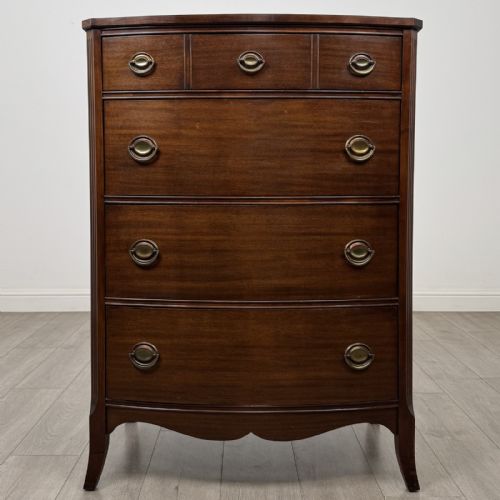
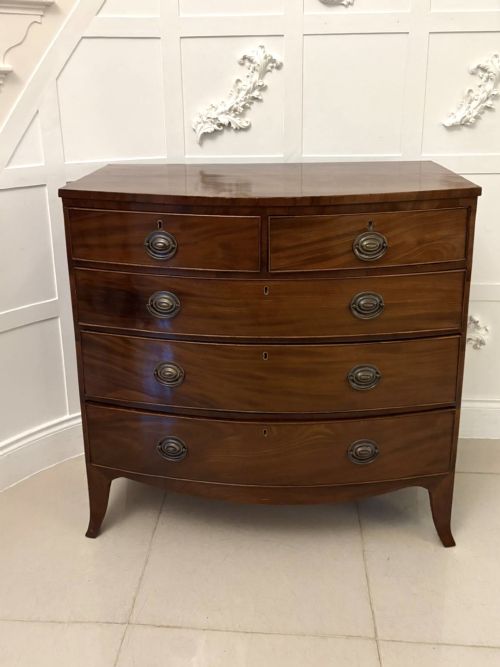
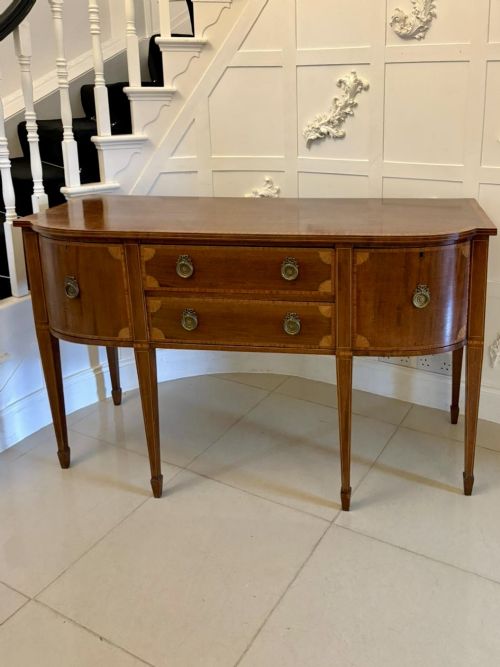
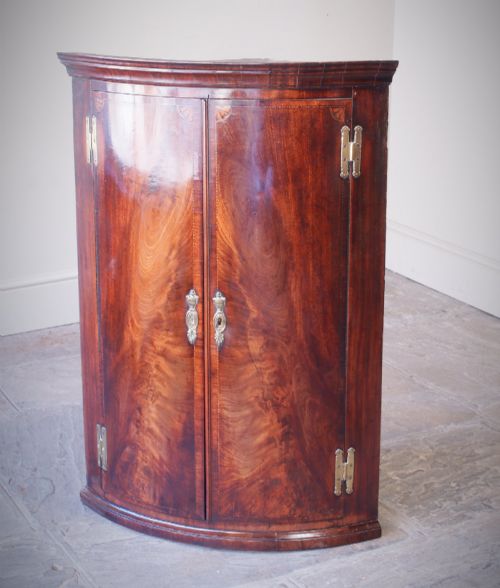
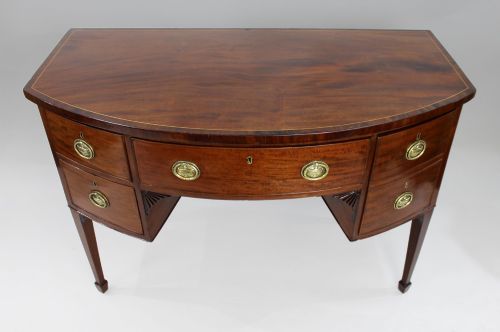
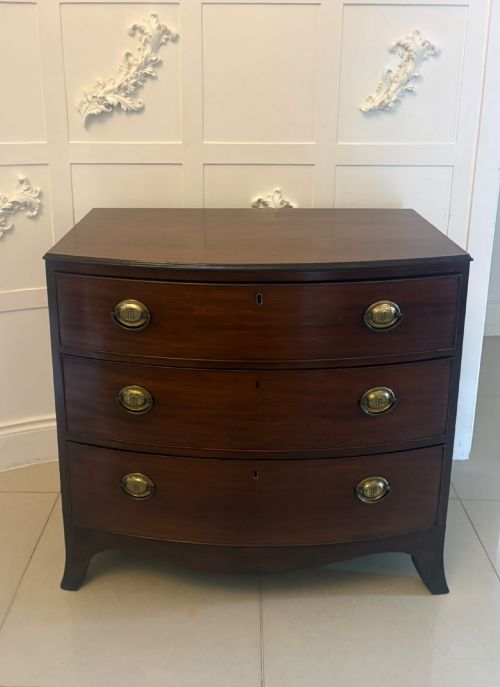
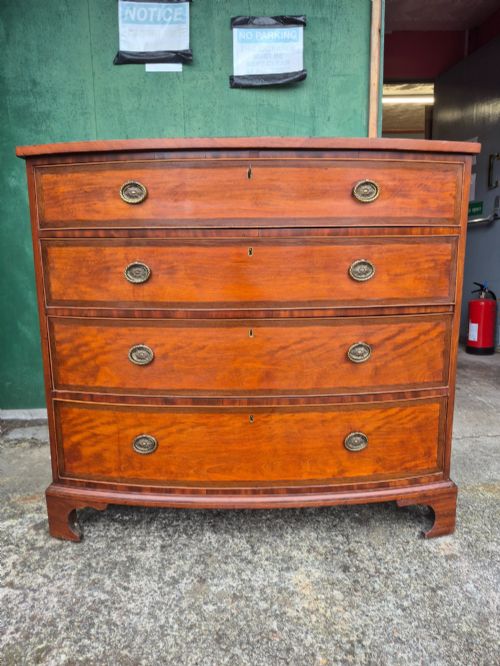
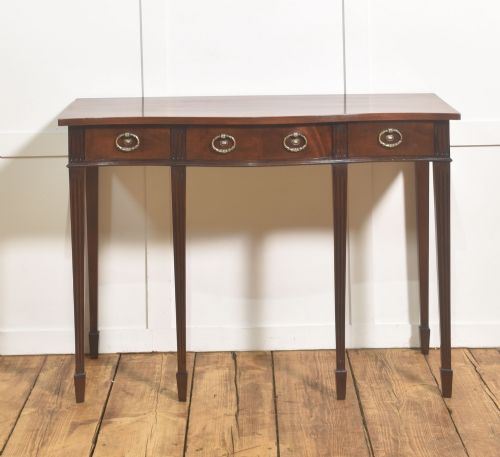
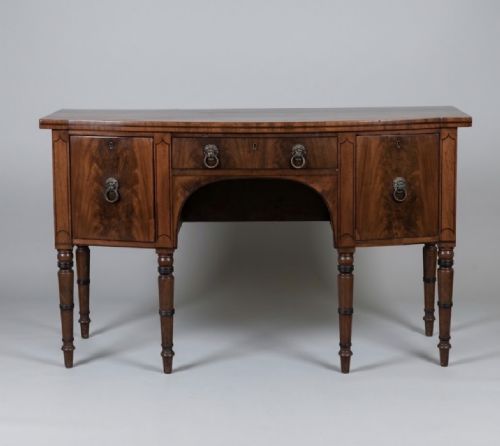
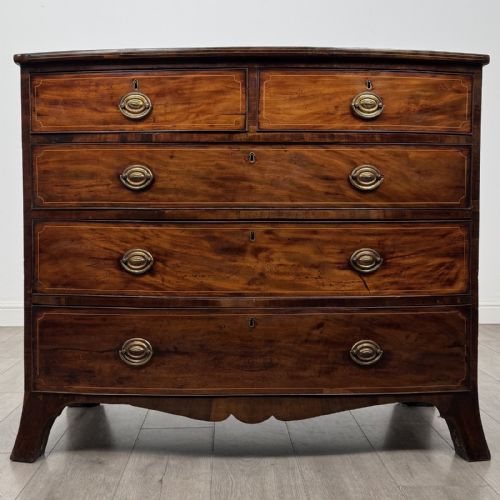
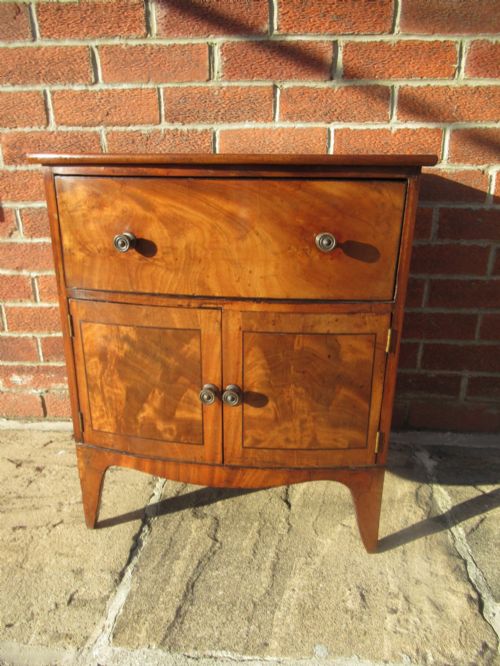
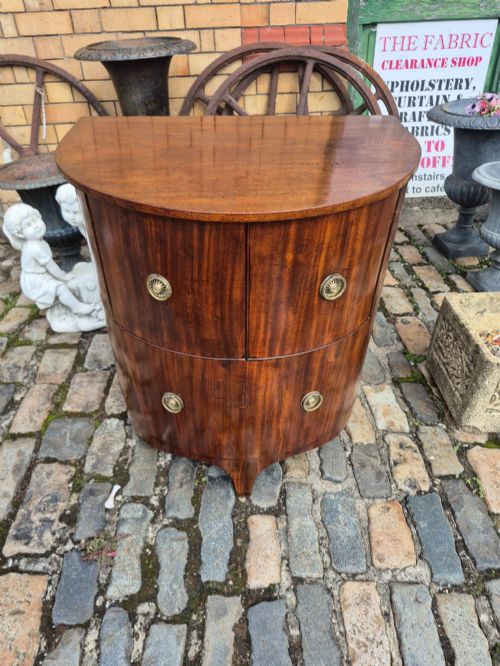
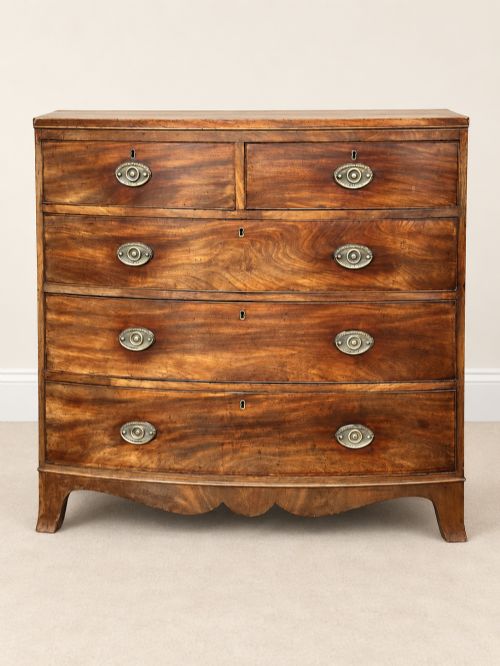
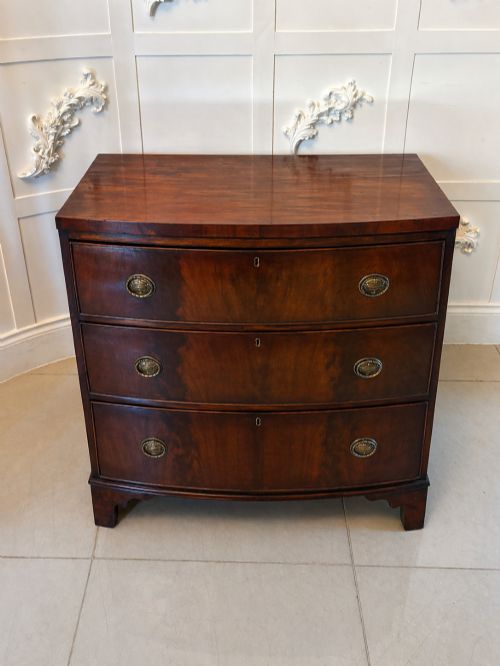
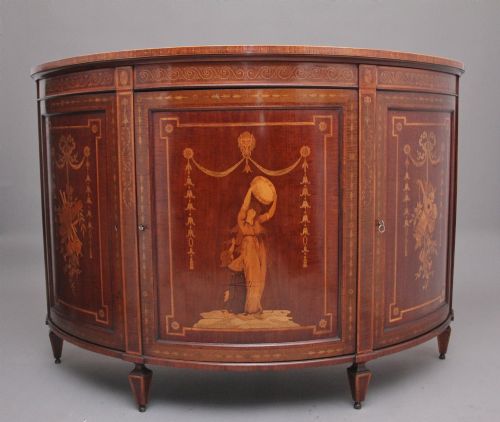
When you search for antique mahogany bowfront, you encounter chests of drawers, sideboards, and corner cupboards defined by their rounded, convex front profiles. These pieces span the 18th century through to the Edwardian period, with Georgian, Regency, and Victorian iterations appearing regularly.
The chest of drawers remains the most common form on this page, alongside sideboards configured for dining rooms and occasional cabinets. Makers from the 18th century onward utilised this curved shape to catch light and soften domestic interiors.
Smaller proportions, including dressing table mirrors and bedside tables, sit alongside large chests on chests and wardrobes in the wider record. Each object combines architectural presence with the warm grain of mahogany.
How they were made
Cabinet makers built these pieces using solid mahogany and flame mahogany veneers applied to secondary timbers such as oak, shaping the curved fronts with steam or specialised timber bending techniques. Crossbanding and stringing in contrasting woods like satinwood, boxwood, and ebony often frame the drawer fronts and tabletops.
Brass hardware, including cast backplates and drop handles, accompanies fine dovetail joinery on the drawers. Glass panels appear on display cabinets and corner cupboards, while internal carcases rely on traditional pegged and jointed construction.
Early cabinet makers occasionally hid secret compartments behind the sweeping curves of the top drawers.
What varies in quality
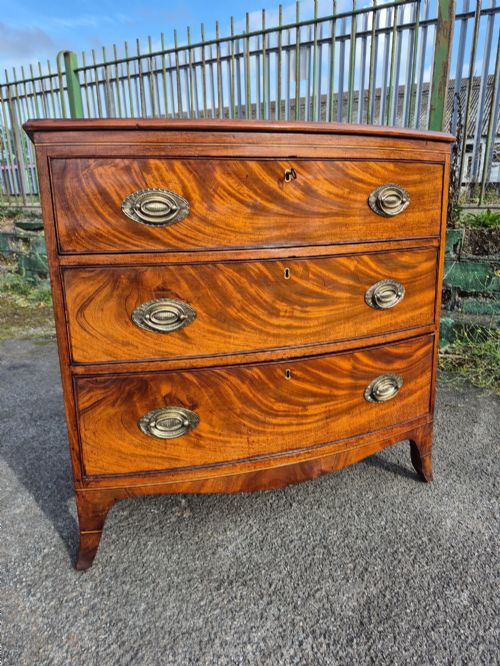
The selection of timber dictates much of the visual appeal, ranging from straight-grained mahogany to highly figured flame veneer that catches the light across the curved facade. Master craftsmanship reveals itself in the continuity of the grain across multiple drawers and the precision of inlaid banding.
Proportions also separate standard domestic furniture from finer workshop output, particularly in the delicate sweep of the bow and the integration of bracket or French feet. Subtle details, such as hand-cut dovetails and original brass fixtures, elevate the execution of a piece.
Waring & Gillow
The Antique Mahogany Bowfront Glossary
- Bowfront
- A convex, curved cabinet front that projects outward in an arc. This form gained popularity during the late 18th century to soften room angles.
- Flame mahogany
- Timber cut from the fork of the mahogany tree where branches meet the trunk. This produces a dramatic, flame-like pattern prized by cabinet makers.
- Crossbanding
- A strip of veneer applied perpendicularly to the main grain along the edges of a panel or drawer. It creates a decorative border.
- Caddy top
- A tabletop style with a raised, moulded edge resembling the lid of a tea caddy. It is frequently found on Georgian chests.
- Stringing
- Fine inlay work consisting of narrow lines of contrasting light wood set into the darker mahogany surface. It defines panels and drawers.
Antique Mahogany Bowfront: Frequently Asked Questions
What rooms suit an antique mahogany bowfront?
These pieces fit naturally into living rooms, dining spaces, and bedrooms where their curved profile prevents them from dominating a floor plan. Their warm timber tones harmonize with both traditional and contemporary interior palettes.
Chest of drawers variants offer deep storage for clothing or linens, while sideboards and corner cupboards provide functional display space for glassware and tableware.
How do I identify a Georgian bowfront?
Georgian examples typically feature hand-cut dovetails, oak drawer linings, and subtle bracket feet supporting the curved carcase. The timber often exhibits a rich, deep patina acquired through centuries of waxing.
Later Victorian and Edwardian reproductions or continuations often employ machine-cut elements, different secondary woods, and brighter reddish finishes without the same depth of age.
What is flame mahogany?
Flame mahogany is a decorative veneer sliced from the branch junctions of the tree. The resulting grain swirls in dramatic, feather-like patterns that ripple across the curved drawer fronts.
Cabinet makers reserved this striking timber for the most prominent surfaces of high-status furniture, pairing it with simpler mahogany on the sides.
How should I care for my bowfront?
Maintain the finish by dusting with a soft, dry cloth and applying traditional beeswax sparingly to preserve the moisture in the timber. Avoid placing the piece in direct sunlight or near heat sources to prevent the mahogany veneer from drying and lifting.
Keep humidity levels in the room stable to protect the solid wood construction and the intricate internal joinery of the drawers.