



Warm Mahogany Sideboard
A warm mahogany sideboard brings deep timber grain and practical dining room storage into the home, spanning Georgian, Victorian and Edwardian periods.
Warm Mahogany Sideboard
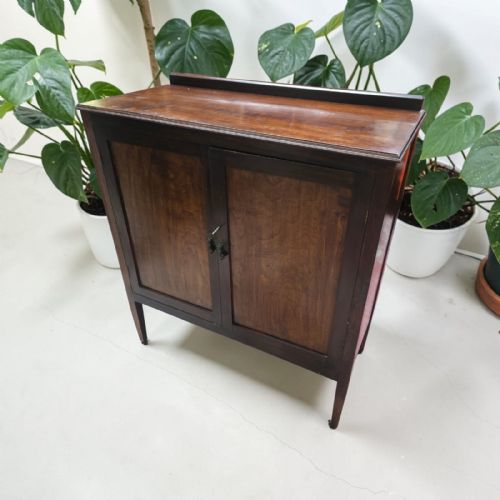
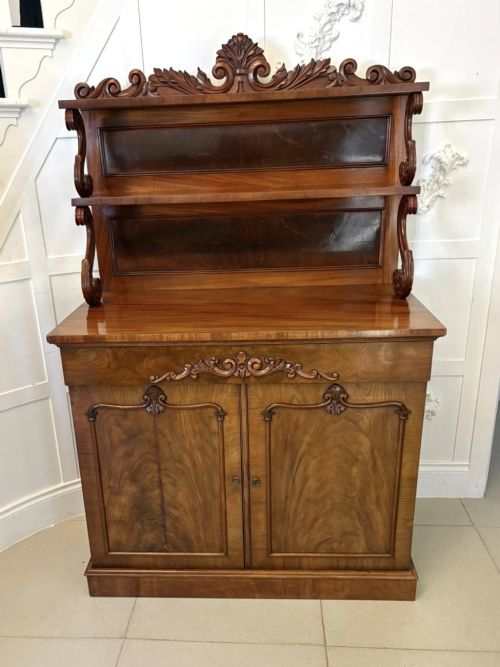
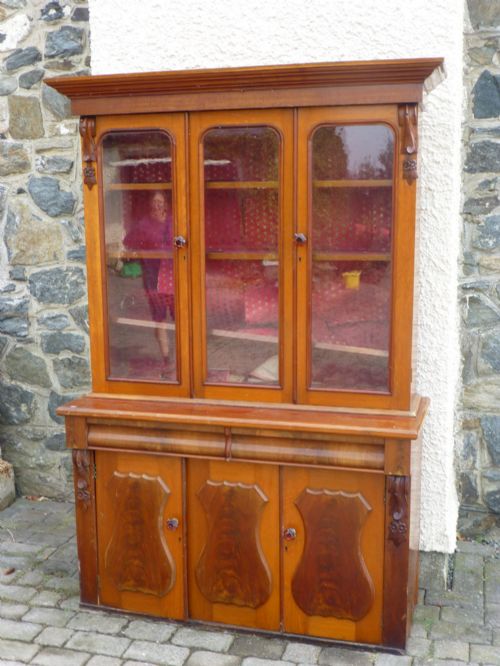
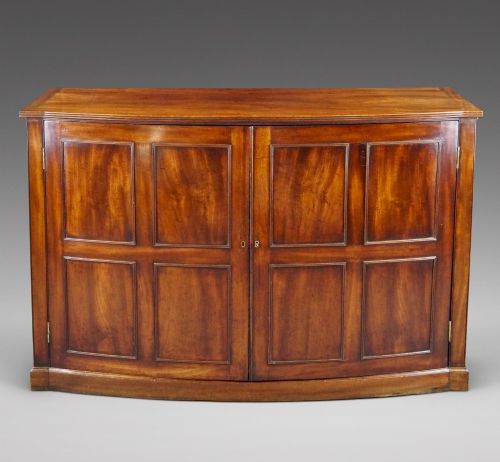
When searching for a warm mahogany sideboard, buyers encounter a variety of substantial dining room furniture built primarily from mahogany and associated timbers. These pieces range from compact Georgian bow-front examples to larger Victorian breakfront chiffoniers and Edwardian mirrorback designs.
The selection here encompasses items originating from the 18th century through to the early 20th century, including regional variations like Welsh vernacular dressers and industrial storage cupboards. Sideboards and chiffoniers dominate the current offerings, providing surface space and enclosed storage for dining utensils and household goods.
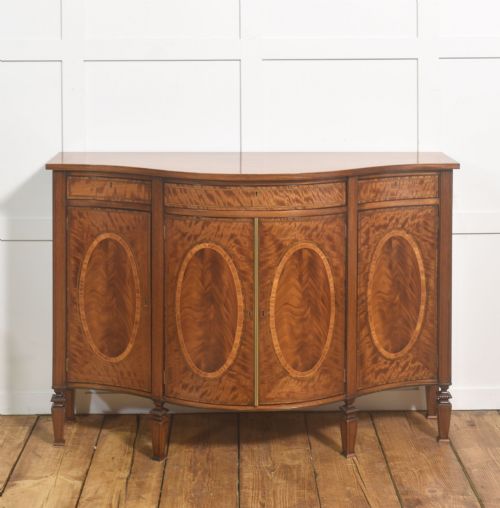
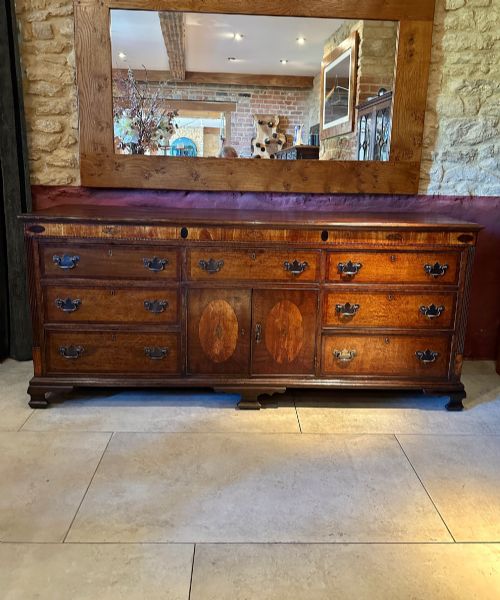
Buyers will find that many examples incorporate decorative elements such as satinwood inlay, brass fittings, and flame mahogany veneer. Each piece reflects the functional requirements and stylistic preferences of its specific period, from restrained Georgian proportions to elaborate Edwardian Art Nouveau ornamentation.
How they were made
Cabinet makers utilised solid mahogany and applied flame mahogany veneer to large structural surfaces to create rich visual depth and pattern. Secondary timbers such as oak frequently appear in drawer linings and internal framing.
Decoration relied on contrasting details, incorporating satinwood and boxwood inlay to define borders and panels. Brass handles, escutcheons and gallery rails complete the construction of these formal dining pieces.
The selection spans four centuries of cabinet making, covering Georgian, Victorian, Regency and Edwardian eras.
What varies in quality
Quality rests heavily on the selection of timber, particularly the grain figure visible across the front drawers and doors. Finely figured mahogany and well-matched veneer work elevate the visual presence of a piece.
Construction methods and the crispness of inlaid details set finer examples apart from standard utility items. The integration of original brass hardware and the overall balance of proportions also indicate the standard of craftsmanship.
The Warm Mahogany Sideboard Glossary
- Bow-front
- A convex, curved cabinet front popular in Georgian and later furniture design. This shape softens the corners of the room and highlights the grain of the mahogany veneer.
- Chiffonier
- A low sideboard or cabinet featuring shelves or a mirrored back, developed during the 19th century. These pieces typically offer enclosed storage beneath a display surface.
- Breakfront
- A cabinet design where the central section projects forward from the flanking outer cupboards. This architectural arrangement creates depth and shadow across the front of the sideboard.
- Satinwood
- A pale, dense exotic hardwood utilised for contrasting stringing and inlay work. Cabinet makers deployed it to create decorative borders against dark mahogany.
Warm Mahogany Sideboard: Frequently Asked Questions
How do I date a mahogany sideboard?
Dating relies on architectural proportions, handle styles and construction techniques visible in the drawers and interior framing. Georgian pieces display simpler, classical lines, whilst Victorian and Edwardian examples often incorporate mirrors, heavier mouldings or elaborate inlay.
Secondary woods inside the drawers also offer clues to the era of manufacture. Examining the backboards and fixings helps confirm whether the piece belongs to the 18th, 19th or early 20th century.
Where were sideboards placed in historical homes?
Sideboards traditionally stood in the dining room against a wall near the dining table. Servants used the top surface to display serving trays, cutlery urns and dishes during formal meals.
The cupboards and drawers below held linen, plate and glassware ready for use. Today, these pieces function equally well in hallways, living rooms and modern dining spaces.
What is the difference between a sideboard and a chiffonier?
A sideboard is typically a longer, lower serving piece designed specifically for the dining room. A chiffonier usually includes a superstructure with shelves or a mirror back, standing somewhat taller.
Victorian chiffoniers often served as smaller storage units in parlours or bedrooms. Both forms utilise mahogany and similar hardwoods, but their proportions and interior layouts differ.
How should I maintain a mahogany surface?
Keep mahogany furniture away from direct sunlight and heat sources to prevent the timber from drying out. Dust regularly with a soft cloth and apply quality beeswax periodically to nourish the grain.
Avoid using modern silicone sprays or abrasive cleaners on antique polish. Proper care preserves the deep warm colour and natural lustre of the wood over time.