
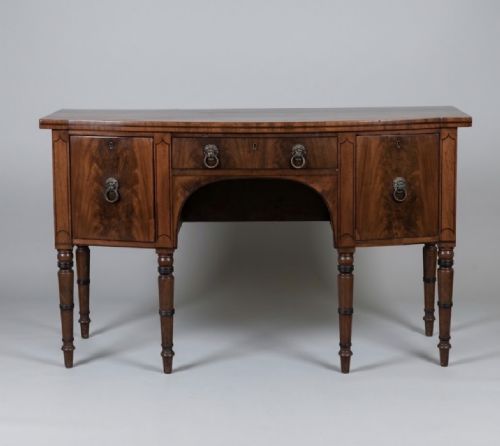
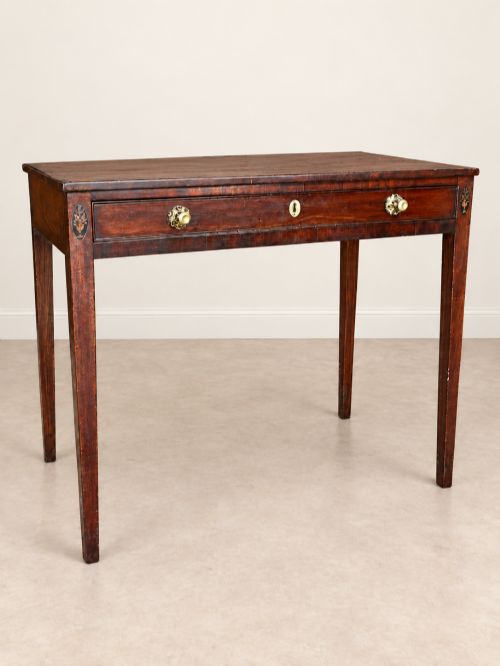
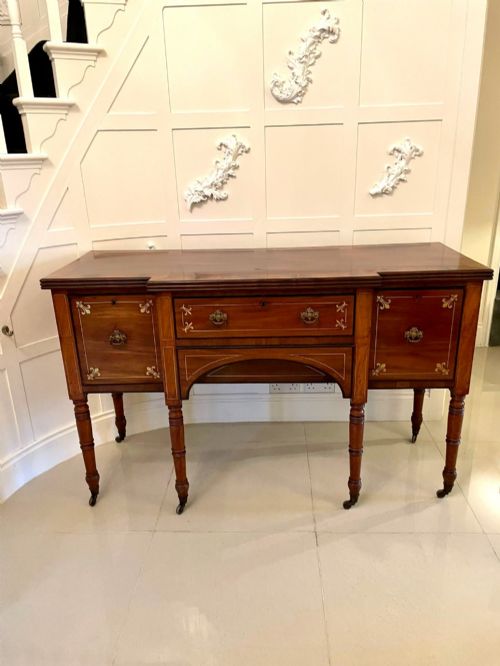
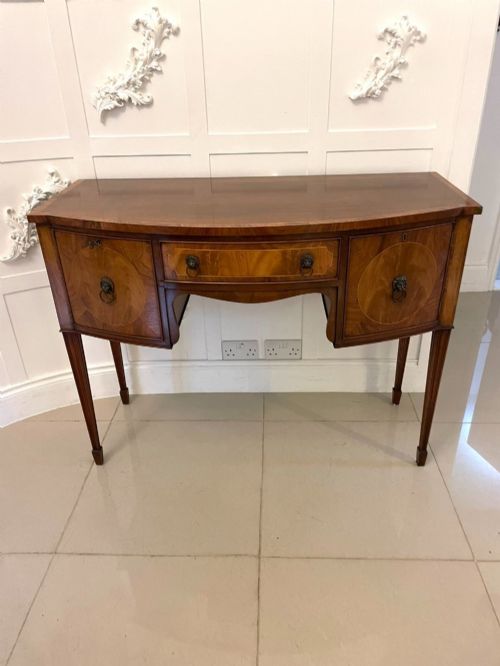
Georgian Inlaid Server
A georgian inlaid server brings formal dining and fine cabinetwork together through rich timber and disciplined lines.
Georgian Inlaid Server
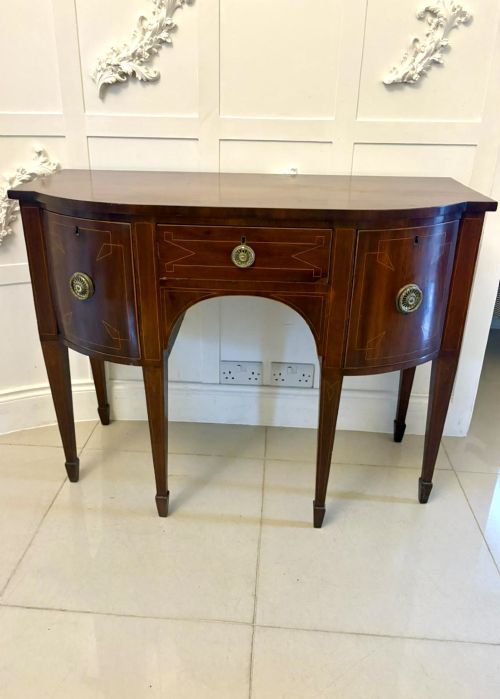
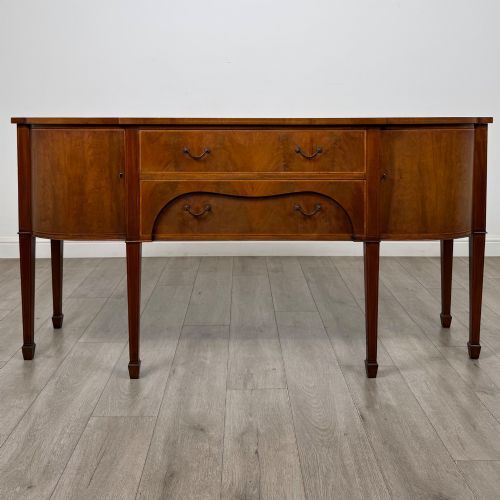
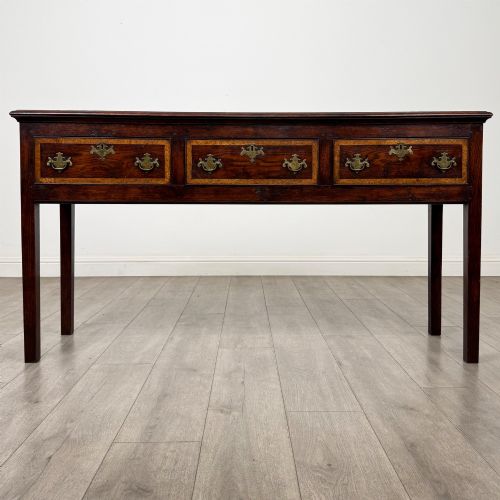
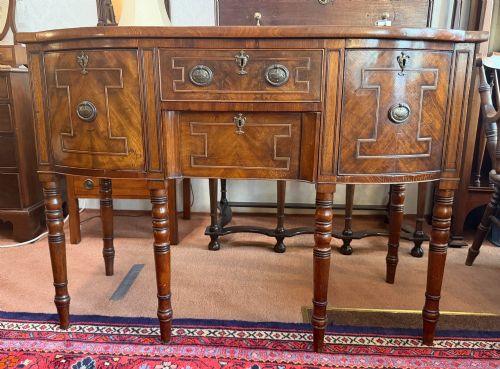
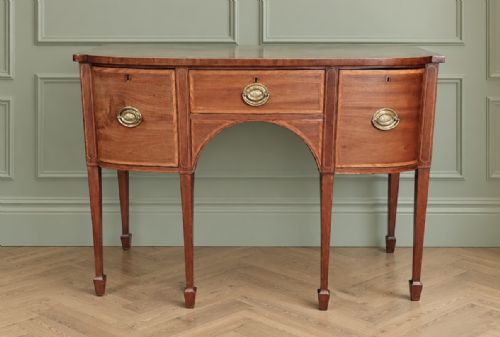
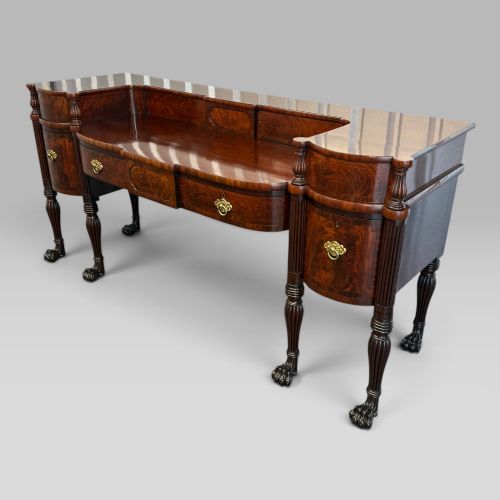
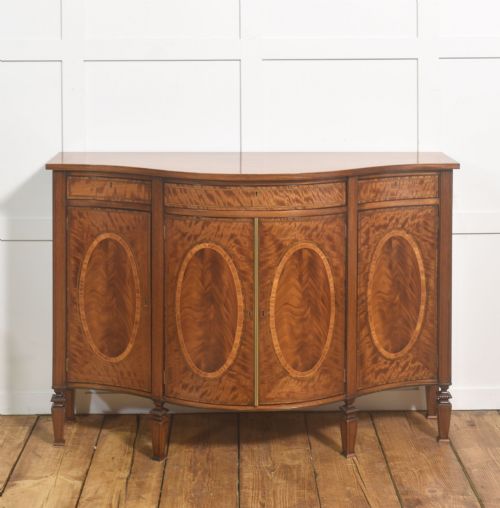
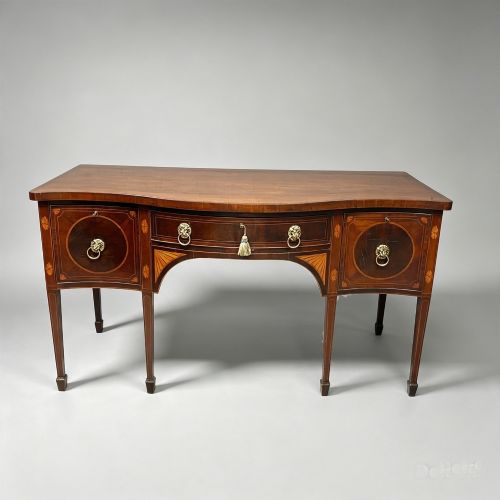
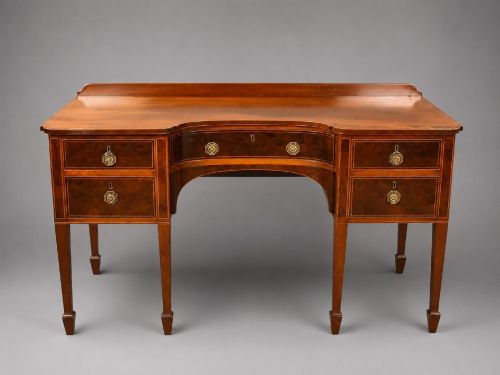
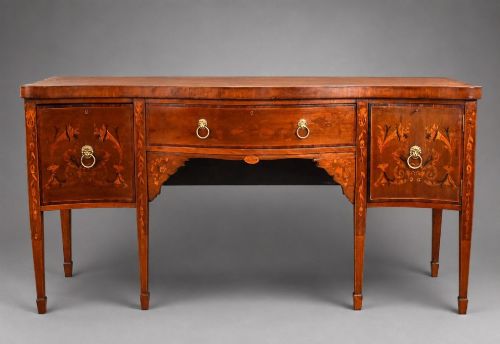
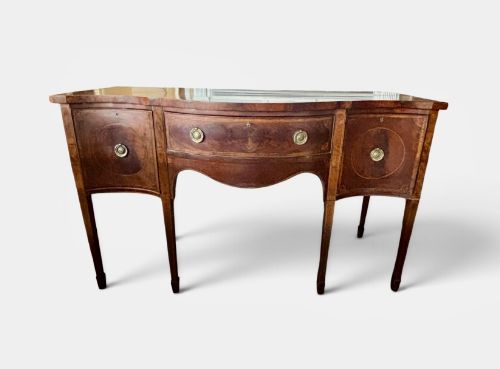
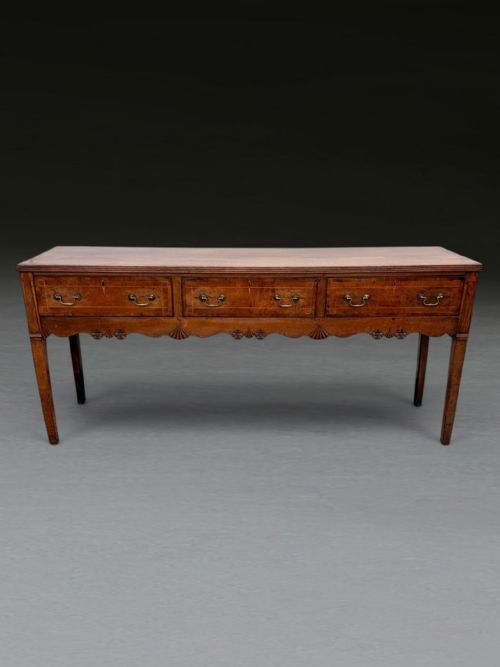
A georgian inlaid server is a dining room storage piece designed to hold serving dishes, cutlery, and glassware during meals. The forms on this page span sideboards, serpentine serving tables, bow-front cabinets, and low dresser bases made during the Georgian, Regency, and Edwardian periods.
Most examples rely on mahogany carcass construction paired with contrasting linear borders and central oval or shell motifs. Makers configured these surfaces with deep cellarette drawers, shallow cutlery compartments, and cupboards hidden behind disciplined facades.
While many date from the original Georgian and Regency eras, the selection also includes later Sheraton Revival interpretations and Edwardian adaptations. These later pieces retain the classic proportions and banded decoration of the eighteenth-century prototypes.
How they were made
Cabinetmakers constructed these servers using solid timber frameworks faced with figured mahogany veneers, flame mahogany panels, and occasional burr elm. Artisans shaped curved fronts and serpentine profiles by working laminated timber or carefully selecting naturally bent stock.
Decoration relied on contrasting stringing and banding applied to borders and drawer fronts. Workshops utilised light satinwood and boxwood inlay set against dark mahogany fields, sometimes incorporating geometric brass stringing or brass lion paw feet.
Some servers hide deep cellarette drawers designed to keep wine bottles cool against lead-lined timber floors.
What varies in quality
Quality reveals itself in the selection of timber figures, where symmetrical flame mahogany and tightly figured satinwood dictate the visual weight of the facade. The crispness of the boxwood stringing and the precision of the mitred joints separate standard utility pieces from high-status commissions.
Structural complexity also defines the grade of a server. Straight bow-fronts appear frequently, whereas complex serpentine profiles and breakfront arrangements demand advanced joinery skills from the workshop that built them.
The Georgian Inlaid Server Glossary
- Serpentine
- A front contour that curves outward at the centre and inwards toward the ends. This sweeping shape requires exceptional skill from the cabinetmaker.
- Bow-front
- A convex, outwardly curved front elevation common on dining room servers. It softens the rigidity of rectangular room corners.
- Inlay
- A technique where contrasting materials are inserted into recessed cavities on a timber surface. Satinwood and boxwood provide pale linear contrast against dark mahogany.
- Cellarette
- A deep drawer or lined compartment built into a sideboard to hold wine bottles. These compartments often feature internal divisions.
- Dresser base
- A lower storage unit featuring drawers and cupboards, originally used in kitchens or dining rooms for food preparation and display.
Georgian Inlaid Server: Frequently Asked Questions
Where did they put a georgian inlaid server?
These pieces stood against dining room walls to hold dishes, silver, and wine during family meals.
Servants used the flat top surface to plate food before it reached the main dining table.
How do I tell an original Georgian server from a revival piece?
Original pieces show period construction methods, timber shrinkage, and hand-cut joints inside the drawers.
Revival versions from the Edwardian era use later machinery marks and standardised hardware while copying eighteenth-century styles.
What is the difference between a sideboard and a serving table?
A traditional sideboard includes built-in cupboards and deep drawers for enclosed storage.
Serving tables offer a lighter frame with an open undertable space and fewer enclosed compartments.
How do I care for a mahogany and satinwood surface?
Keep these timber surfaces away from direct sunlight and sudden radiator heat to prevent veneer lifting.
Apply a light wax polish periodically to maintain the natural lustre of the figured wood.