
18th Century Mahogany Buffet
An 18th century mahogany buffet brings enduring proportion and rich timber tone to a dining room, combining functional storage with classic Georgian design.
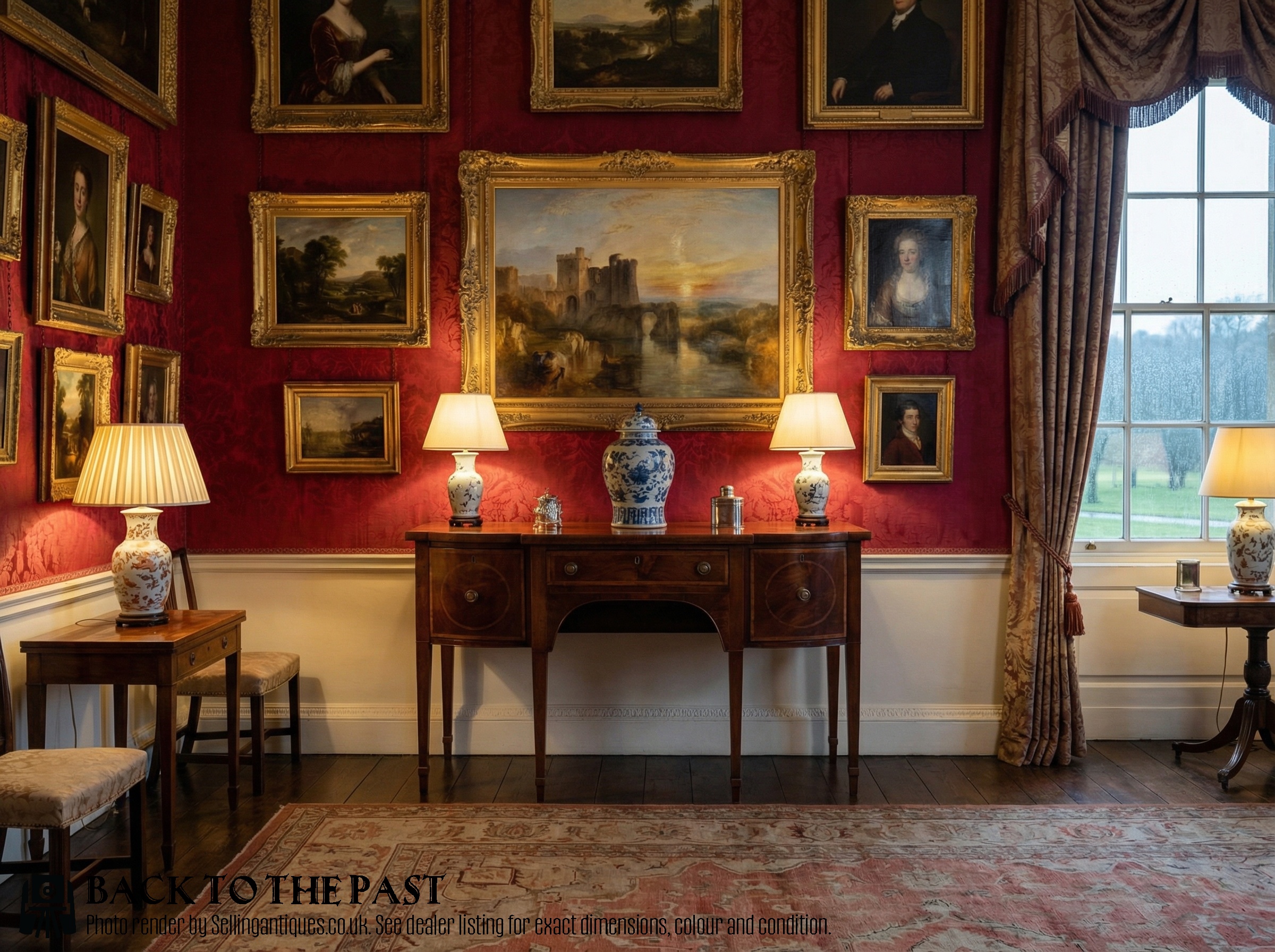
18th Century Mahogany Buffet
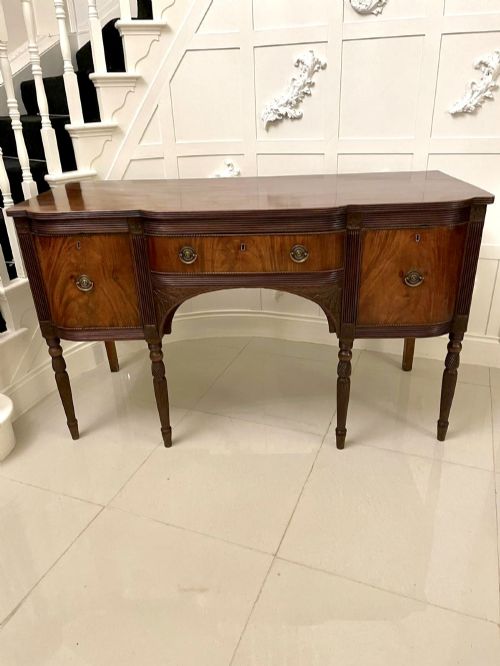
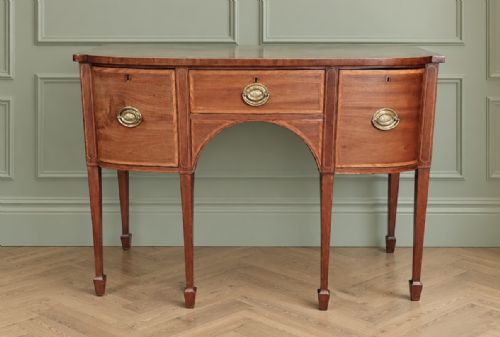
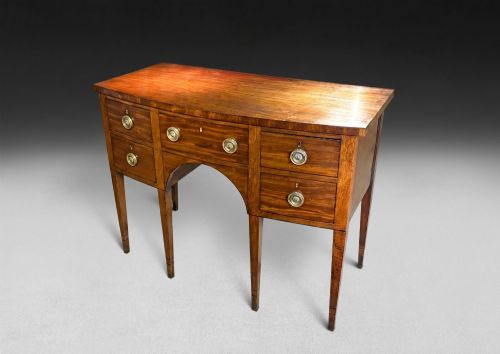
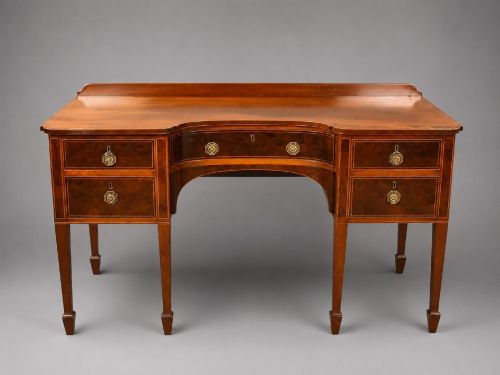
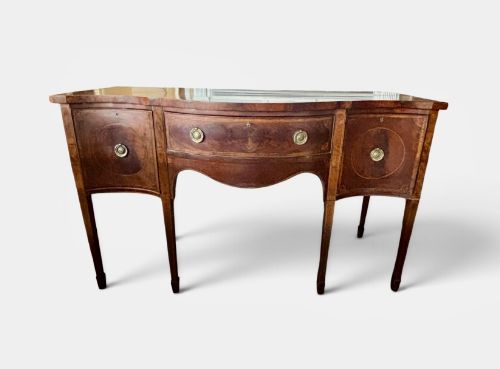
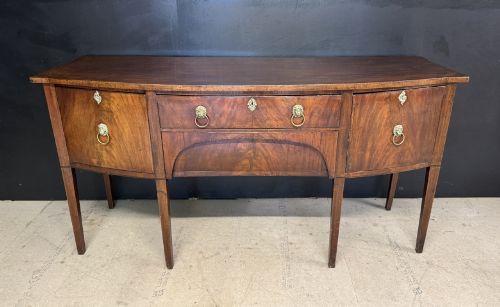
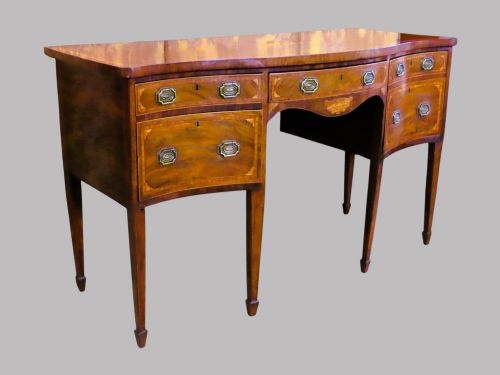
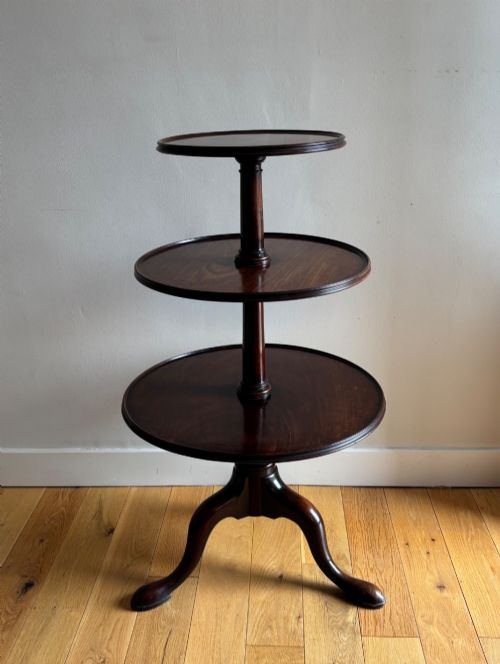
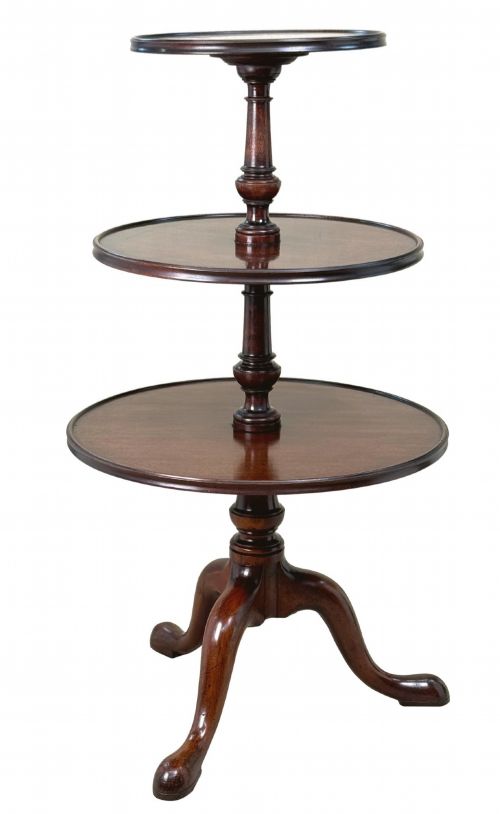
When you search for an 18th century mahogany buffet, you encounter a selection spanning sideboards, serving tables, and tiered dumb waiters from the Georgian era. These forms were designed for formal dining rooms to display silver and serve food.
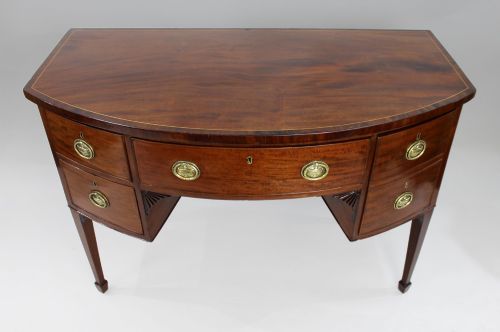
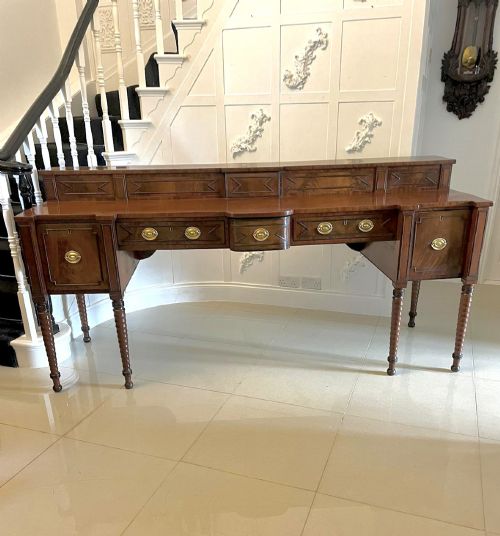
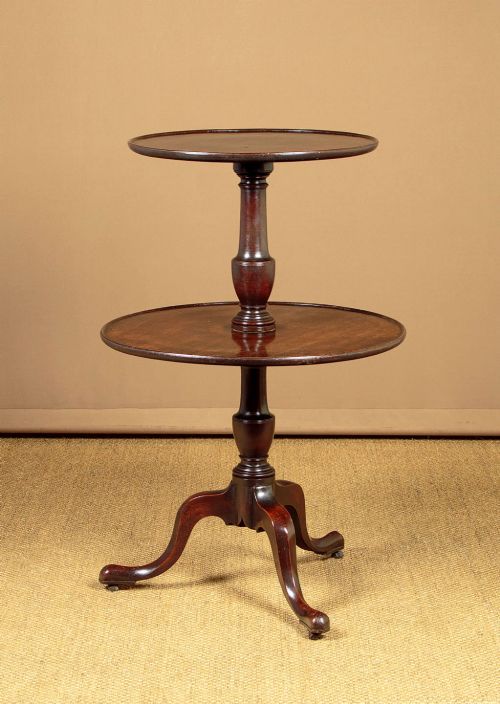
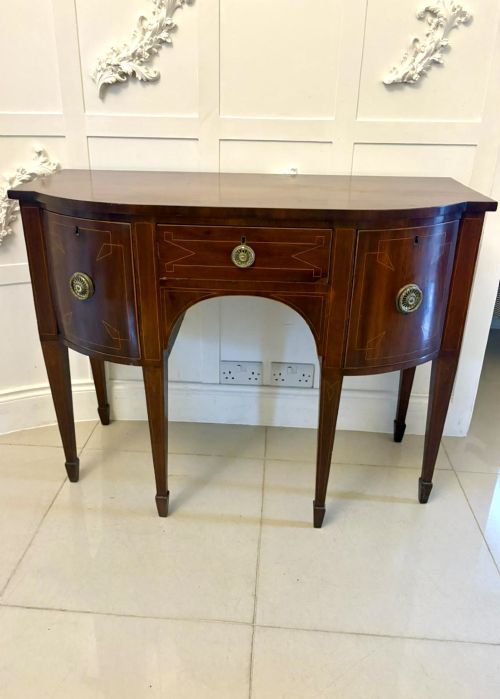
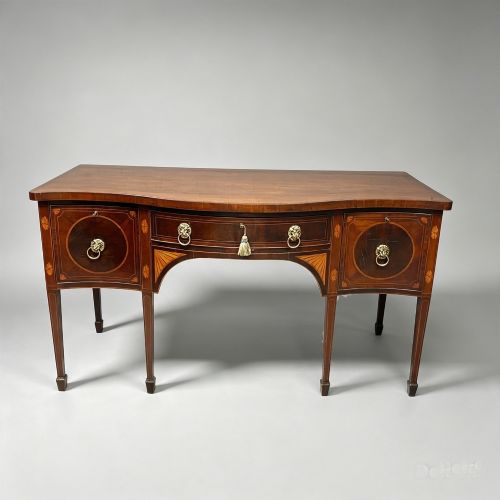
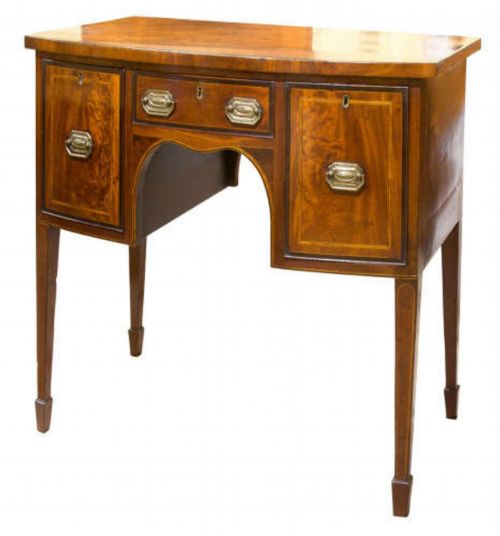
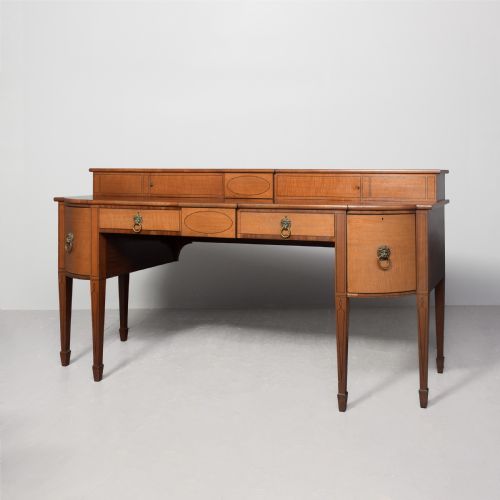
The pieces on this page most frequently appear as George III or Sheraton sideboards featuring straight, bow-front, or serpentine shapes. Alongside these, multi-tiered dumb waiters represent another common form of dining room furniture from the same period.
Materials and Construction
Cabinet makers utilised solid mahogany and flame mahogany veneer over secondary timbers, often selecting figured boards for prominent drawer fronts and tops. Timber choice defined the visual weight and richness of the piece.
Inlay work relied on contrasting timbers such as boxwood and satinwood to create delicate border lines and geometric motifs. Brass hardware, including handles and key escutcheons, completed the construction of these dining room pieces.
Early dining rooms relied on revolving dumb waiters so guests could pass their own cheese and wine without listening to servants gossip.
Factors That Determine Quality
The refinement of the timber figure on the top and drawer fronts separates standard examples from exceptional ones. Highly figured flame mahogany and precise boxwood or satinwood inlay indicate superior craftsmanship.
Proportion and cabinetwork detail also distinguish the range. Sharp execution of serpentine or bow-front curves, alongside well-integrated secondary woods and original brasses, marks the highest tier of Georgian cabinet making.
The 18th Century Mahogany Buffet Glossary
- Serpentine
- A front shape curving gently inward at the centre and outward at the ends, creating a fluid silhouette. This profile requires advanced carpentry skills to execute cleanly on mahogany drawer fronts.
- Bow-front
- A convex curved front that projects outward in a smooth arc. It gained popularity during the late 18th century for sideboards and serving tables.
- Dumb waiter
- A freestanding tiered revolving stand used for holding dishes or glasses during meals. These typically feature two or three graduating circular trays on a central column and tripod base.
- Flame mahogany
- A veneer cut from timber where the grain resembles flickering flames. Cabinet makers prized this figure for its dramatic visual movement.
- Stage-back
- A raised rear superstructure on a sideboard used for displaying plates and serving vessels. This feature appears on larger Scottish examples from the period.
18th Century Mahogany Buffet: Frequently Asked Questions
What is an 18th century mahogany buffet used for?
These pieces served dining rooms as surfaces for carving joints, holding silver, and staging courses before serving.
Today, they function as sideboards in dining spaces or as statement storage units in living rooms.
How do I identify a George III sideboard?
George III sideboards typically display refined proportions, often incorporating straight, bow-front, or serpentine outlines.
They frequently feature mahogany construction with subtle boxwood or satinwood inlay lines dating from the second half of the 18th century.
What is a dumb waiter?
A dumb waiter is a tiered piece of dining furniture featuring multiple circular revolving trays supported by a central pillar.
Georgian dining rooms used them to place extra dishes and wine within reach without needing servants present.
What is flame mahogany veneer?
Flame mahogany is a highly figured wood veneer displaying a pattern that mimics dancing flames.
Cabinet makers in the 18th century applied these decorative veneers to drawer fronts to catch the light and add visual depth.