

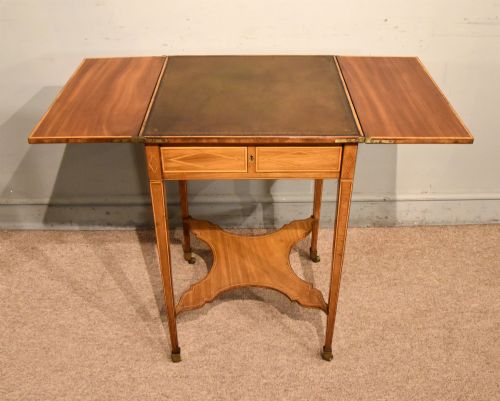
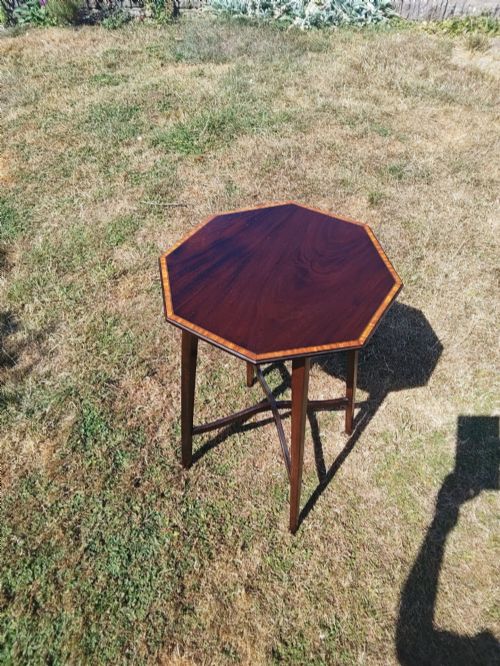
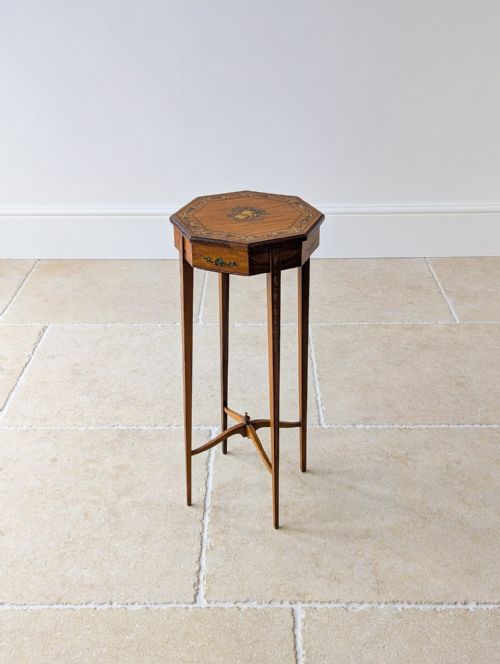
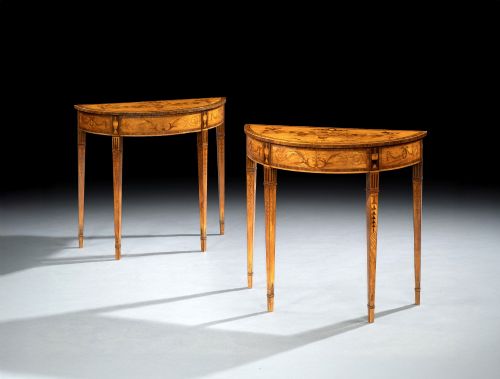


Sheraton Inlaid Side Table
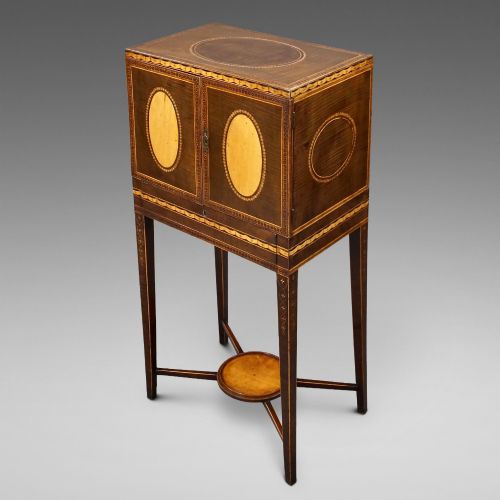
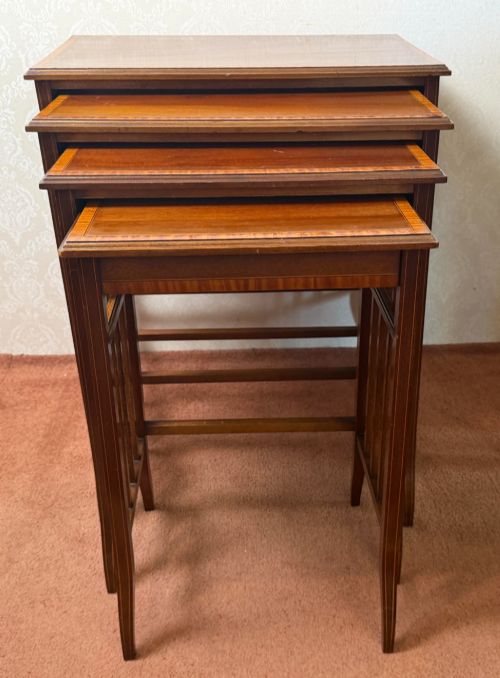
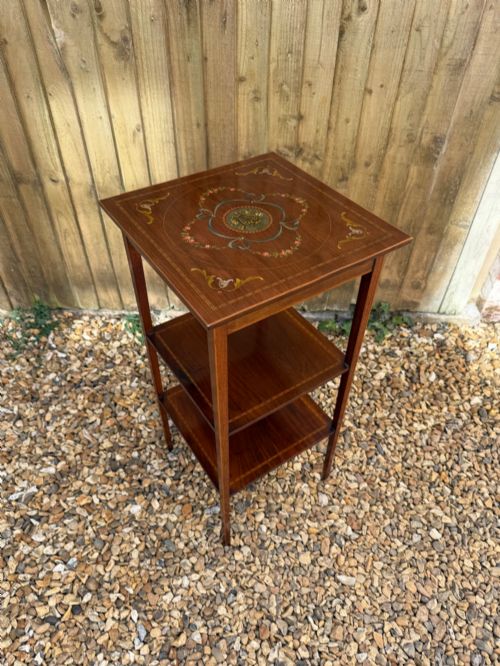
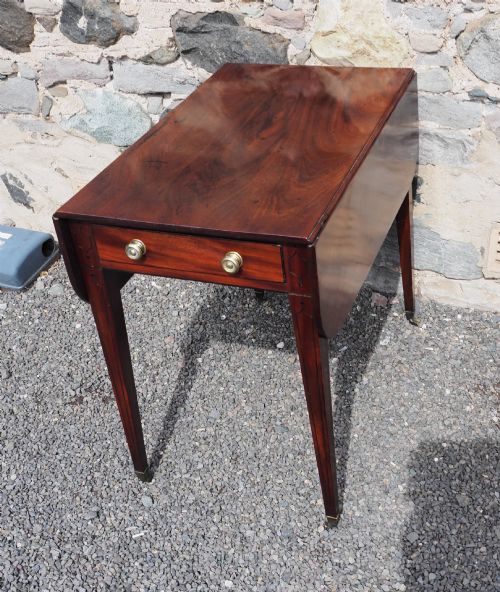
These sheraton inlaid side table examples bring refined neoclassical lines and subtle banded veneers into a room with understated grace.
Sheraton Inlaid Side Table
A sheraton inlaid side table embodies the lighter, more restrained neoclassical aesthetic of the late eighteenth and early nineteenth centuries, alongside later revivals. Buyers seeking this phrase encounter authentic Georgian and Regency pieces alongside Edwardian interpretations built around nineteen hundred.
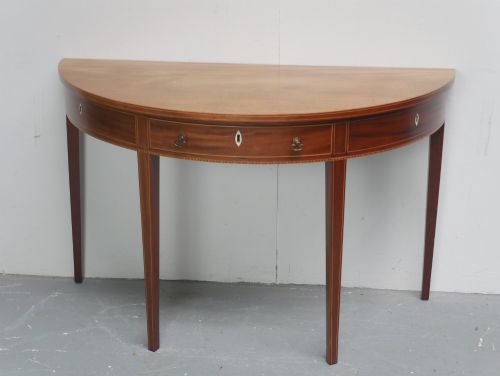
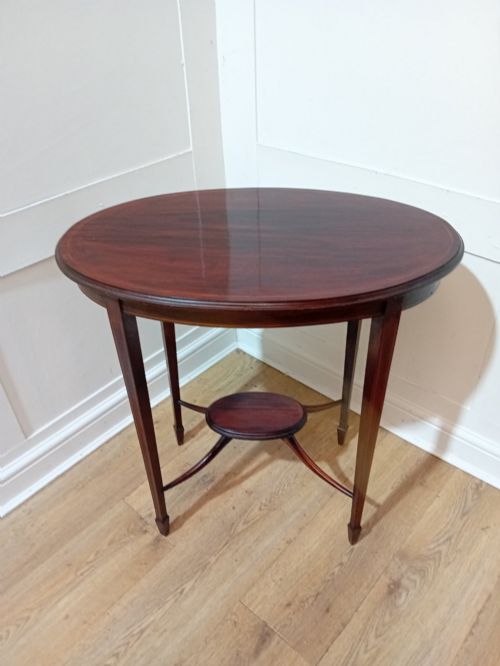
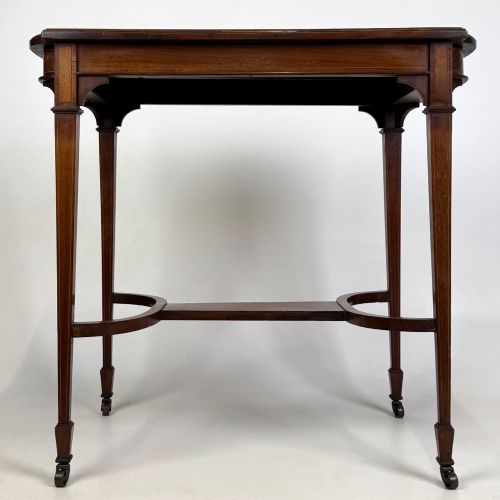
The form spans straightforward side tables, pembroke tables, demi-lune consoles, and occasional tables designed for domestic utility and display. Most pieces on the market rely on mahogany carcases enriched with contrasting wood elements and symmetrical proportions.
Origins stretch from eighteenth-century workshops to Edwardian cabinet makers adopting the revival style, meaning buyers navigate a mix of period originals and later reinterpretations.
Materials and Technique
Makers built the primary carcase using solid mahogany and accented the surfaces with satinwood, rosewood, and harewood veneers. Boxwood and satinwood inlay create crisp geometric borders, stringing, and marquetry motifs that define the decorative vocabulary.
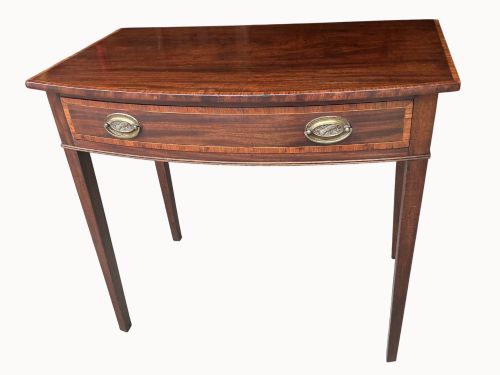
Craftsmen applied contrasting crossbanding around the perimeters of tabletops and drawer fronts to frame the grain of the primary timber. Square tapered legs provide the characteristic support, often detailed with delicate stringing to echo the top.
Secondary timbers such as oak or pine appear in drawer linings and internal framing, reflecting period workshop practices across both Georgian originals and later Edwardian reproductions.
Some drop-leaf sewing tables include internal compartments designed to keep stray cotton reels from rolling away during polite afternoon work.
The Measure of Quality
Quality rests on the depth of figure in the primary mahogany and the precision of the contrasting inlay work. Superior examples exhibit tightly fitted veneers with seamless junctions where boxwood and satinwood meet the ground timber.
The integrity of the construction shows in the crispness of the tapered legs and the retention of original brass hardware or subtle edge detailing. Finer pieces demonstrate a harmony between proportion and decoration without appearing overcrowded with ornament.
The Sheraton Inlaid Side Table Glossary
- Crossbanding
- A strip of veneer applied to the edge of a tabletop running perpendicular to the grain of the main surface. This technique frames the centre panel and protects the exposed edges.
- Marquetry
- A decorative technique arranging pieces of veneer into pictorial or geometric patterns on a wooden ground. It differs from inlay by covering the entire surface rather than resting within routed channels.
- Stringing
- Thin, narrow lines of contrasting wood inlaid into grooves on table legs or tabletops. It provides a linear border that enhances the geometric clarity of the design.
- Demi-lune
- A half-moon shape utilised for console and side tables designed to stand flush against a wall. These pieces frequently feature folding leaves or curved drawer fronts.
- Pembroke table
- A small rectangular table with hinged drop leaves on either side supported by pivoting brackets. They often include a single drawer and were easily moved about a room.
Sheraton Inlaid Side Table: Frequently Asked Questions
How do I identify a period piece?
Examine the secondary timbers inside the drawer box and look for hand-cut dovetails consistent with eighteenth or nineteenth-century workshop methods. Wear patterns on the feet and the mellow oxidation of the mahogany also indicate age.
Compare the style of the inlay and the weight of the timber against known Georgian or Regency examples. Later Edwardian revivals often display lighter secondary woods and machine-finished components beneath the surface veneers.
Where should I place a side table?
These tables suit hallways, drawing rooms, or bedrooms where a shallow footprint is required. A demi-lune version fits neatly against a blank wall, while a pembroke table works well beside a sofa.
Keep them away from direct sunlight and excessive heat sources to protect the delicate satinwood and boxwood veneers from drying out and lifting.
What is the difference between original and revival?
Original pieces date from the late eighteenth or early nineteenth centuries during the height of the neoclassical movement. They carry the patination and structural quirks of period workshop production.
Revival pieces date primarily from the Edwardian era around nineteen hundred, when makers deliberately copied earlier neoclassical forms using contemporary machinery and slightly different secondary woods.
How do I care for inlaid surfaces?
Dust the surface regularly with a soft, dry cloth and avoid using modern silicone-based sprays or harsh chemical polishes. Traditional beeswax applied sparingly maintains the lustre of the mahogany and nourishes the dry veneer.
Maintain a stable room humidity to prevent the thin boxwood stringing and satinwood borders from expanding and cracking away from the main carcase.