

18th Century Satinwood Table
An 18th century satinwood table brings a luminous yellow timber grain and refined neoclassical lines into a room, offering both practical surface space and subtle cabinetwork.
18th Century Satinwood Table
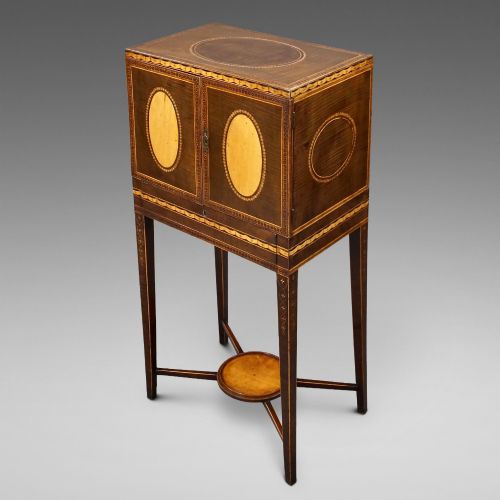
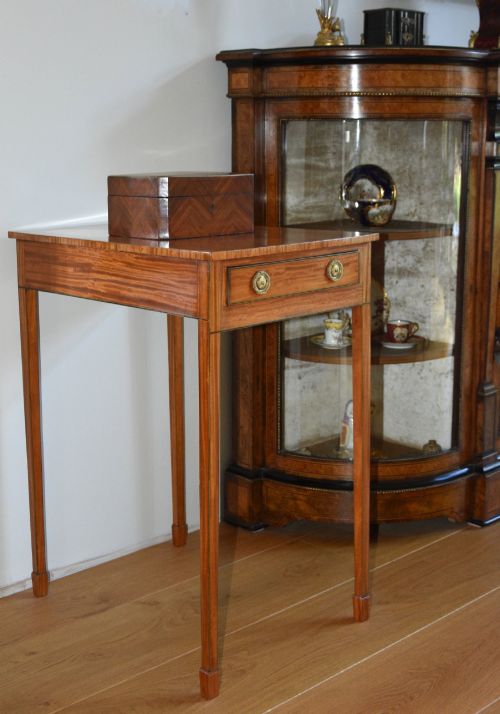
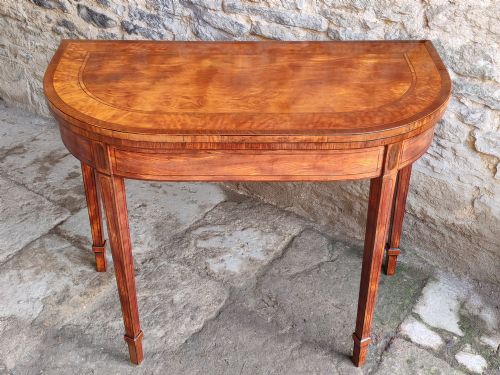
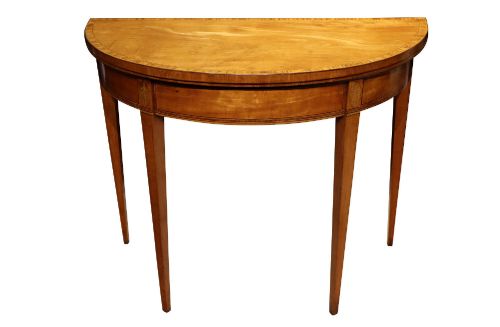
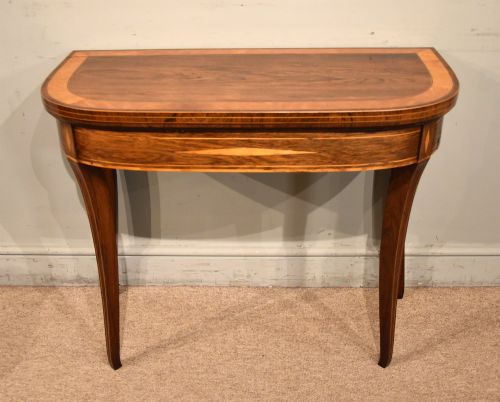
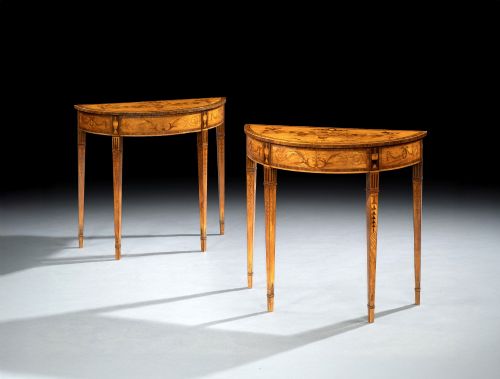
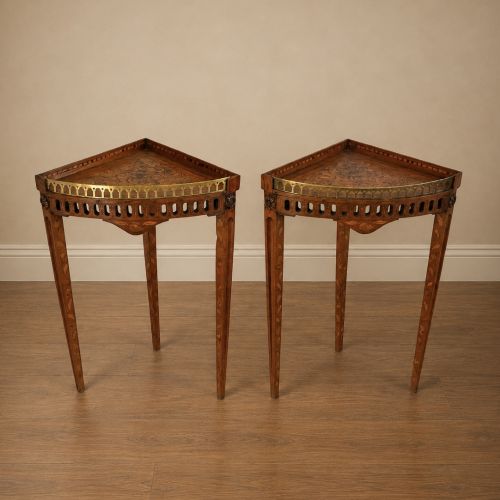
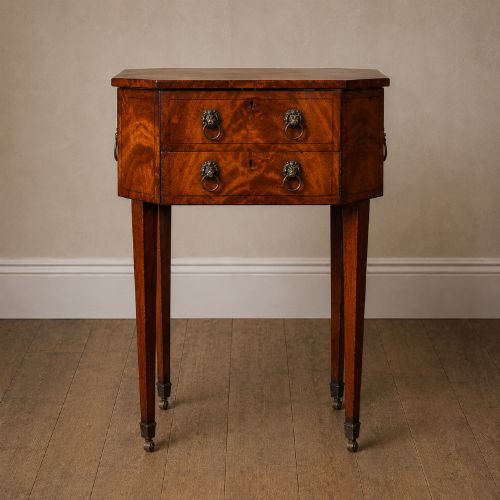
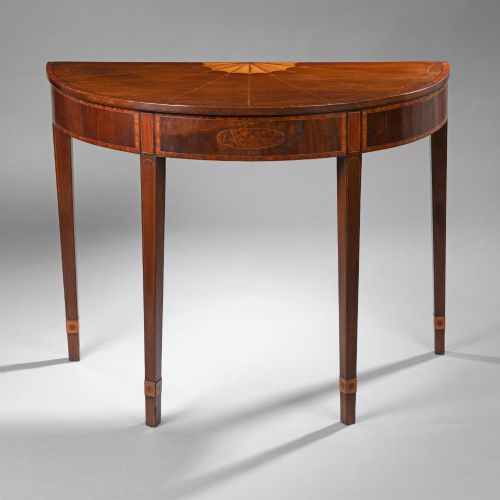
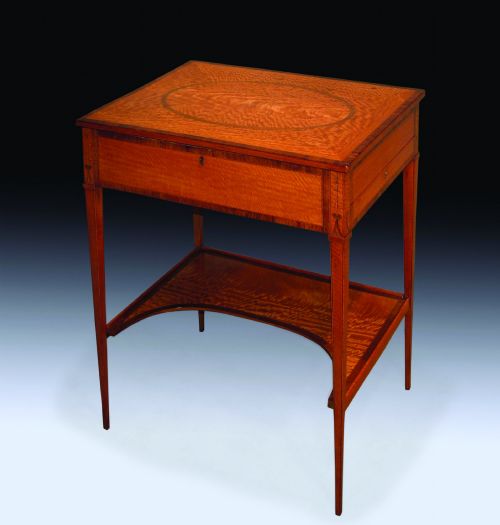
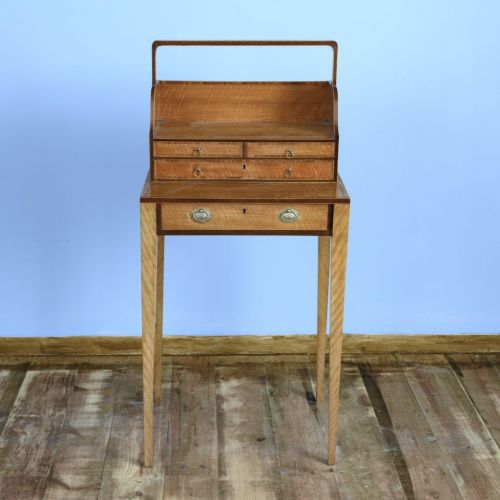
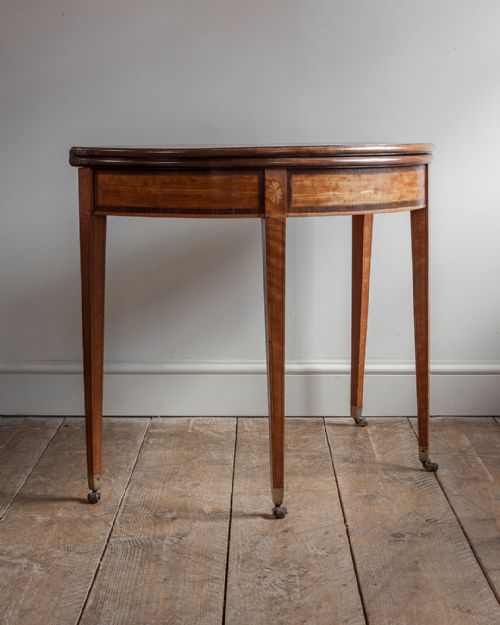
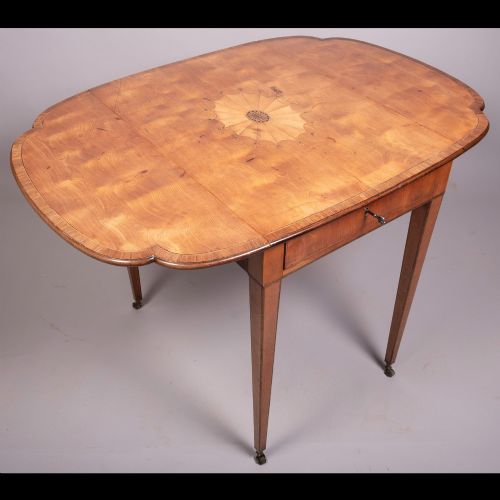
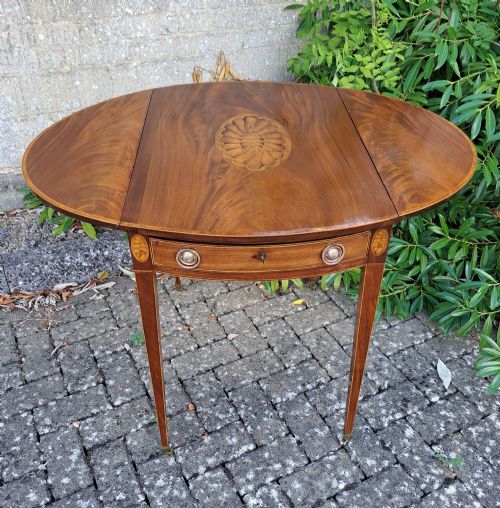
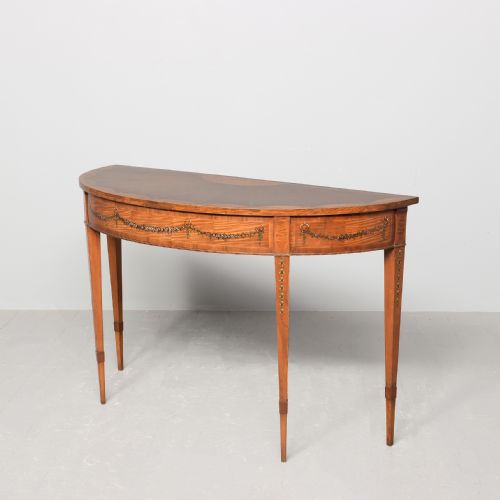
When searching for an 18th century satinwood table, buyers encounter a variety of forms designed for polite society, including Pembroke tables, card tables, and semi-circular demi-lune console tables. These surfaces served specific social functions in Georgian drawing rooms and parlours, from folding over for games of cards to providing a steady ledge for tea or needlework.
The versions most commonly met on this page date from the George III and Sheraton periods, often displaying the characteristic half-moon shape or drop leaves of late-eighteenth-century domestic furniture. Alongside the primary satinwood timber, many examples incorporate contrasting banded woods and painted decorations that typify neoclassical taste.
How they were made
Cabinetmakers constructed these pieces using a foundation of solid timber or pine carcases faced with figured satinwood veneers, which were selected for their natural golden sheen and mottled grain. Crossbanding in darker woods such as mahogany, rosewood, or harewood framed the primary satinwood panels to create sharp visual borders.
Intricate decoration relied on marquetry and inlay using boxwood and fruitwoods to render floral swags, shells, or geometric stringing lines. Painted surfaces also appear, where delicate motifs are applied directly to the pale timber ground.
Listings on this page combine satinwood with mahogany, rosewood, and boxwood across Pembroke, card, and demi-lune table forms.
What varies in quality
The standard of an 18th century satinwood table depends heavily on the choice and matching of the veneer timbers across the top surface, where master makers arranged grain patterns symmetrically to create visual depth. Inferior pieces often utilise plain, poorly matched timber with little natural chatoyancy or active figuring.
The precision of the marquetry and inlay work dictates the upper tier of craftsmanship, separating crisp, sharply defined boxwood lines from blurred or poorly fitted botanical motifs. Original hardware, such as brass drop handles or inlaid paterae, further distinguishes high-workshop production from later alterations.
Gillows of Lancaster·Thomas Shearer·Donald Ross
The 18th Century Satinwood Table Glossary
- Crossbanding
- A border of veneer laid with the grain running perpendicular to the main panel, used to frame table tops and drawer fronts. This technique provides a neat visual contrast against the central satinwood grain.
- Demi-lune
- A half-moon shape with a flat back and a curved front, frequently seen in card tables and serving tables designed to stand flat against a wall. This form became particularly fashionable during the neoclassical period.
- Marquetry
- The art of forming decorative patterns using thin veneers of different coloured woods, ivory, or shell fitted together into a single panel. It differs from inlay by assembling the pattern before gluing it to the carcase.
- Pembroke table
- A small, versatile table featuring two hinged drop leaves on opposing sides and frequently a single drawer beneath the top. It was easily moved around a room for writing, breakfast, or needlework.
- Stringing
- A thin, linear inlay of contrasting wood inserted into grooves cut into the primary timber to outline edges or panels. It provides a delicate border that accentuates the geometric shape of the furniture.
18th Century Satinwood Table: Frequently Asked Questions
How were card tables used?
Card tables remained folded against the wall when not in use, displaying the decorative satinwood veneer on their tops. When guests arrived, the hinged top unfolded to reveal a baize-lined playing surface supported by a swing leg.
These surfaces accommodated evening games such as whist or ombre in polite society. Afterward, servants folded the top back down and returned the table to its perimeter position.
Why is satinwood so pale?
Satinwood is a dense tropical hardwood native to India and Ceylon, prized for its natural yellow colour and reflective, chatoyant grain. Unlike darker mahoagny or walnut, the pale timber allowed cabinetmakers to create bright, luminous surfaces that suited late-eighteenth-century interiors.
Over time and with exposure to light, genuine period satinwood deepens to a rich honey tone while retaining its distinctive golden shimmer. This natural ageing process helps distinguish eighteenth-century pieces from later reproductions.
Can I use a Pembroke table daily?
Pembroke tables offer practical utility through their hinged drop leaves and central drawer, making them adaptable as writing desks or side tables. The sturdy construction of period pieces allows for gentle everyday use in modern settings.
Care should be taken to protect the polished veneer surface from direct heat, moisture, and heavy impacts. Using coasters and placing the table away from direct sunlight will preserve the delicate satinwood finish.
How do I spot a Georgian piece?
Georgian furniture is identified through a combination of structural proportions, timber selection, and decorative styles characteristic of the eighteenth century. Pieces from this era often feature neoclassical motifs such as bellflowers, urns, and tapered legs.
Examining the underside and drawer linings reveals secondary woods like oak or pine, alongside hand-cut dovetail joints typical of period construction. Comparing these construction details against documented regional styles helps confirm the era.