


Satinwood Inlaid Dressing Table
A satinwood inlaid dressing table brings light and refined woodwork into a room, combining practical surface space with delicate craftsmanship from past centuries.
Satinwood Inlaid Dressing Table
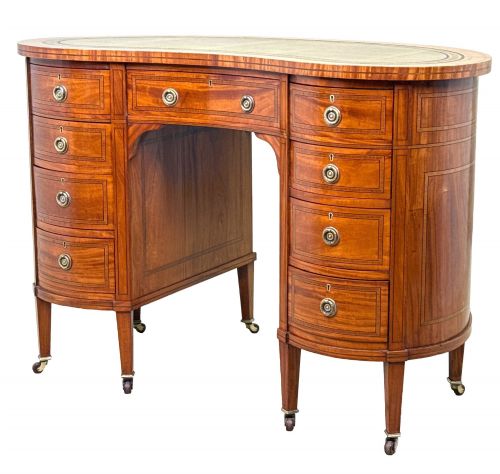
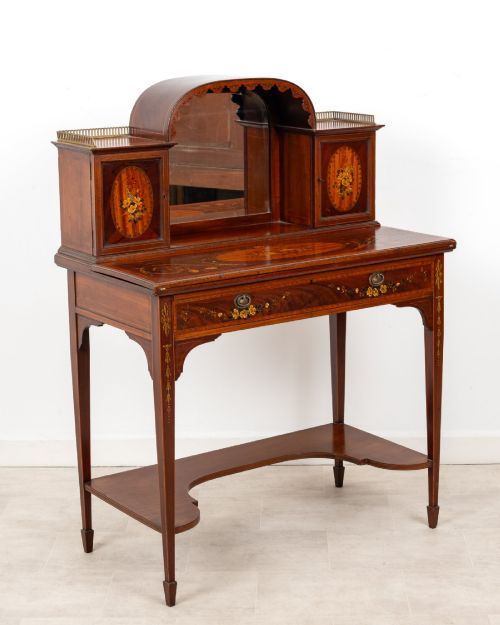
A satinwood inlaid dressing table is a surface designed for personal grooming and writing, most frequently encountered in Edwardian and Victorian forms on this page. These pieces often feature harmonious combinations of mahogany banded with satinwood, alongside integrated mirrors and small drawers for storage.
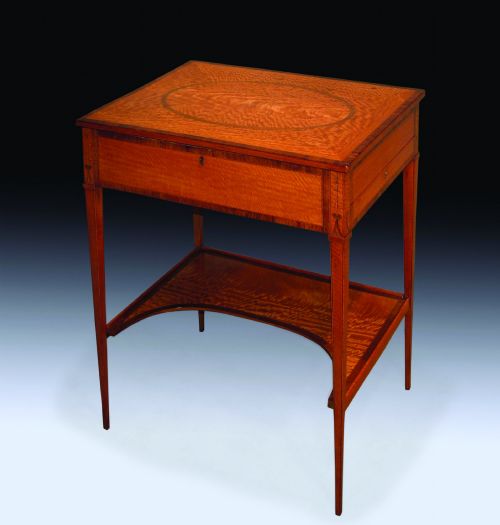
Beyond standard dressing tables, the selection includes related forms like kidney-shaped desks, toilet mirrors, and occasional tables bearing similar decorative veneers. Examples span from the eighteenth-century Georgian period through to the early twentieth century, showing shifting tastes in domestic furniture.
How they were made
Cabinet makers utilised dense timbers like mahogany as a structural base, applying pale satinwood veneers across the surfaces to create striking visual contrast. Fine inlay work, including floral marquetry and contrasting banding in tulipwood or rosewood, was meticulously hand-cut and fitted into the primary wood.
Glass was utilised for tilting mirrors supported by upright frames, while brass hardware fitted the drawer pulls and pivoting mechanisms. Traditional joinery methods ensure the stability of these multi-drawer carcasses and delicate leg supports.
Listings feature Edwardian, Victorian, and Georgian eras, showcasing materials such as satinwood, mahogany, brass, and glass.
What varies in quality
The standard of a satinwood inlaid dressing table depends largely on the precision of the cabinet work and the crispness of the contrasting veneers. Superior examples display seamless geometric banding and intricate marquetry that remains flush with the surrounding timber.
Proportion and the handling of secondary woods also separate standard production items from finer workshop pieces. Better items maintain balanced proportions across mirrors, drawers, and leg supports, reflecting thoughtful design during manufacture.
James Shoolbred of London·Edwards and Roberts·Maple and Co.·Gillows·Collinson and Lock
The Satinwood Inlaid Dressing Table Glossary
- Satinwood
- A lustrous, hard timber native to Ceylon and the West Indies with a natural golden sheen. It provides a pale, reflective surface ideal for contrasting stringing and detailed veneer work.
- Marquetry
- An elaborate decorative technique arranging pieces of veneer into pictorial or geometric patterns. Craftsmen apply these thin wood slices to furniture surfaces to create intricate ornamentation.
- Bandings
- Narrow strips of contrasting timber applied around the borders of table tops and drawer fronts. This framing technique highlights the primary grain of the wood.
- Kidney-shaped
- Describing a writing desk or table curved inward along one long edge to fit the user. This curved profile requires specialised joinery for the surrounding drawers.
- Toilet mirror
- A smaller tabletop glass set into a pivoting frame above miniature drawers. These moveable looking glasses frequently accompany dressing chests and side tables.
Satinwood Inlaid Dressing Table: Frequently Asked Questions
How do I clean satinwood furniture?
Dust surfaces regularly with a soft, dry cloth to prevent dirt accumulation on the veneer. Avoid chemical sprays and excessive moisture which can damage polished timber finishes.
Apply a quality beeswax polish sparingly when the wood appears dry, buffing gently to maintain the natural sheen of the satinwood.
Are these dressing tables suitable for modern use?
These pieces function well as compact writing desks or console tables in contemporary bedrooms and hallways. Their integrated drawers offer practical storage for everyday small items.
Protect the veneered surfaces from direct heat and damp objects by using coasters or desk mats during daily use.
How do I distinguish Edwardian pieces from Victorian ones?
Edwardian examples tend to display lighter framing, brighter satinwood veneers, and refined Neoclassical Revival motifs. They often draw inspiration from Sheraton designs with delicate painted or inlaid details.
Victorian pieces frequently utilise heavier proportions, deeper tones of mahogany, and occasionally bolder Aesthetic movement styling within the woodwork.
Can the mirrors be removed safely?
Most dressing table mirrors attach via pivot screws on upright wooden arms secured to the main tabletop. These can be unscrewed carefully if the mirror needs to be detached for transport.
Retain all original brass fixings and washers during any dismantling process to preserve the mounting integrity of the glass.