





Sheraton Games Table
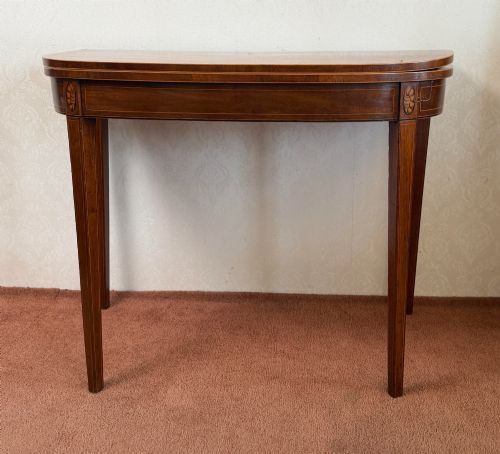
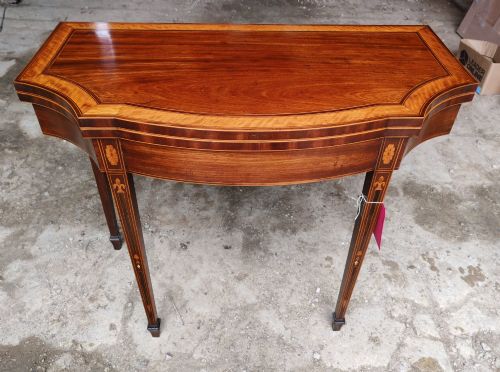
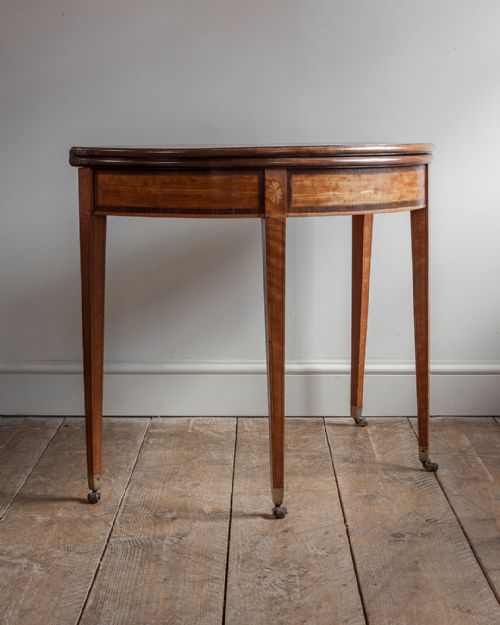
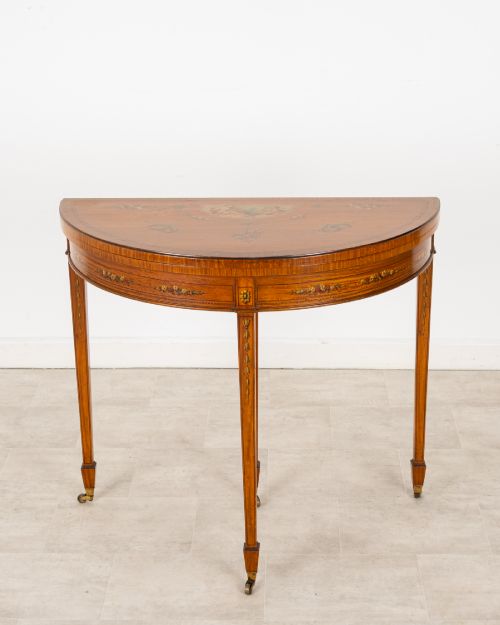
A sheraton games table is a refined folding piece designed for evening entertainment, combining delicate timbers with balanced proportions.

Sheraton Games Table
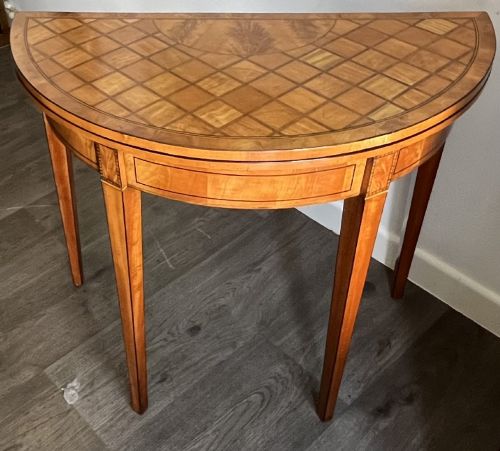
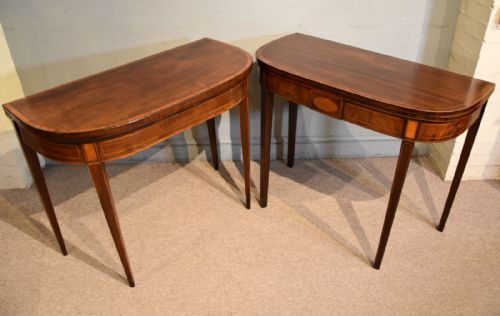
A sheraton games table bridges utility and elegance, appearing frequently in card, tea, and demi-lune forms across Georgian, Regency, and Edwardian periods. These tables rely on clever fold-over leaves or rotating tops to transform from console surfaces into playing baize-lined boards. Examples range from authentic late eighteenth-century George III pieces to later nineteenth-century Sheraton Revival interpretations.
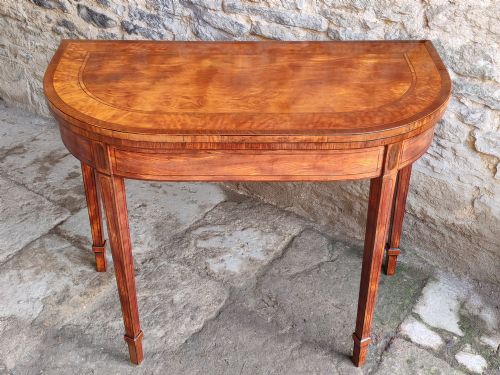
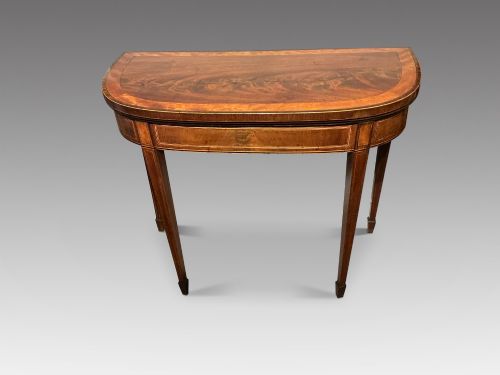
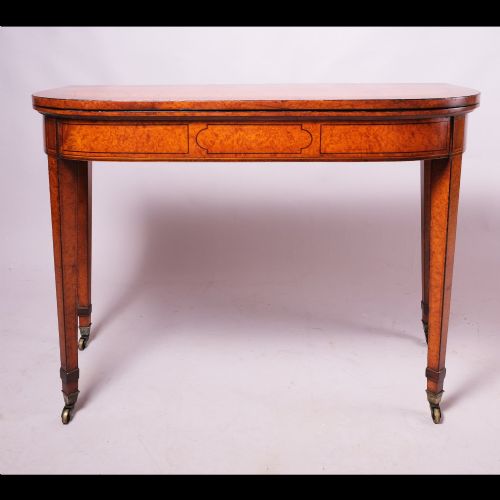
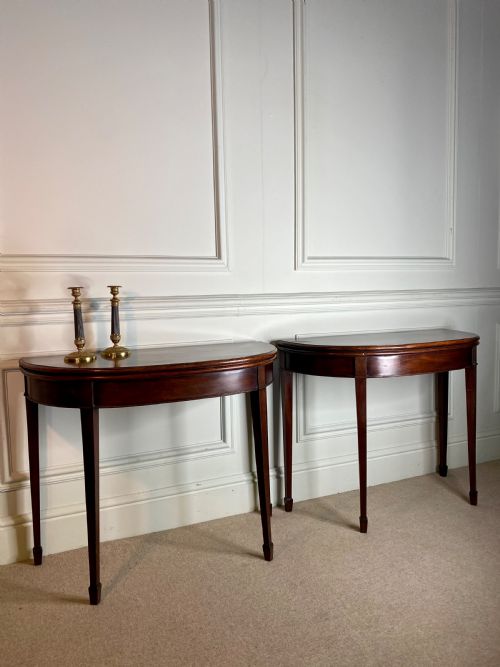
Makers utilised characteristic demi-lune, rectangular, and serpentine shapes supported by slender tapered legs. Buyers encounter both mahogany structures and lighter satinwood finishes, often enhanced by contrasting boxwood or ebony stringing. The object served upper-class drawing rooms where sociable pastimes demanded adaptable furniture.

Materials and construction
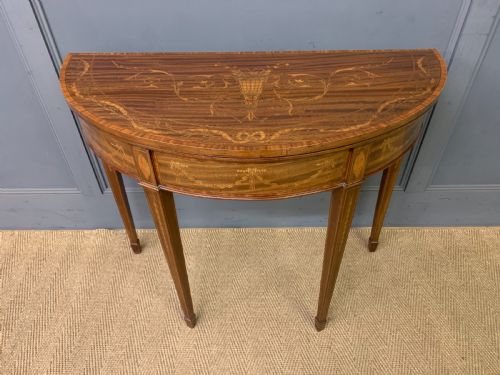
Cabinetmakers constructed these tables primarily using figured mahogany or pale satinwood, sometimes incorporating rosewood and amboyna veneers. Tops frequently display carefully matched timber grains across the foldover leaf, supported by pivoted rear legs. Inlaid marquetry, painted decoration, and boxwood or ebony stringing define the surface enrichment.
The joinery employs precise hinge mechanisms and folding brackets to support the heavy weight of the opening leaf. Frame structures rest upon delicate tapering spade feet or cylindrical turned supports typical of the style. Brass hinges and subtle locks secure the folded top when not in use.
Sheraton Games Table Retail Price Guide 2026
Typical asking prices for sheraton games table among the pieces listed under this phrase on Sellingantiques today, from the lower quarter to the upper quarter. They describe what is for sale here now, not the wider market.
One Edwardian games table includes the Royal and Pleasant Game of Goose printed directly onto the folding board.
What separates the best examples
Quality rests upon the choice of timber and the precision of the marquetry or painted decoration on the top. Superior tables display highly figured mahogany or intricate satinwood and marquetry inlay that remains crisp and undisturbed across the fold. Lesser examples rely on plain timber surfaces with minimal decorative detailing.
The integrity of the pivoting mechanism and the alignment of the folding leaf dictate structural success. Master workshops achieved seamless joints where the top closes flush, whereas simpler production shows minor gaps or heavy-handed modern repairs to the hinges and timber edges.
Howard And Son's
The Sheraton Games Table Glossary
- Demi-lune
- Semi-circular in shape. This profile allowed tables to stand flush against a drawing-room wall before opening into a full circle for card games.
- Foldover
- A hinged tabletop construction. The top leaf rotates or folds out to reveal a baize-lined playing surface.
- Marquetry
- Decorative patterns formed from fitted veneer slices. Artisans used various coloured woods to create floral or geometric motifs on the table surface.
- Stringing
- Thin inlaid lines of contrasting timber. This linear detail outlines the edges and legs of furniture to create visual definition.
- Sheraton Revival
- A late nineteenth and early twentieth-century style imitating original eighteenth-century designs. These pieces adopt classic proportions while using later manufacturing methods.
Sheraton Games Table: Frequently Asked Questions
How do I use a folding games table?
The top leaf rotates on a central pivot or lifts on hinges to unfold flat, supported by a swing leg that swings out from the rear frame.
Once opened, the surface reveals a baize or leather playing area intended for card games or social pastimes.
Where should I place a demi-lune table?
A demi-lune table fits flat against a wall as a side or console table when closed, making it ideal for hallways or drawing rooms.
Pulling the table into the centre of the room allows the leaf to open fully for evening gatherings.
What timbers were used for these tables?
Primary construction relies heavily on figured mahogany and bright satinwood, occasionally featuring rosewood or amboyna.
Details are accented with boxwood, ebony stringing, and delicate painted motifs across the top.