
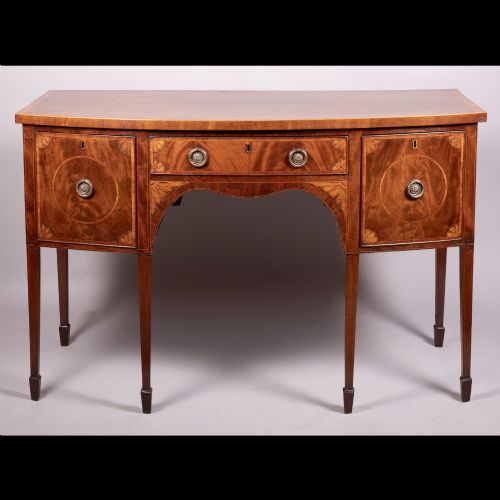


Sheraton Bow Front Sideboard
A sheraton bow front sideboard brings elegant curved lines and refined classical proportions to a dining room or hallway.
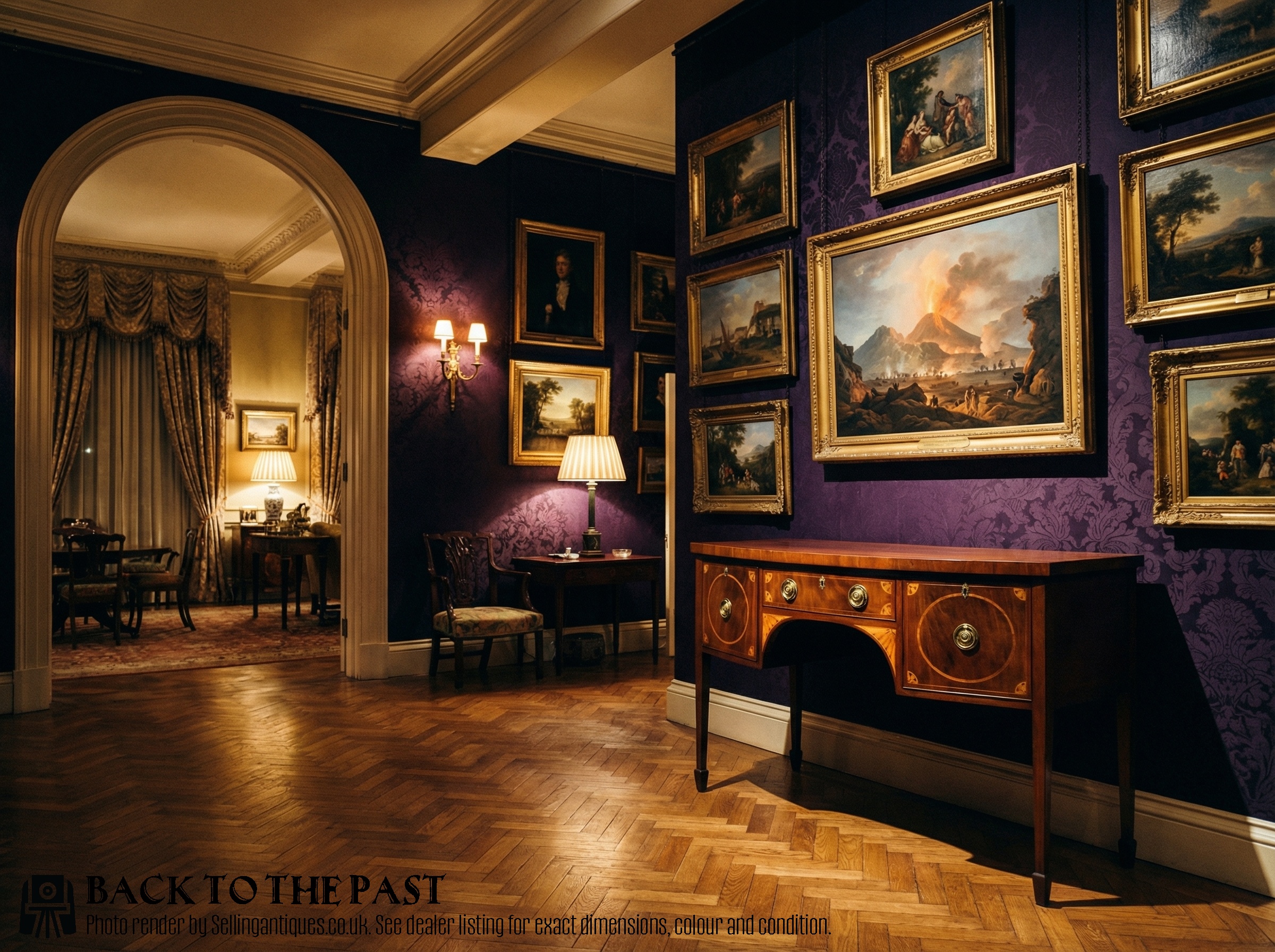
Sheraton Bow Front Sideboard
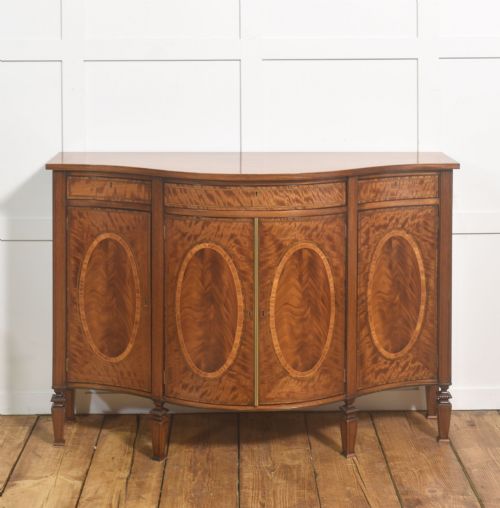
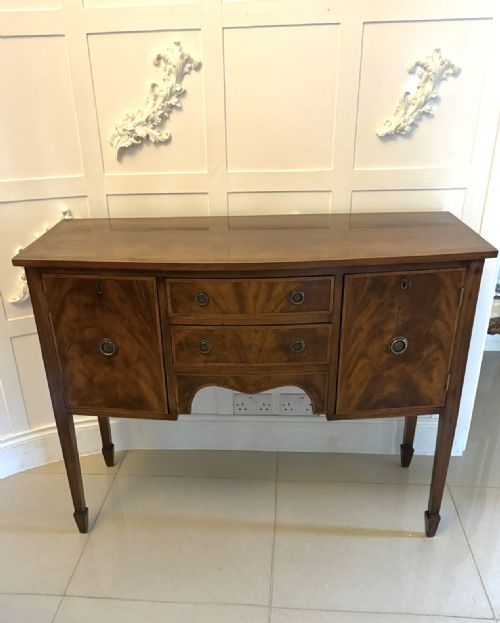
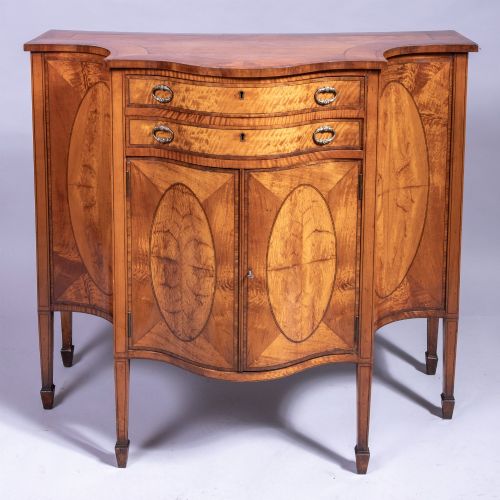
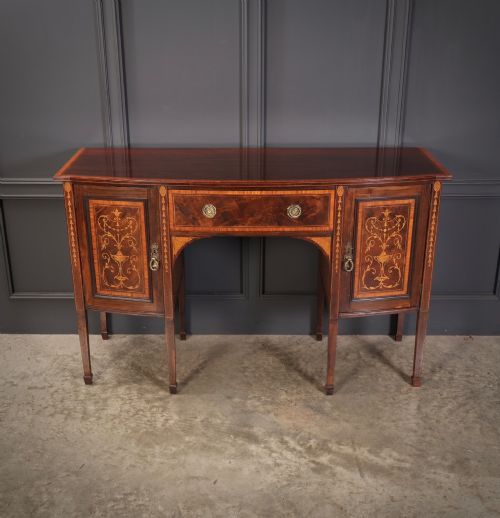
A sheraton bow front sideboard combines the characteristic sweeping convex curve of the front facade with the light, balanced neoclassical ornamentation popularised in the late eighteenth and early nineteenth centuries. These serving pieces provide substantial storage capacity through central drawers and flanking cupboards whilst maintaining a visually graceful profile that avoids heaviness.
The versions most frequently met on this page span the Georgian period, particularly the George III era, alongside later nineteenth and early twentieth century Sheraton revival interpretations. Buyers encounter standard large formats with multiple legs alongside smaller proportions, side cabinets, and serving tables sharing the same distinctive curved silhouette.
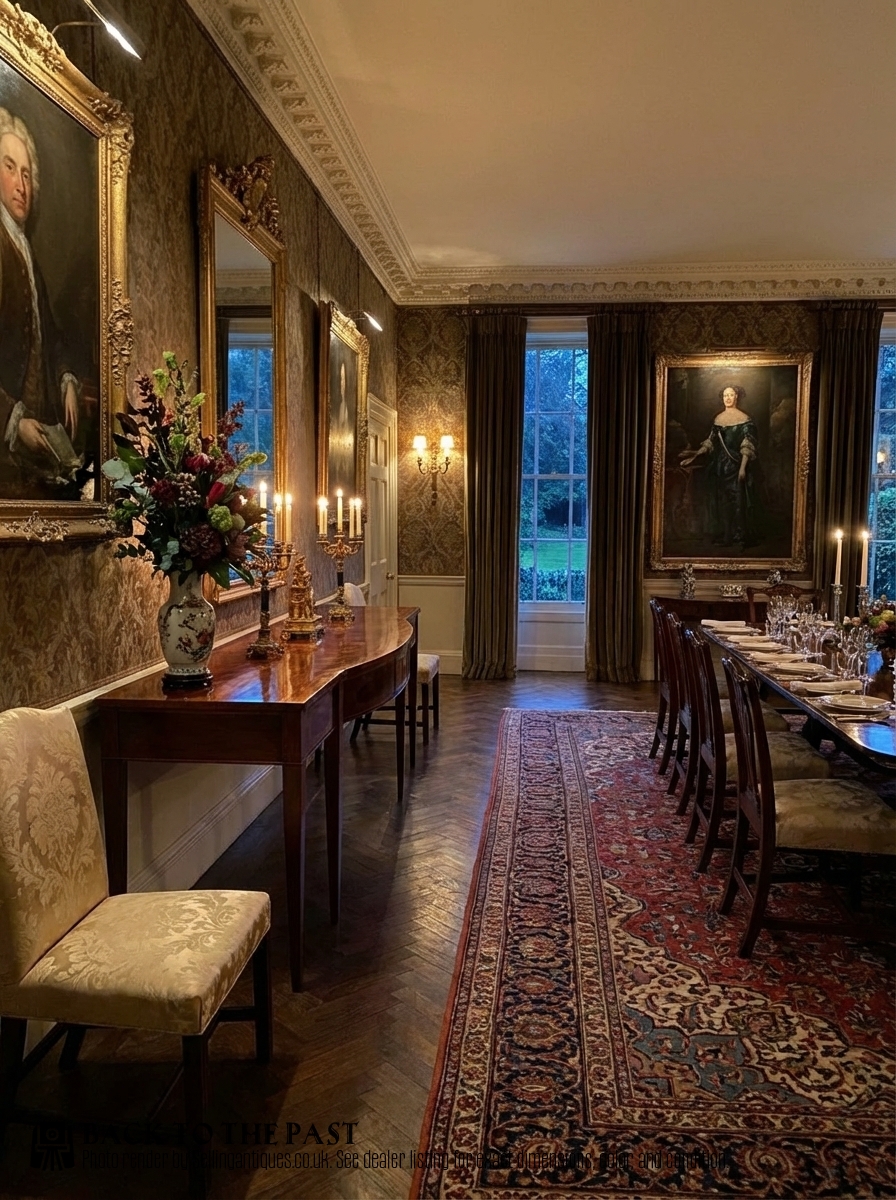
Cabinet makers designed these furnishings to anchor dining spaces, functioning primarily for the storage of cutlery, linen, and serving dishes while displaying silver or ceramics on the top surface. The inclusion of satinwood inlay, contrasting stringing, and flame mahogany veneer defines the decorative vocabulary across both original Georgian examples and later revivals.
Construction and Materials
The primary structural timber across these pieces is mahogany, frequently selected for solid frames and enhanced with flame mahogany veneer across drawer fronts and cupboard doors to create striking grain patterns. Cabinet makers combined this foundation with contrasting exotic woods, employing satinwood, boxwood, and ebony for geometric inlay and delicate stringing details.
Surfaces often incorporate elaborate marquetry work, whilst hardware relies on cast brass handles and escutcheons that complement the warm tones of the polished wood. Some later Victorian and Edwardian interpretations introduce painted satinwood or glass elements to achieve a lighter visual effect.
Certain six-legged variations provide extra stability for storing heavy Georgian dining plate without tipping the curve.
Judging Quality and Execution
The distinction between standard examples and superior pieces rests upon the precision of the cabinet work, particularly in the execution of the curved bow front and the alignment of the veneer. Mastery is visible where the flame mahogany grain matches symmetrically across multiple drawers and where inlay work remains crisp and integrated into the timber rather than superficial.
Proportion and the handling of secondary timbers inside the drawers further separate fine studio or workshop production from mass commercial output. Pieces bearing documented cabinet maker signatures or exceptional attention to structural detail in the legs and framing command greater appreciation among collectors.
Edwards and Roberts
The Sheraton Bow Front Sideboard Glossary
- Bow Front
- A convex curved front facade that swells outward from the corners, creating a softer silhouette than a flat-fronted cabinet.
- Satinwood
- A durable, dense tropical timber with a lustrous golden-yellow sheen, widely utilised for contrasting panels and decorative inlay work.
- Stringing
- Thin strips of contrasting wood inlaid into channels on the surface to outline drawers, legs, and borders.
- Flame Mahogany
- A veneer cut from the branch junctions of the mahogany tree, displaying a distinctive rippled, flame-like pattern.
- Marquetry
- Elaborate decorative patterns formed by the insertion of different woods, veneers, or shell into the solid wood surface of furniture.
Sheraton Bow Front Sideboard: Frequently Asked Questions
How do I date a sheraton bow front sideboard?
Dating relies on examining the construction methods of the drawer linings, the type of brass hardware, and the character of the mahogany timbers. Georgian pieces typically show hand-cut dovetails and older secondary woods, whereas revival pieces from the Victorian and Edwardian eras display machine accuracy or nineteenth-century workshop practices.
The presence of specific revival styles, such as Edwardian Sheraton revival or painted satinwood decoration from the late nineteenth century, helps separate original eighteenth-century furniture from later homages.
Where should I place a bow front sideboard?
These furnishings suit dining rooms, large hallways, or drawing rooms where the curved front can be appreciated without obstructing foot traffic. The shallow depth at the ends compared to the centre makes them practical for spaces where a straight-edged cabinet might protrude too far.
Ensure the piece has sufficient clearance from doors and walkways to let the sweeping lines function as a visual focal point in the room.
What is the difference between Georgian and Sheraton revival?
Original Georgian pieces date from the eighteenth and early nineteenth centuries, manufactured during the height of the neoclassical movement when Thomas Sheraton published his influential design books. They carry the patina of age and construction techniques specific to that period.
Sheraton revival pieces were manufactured later, primarily during the Victorian and Edwardian eras, when cabinet makers reinterpreted those classic proportions using contemporary workshop standards and machinery.
How do I care for antique mahogany surfaces?
Maintain the finish by dusting with a soft, dry cloth and avoiding direct sunlight or excessive heat sources that can dry out the mahogany and veneer. Occasional application of quality beeswax helps nourish the wood and preserves the natural lustre of the polished surface.
Protect the top from moisture and direct contact with liquids by using mats under serving items or decorative objects.