

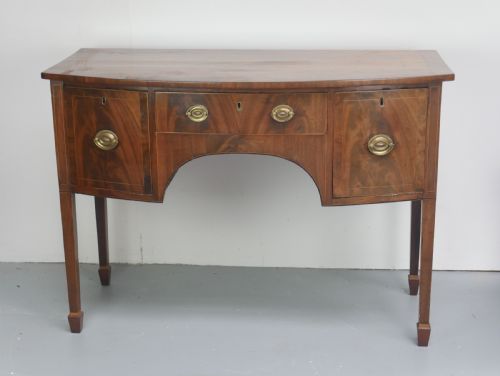


Tapered Leg Serving Table
A tapered leg serving table offers timeless utility, bringing balanced proportions and refined storage to a dining room or hallway.
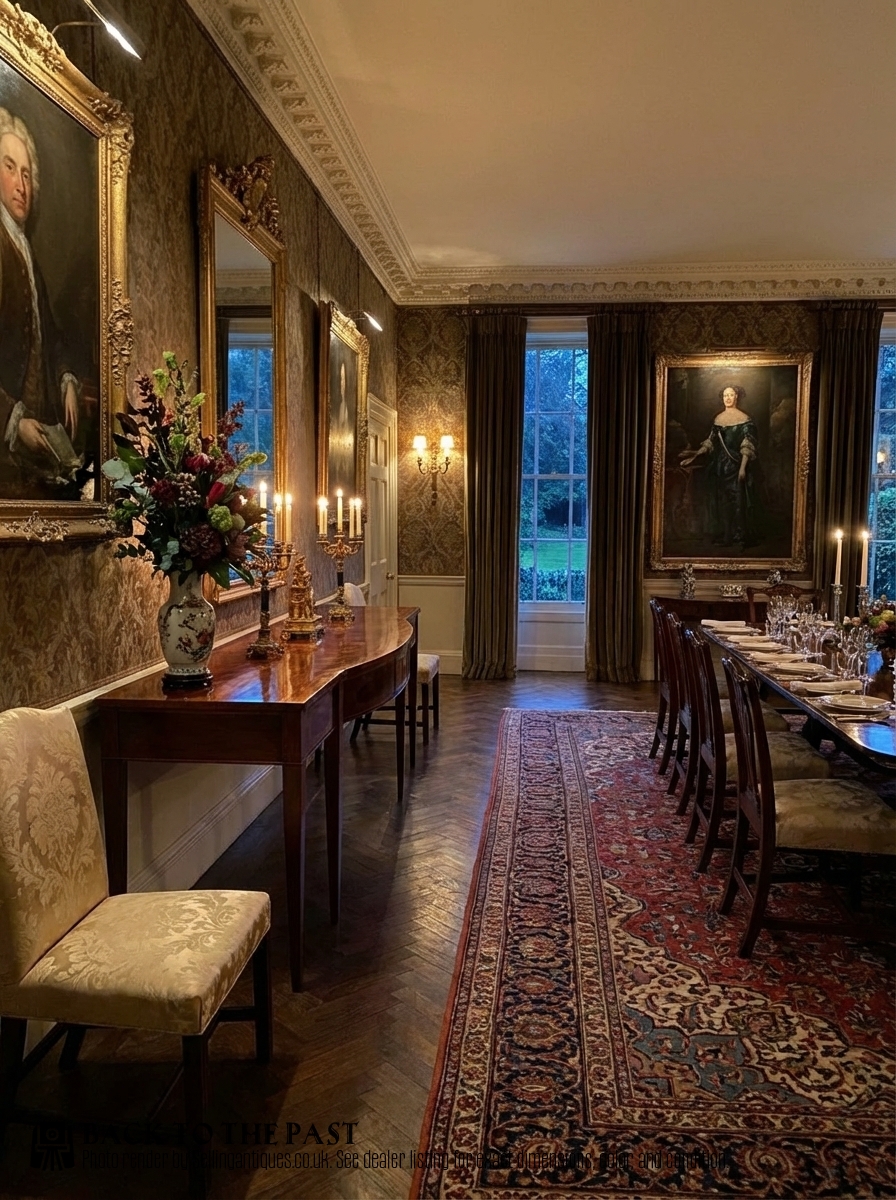
Tapered Leg Serving Table
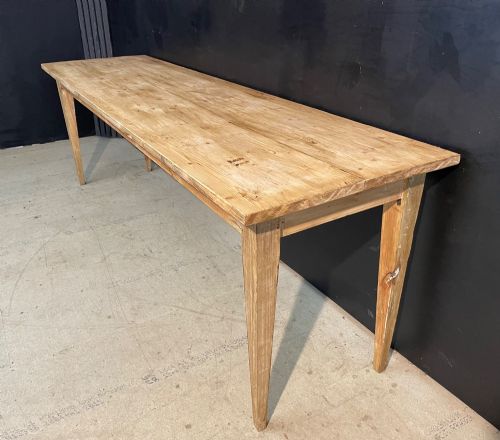
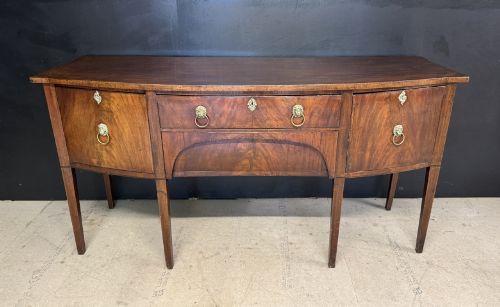
When you search for a tapered leg serving table, you encounter practical dining room furniture designed for serving food and displaying silver. The examples found here span the Georgian and Edwardian periods, showcasing both original 18th-century craftsmanship and later Sheraton revival interpretations.
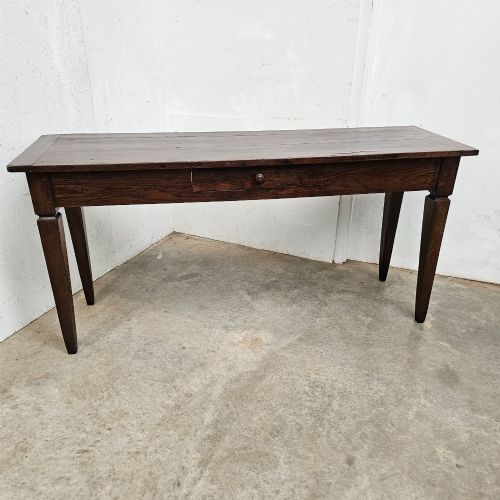
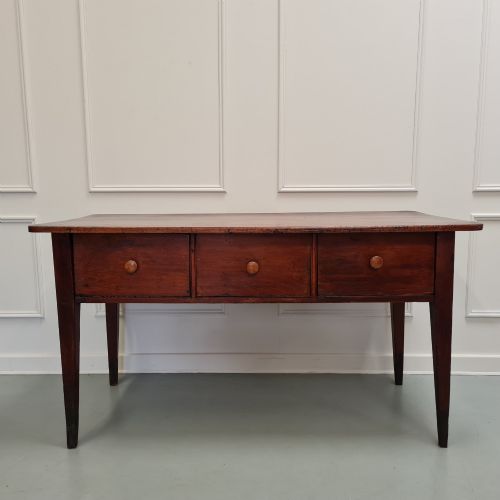
Mahogany dominates the selection, frequently enhanced by satinwood and boxwood inlay, alongside alternative timbers like pine and oak. These pieces range from compact side tables and bowfront servers to larger serpentine sideboards and console tables.
The form developed to meet domestic dining requirements, evolving from plain rustic country pieces to sophisticated city furniture. Most pieces rely on clean straight lines or curved fronts, supported by the distinctive narrowing legs that define the style.
Materials and Construction
Cabinet makers utilised solid mahogany and pine for the main structures, frequently selecting flame mahogany veneers for drawer fronts. Inlay work incorporates lighter timbers such as satinwood and boxwood to create contrasting borders and geometric stringing.
Brass hardware, including handles and sometimes key escutcheons, provides functional and decorative detail. Construction methods rely on traditional joinery, with drawer boxes built using hand-cut dovetails and carcases secured by internal framing.
Materials recorded across the selection include mahogany, satinwood, boxwood, oak, and pine.
Assessing Quality and Execution
The selection of timber grain largely determines visual success, particularly where symmetrical flame mahogany veneers match across a drawer front. Precision in the boxwood and satinwood inlay indicates the skill of the original workshop.
Proportion and structural grace separate simple utility pieces from finer urban furniture. The refinement in the shaping of the tapering legs and the crispness of the edge mouldings reflect the standard of the manufacture.
The Tapered Leg Serving Table Glossary
- Bowfront
- A convex curved front that projects outward in the centre, commonly seen on late 18th-century sideboards and servers.
- Serpentine
- A front design featuring a concave centre flanked by two convex ends, creating a flowing wave shape.
- Cross-banding
- A strip of veneer laid around the border of a table top or drawer front with the grain running perpendicular to the centre.
- Inlay
- A technique where pieces of contrasting wood, such as boxwood or satinwood, are inserted into recesses in the primary timber to form decorative patterns.
- Sheraton Revival
- A late 19th-century design movement that copied the lighter classical furniture styles associated with the designer Thomas Sheraton.
Tapered Leg Serving Table: Frequently Asked Questions
Where should I place a serving table?
These tables suit dining rooms as practical sideboards for holding serving dishes during meals.
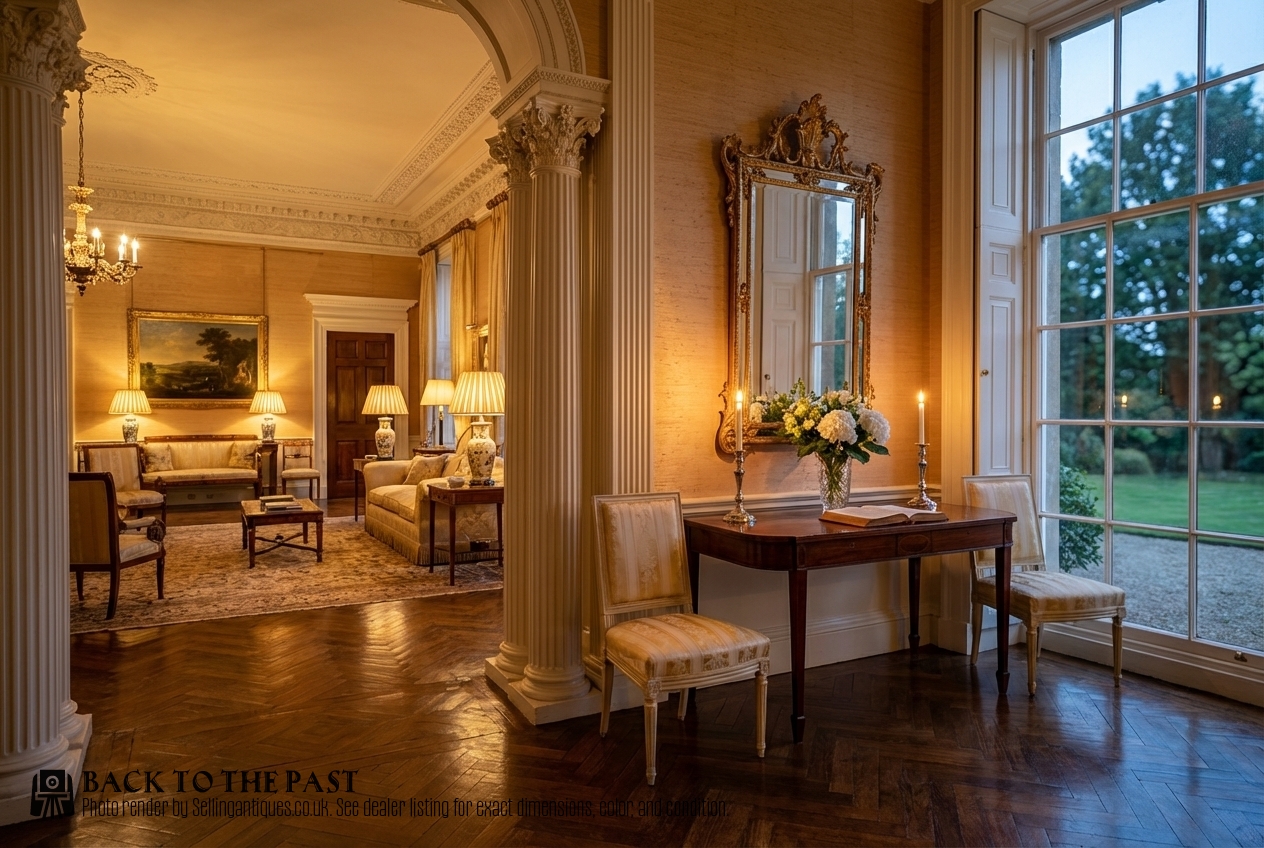
They also work well in hallways and living spaces as narrow console tables for displaying lamps and decorative objects.
How do I care for mahogany furniture?
Keep the wood away from direct heat sources and strong sunlight to prevent the timber and polish from drying out.
Apply a traditional beeswax polish occasionally and buff with a soft cloth to maintain the natural sheen.
How do I distinguish Georgian from Edwardian pieces?
Original Georgian pieces date from the 18th or early 19th century and exhibit the hand tool marks and construction methods of that era.
Edwardian and Sheraton revival pieces date from around 1900, often utilising machine preparation while imitating earlier classical proportions.
What is the difference between a sideboard and a serving table?
Serving tables generally offer simpler open frames with fewer drawers, intended primarily for holding food.
Sideboards incorporate more extensive drawer and cupboard storage configurations for dining accessories.