
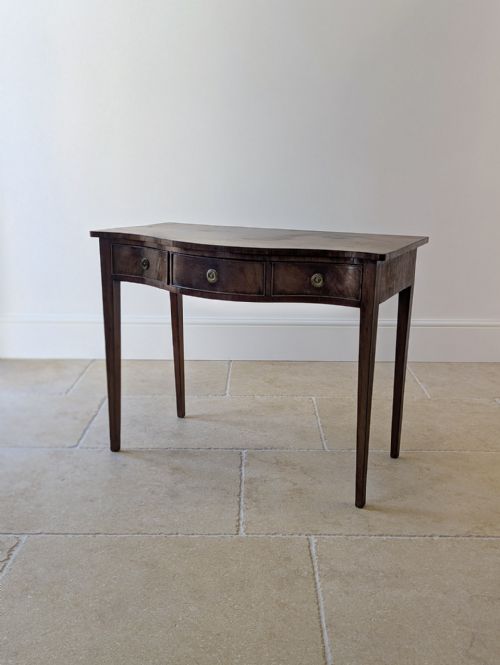
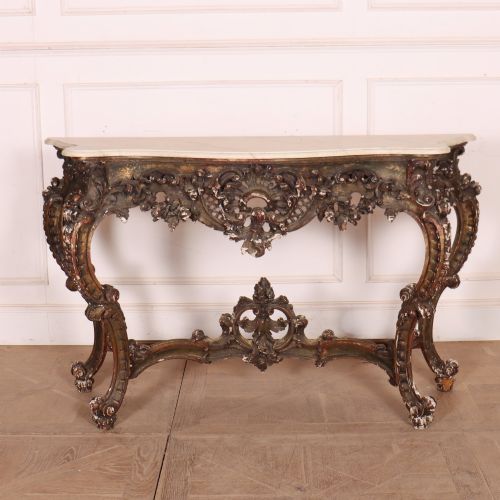
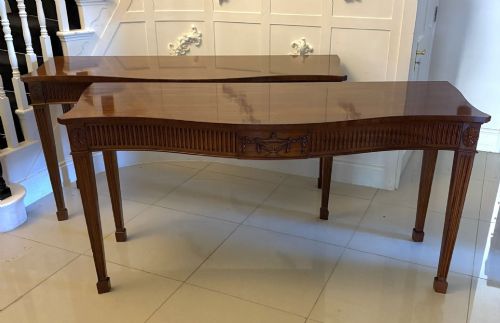
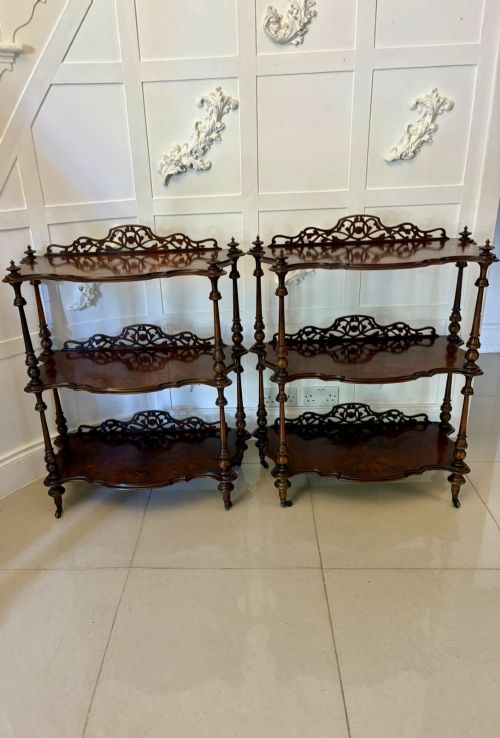
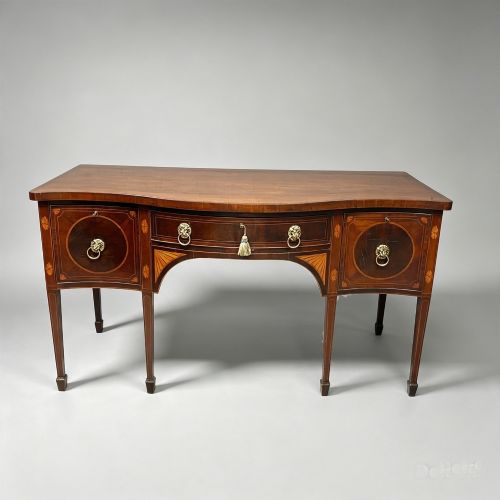
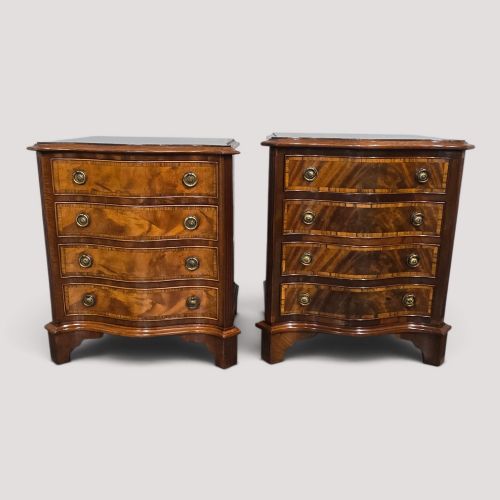
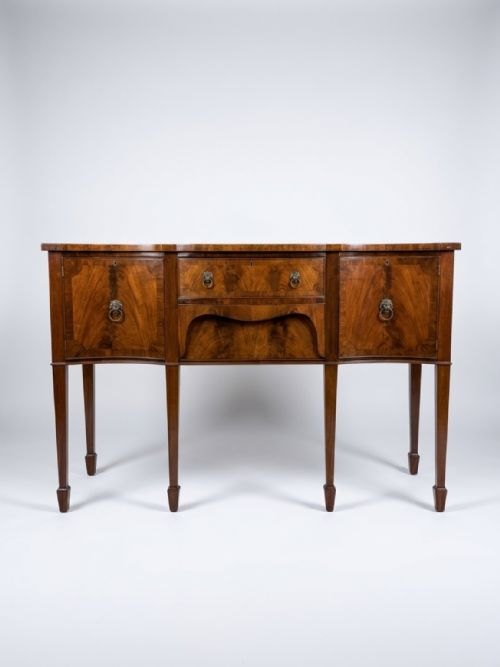
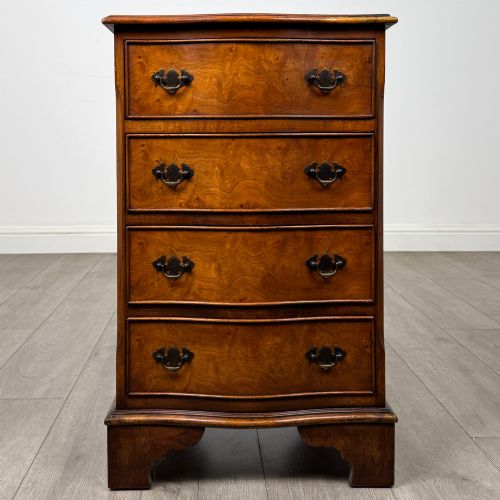

Serpentine Front Table
A serpentine front table brings an undulating sweep to a room, offering functional surfaces shaped with characteristic curved timber.
Serpentine front tables
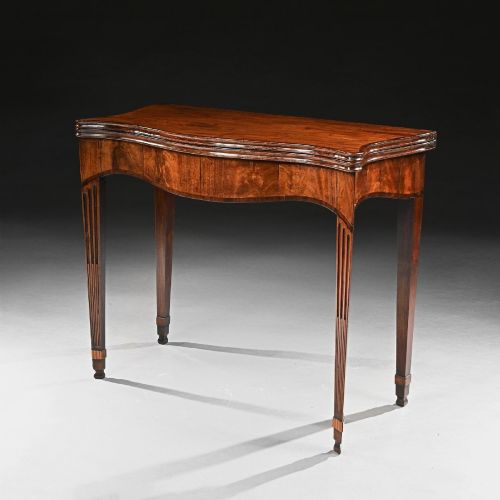
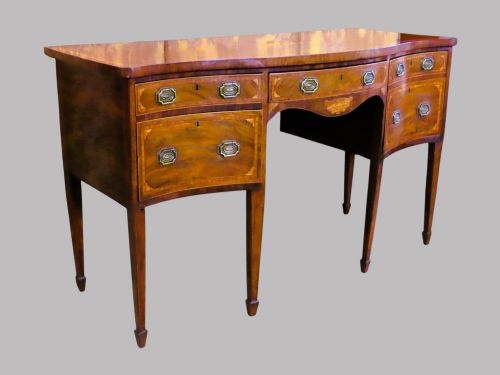
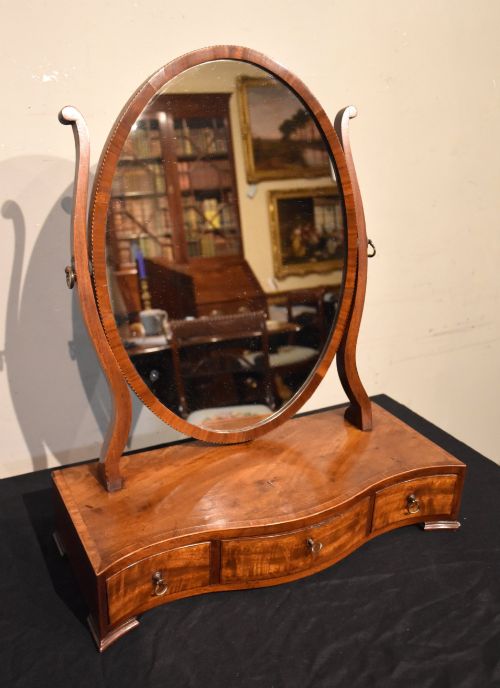
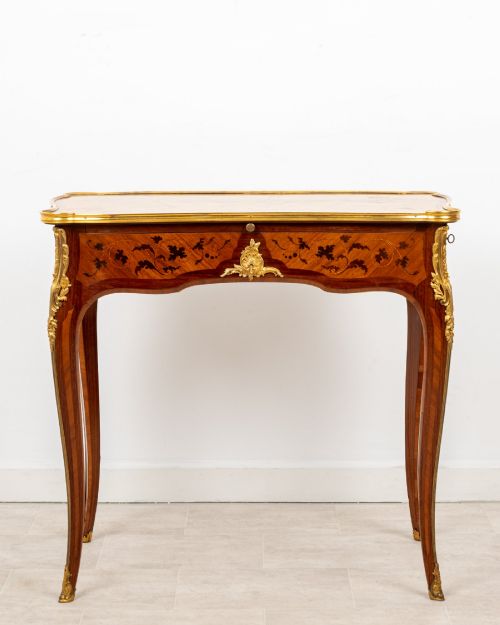
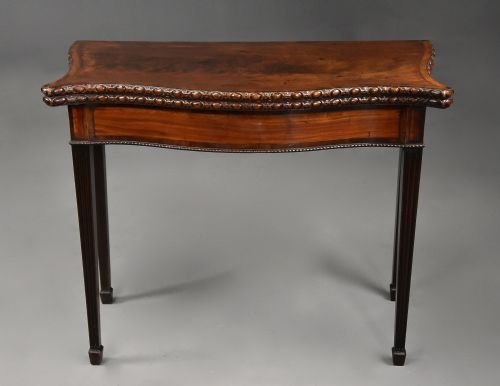
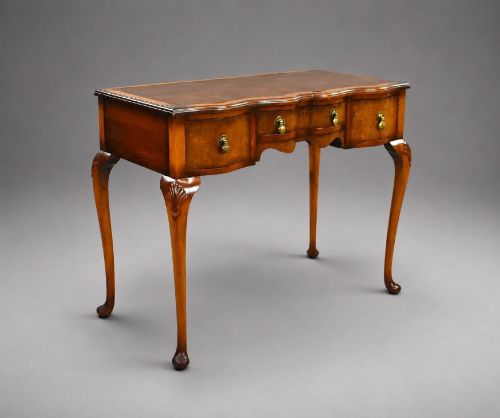
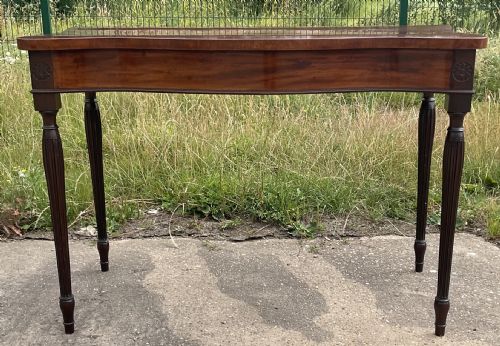
A serpentine front table is defined by its undulating front edge, curving outward in the centre and inward toward the ends, or vice versa. These pieces appear primarily in Georgian and Victorian forms, encompassing serving tables, card tables, tea tables, and console tables.
The most common version met on this page is the George III mahogany serving or card table, often featuring folding leaves or substantial timber construction. Walnut and burr walnut examples also appear frequently, alongside occasional French and Edwardian variants.
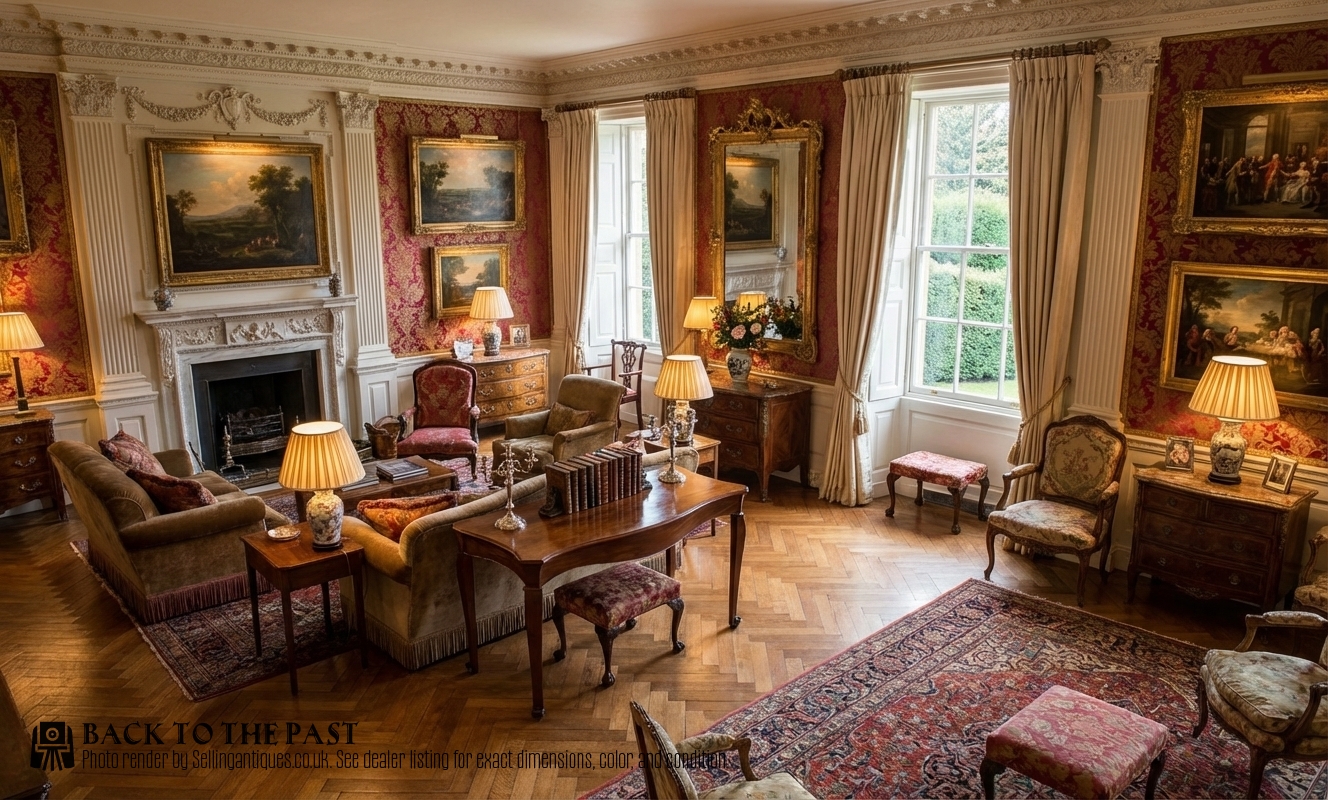
Makers utilised this complex shape for domestic utility, creating items designed for dining rooms, halls, and drawing rooms where visual movement enhanced the furniture.
Materials and construction
Joiners constructed these pieces using solid timbers like mahogany, walnut, and oak, frequently applying veneers such as flame mahogany and burr walnut to create patterned surfaces across the curved fronts.
Brass fittings appear as hinges, handles, and swing mechanisms, particularly on card and tea tables that incorporate folding tops or drawers.
The characteristic serpentine curve required precise timber shaping and blocking to ensure the frame maintained its structural integrity along the undulating profile.
Retail Price Guide 2026
Typical UK retail prices for serpentine front table, calculated from the Sellingantiques database of over a million retail prices indexed since 2003. This retail price guide relies exclusively on Sellingantiques data; no external sources or auction records are used, so the figures do not describe the wider market.
Listings feature mahogany, burr walnut, and oak across 18th-century, Georgian, and Victorian periods.
Distinctions in craftsmanship
Quality rests in the handling of the curved timber grain and the crispness of the serpentine sweep across the front. Finer examples display continuous veneer matching along the undulating line, whereas lesser pieces show disjointed grain patterns.
The treatment of secondary woods and the precision of the joints reveal the hand of the cabinetmaker. Subtleties in proportion and the preservation of original timber surfaces distinguish the top of the range from standard workshop production.
The Serpentine Front Table Glossary
- Serpentine front
- A furniture front characterised by a double curve, curving convexly in the centre and concavely at the sides. This shape requires advanced woodworking skill to execute properly.
- Flame mahogany veneer
- A figured wood veneer showing a distinct flame-like pattern derived from the branch junctions of the tree. It is often applied to the primary surfaces of Georgian tables.
- Burr walnut
- A prized wood veneer obtained from walnut tree growths, producing intricate swirling patterns. It is frequently seen on Victorian and Edwardian console and writing tables.
- Card table
- A small folding table designed for playing games, often lined with baize. Many examples feature a serpentine front to accommodate the user.
- Console table
- A table designed to stand against a wall, sometimes supported by brackets or legs. These pieces often feature marble tops or decorative timber work.
Frequently Asked Questions
What is a serpentine front table?
A serpentine front table is a piece of furniture featuring a curved front edge that sweeps inward and outward in a wave-like pattern. These tables were produced in various forms including serving tables, card tables, and side tables.
Cabinetmakers used this design to introduce movement and elegance into interior spaces. Mahogany and burr walnut were standard woods utilised for these constructions.
How were serpentine card tables used?
Serpentine card tables functioned as multi-purpose items that remained folded against a wall when not in use. Opening the top revealed a surface lined with baize for card games.
These tables populated Georgian and Victorian drawing rooms. They provided both a decorative console appearance and a practical gaming surface.
How do I identify a Georgian serpentine table?
Georgian serpentine tables typically display solid mahogany construction, hand-cut joinery, and specific proportioning associated with the eighteenth century. Details such as brass hardware and timber patination help indicate this period.
Later Victorian and Edwardian revivals often incorporate burr walnut veneers and different interior framing techniques. Examining the secondary woods on the underside clarifies the manufacturing era.
Where should I place a serpentine table?
A serpentine table suits hallways, dining rooms, or living spaces where its curved profile can be appreciated from multiple angles. Serving tables work well against dining room walls, while smaller card or side tables fit into alcoves.
The undulating front requires open space to display the shape effectively without obstruction from surrounding furniture.