




Hepplewhite Style Serving Table
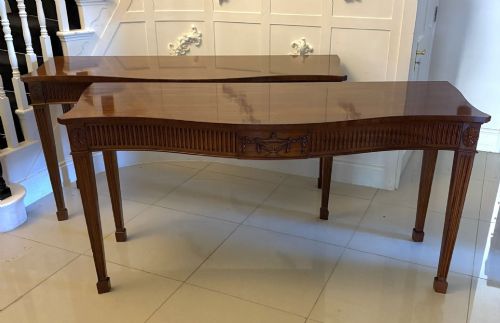
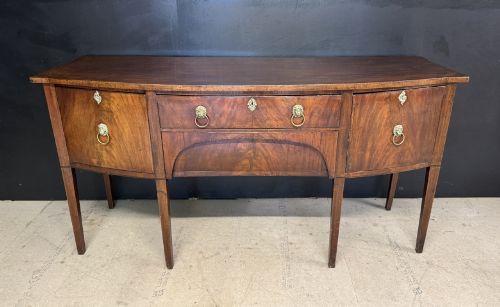
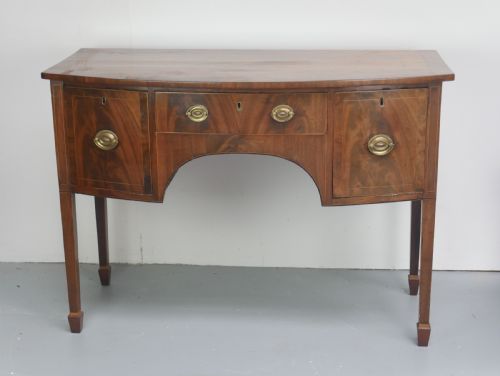
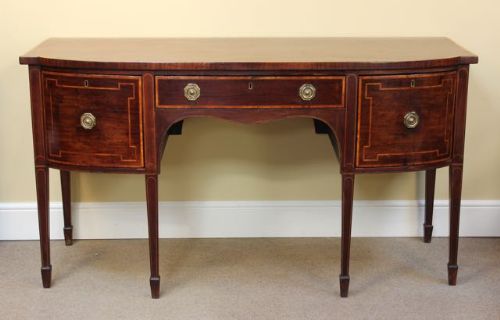
These hepplewhite style serving table pieces are elegant mahogany dining furnishings offering refined neoclassical lines for period interiors.
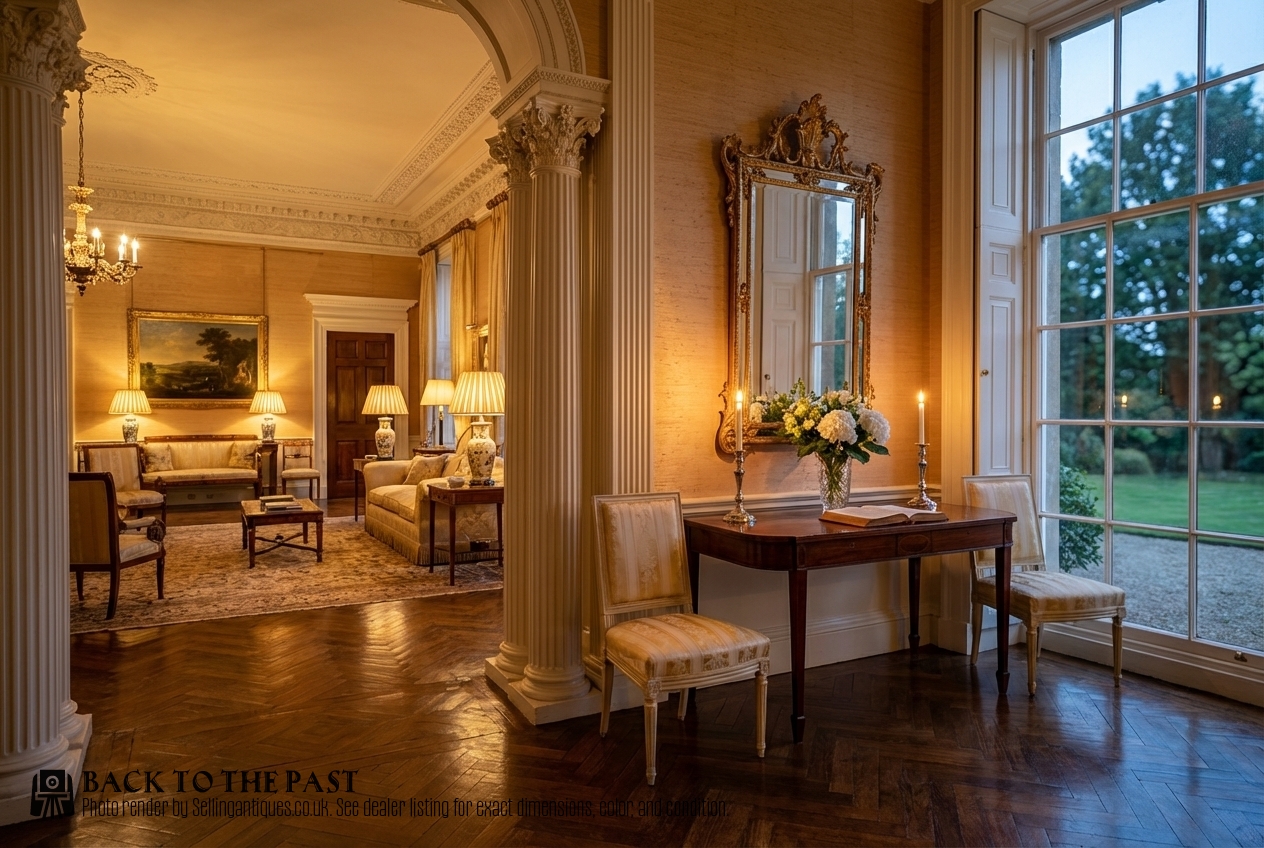
Hepplewhite Style Serving Table
A hepplewhite style serving table brings classic proportions and restrained neoclassical detailing to dining spaces and formal rooms. These pieces appear in forms such as sideboards, console tables, and servers, spanning the Georgian, 18th century, 1800, 1860, 1900, and 1920 periods.
How they were made
Cabinet makers utilised dense mahogany timber as the primary structural and visual base for these serving tables and sideboards. Artisans shaped the wood into graceful curved fronts, including serpentine and bowfront configurations.
Detailing was achieved through contrasting wood inlay, satinwood, boxwood, and brass hardware. Neoclassical carving provided crisp architectural ornamentation along the borders and legs.
Listings span the Georgian, 18th Century, 1800, 1860, 1900, and 1920 periods.
What varies in quality
The standard of execution in the cabinetwork and inlay defines the hierarchy among these serving tables. Superior examples display precise joinery, balanced proportions, and sharp, well-defined neoclassical carving rather than generalised shaping.
The choice of secondary timbers and the crispness of the satinwood and boxwood inlay reflect the maker's investment of time. Subtle differences in the fluidity of the serpentine or bowfront outline distinguish workshop output.
Gillow
The Hepplewhite Style Serving Table Glossary
- Serpentine
- A furniture front configuration that curves outward in the centre and inward at the sides. This contour requires advanced woodworking skill.
- Bowfront
- A convex curving front profile popular on sideboards and serving tables. It softens the linear appearance of dining room furniture.
- Neoclassical
- A decorative style drawing inspiration from classical antiquity. It introduces symmetrical motifs, urns, and restrained foliage.
- Satinwood
- A luminous hardwood utilised for contrasting inlay work and banding. Its golden sheen highlights geometric borders.
Hepplewhite Style Serving Table: Frequently Asked Questions
What is a hepplewhite style serving table?
These furnishings are dining room sideboards and console tables characterised by graceful curved fronts and neoclassical ornamentation.
They derive their design vocabulary from the late eighteenth century aesthetic popularized by George Hepplewhite.
How were these serving tables used?
Dining rooms utilised these tables for serving food, displaying silver, and storing dining accessories during formal meals.
Their substantial top surfaces and drawer configurations provided practical utility alongside decorative presence.
How do I distinguish periods?
Examination of the timber, construction methods, and inlay sharpness helps differentiate eighteenth century production from later nineteenth and twentieth century interpretations.
Period pieces exhibit traditional hand joinery and authentic patina developed over generations of use.
What woods appear in these pieces?
Mahogany serves as the primary structural and surface timber across the majority of these listings.
Cabinet makers integrated satinwood, boxwood, and general wood inlay to create contrasting decorative borders.