


Sheraton Inlaid Serving Table
A sheraton inlaid serving table brings refined linear elegance and figured timber into a dining room.
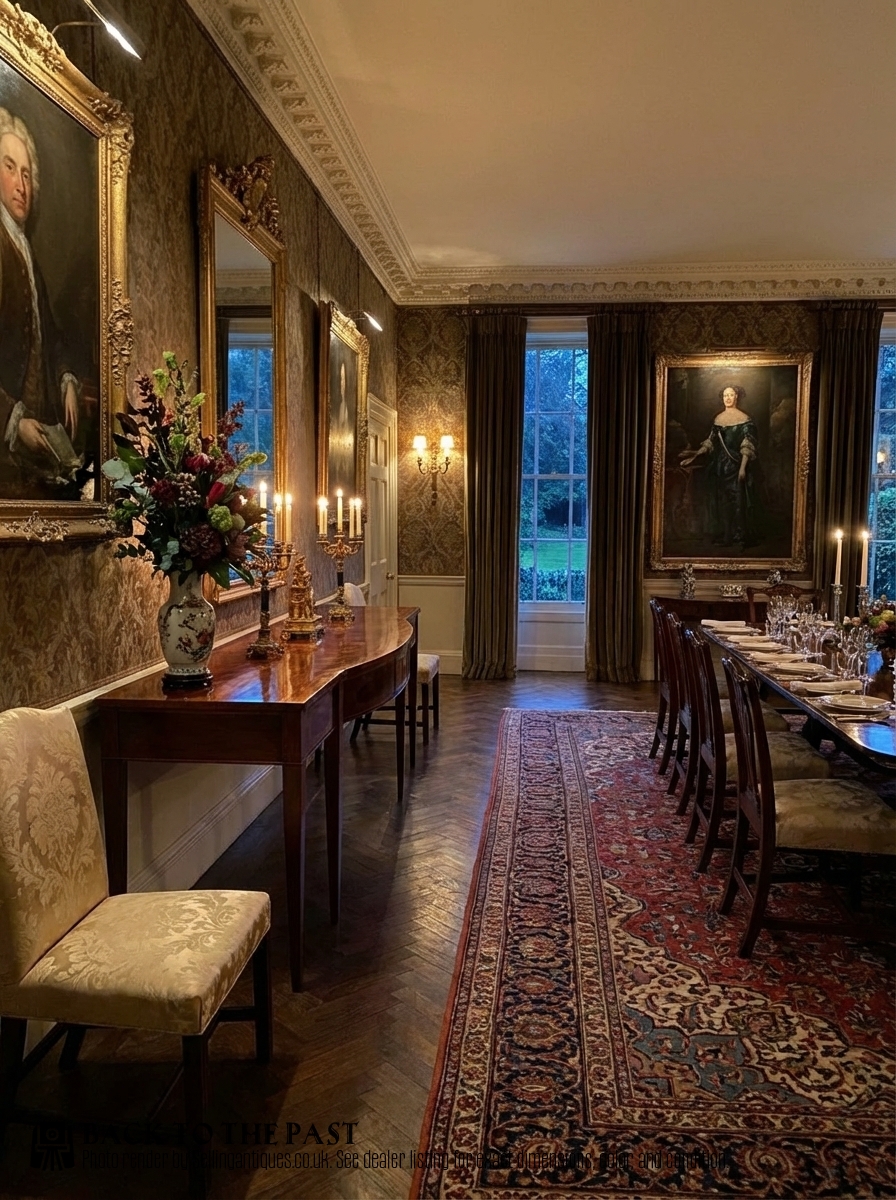
Sheraton Inlaid Serving Table
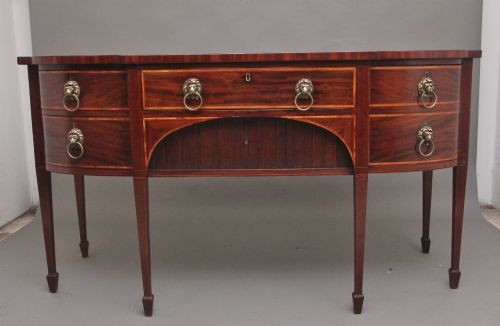
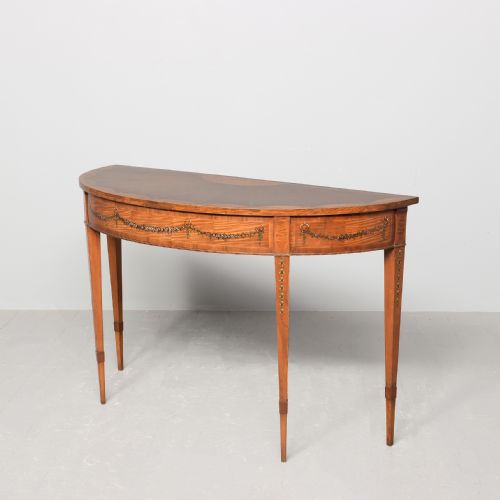
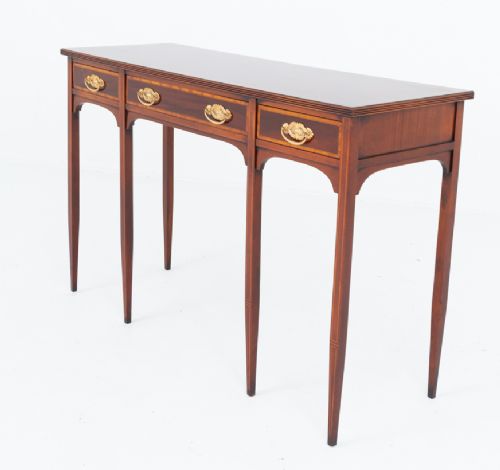
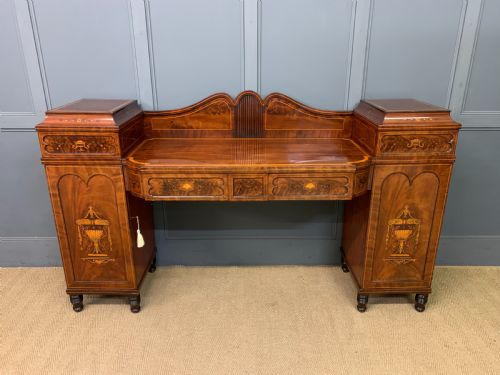
A sheraton inlaid serving table encompasses formal dining room furnishings designed for display and service, appearing across Georgian and revival periods. You will encounter bowfront and serpentine forms alongside servers, sideboards, and occasional two-tier tables.
The selections span original eighteenth-century craftsmanship through to Edwardian Sheraton Revival interpretations. Mahogany and satinwood form the foundation of these surviving dining pieces.
What varies in quality
The refinement of the timber figure and the precision of the contrasting inlay separate standard examples from finer works. Flame mahogany veneers matched symmetrically across a front elevate the visual merit.
Original brass fittings and restrained proportions indicate higher atelier standards, whereas later revivals vary in the crispness of their boxwood details.
Listings feature mahogany and satinwood across Georgian, Victorian, and Edwardian periods.
The Sheraton Inlaid Serving Table Glossary
- Bowfront
- A convex curved front contour popular in late eighteenth-century case furniture. This shape softens the corners of a dining room server.
- Satinwood
- A pale, lustrous exotic timber used extensively for contrasting stringing and banding. It provides a bright highlight against darker mahogany surfaces.
- Serpentine
- A front design featuring a convex centre flanked by concave curves. This undulating line requires exceptional skill from the cabinetmaker.
- Stringing
- Narrow inlaid lines of contrasting wood set flush into the primary timber. It frames drawers and tabletops with linear precision.
- Etagere
- A set of open shelves for displaying small objects or serving items. These tiered pieces often feature satinwood cross-banding.
Sheraton Inlaid Serving Table: Frequently Asked Questions
How do I date a sideboard?
Examine the secondary woods, construction methods, and the style of the inlay. Eighteenth-century pieces display hand-cut joinery and subtle patination.
Revival pieces from the Edwardian period often utilise machine-sawn timber and brighter, highly polished satinwood highlights.
Where were serving tables placed?
These pieces stood against dining room walls to hold dishes, silver, and decanters during formal meals. Their narrow profiles kept circulation clear.
Today they function effectively in hallways, living rooms, or dining spaces as display consoles.
What is Sheraton Revival furniture?
Sheraton Revival pieces are later nineteenth and early twentieth-century interpretations of original George III designs. They emulate the light proportions and classical motifs popularized by Thomas Sheraton.
Cabinetmakers of the Edwardian era reproduced these classic forms using contemporary workshop methods.
How should I clean mahogany?
Dust surfaces regularly with a soft, dry cloth to prevent particulate accumulation. Avoid silicone sprays which can damage old finishes.
Apply a traditional beeswax polish sparingly to nourish the timber and maintain a soft sheen.