

George III Server
A george iii server brings substantial presence to a room, offering practical storage and serving surfaces rooted in eighteenth-century design.
George III Server
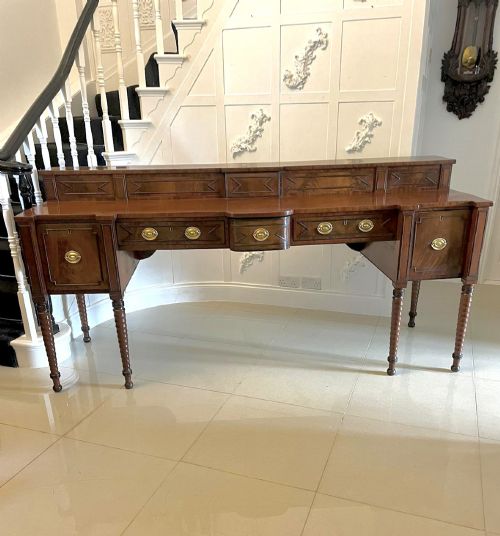
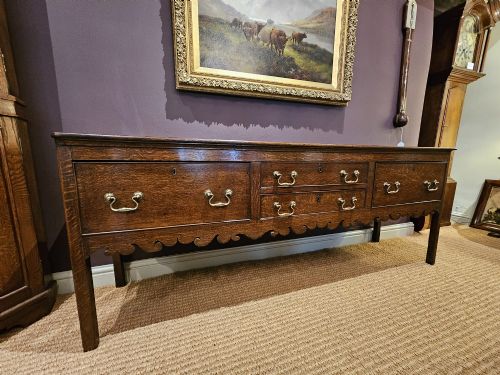
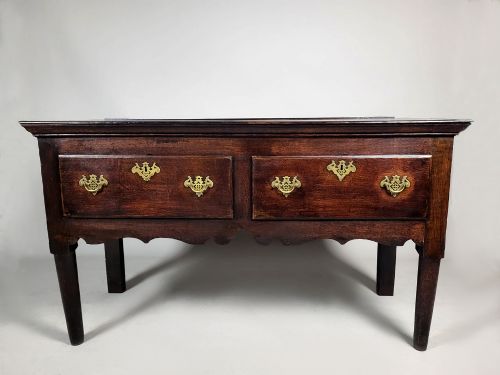
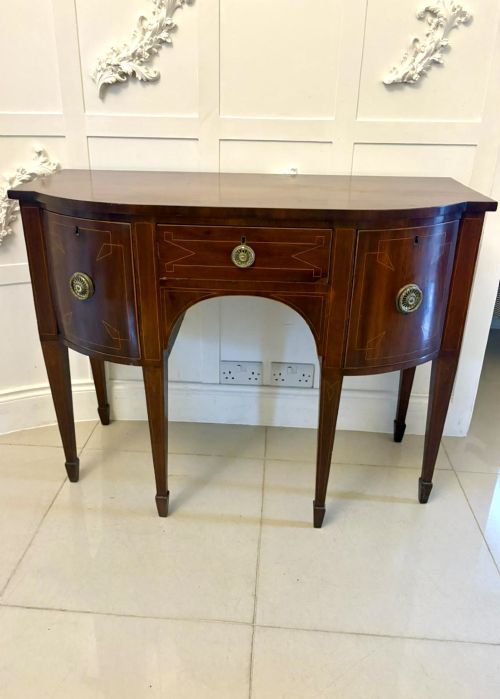
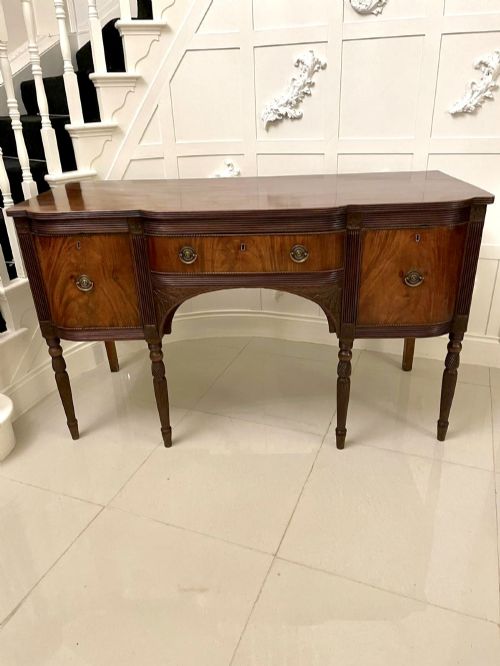
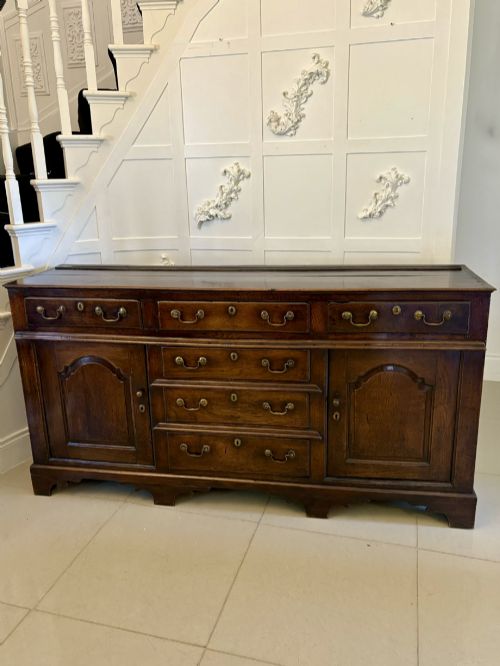
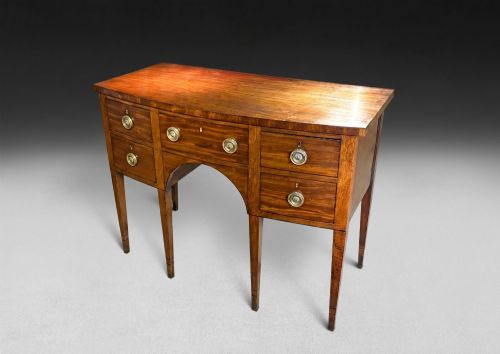
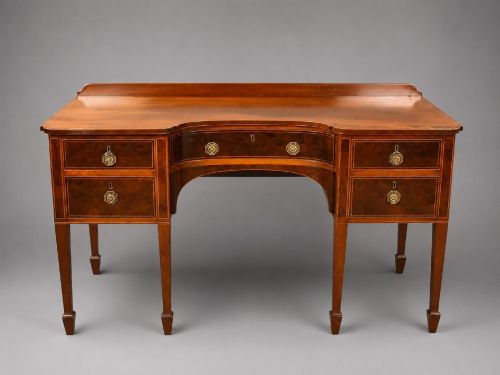
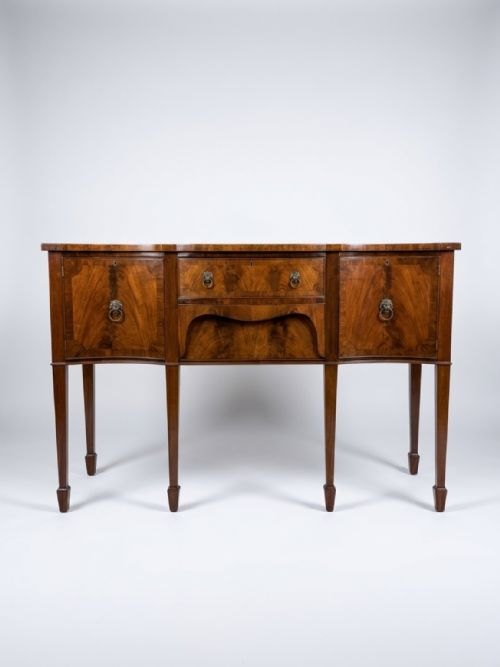
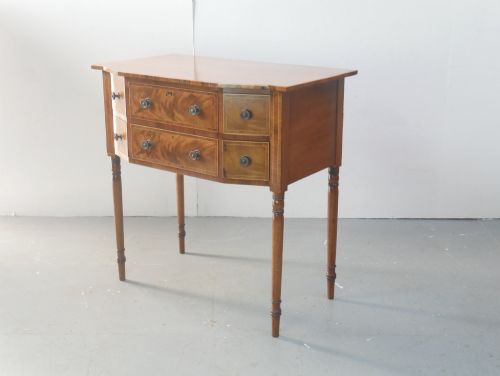
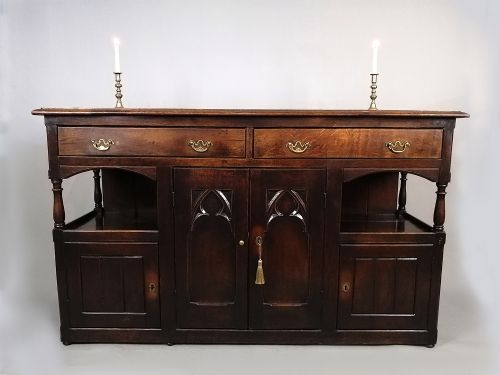
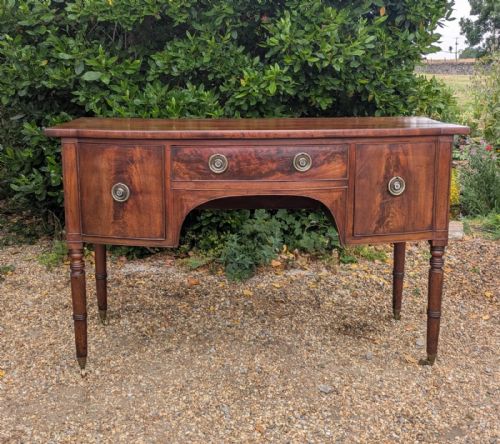
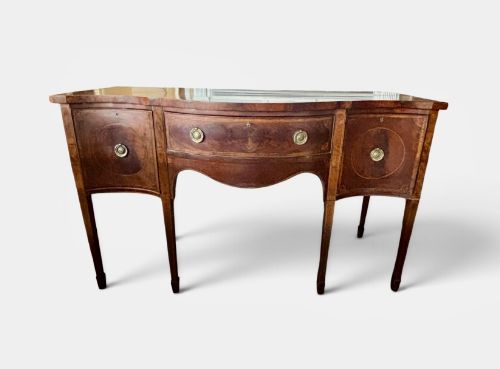
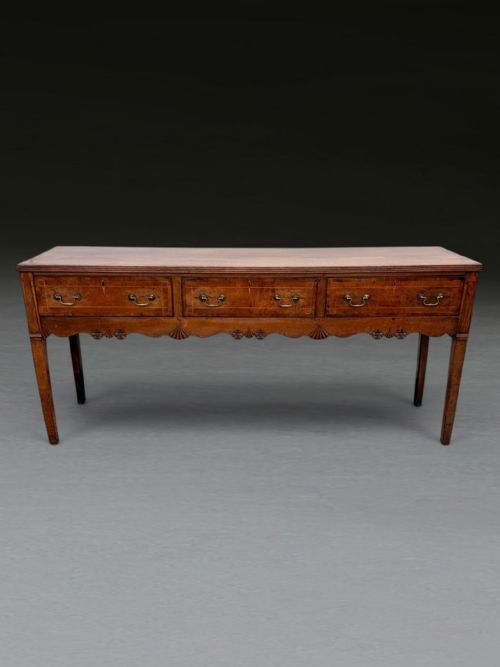
When you search for a george iii server, you encounter a variety of forms designed for dining and display, most frequently sideboards, dresser bases, and serving tables. These pieces emerge primarily from the Georgian period and the eighteenth century, reflecting the domestic needs of the era through deep drawers and spacious tops.
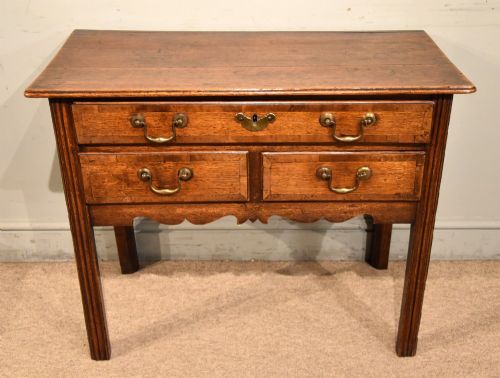
The pieces on this page span several specific variations, including oak dresser bases with potboards, mahogany bow-front and serpentine sideboards, and occasional three-tier dumb waiters or serving pieces. Oak and mahogany dominate the offerings, often complemented by inlays of satinwood or boxwood.
Originating in English and Scottish workshops, these servers range from compact lowboys to large breakfront configurations. Buyers seeking a george iii server find both utilitarian kitchen and pantry pieces and formal dining room furniture built to command attention.
What varies in quality
Quality in these pieces depends heavily on the selection of timber, such as highly figured mahogany or well-grained oak, paired with crispness in the inlay and carving. The integration of original brass hardware and the preservation of surface patination distinguish finer examples from standard production.
Proportion and architectural line also dictate the upper tier of the range, visible in balanced serpentine or bow fronts and well-executed breakfront forms. Superior construction shows in tight dovetailing and the stability of large timber carcases over centuries of use.
Materials recorded across the inventory include solid mahogany, oak, elm, satinwood, sterling silver, and brass.
The George III Server Glossary
- Serpentine
- A front contour that curves inward centrally and swells outward toward the ends. This sweeping line requires advanced cabinetmaking skill to execute smoothly.
- Bow-front
- A convex, outwardly curved front profile popular in late eighteenth-century case furniture. It softens the rigidity of straight-sided sideboards.
- Potboard
- An open lower shelf fitted between the legs of a Welsh dresser or server. Originally utilised for storing heavy pots and culinary utensils.
- Dumb waiter
- A freestanding tiered piece of furniture with revolving circular trays on a central column. It allowed diners to serve themselves without servants present.
- Lowboy
- A small oak or mahogany side table featuring one or more rows of drawers. These versatile items functioned as dressing tables or auxiliary servers.
George III Server: Frequently Asked Questions
What is the difference between a server and a sideboard?
A server generally refers to a smaller or more specialised table used for holding dishes during a meal, whereas a sideboard often includes extensive cupboard and drawer space for storage.
In eighteenth-century contexts, terms like server, sideboard, and dresser base frequently overlap depending on whether the piece was made for the dining room or the kitchen.
How do I identify a genuine piece from this period?
Examine the construction methods, timber selection, and wear patterns visible on the secondary woods and drawer linings. Hand-cut dovetails and period brass fixings offer strong indicators of authentic eighteenth-century craftsmanship.
Stylistic cues such as George III proportions, satinwood stringing, and timber shrinkage provide further evidence of age.
Where were these pieces originally placed in a home?
Large mahogany sideboards and serving tables stood in the dining room to hold silver platters, wine coolers, and serving dishes during feasts. Oak dresser bases and potboards typically resided in kitchens or sculleries for everyday food preparation and storage.
Smaller dumb waiters sat beside the dining table to facilitate self-service among guests.
How should I care for an antique mahogany surface?
Protect the timber by avoiding direct sunlight and maintaining stable humidity levels in the room to prevent splitting or warping. Apply traditional beeswax periodically to nourish the wood and preserve the natural patina.
Clean surfaces gently with a soft, dry cloth and avoid harsh chemical polishes that strip the historic finish.