


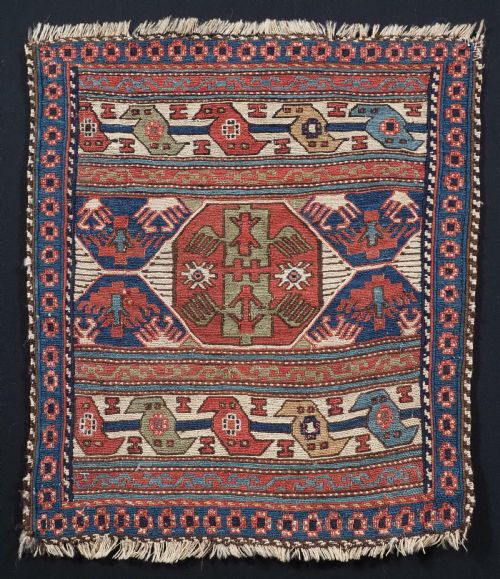


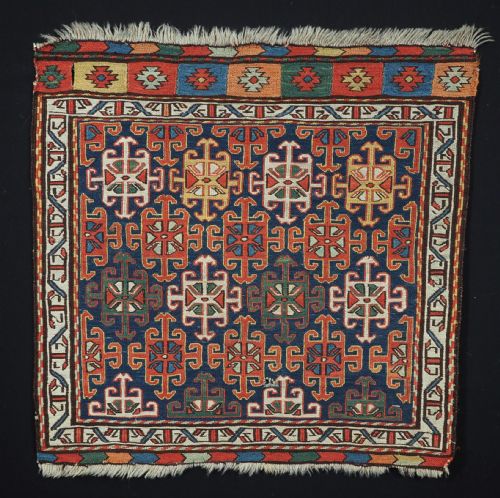
Shahsavan Flatweave Rug
These shahsavan flatweave rug pieces are tribal weavings and storage containers valued for their geometric motifs and rich textile art.
Shahsavan Flatweave Rug
A shahsavan flatweave rug search reveals traditional tribal textiles, panels, and storage containers originating from the Caucasus and north-west Persia. Buyers frequently encounter complete saddle bags, bag faces, storage bags, and kilim runners produced during the nineteenth century.
The inventory demonstrates various forms, including mafrash storage bag panels adapted into kilims, pairs of soumak bags, and long narrow runners. These nomadic textiles reflect the distinctive heritage of Shahsavan and Caucasian weaving traditions.
Dated examples span from the late nineteenth century into the turn of the twentieth century, showcasing traditional utilitarian items repurposed or preserved as textile art.
How they were made
Weavers utilised hand-spun wool and cotton, combining them with structural elements in leather and metal where bags required reinforcement. The construction relies primarily on flatweave and soumak techniques rather than knotted pile.
Colour comes from natural dyes and vegetable dyes, producing the soft, muted tones visible across the panels and bag faces. These traditional dyeing methods give the wool its characteristic depth and variation.
Shahsavan Flatweave Rug Retail Price Guide 2026
Typical asking prices for shahsavan flatweave rug among the pieces listed under this phrase on Sellingantiques today, from the lower quarter to the upper quarter. They describe what is for sale here now, not the wider market.
Nomadic weavers occasionally embedded hidden bird and dragon motifs within their soumak storage bags to guard belongings during transit.
What varies in quality
The distinction between standard and superior pieces rests on the complexity of the design, such as the inclusion of specific animal or geometric motifs like birds and dragons. Completeness also dictates standard, as intact pairs or whole storage bags carry greater historical integrity than isolated panels.
Material preparation and dye work influence the visual outcome, with well-preserved vegetable and natural dyes providing superior aesthetic depth. The finesse of the soumak technique further separates ordinary domestic work from exceptional examples of tribal art.
The Shahsavan Flatweave Rug Glossary
- Soumak
- A flatweave technique involving wrapping supplementary weft threads over the warp to create a textured, durable surface. This method produces raised patterns often seen on bag faces and storage containers.
- Mafrash
- A large rectangular storage container or bedding chest used by nomadic tribes, typically constructed from four side panels and a base. These panels are frequently separated and repurposed into flatweave rugs or smaller kilims.
- Khorjin
- A traditional pair of double-sided saddle bags used for transport on animals during tribal migrations. They feature integrated slits or bridges connecting the two pouches.
- Kilim
- A flatweave textile produced without a pile, resulting in a thin, tapestry-like fabric used for floor coverings or cargo storage. These pieces rely on interlocking weft techniques to form sharp geometric patterns.
- Warp
- The stationary vertical threads stretched on a loom that form the structural foundation of the textile. Weft threads are woven horizontally through these parallel strands.
Shahsavan Flatweave Rug: Frequently Asked Questions
What is a shahsavan flatweave rug?
It is a nomadic textile originating from the Shahsavan tribes of north-west Persia and the Caucasus, produced using flatweave or soumak techniques.
These pieces often take the form of saddle bags, storage containers, or long runners rather than standard floor carpets.
How do I care for a tribal textile?
Protect the hand-spun wool and natural dyes by keeping the textile away from direct sunlight to prevent fading. Gentle vacuuming without a rotating brush helps remove dust without damaging the flatweave structure.
Professional cleaning suited for antique rugs is recommended when necessary, avoiding immersion in water unless handled by a specialist.
Are these pieces from the nineteenth century?
The listings include examples dated from around the 1870s, 1880s, 1890s, and into the early 1900s. These dates reflect the active period of nomadic tribal weaving before synthetic materials became widespread.
Exact dating relies on stylistic evidence, structural analysis, and material composition typical of the era.
Why are some items sold as panels?
Many items originate from large mafrash storage chests that sustained damage or wear over decades of nomadic use. Surviving panels were subsequently preserved independently or stitched together to form small kilims and wall hangings.