



1900s Wool Kilim
These 1900s wool kilim examples are flat-woven textiles carrying tribal designs, prized for their vibrant wool geometry.
1900s Wool Kilim
A 1900s wool kilim represents flat-woven nomadic and village textiles originating from regions across Persia, Anatolia, the Caucasus, and Central Asia. When searching for a 1900s wool kilim, a buyer encounters distinct regional subgroups including Qashqai, Turkmen, Shahsavan, and Turkish examples from areas such as Konya and Obruk.
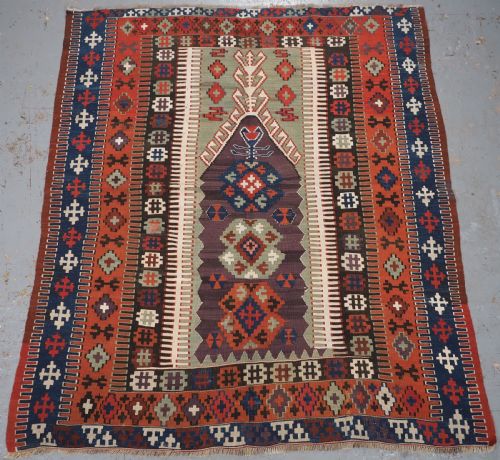
The inventory demonstrates varied forms beyond standard rugs and carpets, notably including saddlebags, saddlebag faces, and prayer kilims. These textiles served practical purposes for nomadic tribes before entering the collector market.
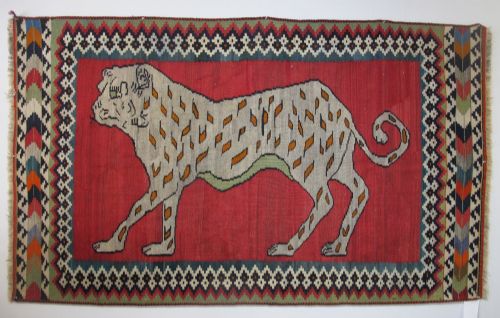
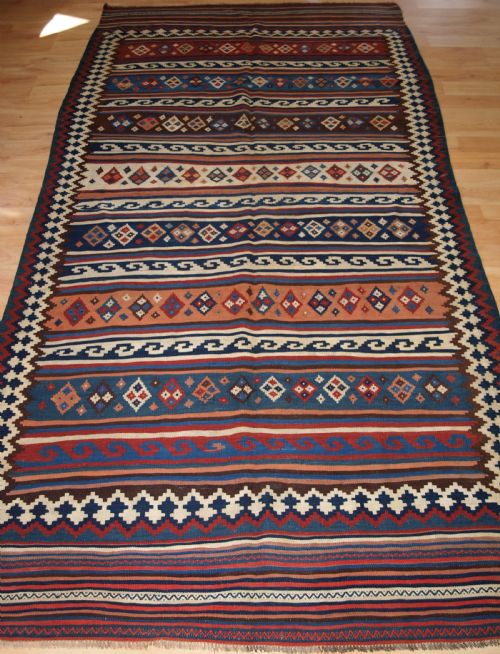
Design vocabulary spans striking banded weft work, eye-dazzler patterns, and lion motifs woven with natural dyes. Each piece reflects the specific tribal weaving traditions of its origin.
How they were made
Weavers constructed a 1900s wool kilim using flat-weaving techniques without a pile, interlocking weft threads over warp threads to build crisp geometric patterns. The reliance on wool and natural dyes accounts for the enduring depth and softness of the palette.
Regional workshops and nomadic camps employed distinct structural methods, from the very fine weave of Turkmen pieces to the bold banded designs of Uzbek and Varamin textiles.
1900s Wool Kilim Retail Price Guide 2026
Typical asking prices for 1900s wool kilim among the pieces listed under this phrase on Sellingantiques today, from the lower quarter to the upper quarter. They describe what is for sale here now, not the wider market.
Listings feature Anatolian, Persian, Caucasian, and Central Asian tribal styles executed in wool using natural dyes.
What varies in quality
Quality in a 1900s wool kilim rests on the precision of the flat-weave structure and the integrity of the natural dyes. Tighter, finer weaves and well-preserved soft colour palettes distinguish superior tribal work.
The artistic strength of the design, whether an eye-dazzler or a pictorial lion motif, dictates the visual impact of the textile. Condition and regional authenticity complete the distinction between standard village pieces and exceptional tribal output.
The 1900s Wool Kilim Glossary
- Kilim
- A flat-woven carpet or rug produced in countries of the former Persian Empire, Turkestan and the Caucasus. These textiles lack a pile, created by tightly interweaving warp and weft strands.
- Warp
- The vertical threads held stationary on a loom before weaving commences. Wefts are passed through these foundational threads.
- Weft
- The horizontal threads passed back and forth through the warp to form the pattern and fabric. In kilims, these coloured threads create the visible design.
- Natural dyes
- Colourants derived from plants, insects, and minerals used before the widespread adoption of synthetic alternatives. They yield the soft, complex hues seen in older textiles.
- Prayer kilim
- A rug featuring a mihrab or niche design indicating the direction of Mecca, utilised for daily prayers in Islamic communities.
- Saddlebag
- A utilitarian storage pouch woven in pairs for transport on animals, often preserved today as individual decorative panels or complete joined faces.
1900s Wool Kilim: Frequently Asked Questions
How do I clean a kilim?
Gentle surface brushing and professional specialist washing maintain the integrity of natural wool fibres.
Avoid aggressive scrubbing or chemical immersion to protect the natural dyes.
Can I put a kilim on the floor?
These flat-weaves function well as floor coverings in areas with moderate foot traffic when paired with a quality slip-resistant underlay.
For fragile or exceptionally fine examples, wall hanging preserves the structure from wear.
What is an eye-dazzler design?
The term describes high-contrast geometric patterns that create an optical vibration effect across the surface of the textile.
Weavers utilised this style to draw the eye through intricate repeating motifs.