
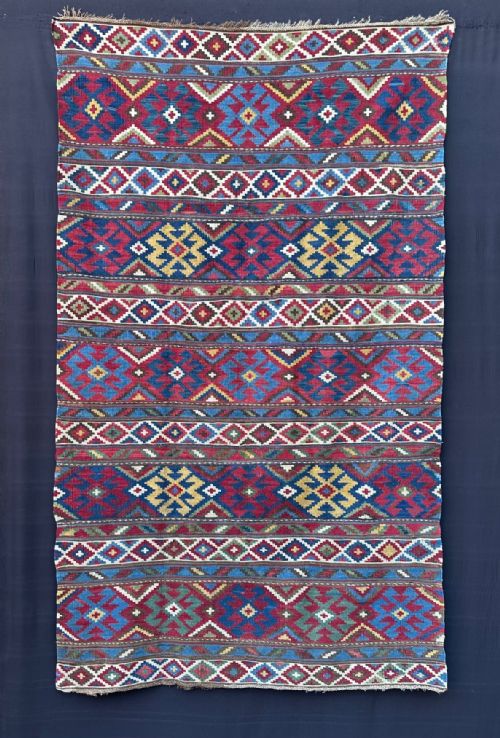
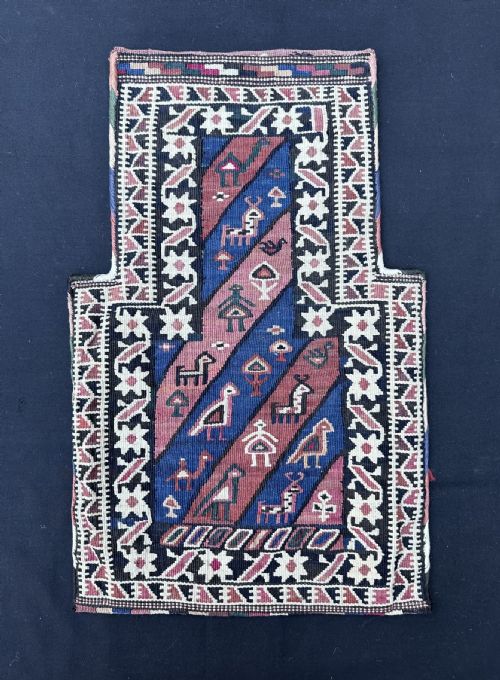
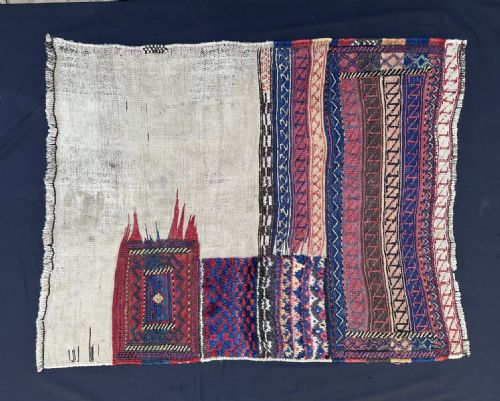
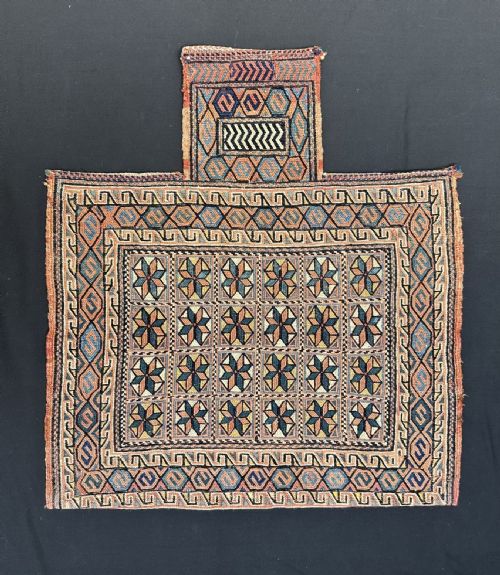




Blue Wool Flatweave Rug
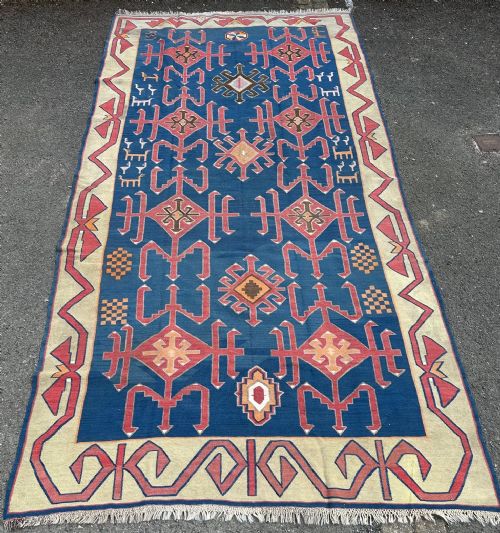
When you search for a blue wool flatweave rug, you find utilitarian tribal textiles woven across Persia, the Caucasus, and Anatolia for nomadic daily life.
Blue Wool Flatweave Rug
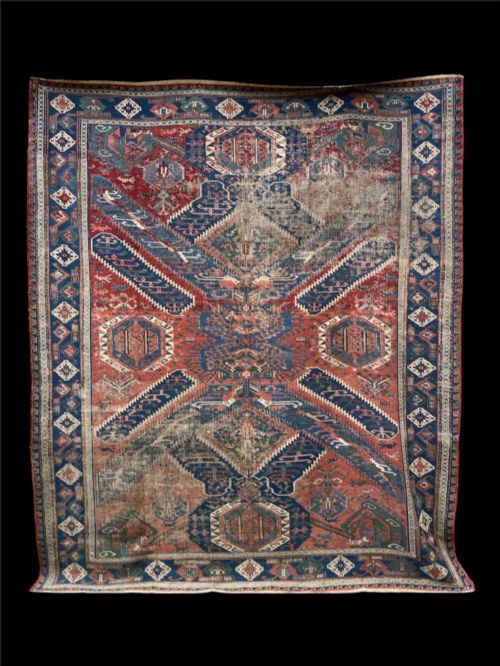
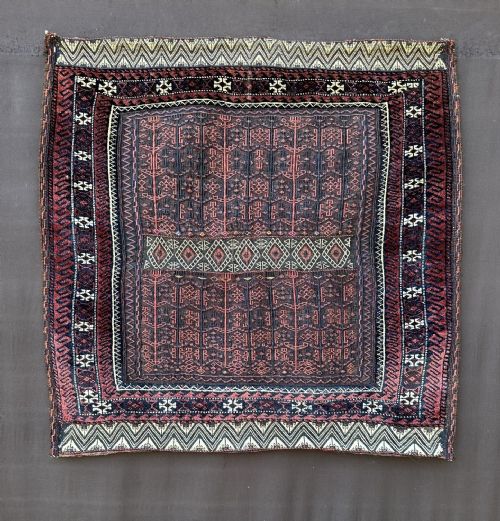
A blue wool flatweave rug represents the functional weaving of pastoral and tribal groups from regions such as Shirvan, Daghestan, and Khorassan. These items served as grain sacks, eating cloths, storage bags, and floor coverings rather than decorative items made for export.
The pieces appearing on this page span from the late nineteenth century into the mid-twentieth century, showing traditional tribal patterns rooted in specific geographical regions and nomadic communities.
Forms include kilims, soumaks, sofres, and saddlebags, displaying flat-woven structures created on portable horizontal looms.
How they were made
Weavers utilised hand-spun wool and occasional goat hair, working on narrow looms in multiple sections that were subsequently joined together to create larger formats like room-size carpets and runners.
Colour comes from natural and vegetable dyes, producing varied tones across panels that reflect the organic dye pots of nineteenth and early twentieth-century village workshops.
Listings span several decades from the late nineteenth century through to the mid-twentieth century, focusing on wool and natural dyes.
What varies in quality
Quality rests in the precision of the flatweave structure and the integrity of the original tribal design, whether executed in simple banded layouts or complex medallion and shield configurations.
The nuance of the natural dye palette and the fineness of the hand-spun wool differentiate standard utility sacks from masterworks woven by experienced nomadic hands.
The Blue Wool Flatweave Rug Glossary
- Kilim
- A flat-woven carpet or rug produced without a pile by tightly interweaving warp and weft strands. These textiles were traditionally utilised for floor coverings and wall hangings.
- Sofreh
- A spread or cloth used for dining or handling bread within nomadic households. They often feature geometric tribal markers and durable flatweave construction.
- Soumak
- A brocade-like flatweaving technique where supplementary weft threads wrap around the warp yarns to create a textured surface. This method provides extra durability for storage bags and heavy carpets.
- Mafrash
- A large rectangular storage chest panel or complete bag used by nomadic tribes for bedding and household goods during migration. They frequently display striking banded or medallion designs.
- Warp
- The stationary vertical threads stretched onto a loom before weaving begins. The weft threads are passed through these structural lines to form the textile.
Blue Wool Flatweave Rug: Frequently Asked Questions
What is a flatweave rug?
A flatweave rug is a textile constructed without any knotted pile, created instead by interweaving warp and weft threads flat on a loom. This method produces a thin, flexible fabric traditionally used for portable floor coverings and utility cloths.
Such rugs were easier for nomadic communities to transport and maintain than heavy piled carpets. They rely entirely on the tension of the weave and the pattern of the coloured threads for their visual impact.
How were tribal bags used?
Nomadic groups utilised woven bags such as salt-bags, saddlebags, and grain sacks for storing household possessions, food, and personal items during seasonal migrations. These containers hung inside tents or packed onto animals for transport.
Over time, many of these functional items were opened along their seams or preserved intact, allowing modern collectors to appreciate their specific tribal motifs and regional weaving structures.
Where were these textiles woven?
The pieces originate from nomadic and village communities across Persia, the Caucasus, Anatolia, and Central Asia. Specific regions include Shirvan, Daghestan, Khorassan, and the Chahar Mahal valley.
Each area developed distinct weaving habits, structural divisions, and palette choices tied to local materials and traditional tribal patterns passed down through generations.
How do I care for a flatweave?
Caring for a vintage flatweave requires gentle vacuuming without a rotating brush roll to protect the flat surface. Professional textile cleaning suited to antique wool ensures the natural fibres and vegetable dyes remain stable.
Keeping the rug out of direct sunlight prevents the natural indigo and other organic dyes from fading unevenly across the panels.