





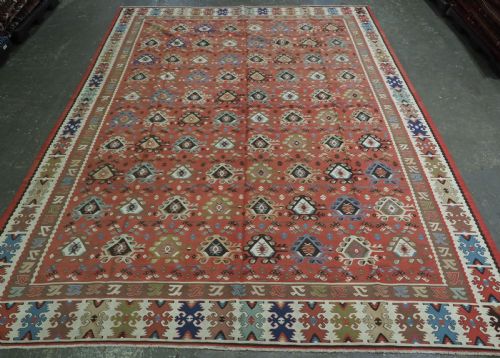


Terracotta Wool Kilim Carpet
When you search for a terracotta wool kilim carpet, you uncover flatwoven textiles born from tribal traditions across the Caucasus, Anatolia, and Central Asia.
Terracotta Wool Kilim Carpet
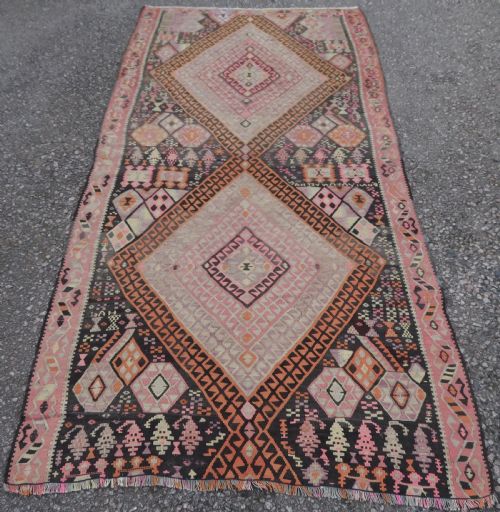
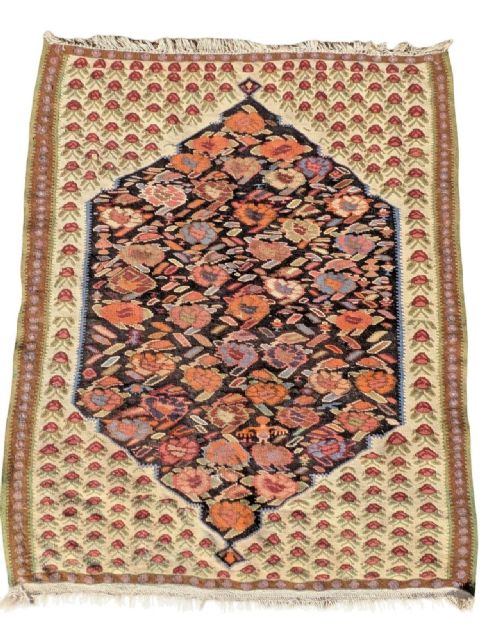
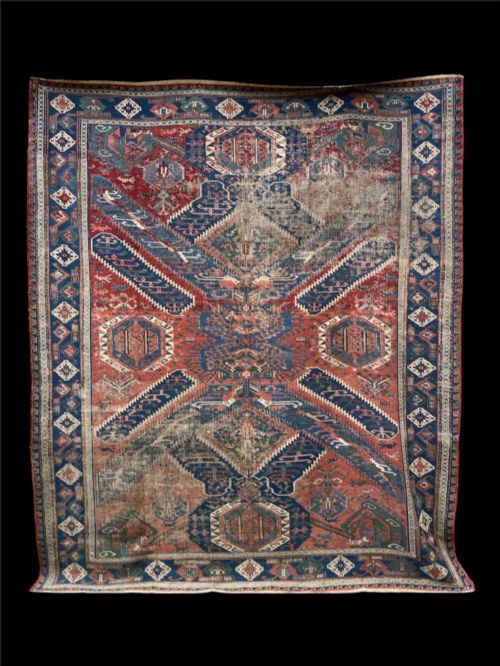
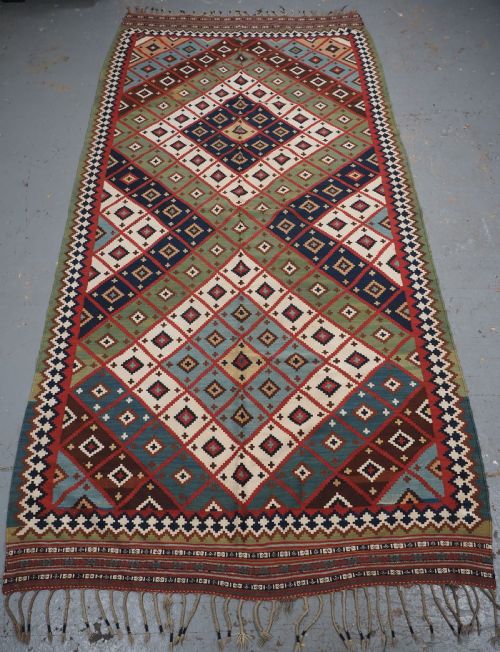
A terracotta wool kilim carpet represents a distinct category of flatwoven floor coverings and wall panels produced by tribal and nomadic makers. These textiles span periods from the nineteenth century through the early twentieth century, encompassing Victorian influences and regional folk art styles.
Buyers will encounter various forms on this page, including long runner rugs, large room-sized carpets, storage bag panels, and tent bands. The designs range from banded motifs and large medallions to repeat geometric patterns originating from Caucasian, Persian, and Balkan traditions.
Materials and construction
The primary construction relies on wool and hand-spun wool, often paired with cotton for structural stability. Artisans utilised flatweaving techniques without a pile, creating crisp geometric edges where different coloured weft threads interlock.
Certain pieces incorporate supplementary weft-work, brocade, and soumak wrapping techniques to build textured surfaces. Additional materials such as wood, metal, and brass appear primarily in associated functional objects like storage bags and carriage foot warmers.
Terracotta Wool Kilim Carpet Retail Price Guide 2026
Typical asking prices for terracotta wool kilim carpet among the pieces listed under this phrase on Sellingantiques today, from the lower quarter to the upper quarter. They describe what is for sale here now, not the wider market.
Materials documented across the inventory consist primarily of wool, hand-spun wool, and cotton, alongside structural elements of wood and brass.
Evaluating structural execution
Quality in these flatweaves rests on the tightness of the weave and the precision of the geometric lines. Finer weaves require greater control from the weaver, resulting in sharper graphic definitions across banded or medallion layouts.
The choice of dyestuffs and the preservation of long kilim ends or original borders influence the overall integrity of the textile. Pieces displaying harmonious soft colours or vibrant pastel palettes demonstrate superior material selection.
The Terracotta Wool Kilim Carpet Glossary
- Kilim
- A flatwoven carpet or rug produced without a pile by tightly interweaving warp and weft strands. This technique creates a lightweight textile suitable for both floor use and decorative hanging.
- Soumak
- A brocading technique where coloured weft threads are wrapped around the warp threads in a continuous sequence. This method adds structural weight and subtle relief texture to the surface design.
- Mafrash
- A large storage bag or chest panel used by nomadic tribes for household transport. These items are frequently preserved as flatwoven panels showcasing complex regional patterns.
- Warp
- The stationary vertical threads stretched across a loom that form the foundational skeleton of the textile. The weft threads are passed horizontally through these structural lines.
- Weft
- The transverse threads passed across the warp to build the visible pattern and colour of the fabric. In flatweaves, these coloured threads completely conceal the warp foundation.
Terracotta Wool Kilim Carpet: Frequently Asked Questions
What is a kilim?
A kilim is a flatwoven textile made without the plush pile found in traditional knotted carpets. Artisans build the patterns directly into the structure by tightly interweaving the coloured weft threads across the vertical warp.
These versatile pieces functioned historically as floor coverings, blankets, wall hangings, and storage containers. Their lightweight construction made them easily transportable for nomadic and tribal communities.
How do I care for a wool kilim?
Wool kilims require gentle maintenance to preserve their natural fibres and historic dyes. Regular light vacuuming without a rotating brush roll prevents dust accumulation within the flatweave.
Professional cleaning tailored for antique textiles remains the safest method for deeper restoration. Keeping the carpet away from prolonged direct sunlight prevents the natural colours from fading prematurely.
Where were these carpets made?
The pieces originate from diverse weaving traditions across the Caucasus, Anatolia, Persia, and the Balkans. Specific regional styles include Caucasian, Shahsavan, Yomut Turkmen, and Pirot or Sarkoy designs.
Each geographic area developed distinct geometric vocabularies, colour palettes, and weaving techniques passed down through generations. These regional traits help collectors attribute age and origin to individual textiles.
How do I distinguish regional styles?
Regional attribution relies on analysing the specific geometric motifs, border arrangements, and colour combinations. Caucasian and Anatolian pieces often feature bold graphic medallions and sharp rectilinear patterns.
Central Asian and Balkan examples typically display structured banded designs, lattice layouts, or detailed repeat motifs. Examining the weave density and wool preparation provides further clues to a carpet's provenance.