



Seventeenth Century Tallboy
These seventeenth century tallboy pieces bring genuine seventeenth-century storage and craftsmanship into your home, offering architectural presence and rich historical materials.
Seventeenth Century Tallboy
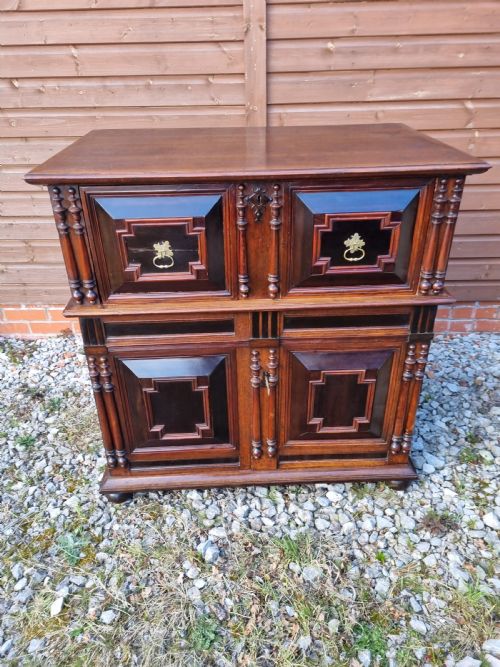
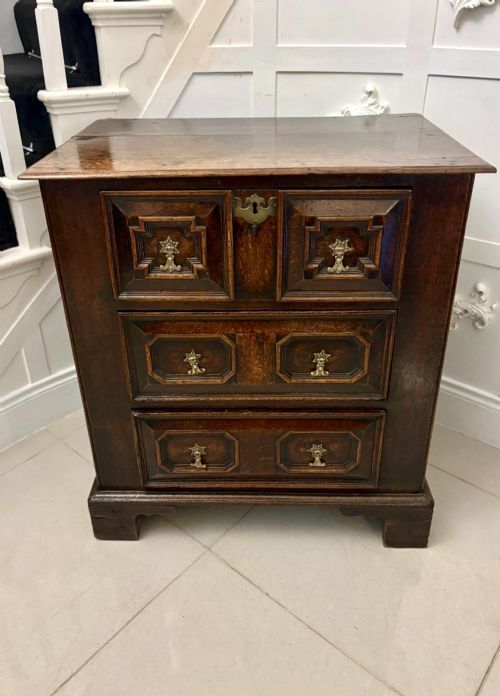
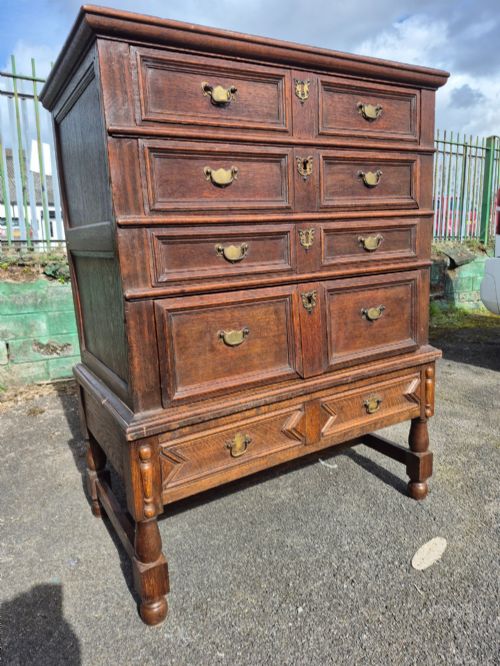
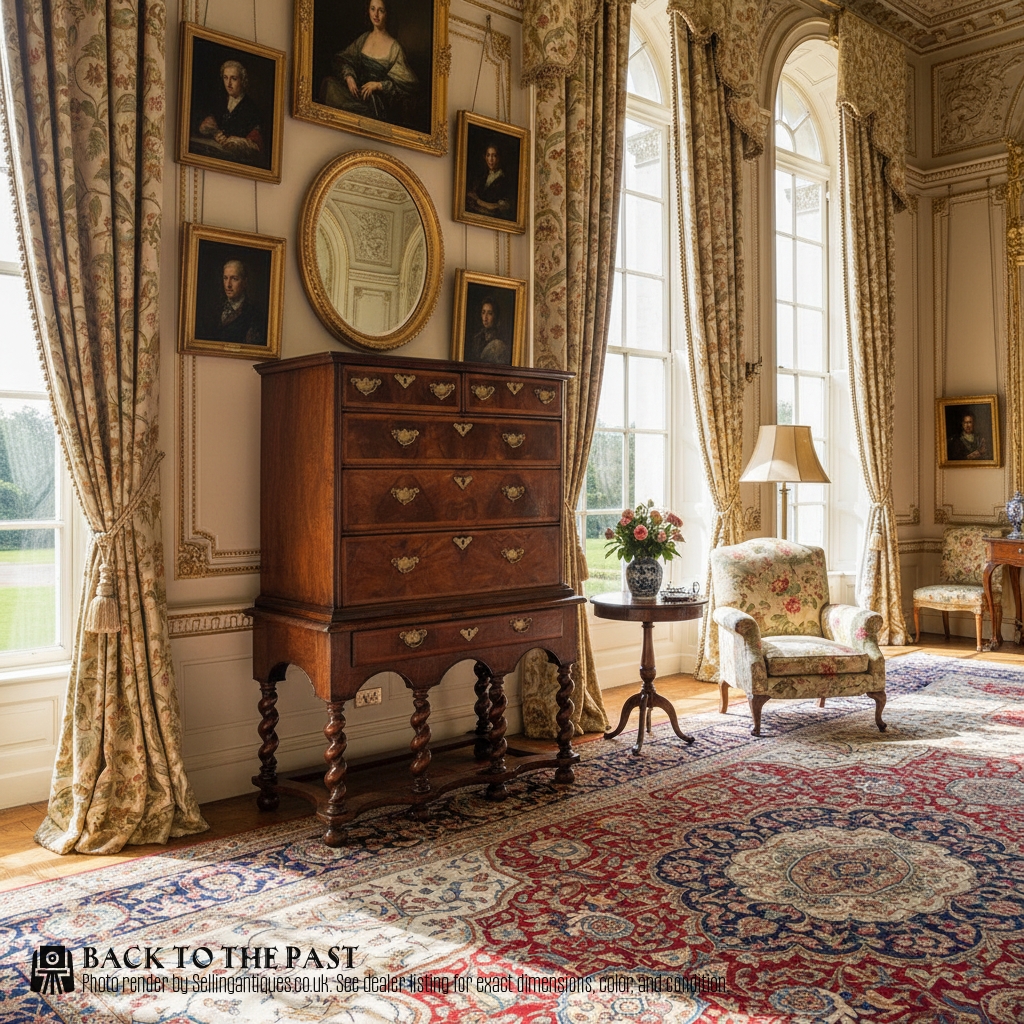
A seventeenth century tallboy encompasses robust seventeenth-century forms like chests of drawers, cabinets on chests, and chests on stands. These pieces reflect the sturdy domestic architecture of the period.
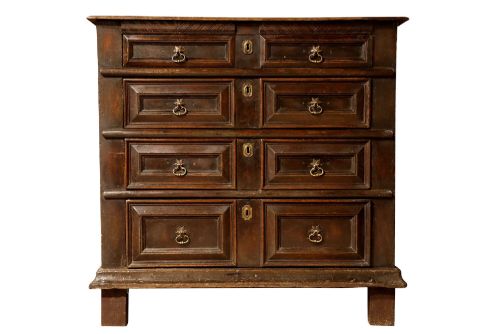
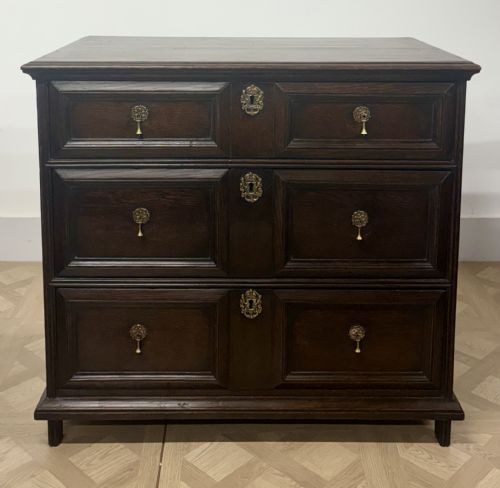
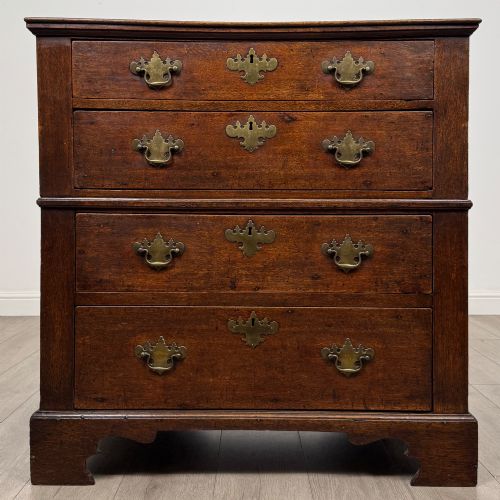
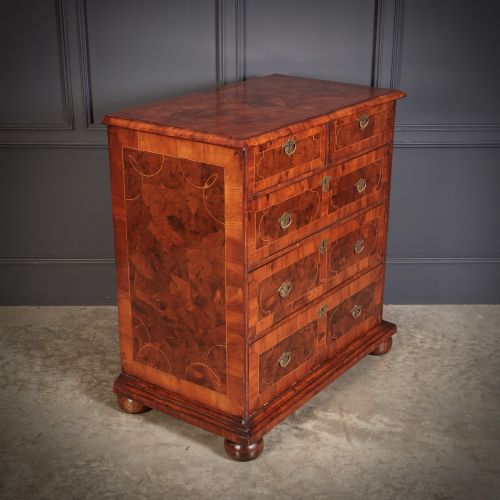
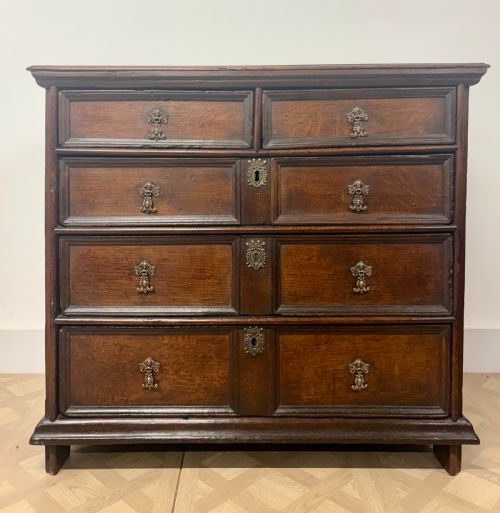
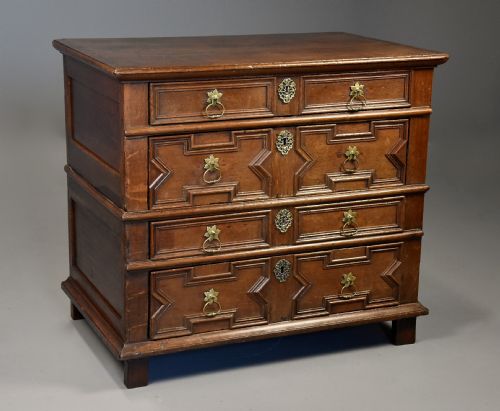
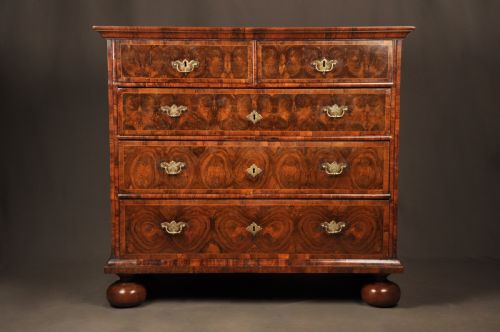
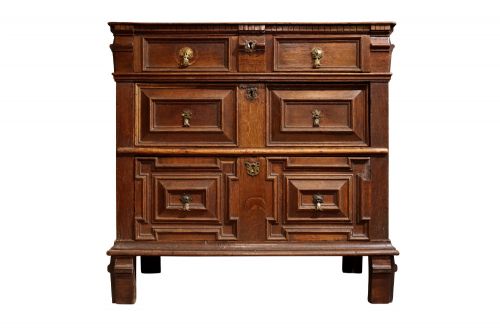
You are most likely to encounter oak chests of drawers featuring moulded fronts and geometric panels from the Jacobean and Charles II periods. Walnut and oyster-veneered examples also appear alongside rarer cedar and olive wood variants.
The construction typically involves heavy timber framing, often divided into two parts for easier movement. Many examples date from the late seventeenth century, specifically around the William and Mary era.
What varies in quality
The refinement of the surface ornament largely determines the distinction between standard and superior pieces. Crisp execution of geometric mouldings and well-matched oyster veneering elevate certain examples above plain panelled chests.
The integrity of the timber and the preservation of original brass hardware significantly affect the standing of a piece. Faded patination developed over centuries adds depth to the oak and walnut surfaces.
Seventeenth Century Tallboy Retail Price Guide 2026
Typical asking prices for seventeenth century tallboy among the pieces listed under this phrase on Sellingantiques today, from the lower quarter to the upper quarter. They describe what is for sale here now, not the wider market.
The listings feature oak, walnut, burr walnut, olive, cedar, and boxwood across Jacobean, Charles II, and William and Mary styles.
The Seventeenth Century Tallboy Glossary
- Oyster veneer
- Slices of wood cut transversely from small branches to produce circular or oval patterns resembling oyster shells. This technique gained popularity during the late seventeenth century on walnut and olive furniture.
- Geometric mouldings
- Raised wooden strips applied to drawer fronts in repeating angular patterns. They are characteristic of Charles II and William and Mary case furniture.
- Chest on stand
- A two-part storage form where a drawer section sits upon a distinct supporting frame with legs. This configuration lightened the visual weight of heavy seventeenth-century storage.
- Moulded front
- Drawer fronts shaped with projecting profiles and sunken panels. This treatment creates strong play of light and shadow across the facade.
- Brass drop handle
- A pendant-shaped pull suspended from a backplate, typical of late seventeenth-century drawer furniture. These fittings often hang from original brasses.
Seventeenth Century Tallboy: Frequently Asked Questions
What is a seventeenth century tallboy?
A seventeenth century tallboy describes elevated storage furniture from the 1600s, encompassing tall chests of drawers, cabinets on chests, and chests on stands.
These pieces combine functional compartment storage with the decorative architectural styles of the Jacobean, Charles II, and William and Mary periods.
What is oyster veneering?
Oyster veneering is a decorative technique where timber branches are sliced across the grain to reveal concentric growth rings. The resulting pieces resemble oyster shells.
Cabinet makers arranged these small veneers closely together across drawer fronts and tabletops, frequently utilising walnut or olive wood.
How should I care for antique oak furniture?
Maintain antique oak by keeping it away from direct heat sources and sudden humidity changes to prevent the timber from splitting. Regular gentle dusting preserves the natural finish.
Apply traditional wax sparingly when the surface appears dry, buffing it softly to maintain the historic patina developed over centuries.