
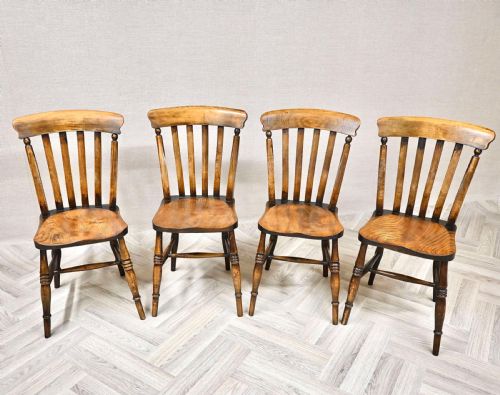
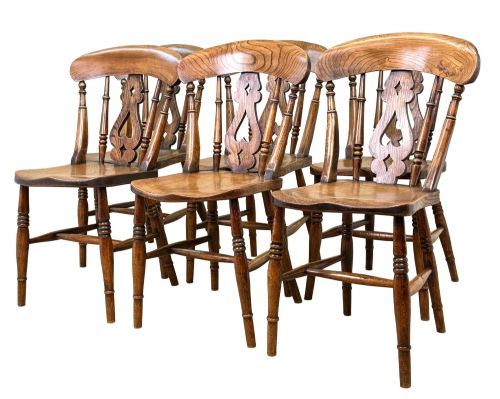
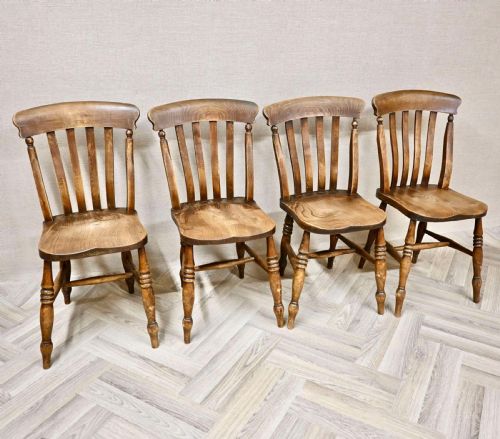
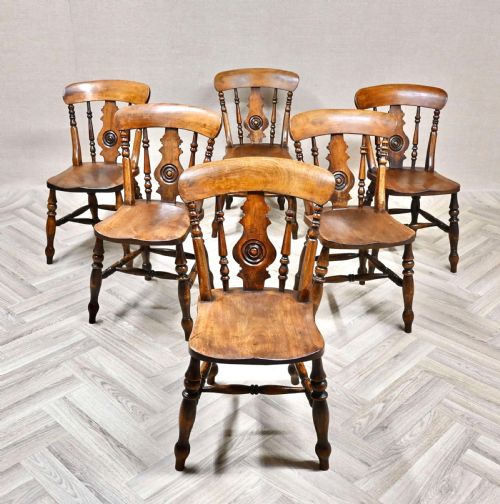
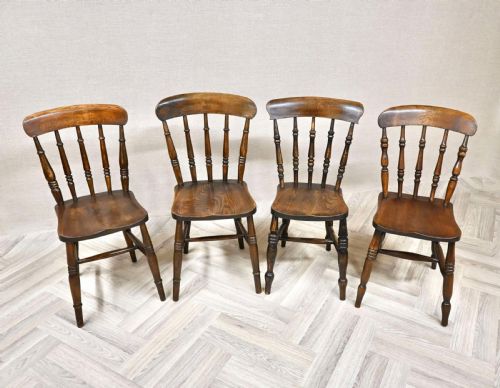
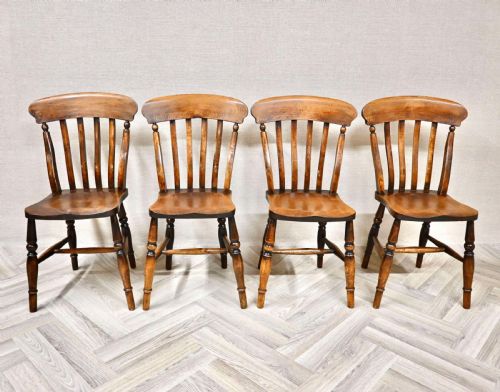
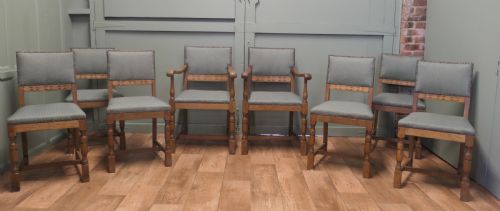
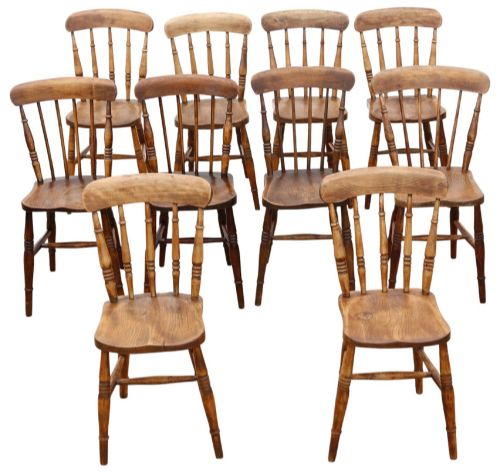
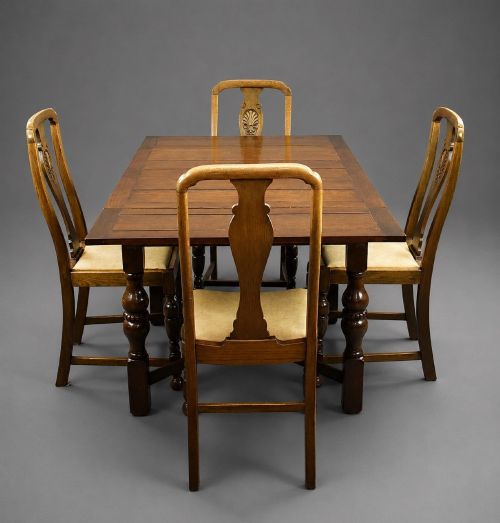
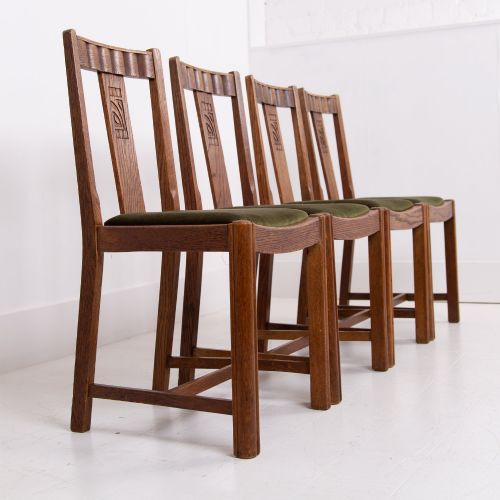
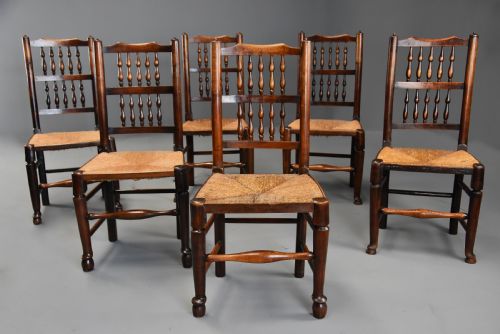
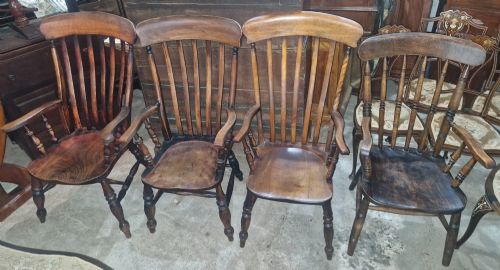
Set of Kitchen Chairs
When you search for a set of kitchen chairs, you are seeking honest vernacular seating shaped from elm, ash, and beech for daily use.
Set of Kitchen Chairs
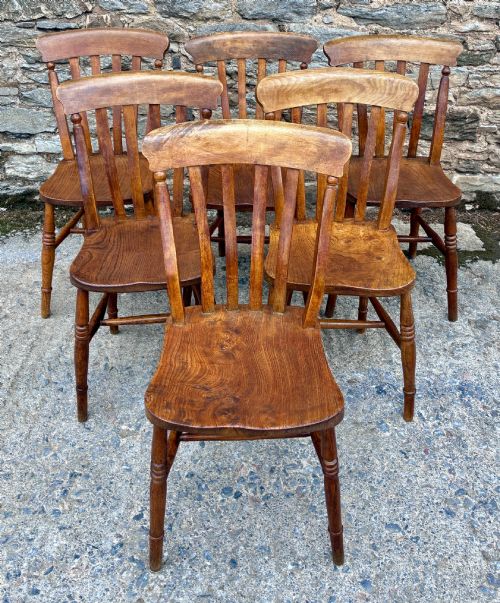
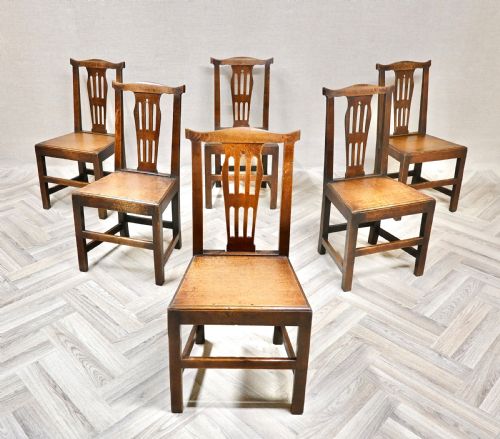
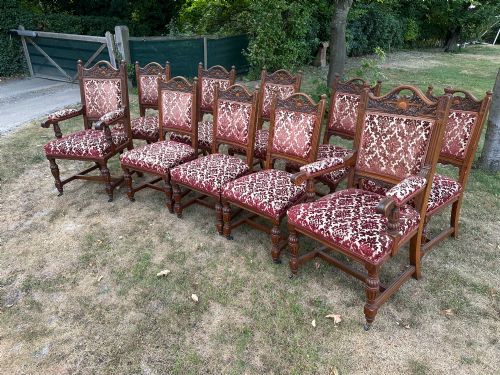
A set of kitchen chairs unites multiple seats gathered for domestic dining and daily work around the farmhouse table. You will frequently encounter matched or harlequin groupings originating from the nineteenth and early twentieth centuries.
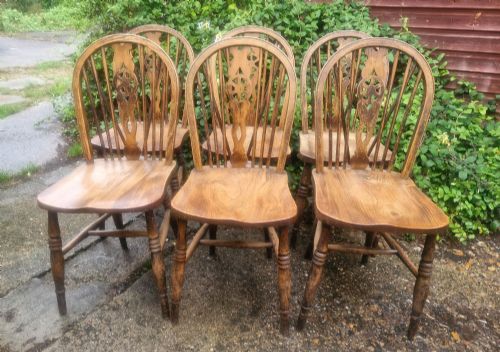
The regional English vernacular dominates these listings, taking the form of Windsor wheel backs, stick backs, hoop backs, and ladder backs. Makers constructed these sturdy groupings to withstand the heavy wear of farmhouse kitchens and country houses.
Most examples rely on traditional timber construction, combining solid wood seats with turned spindles and bowed crest rails. These groupings range from modest sets of four up to expansive dining arrangements numbering ten or twelve chairs.
How They Were Made
Cabinet makers and bodgers built these seats using a combination of native hardwoods, most commonly turning ash or beech for the spindles and legs while carving solid elm for the saddled seats. This timber selection placed flexible woods where bending was required alongside dense grain where strength mattered most.
Construction relied on traditional wedged tenon joints and steam bending to form the continuous hoop backs characteristic of Windsor styles. Makers often secured the components without metal fixings, allowing the timber to move naturally with changes in household humidity.
Listings feature regional variations spanning the nineteenth and early twentieth centuries, constructed primarily from elm, ash, and beech.
What Varies in Quality
The integrity of the original timber surface and the depth of the patina separate standard utilitarian seating from superior examples. Decades of polishing and daily handling create a rich tactile quality that heavy modern sanding destroys.
Proportion and the complexity of the spindle turnings also define the tier of the piece. Master bodgers shaped balanced crest rails and well-sculpted saddle seats that offer superior comfort alongside structural harmony.
The Set of Kitchen Chairs Glossary
- Windsor
- A traditional wooden chair featuring a solid carved seat into which the legs and back spindles are wedged directly. This form developed deep roots in English country workshops during the eighteenth and nineteenth centuries.
- Harlequin
- A matched or closely related group of chairs assembled together rather than born as a single factory batch. These sets share common regional traits while showing subtle variations in individual turning and age.
- Stick back
- A vernacular chair design utilising simple turned vertical spindles pinned into a bentwood rail or straight crest. These functional seats formed the backbone of rural domestic life.
- Saddle seat
- A thick wooden seat base scooped and shaped by hand to mirror the contours of the body. Elm was the preferred timber for this task due to its interlocking grain resisting splits.
- Spindle
- A slender, lathe-turned rod of timber used structurally to support the backrest or legs. Turners shaped these components by eye to balance strength with visual lightness.
Set of Kitchen Chairs: Frequently Asked Questions
What is a harlequin set?
A harlequin set is a collection of chairs that share a distinct regional style, timber, and era but were not originally manufactured together as a single batch.
Collectors often assemble these groupings over time to achieve a larger seating capacity while maintaining a cohesive rustic aesthetic around the dining table.
How do I identify elm wood?
Elm is characterised by a distinctive interlaced grain pattern that makes the timber exceptionally tough and resistant to splitting when carved into heavy seat bases.
Over the centuries, seasoned elm develops a warm, honeyed tone with a deep tactile patina that responds well to traditional wax polishing.
Can I use these chairs daily?
These vernacular country chairs were originally built for heavy daily service in farmhouses and cottages, making them robust enough for modern dining use.
Checking the joints and ensuring the wedged legs remain secure will keep these historic timbers functioning reliably in a contemporary home.