
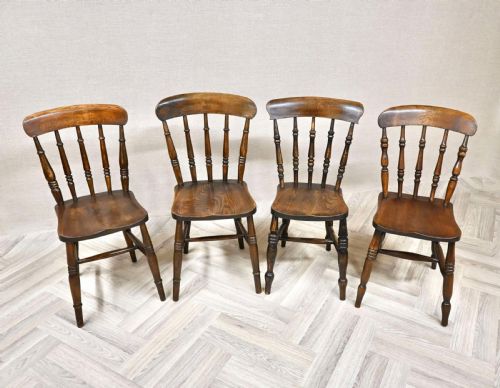
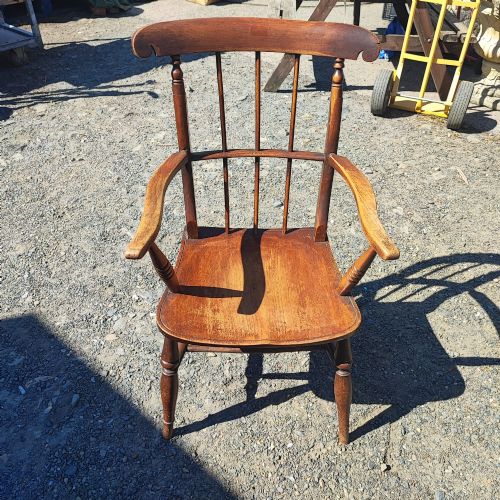
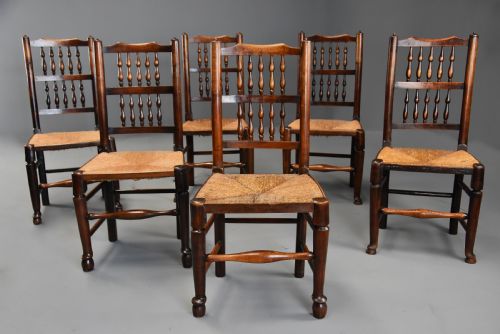
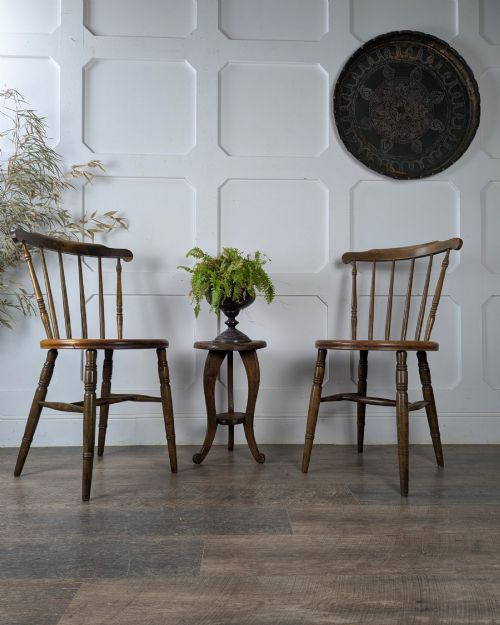


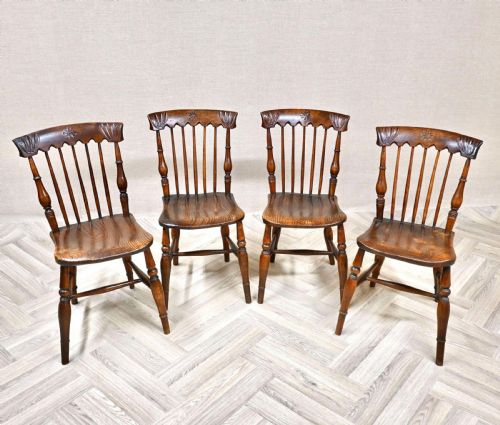

Turned Spindle Dining Chair
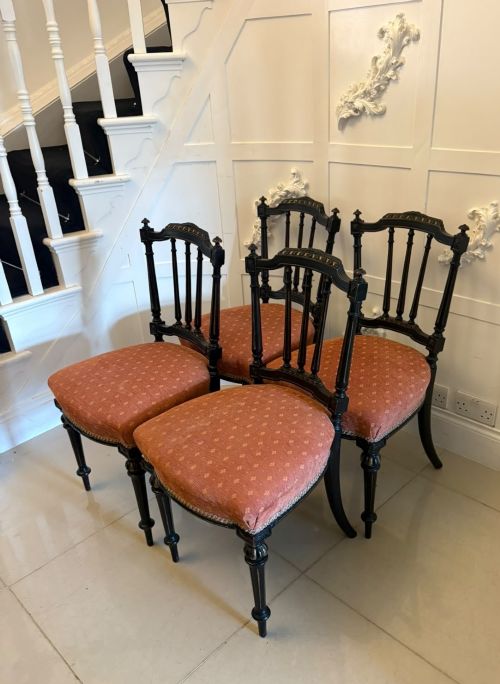
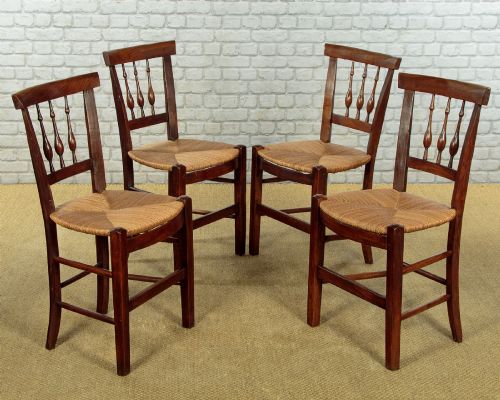
These turned spindle dining chair examples bring rustic English country character to the table, fashioned from honest native timbers like elm and ash.
Turned Spindle Dining Chair
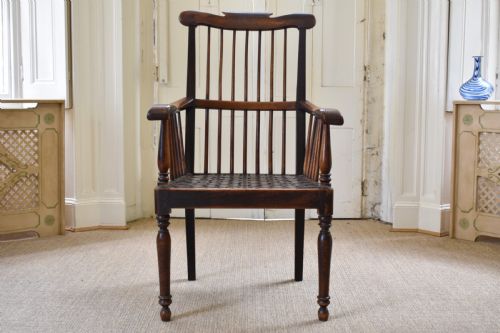
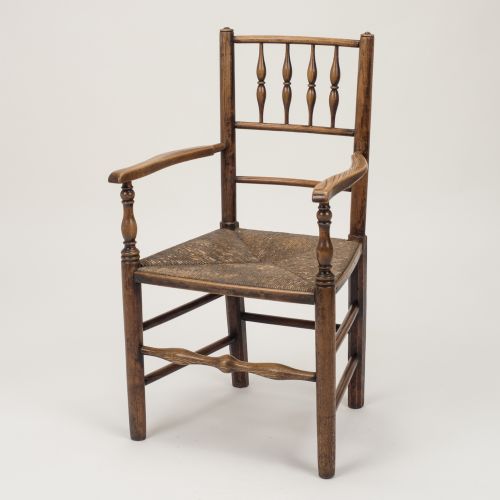
A turned spindle dining chair represents the traditional vernacular seating of British domestic life, spanning regional kitchen, farmhouse, and Windsor forms. Buyers exploring this category encounter sturdy timber frames designed for daily utility, often surviving in sets or pairs spanning the Georgian, Victorian, and Edwardian eras.
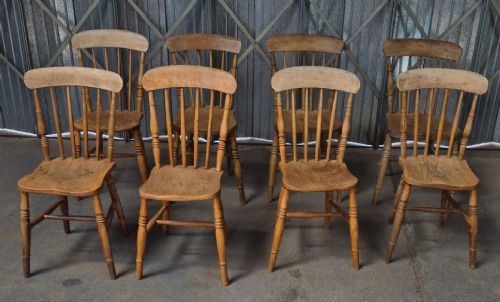
The selections on this page lean heavily towards English Country styles, featuring stick backs, ladder backs, and rush seats rooted in regional workshops. From Thames Valley stick backs to Worksop kitchen chairs, these pieces showcase the honest utility valued by rural households and contemporary interiors alike.
How They Were Made
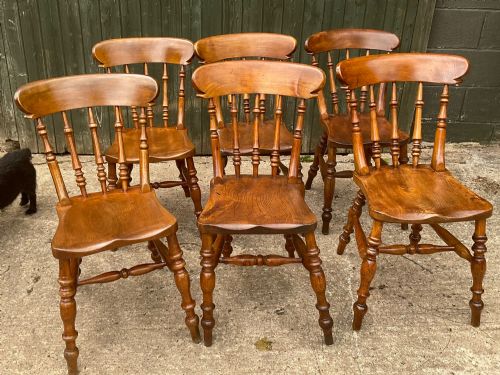
Constructed primarily from native hardwoods such as ash, elm, beech, and fruitwood, these chairs rely on contrasting timbers for seats and turned spindle components. Makers typically combined solid elm saddles with steam-bent ash frames and turned spindles, securing the joints through traditional mortise and tenon or wedged peg construction.
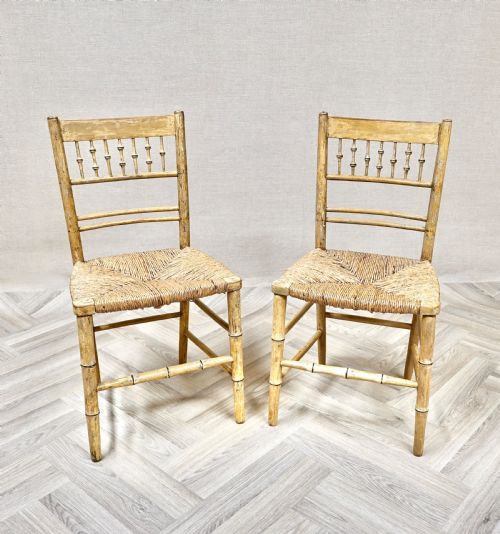
Seating areas frequently incorporate woven rush or solid timber saddle forms shaped for comfort. Surface finishes range from natural waxed grain and ebonised treatments to painted bamboo effects, reflecting the working methods of 19th-century and early 20th-century regional turners and provincial cabinetmakers.
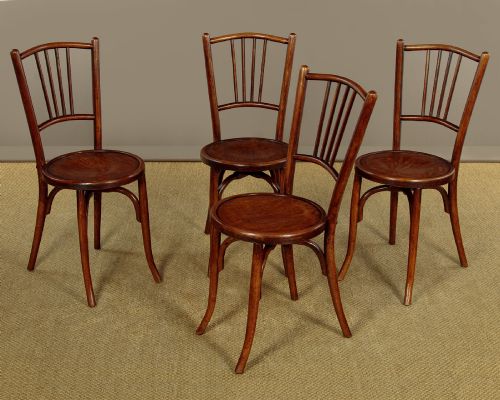
Penny seats offer a literal nod to their form, featuring small circular depressions carved directly into the solid timber.
What Varies in Quality
Quality rests upon the integrity of the timber selection and the precision of the turning in the spindles and stretchers. Higher grade examples maintain matching grain patterns across matched sets, retaining crisp turning details and solid structural joints without excessive replacement parts.
The presence of patination built up through generations of use elevates a piece, distinguishing honest vernacular craftsmanship from later reproductions. Consistency within sets, particularly among larger groupings of six or eight chairs, dictates the desirability and coherence of the furniture.
Codina·Liberty And Co·Philip Webb
The Turned Spindle Dining Chair Glossary
- Spindle back
- A chair design featuring a series of turned vertical wooden rods supporting the backrest. These members provide lightweight strength to the frame.
- Rush seat
- A seating surface woven from dried marsh rushes around a wooden frame. This technique creates a resilient and textured pad common in country chairs.
- Crindoline stretcher
- A bent metal or wooden reinforcing rail connecting the legs of a chair near the base. It adds rigidity while often providing a footrest.
- Carver
- An armchair, traditionally placed at the head of a dining table, sharing stylistic details with the smaller side chairs in a set.
Turned Spindle Dining Chair: Frequently Asked Questions
How do I care for rush seats?
Keep rush seats away from damp environments and direct heat sources to prevent the natural fibres from becoming brittle.
Clean them gently with a dry brush and occasionally apply a light mist of water to maintain the moisture in the dried marsh material.
Are these chairs comfortable for daily dining?
Most country dining chairs feature sculpted wooden saddle seats or supportive woven rush pads designed for extended sitting.
While they lack modern upholstery, their ergonomic proportions suit everyday kitchen and dining room use.
Can I mix different styles around a table?
Combining regional country chairs creates an eclectic look that reflects how these domestic items accumulated over generations.
Matching seat heights and similar timber tones help unify a gathered set around a shared dining table.