


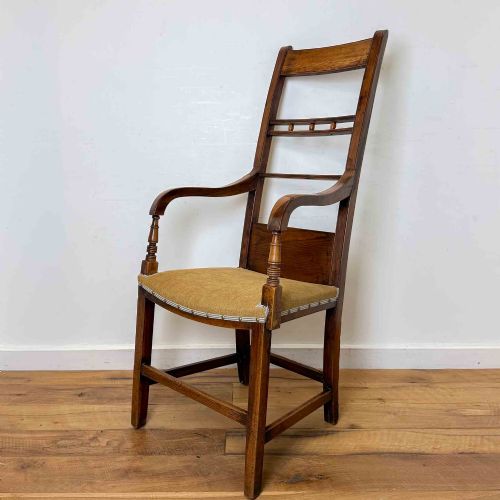

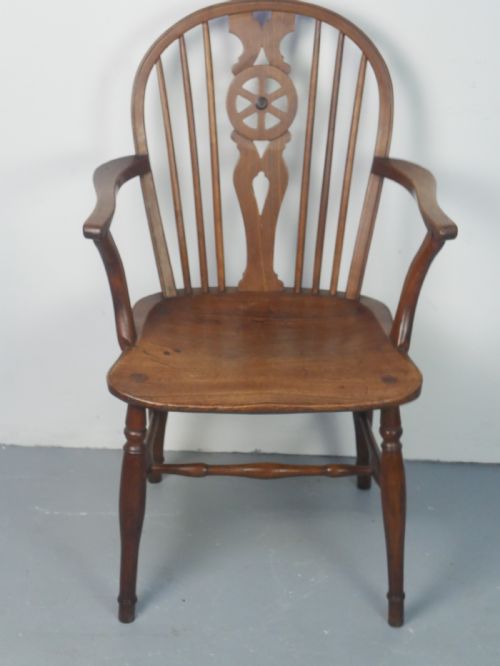


Fruitwood Armchair
A fruitwood armchair brings warmth and distinct regional character to a room, offering tactile pleasure through its rich, patinated timber.
Fruitwood Armchair
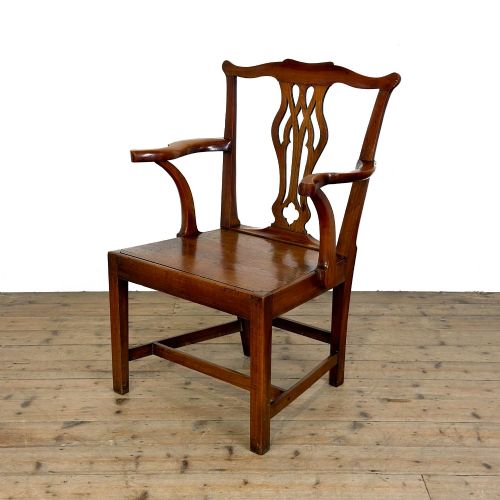
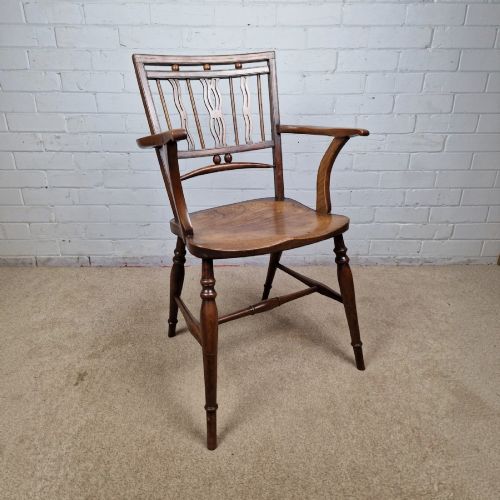
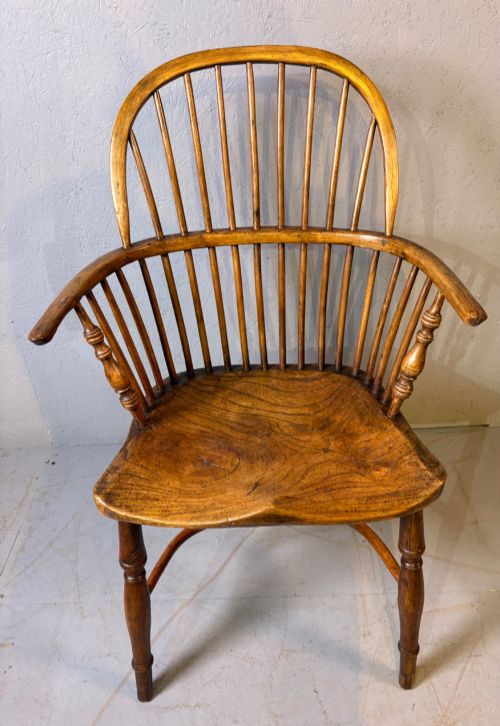
The most common examples encountered on this page are country Windsor armchairs and regional spindle-back chairs dating from the eighteenth and nineteenth centuries. These pieces reflect the local traditions of makers in areas like East Anglia, the Thames Valley, and the West Country.
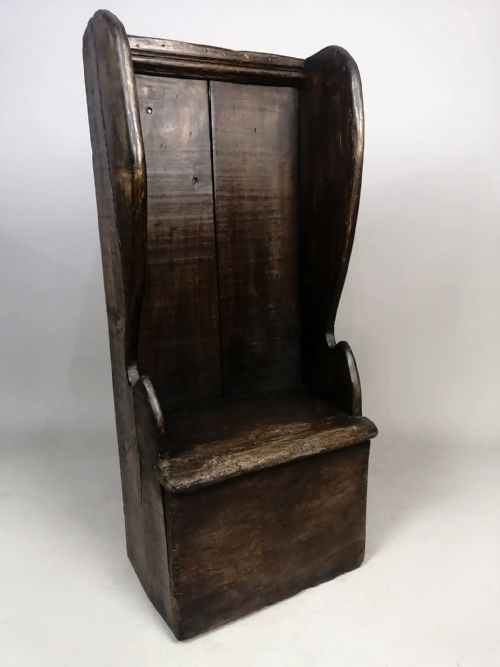
Buyers also encounter continental open armchairs and occasional French bergere models alongside sturdy British farmhouse seating. The diversity spans from seventeenth-century primitive child's lambing chairs to nineteenth-century Arts and Crafts variations.
Materials and construction
Makers utilised solid timbers, frequently pairing fruitwood seats or arms with elm, ash, or yew for structural strength and contrasting grain. This multi-wood construction was a practical response to material availability in regional workshops.
Joinery methods include traditional Windsor stick-back construction, mortise and tenon joints, and occasional rush seating. Surfaces were finished to highlight the natural colour and tactile quality of the wood without heavy synthetic varnishes.
Listings feature eighteenth-century and nineteenth-century pieces alongside seventeenth-century examples, using fruitwood, elm, yew, and rush.
Assessing quality and character
Quality in these seating pieces rests upon the integrity of the original construction, the depth of patination, and the survival of surface finishes. Chairs that retain their original timber combinations and uncompromised structural form command greater interest.
Godfrey Workshop
The Fruitwood Armchair Glossary
- Windsor chair
- A chair built with a solid wooden seat into which the legs and back spindles are direct-tenoned. These chairs often feature a bowed top rail and combined timbers.
- Patination
- The surface sheen and colour developed by wood over centuries through handling, light, and waxing. It indicates age and authenticity.
- Comb back
- A Windsor chair variation where the top rail resembles the spine of a comb, often featuring an extra tier of short spindles.
- Vernacular
- Objects made by local craftsmen following traditional regional designs rather than academic or metropolitan pattern books.
- Rush seat
- A bottom woven from dried marsh reeds, providing a flexible and durable seating surface found on many country chairs.
Fruitwood Armchair: Frequently Asked Questions
What is a fruitwood armchair?
A fruitwood armchair is a traditional wooden seat constructed using timber from fruit-bearing trees, often combined with other regional woods like elm and ash. These chairs encompass vernacular farmhouse designs, Windsor styles, and continental seating.
Craftsmen built them for everyday use in country houses and rural workshops, resulting in sturdy structures with distinct regional variations.
How do I care for a fruitwood chair?
Keep the wood conditioned by applying natural beeswax sparingly to maintain the surface sheen and prevent the timber from drying out. Avoid placing the chair in direct sunlight or near sudden heat sources.
Gentle dusting with a dry cloth protects the historic patination and preserves the tactile quality of the grain.
How old is my fruitwood armchair?
Dating relies on examining construction techniques, tool marks, timber combinations, and the wear patterns on the seat and arms. Eighteenth and nineteenth-century pieces dominate the surviving examples.
Regional styles often point to specific decades, while vernacular traits help separate earlier primitive forms from later revival pieces.