


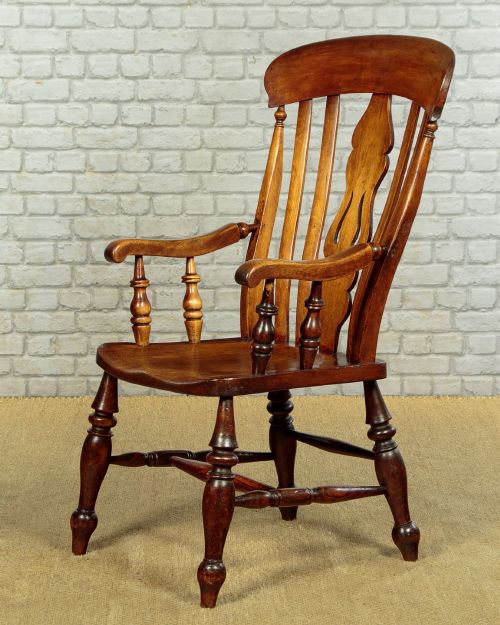
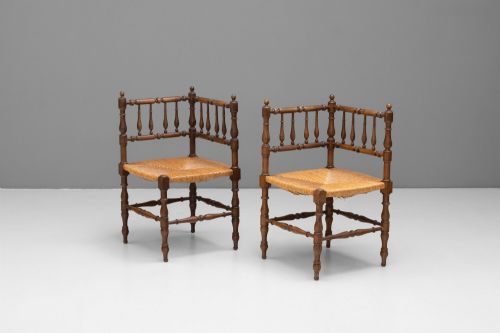
Rustic Country Armchair
A rustic country armchair brings centuries of vernacular seating tradition directly into a modern room through honest timber and unpretentious joinery.

Rustic Country Armchair
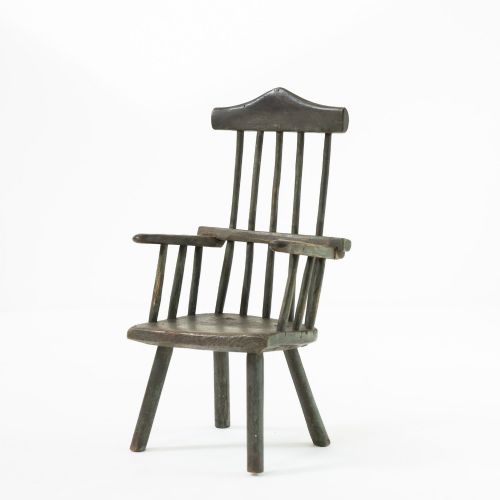
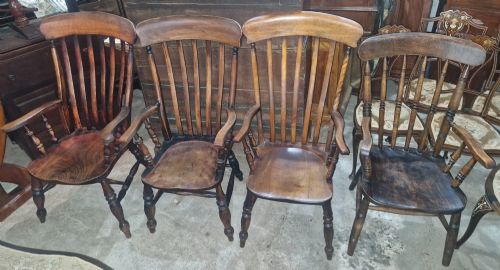
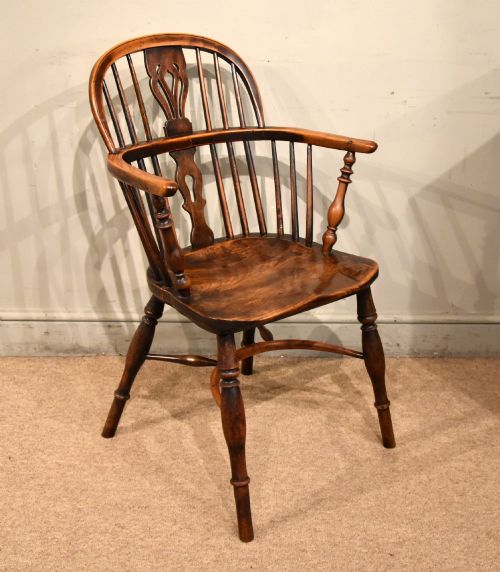
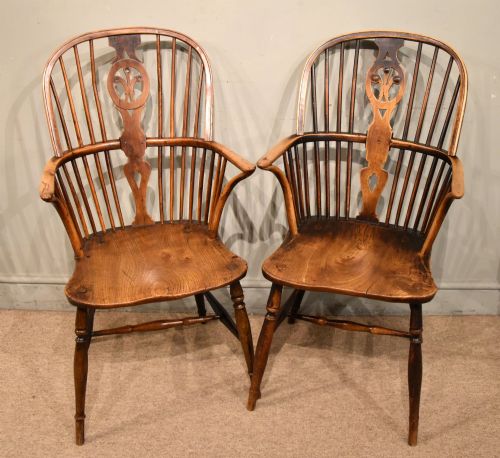
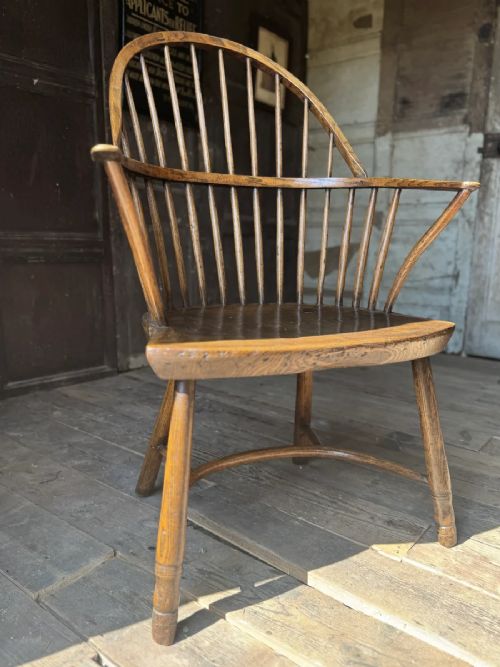
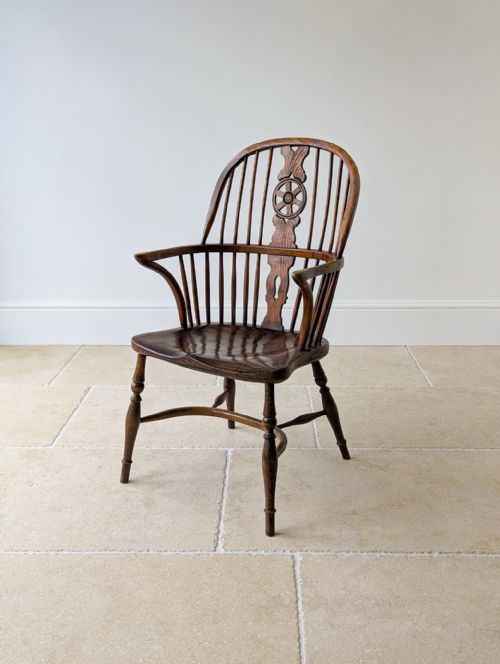
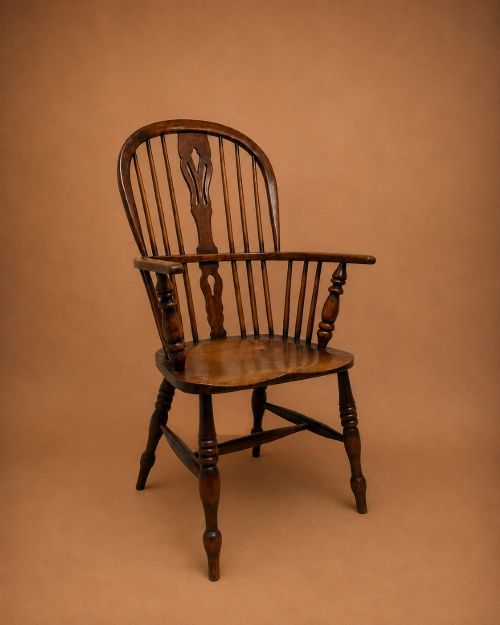
A rustic country armchair is a vernacular seating form shaped by local tradition and available timber rather than metropolitan fashion. When you search for a rustic country armchair, you encounter diverse regional variations from the eighteenth and nineteenth centuries, including Windsor, ladder back, and stick back forms. The most frequently met examples on this page are elm and ash Windsor armchairs originating from English farmhouses and vernacular workshops.
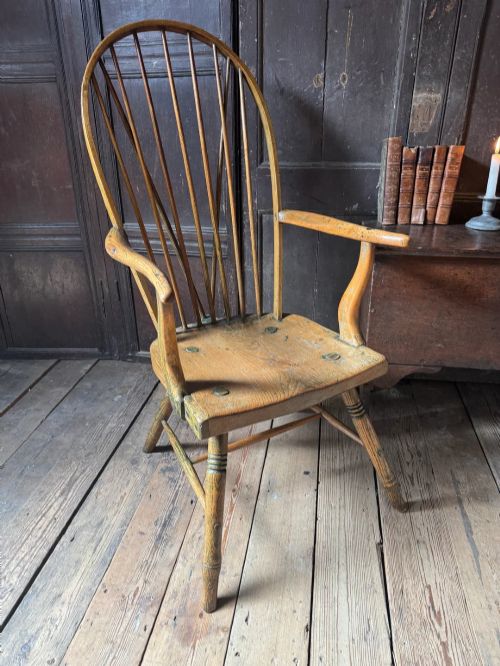
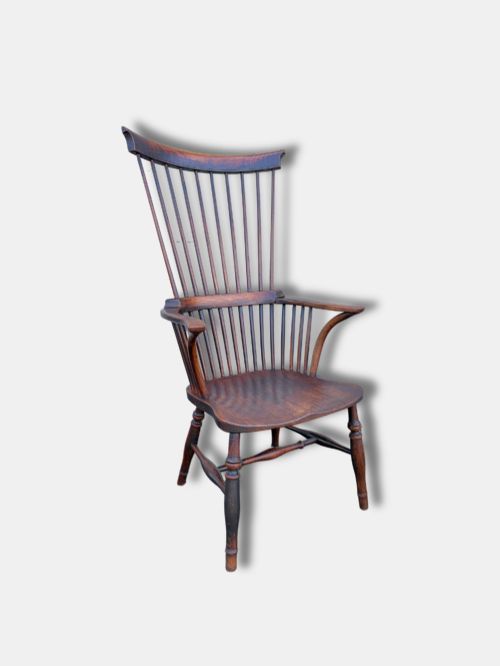
Makers working across rural districts produced robust seating for daily domestic use in kitchens, farmhouses, and cottages. These chairs range from low back and high comb back Windsors to spindle back farmhouse models and primitive rocking chairs. Surviving pieces often display distinct regional traits, such as crinoline stretchers or wheelback motifs tied to specific localities like the West Country or Lincolnshire.
Materials and construction methods
Country chair makers utilised contrasting native hardwoods for different structural components to ensure strength and resilience. Elm is typically selected for solid, dished seats because its interlocking grain resists splitting under pressure, whilst ash and beech provide flexible strength for spindles, stems, and bent hoops.
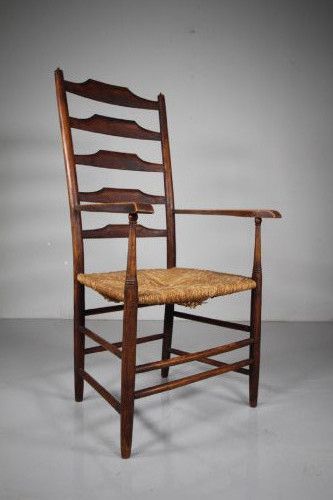
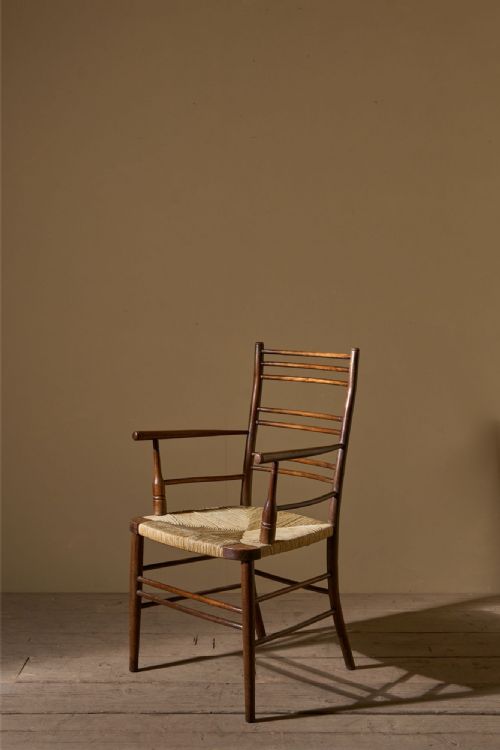
Construction relies on traditional bodging and Windsor techniques where turned or cleft legs and spindles are wedged directly into thick wooden seats. Additional materials like rush appear in woven seats, while yew and oak provide sturdy frames in specific regional workshops.
Rustic Country Armchair Retail Price Guide 2026
Typical asking prices for rustic country armchair among the pieces listed under this phrase on Sellingantiques today, from the lower quarter to the upper quarter. They describe what is for sale here now, not the wider market.
Listings feature eighteenth and nineteenth-century periods, alongside materials like elm, ash, oak, beech, yew, and rush.
Distinctions in quality
The distinction between ordinary utility seating and finer workshop production lies in the harmony of timber selection and the grace of the turning. Superior examples display carefully sculpted seats with deep comfort contours and balanced undercarriages where stretchers and legs align with precision.
Proportion and retention of original surface finish dictate the standing of an individual piece. Chairs that retain genuine surface patination without aggressive cleaning or excessive structural replacement hold greater integrity than those altered by later interventions.
Philip Clissett·Gabbitass Worksop
The Rustic Country Armchair Glossary
- Windsor chair
- A chair built with a solid wooden seat into which the legs and back spindles are separately inserted. This structural method creates a robust, organic form characteristic of rural English joinery.
- Comb back
- A Windsor chair design where the top rail resembles the teeth of a comb extending above the main spindle line. It provides an elevated rest for the occupant's head and neck.
- Crinoline stretcher
- An arched wooden brace connecting the legs of a chair near the base for added rigidity. The curved shape resembles the framework of a nineteenth-century crinoline skirt.
- Vernacular furniture
- Objects made by local craftsmen following regional traditions rather than formal academic styles. These pieces prioritise practical function and local material availability.
- Bodger
- A woodland craftsman who turned chair legs and spindles on a pole lathe near the source of timber. Their components supplied regional chairmakers who assembled the final frames.
Rustic Country Armchair: Frequently Asked Questions
How do I date an old Windsor chair?
Dating relies on examining construction marks, timber combinations, and the wear patterns on the seat. Earlier eighteenth-century models often feature multi-piece elm seats and distinct regional turning styles.
Later Victorian versions tend to show more uniformity in turning and sometimes incorporate machine-sawn components alongside traditional hand-rived timber.
Are these chairs comfortable for daily use?
Most country armchairs were designed for sustained domestic labour or relaxation, featuring ergonomically dished wooden seats. The geometry of the spindles and raked backs provides natural support.
Adding a loose squab cushion allows these historic seats to integrate smoothly into contemporary living spaces without losing their traditional character.
What is the difference between ash and elm?
Ash offers exceptional flexibility and tensile strength, making it the preferred choice for bent hoops, arms, and slender spindles. Its light colour and distinct grain contrast neatly with other timbers.
Elm provides high density and toughness with a swirling grain pattern that resists splitting, which explains its widespread use for solid plank seats.
Why do some chairs have rush seats?
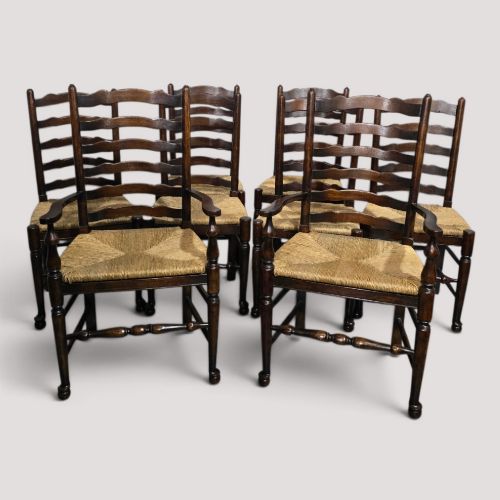
Rush seating represents an alternative regional tradition where dried marsh plants are twisted and woven across an open wooden frame. This technique yields a slightly springy surface different from solid wood.
Chairs featuring rush work, such as ladder back dining models, often point towards specific West Country or Arts and Crafts production methods.