




Serpentine Marquetry Side Table
A serpentine marquetry side table brings fluid lines and intricate floral or pictorial wood inlays into a room, offering both decorative presence and a practical surface.
Serpentine Marquetry Side Table
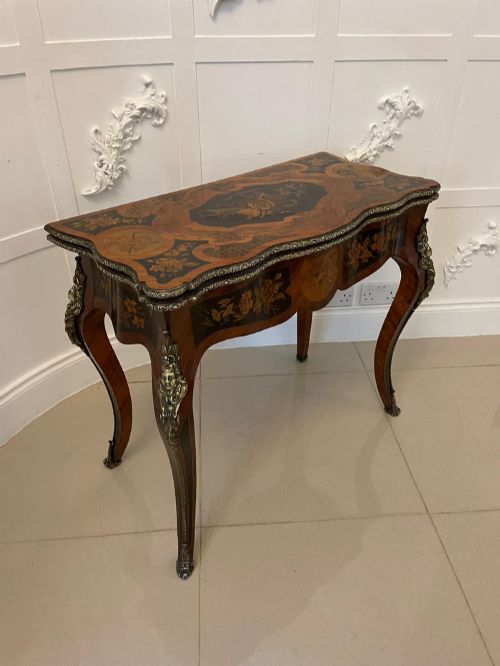
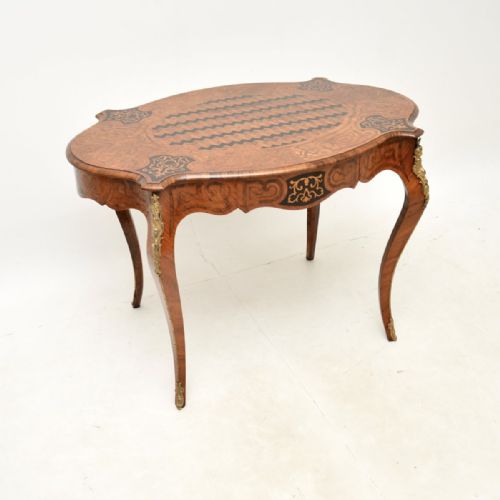
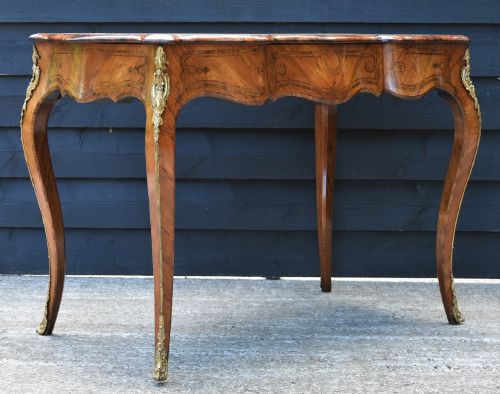
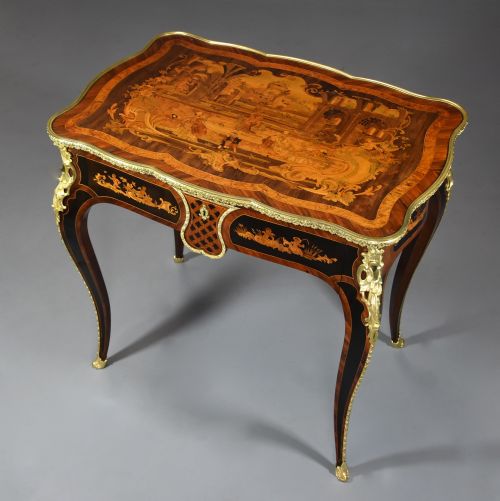
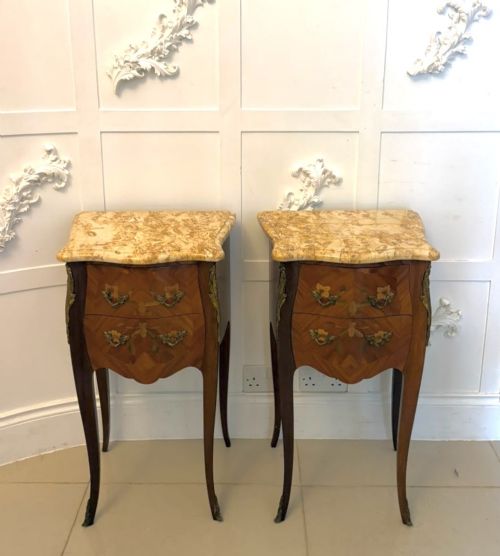
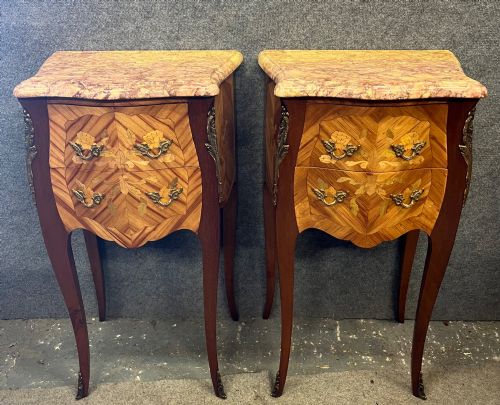
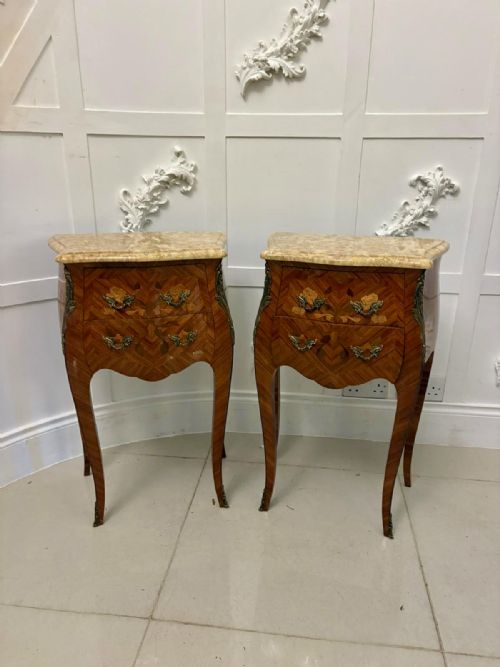
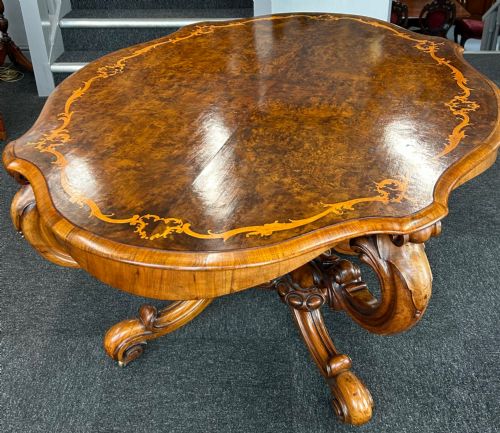
A serpentine marquetry side table displays a distinctive undulating front edge paired with patterned wood veneers. These pieces emerge predominantly from nineteenth-century French and Victorian workshops, reflecting revival tastes such as Louis XV and Rococo styles.
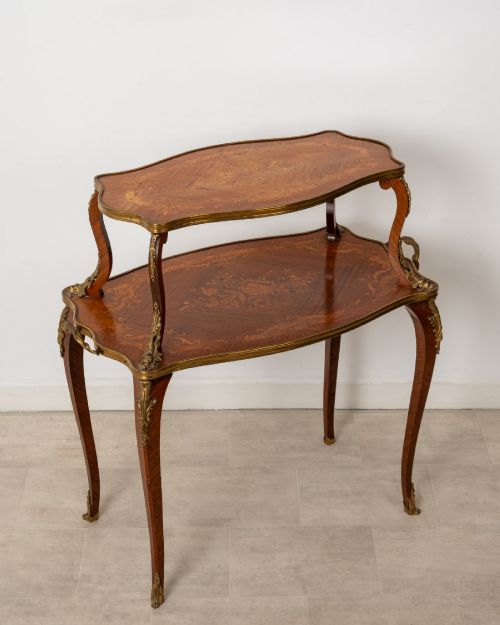
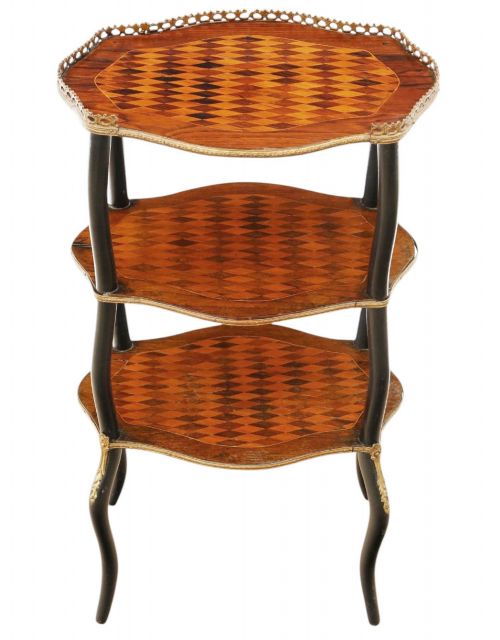
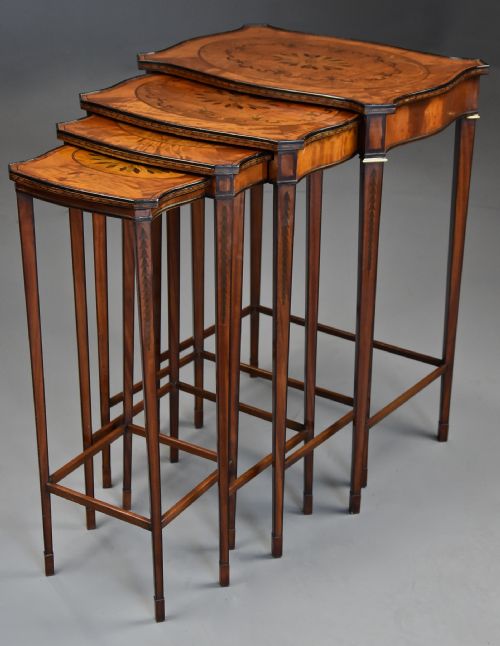
The selection encompasses various forms alongside traditional side tables, including card tables, centre tables, and occasional tables. Walnut, kingwood, and rosewood form the structural and veneer basis for the majority of these examples.
How they were made
Craftsmen built these tables using timber carcases overlaid with fine veneers like kingwood, walnut, and satinwood. Marquetry cutters sliced contrasting woods by hand to form floral, geometric, or pictorial motifs embedded directly into the surface.
Many examples incorporate cast or chased ormolu mounts fixed to the corners, legs, and aprons to accent the curved outlines. Ebonised wood and brass inlay also appear on select nineteenth-century pieces, adding further contrast to the polished tops.
Periods represented span from the eighteenth century through the Victorian era and into the early twentieth century.
What varies in quality
The refinement of the marquetry design sets apart the finer examples, distinguishing crisp, multi-wood pictorial inlays from simpler geometric repeats. Precision in the shaping of the serpentine timber outlines also dictates the overall elegance of the piece.
The integration and chasing of the ormolu mounts demonstrate the maker's skill, with superior pieces featuring finely detailed gilt bronze rather than simpler cast metal. The choice of underlying cabinet woods, such as solid kingwood versus secondary timbers, further defines the tier of manufacture.
Maison Millet·Henry Dasson
The Serpentine Marquetry Side Table Glossary
- Serpentine
- A curved furniture edge featuring a convex centre flanked by concave ends. This contour requires careful hand-shaping of the solid timber and veneer.
- Marquetry
- Decorative veneer work forming pictures or patterns using various woods. Craftsmen assemble thin slices of timber like kingwood, tulipwood, and walnut.
- Ormolu
- Gilt-bronze mounts applied to furniture for decoration and edge protection. These mounts are cast and chased to highlight Louis XV and revival styles.
- Etagere
- An open tiered piece of furniture used for display. These items often share the marquetry and serpentine characteristics of contemporary side tables.
- Bureau Plat
- A freestanding writing desk fitted with drawers. These desks frequently exhibit the same kingwood veneers and ormolu mounts found on companion tables.
Serpentine Marquetry Side Table: Frequently Asked Questions
Where were these tables placed?
These tables typically stood against drawing room walls, in hallways, or as freestanding centrepieces in nineteenth-century reception rooms. Their finished backs allowed them to occupy central spaces without losing visual appeal.
Smaller variants also served beside seating areas or within bedrooms as lamp tables and nightstands. Their compact footprints made them adaptable to various interior layouts.
How do I identify Louis XV style?
Louis XV revival pieces display characteristic asymmetrical curves, cabriole legs, and naturalistic floral marquetry. The serpentine outline of the top mirrors the sweeping contours found throughout the frame.
Ormolu mounts on these pieces usually highlight the shoulders of the legs and the apron centre. These decorative elements emphasise the flowing lines typical of French nineteenth-century design.
What woods were used for veneers?
Cabinetmakers relied heavily on exotic and domestic hardwoods for both colour and grain contrast. Kingwood, rosewood, and walnut provided rich dark backgrounds for intricate inlay work.
Satinwood and tulipwood supplied lighter tones for floral petals and geometric banding. These veneers were sawn thin and glued over solid wood carcases.
How do I care for antique marquetry?
Keep these tables away from direct sunlight and heat sources to prevent the underlying veneers from drying and lifting. Maintaining stable room humidity protects the delicate wood inlays and joints.
Clean the polished surfaces gently with a soft, dry cloth rather than modern liquid polishes. Wax can be applied sparingly to nourish the timber and preserve the historic finish.