

Brass Mounted Occasional Table
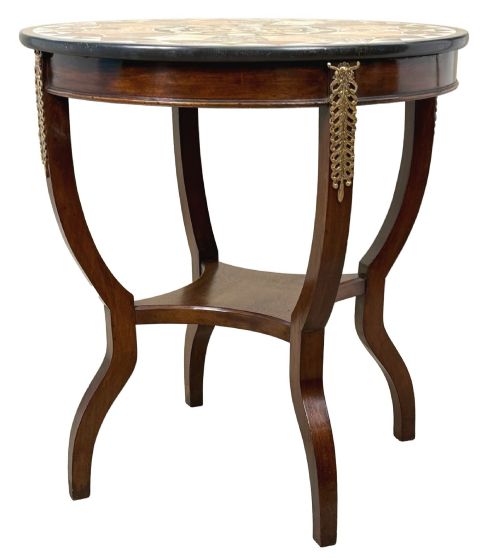
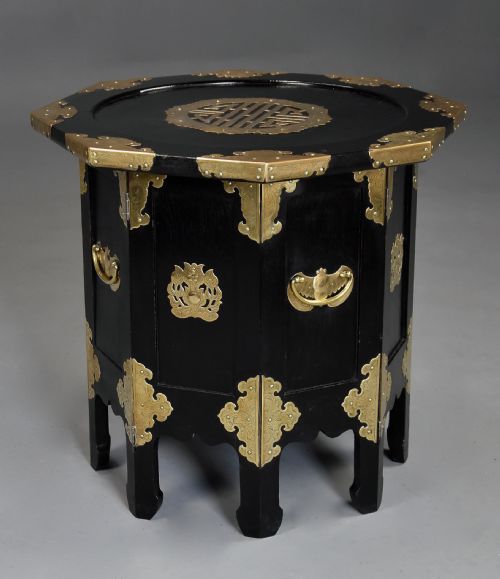
A brass mounted occasional table brings structured French and Regency refinement to a room, offering a surface framed in cast metal.
Brass Mounted Occasional Table
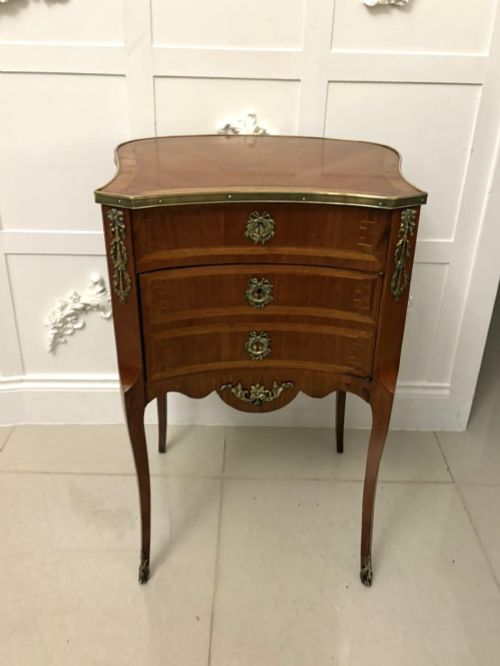
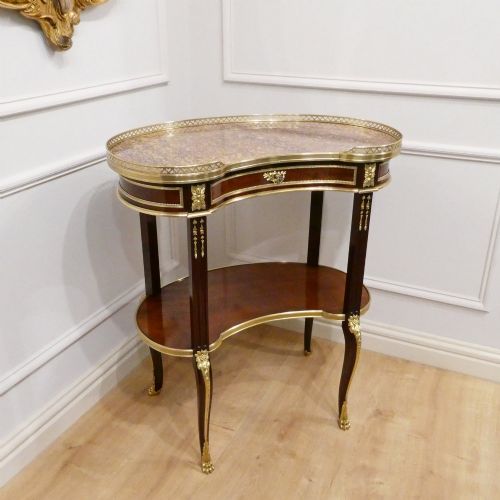
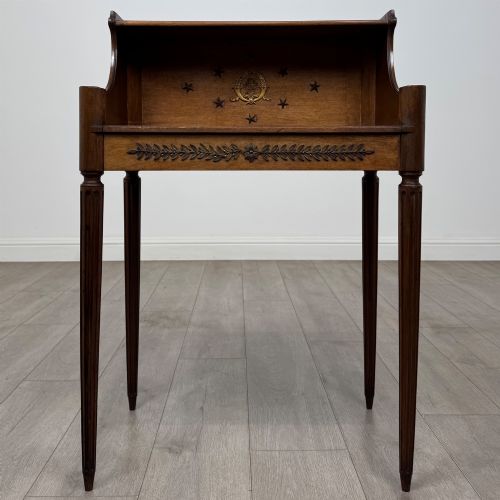
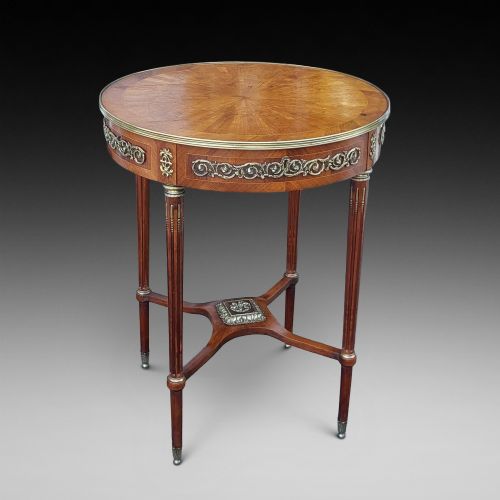
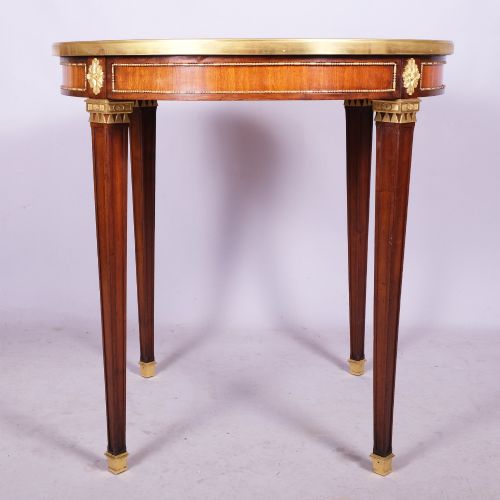
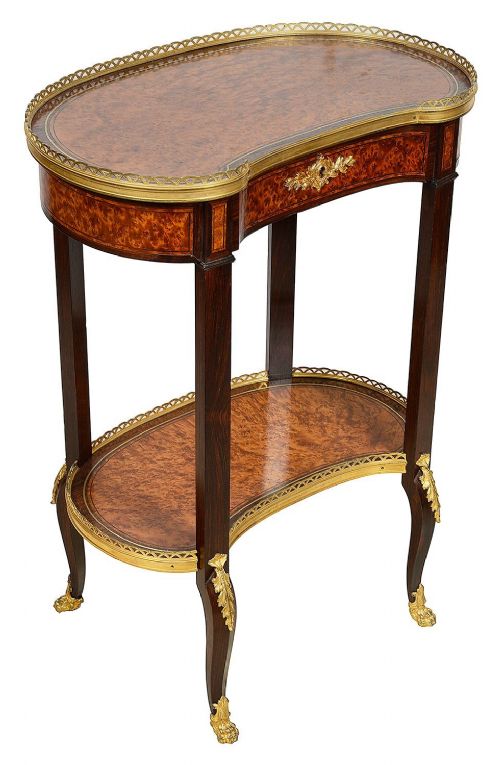
A brass mounted occasional table covers a variety of compact freestanding forms designed for flexibility within the home, including side tables, lamp tables and bouillotte tables. The most common examples on this page are French revival pieces from the nineteenth century alongside English Regency designs.
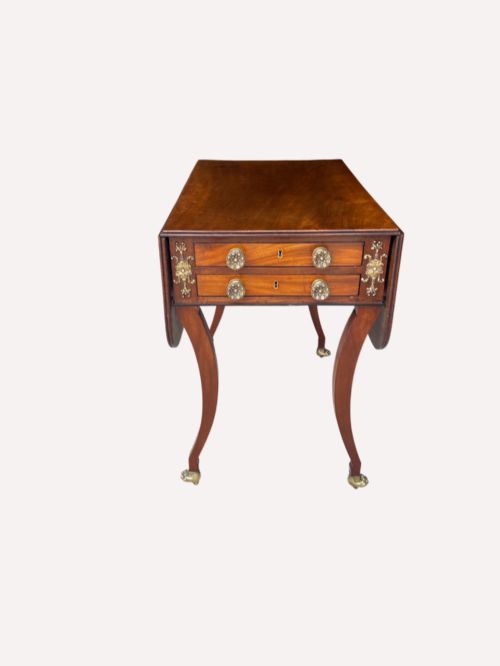
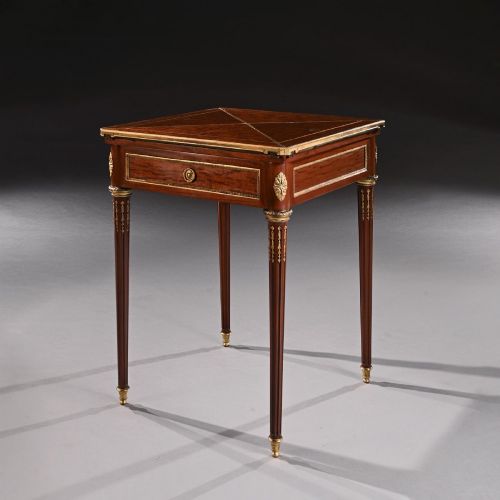
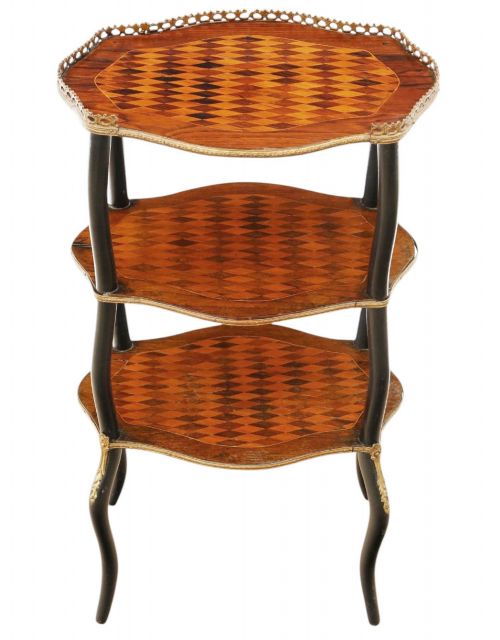
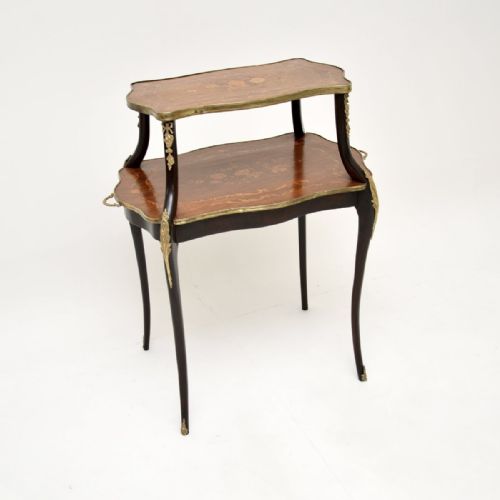
Beyond standard side surfaces, the category extends to include multi-tiered etageres, card tables and drop-flap centre tables. These pieces served varied social functions in nineteenth-century drawing rooms and boudoirs before finding new utility in contemporary interiors.
How they were made
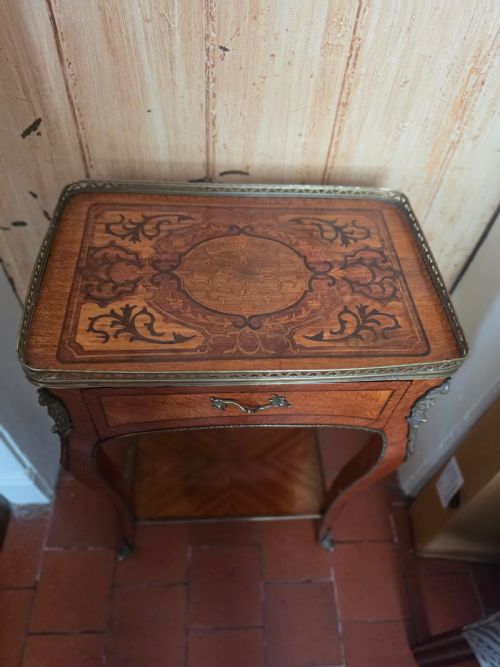
Carpenters constructed the structural carcasses from dense hardwoods like mahogany and walnut, frequently applying intricate veneers of kingwood, rosewood and satinwood in marquetry or parquetry patterns. Tops were often inset with polished marble, onyx or specimen stone, creating a heavy and durable display surface.
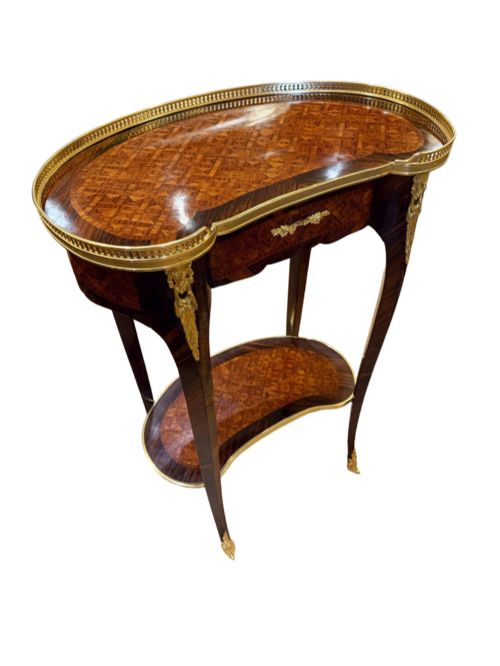
Ornamentation relied on cast metal components, specifically brass, ormolu and gilt bronze, which were secured to edges, legs and aprons to highlight the structural lines. These mounts were hand-chased after casting to yield sharp detail along the scrolling foliage and neoclassical motifs.
Several tables include hidden candle slides, reminding us that nineteenth-century card players relied on candlelight to see their hands.
What varies in quality
The distinction between standard commercial output and high workshop production rests on the precision of the timber inlay and the crispness of the metal mounts. Finer examples display hand-chased ormolu with distinct relief, whereas lesser pieces use stamped brass fittings with softer edges.
Structural integrity also separates workshop grades, evident in the choice of solid secondary timbers beneath the veneers and the seamless fit of marble or onyx tops. Tables bearing recorded maker signatures or attributions to prominent cabinetmakers generally exhibit superior joinery and more balanced proportions.
James Shoolbred·Maison Millet·Antoine Lampre·François Linke
The Brass Mounted Occasional Table Glossary
- Ormolu
- Gilded bronze or brass applied as a decorative mount to furniture. This technique was widely utilised in French cabinetmaking during the eighteenth and nineteenth centuries.
- Marquetry
- Decorative veneer applied to furniture in patterned wood designs depicting floral or geometric motifs. Craftsmen cut contrasting thin wood sheets together to achieve a tight fit.
- Bouillotte table
- A small circular occasional table featuring a raised brass gallery around the top edge, originally designed for card playing. They frequently incorporate marble tops and small candle slides.
- Gueridon
- A small French occasional table supported by one or more central columns or a figural stand. The form originated in the seventeenth century and saw a revival in nineteenth-century neoclassical interiors.
- Parquetry
- Geometric wood inlay forming repetitive patterns such as cubes or chequers across a table surface. It differs from marquetry by relying strictly on angular geometric arrangements.
- Etagere
- An open shelving unit or side table with multiple tiers designed for displaying decorative objects. These pieces often feature brass mounts and slender upright supports.
Brass Mounted Occasional Table: Frequently Asked Questions
What is a bouillotte table?
A bouillotte table is a small circular occasional table distinguished by a raised brass rim, or gallery, designed to prevent items from sliding off the top. They frequently feature inset marble surfaces and candle slides pulled out from beneath the top.
Originally constructed for card games, these tables date largely to the nineteenth century in the French neoclassical taste. Their compact footprint makes them versatile as lamp tables in modern spaces.
How do I care for marble tops?
Marble surfaces require simple maintenance using a soft damp cloth and neutral soap, avoiding acidic cleaning agents that etch polished stone. Periodic waxing protects the surface from moisture rings and daily wear.
The stone is heavy and rests within the wooden framework of the table, meaning it can be lifted out carefully for deep cleaning or moving.
What distinguishes Regency from Victorian pieces?
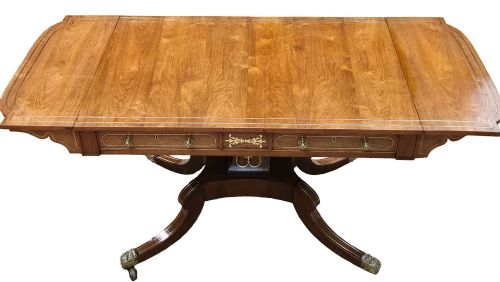
Regency tables, dating from the early nineteenth century, favour architectural simplicity with dark mahogany or rosewood surfaces and restrained gilt brass mounts. They often take the form of heavy pillar-and-base centre tables or sofa tables with drop flaps.
Victorian and later nineteenth-century pieces lean heavily into French revival styles, featuring elaborate marquetry, kidney-shaped tops, and profuse ormolu mounts. These later iterations display a lighter decorative sensibility drawn from Louis XV and Louis XVI designs.
Where were these tables used?
These tables served flexible roles in nineteenth-century drawing rooms, boudoirs and parlours as display surfaces for decorative objects, books or tea service. Freestanding centre tables stood in the middle of rooms, while smaller occasional pieces fitted beside seating.
Card tables and etageres fulfilled specific social functions, hosting evening games or holding collections of porcelain and small artefacts.