
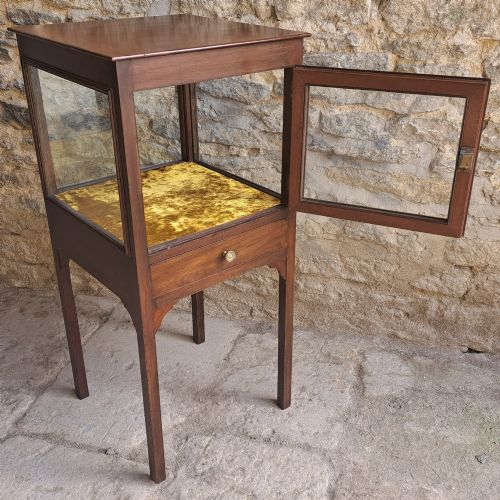


Velvet Lined Display Table
These velvet lined display table examples combine glass and timber to showcase small treasures, offering a practical surface for precious items.

Velvet Lined Display Table
A velvet lined display table serves as a specialised surface for exhibiting small objects, collector pieces and curiosities under glass. When searching for a velvet lined display table, buyers encounter forms ranging from compact cabriole-legged cabinets to oval occasional tables designed for drawing rooms.
The pieces appearing on this page span several distinct periods including the eighteenth century, Victorian era, Edwardian period and the early twentieth century. Common physical manifestations include serpentine-shaped bijouterie tables, mahogany cabinets and rosewood occasional pieces.
English and French styling dominates the selection, encompassing Sheraton revival, French Louis XV and XVI revivals, and Rococo revival designs. These furniture pieces merge the functionality of a display cabinet with the proportions of a standard table.
Materials and construction
Makers constructed these display pieces primarily using mahogany and rosewood timber frames, frequently incorporating glass panels to enclose the top display area. Interior surfaces feature velvet fabric linings designed to cushion and display delicate items safely.
Decorative detailing on these cabinets and tables relies upon brass mounts, ormolu accents and intricate satinwood inlay work. Joinery techniques from the eighteenth to the early twentieth centuries support glass-topped lids and hinged display compartments.
Velvet Lined Display Table Retail Price Guide 2026
Typical asking prices for velvet lined display table among the pieces listed under this phrase on Sellingantiques today, from the lower quarter to the upper quarter. They describe what is for sale here now, not the wider market.
Listings feature mahogany, rosewood, brass, ormolu, and satinwood inlay across multiple periods from the eighteenth century to the 1920s.
Assessing quality in display furniture
The refinement of the timber inlay and the precision of the brass or ormolu mounts indicate the standard of execution in a piece. Finer examples display meticulous cabinetmaking in the curves of serpentine frames and the fitting of glass lids.
Proportion and stylistic consistency dictate the standing of individual tables, with revival pieces drawing strength from faithful adherence to period design vocabulary. The integration of the velvet lining with the surrounding timber framework reveals the level of original craftsmanship.
The Velvet Lined Display Table Glossary
- Bijouterie table
- A specialised vitrine table designed specifically for housing small valuable trinkets and jewellery under glass. These tables often feature hinged lids.
- Ormolu
- Gilded bronze ornamentation applied to furniture, commonly seen on French revival pieces. This technique adds metallic contrast to the timber frame.
- Serpentine
- A furniture shape characterised by a undulating front or edge curving inward then outward. This contour requires skilled woodworking.
- Vitrine
- A glass-fronted or glass-topped cabinet used for displaying fine objects. These enclosures protect contents from dust while maintaining visibility.
Velvet Lined Display Table: Frequently Asked Questions
What is a velvet lined display table used for?
These tables provide a secure, dust-free enclosure for exhibiting small collections, medals, pocket watches or delicate ornaments. The glass top allows viewers to examine items from above while the fabric interior protects them from scratching.
Historically placed in reception rooms and parlours, they functioned as both decorative furniture and conversation pieces for displaying personal treasures to guests.
How do I date a display table?
Dating relies upon examining the timber species, construction methods, decorative hardware and prevailing stylistic revival influences. Eighteenth-century pieces feature different joinery characteristics compared to Victorian or Edwardian interpretations.
Stylistic cues such as French Rococo or Sheraton revival details help narrow the period of manufacture when combined with wood analysis and overall proportions.
Are these tables sturdy enough for daily use?
While structurally sound, antique display tables are designed primarily for holding lighter decorative objects rather than heavy everyday items. The glass tops and hinged compartments require gentle handling during use.
Placing them away from direct sunlight and heavy traffic areas helps preserve the delicate timber finishes, inlay work and interior velvet linings.
What is the difference between a bijouterie table and a display cabinet?
Bijouterie tables typically feature a waist-height table base topped with a glazed compartment, often with a hinged or lifting lid. Display cabinets generally offer vertical storage with glass doors and multiple internal shelves.
Both forms utilise glass and timber to exhibit objects, but bijouterie tables focus on horizontal tabletop viewing rather than vertical elevation.