


Glazed Curiosity Table
These glazed curiosity table pieces are glass-topped display cases designed to show off small treasures and personal collections.
Glazed Curiosity Table
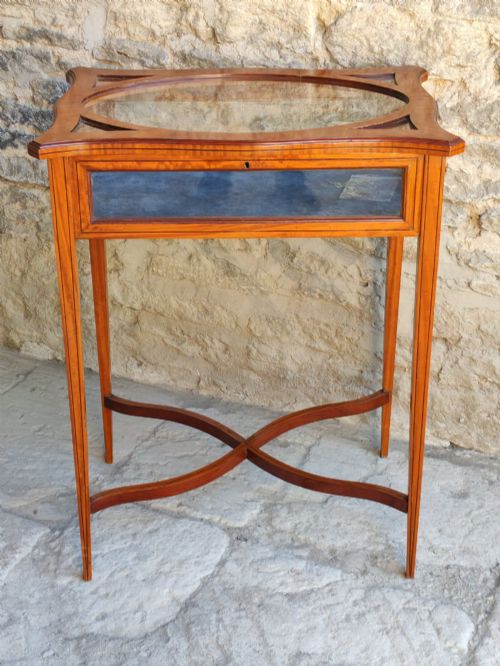
When you search for a glazed curiosity table, you are looking at specialised furniture designed to exhibit small valuables under glass. The pieces listed here span the Victorian, Edwardian, and nineteenth-century periods, showcasing various decorative forms.
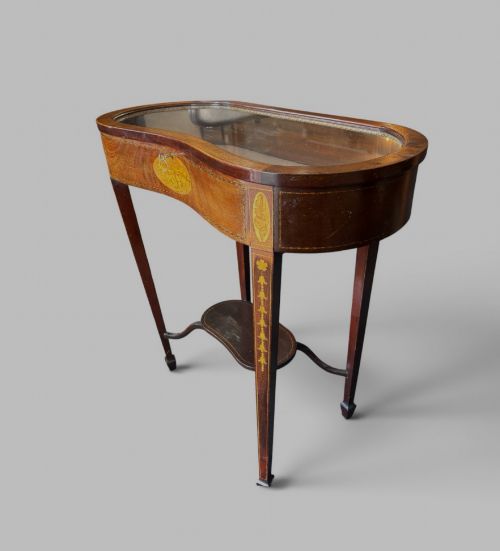
You are most likely to meet mahogany and satinwood display tables from the Edwardian era on this page. These versions often feature inlaid decoration and specific shapes like kidney or serpentine outlines.
Makers produced these tables as functional display surfaces for drawing rooms and sitting rooms. They allow owners to curate and protect delicate objects from dust while keeping them visible.
How they were made
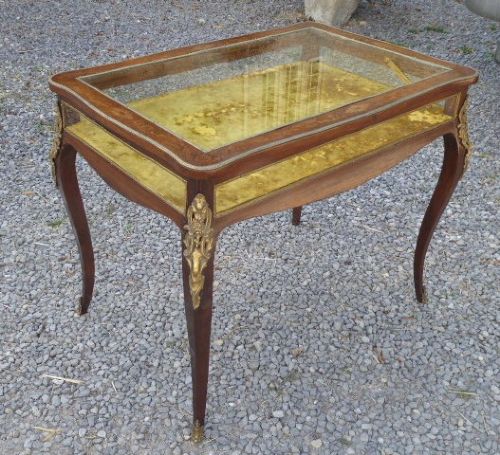
Cabinet makers utilised fine timbers such as mahogany, satinwood, kingwood, and boxwood for the frames and legs of these tables. Marquetry inlay work and decorative brass or ormolu mounts frequently adorn the exterior surfaces.
Glass panels form the top and sometimes the sides to create a clear viewing chamber for the contents inside. Interiors are often lined with fabric to provide a soft resting surface for displayed items.
One listed piece incorporates Brazilian butterfly wings beneath its glass top, showcasing a distinct turn-of-the-century decorative taste.
What varies in quality
Quality rests upon the selection of timber veneers and the precision of the marquetry inlay. Pieces with complex structural forms like kidney or serpentine shapes require greater carpentry skill than standard rectangular or octagonal designs.
The finesse of the cast brass or ormolu mounts and the integration of the glass framing distinguish finer examples. Superior execution in the interior fabric lining and overall joinery elevates a piece above simpler utilitarian versions.
The Glazed Curiosity Table Glossary
- Bijouterie table
- A small display table with a glass top and sides used for holding trinkets and jewellery. This term appears frequently alongside display table in the listings.
- Marquetry
- Decorative veneer work forming pictures or patterns using various woods. Craftsmen applied this technique to the timber surfaces of cabinets and tables.
- Ormolu
- Gilt bronze mounts used as decorative ornaments on furniture. These metallic details accent the corners and legs of finer pieces.
- Satinwood
- A durable hardwood with a lustrous yellowish grain used for fine cabinet making. It often appears as a contrasting veneer in inlaid furniture.
- Kidney shape
- A curved, asymmetrical furniture profile resembling a bean. This form provides a comfortable contour for domestic placement.
Glazed Curiosity Table: Frequently Asked Questions
What is a glazed curiosity table used for?
These tables function primarily as display cabinets for small collectibles, medals, and personal trinkets. The glass top protects delicate items from dust while allowing them to remain visible in a room.
They also serve as occasional tables within a drawing room or parlour setting. Owners can arrange and rearrange their curated items beneath the glass without cluttering other surfaces.
What materials are used in these tables?
The primary structure relies on hardwoods such as mahogany and kingwood, often enhanced by satinwood and boxwood veneers. Glass forms the viewing panels, while fabric lines the interior display area.
Decorative elements frequently include brass or ormolu mounts fitted to the corners and legs. These combined materials give the furniture its characteristic finished appearance.
How do I care for a vintage bijouterie table?
Keep the timber clean using appropriate furniture wax and avoid placing the table in direct sunlight to protect the wood and interior fabric. Glass cleaner can be used carefully on the viewing panels.
Ensure that heavy items are not placed on the glass top to prevent structural strain. Regular gentle dusting preserves the condition of the inlay and brass mounts.