
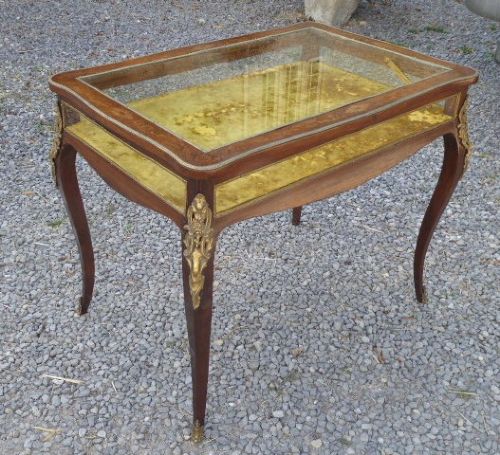


Louis XV Bijouterie
Louis xv bijouterie comprises glazed display tables and vitrines designed to showcase small treasures.
Louis XV Bijouterie
When someone searches for louis xv bijouterie, they are looking at glazed display tables and cabinets built to house precious personal items. These pieces emerge predominantly in the nineteenth century, reflecting a revival taste for French Rococo forms.
The version most commonly met on this page is the freestanding table with a glazed top and velvet-lined interior. Makers construct these using rich timbers such as mahogany, kingwood, and rosewood, often pairing them with gilt-bronze mounts.
Display cabinets and vitrines also appear amongst the listings, offering upright storage for smaller objects of vertu. Each piece follows the curved outlines and ornamental grace characteristic of the Louis XV style.
How they were made
Cabinetmakers select dense timbers including mahogany, kingwood, and rosewood for the foundational framework, frequently applying marquetry or brass inlay. Ormolu and gilt-bronze mounts are cast and chased then fixed to the corners, legs, and borders to accentuate the curving lines.
Interiors are typically lined with velvet to cushion delicate objects placed on display beneath bevelled or plain glass panels. Joinery techniques combine traditional carcase construction with precise framing to support the weight of the glass lids and vitrine doors.
Listings feature pieces spanning the Victorian era through the early twentieth century, utilising glass, ormolu, mahogany, and velvet.
What varies in quality
The refinement of the gilt-bronze or ormolu mounts largely separates standard production from exceptional work. Crisp chasing, deep relief, and heavy metal weight indicate superior craftsmanship by the founding artisan.
Timber selection and the intricacy of marquetry or veneer matching further define the tier of the piece. Well-figured kingwood or rosewood combined with precise brass inlay and sound structural joinery marks out the finest examples.
The Louis XV Bijouterie Glossary
- Bijouterie table
- A freestanding display table with a glazed lid designed for showing small ornaments and jewellery. The interior is usually lined with velvet.
- Ormolu
- Gilt bronze applied to furniture as decorative mounts and feet. The technique involves coating copper or brass with gold amalgam.
- Vitrine
- An upright glass-fronted display cabinet used for showcasing porcelain and small collectibles. These pieces often feature glass sides to maximise light.
- Kingwood
- A dense exotic timber prized for its rich violet-brown colouring and striking grain patterns. Cabinetmakers use it extensively for veneering.
- Marquetry
- The art of applying small pieces of veneer to a structure to form decorative patterns. Craftsmen use various woods to achieve tonal contrast.
Louis XV Bijouterie: Frequently Asked Questions
What is louis xv bijouterie used for?
These glazed tables and cabinets were originally created to display small personal treasures, medals, and decorative ornaments in drawing rooms.
Today, collectors use them in similar fashion to exhibit pocket watches, miniatures, and small antiques safely within a domestic interior.
How do you date louis xv bijouterie?
Dating relies on examining the timber construction, the style of the cast bronze mounts, and the manufacturing techniques used in the carcase.
Most pieces found here date from the nineteenth century revival periods rather than the original eighteenth-century reign.
Where should I place a bijouterie table?
These tables suit drawing rooms, studies, or reception spaces where adequate natural light illuminates the glass top and interior.
Because they feature glazed panels and delicate timber frames, positioning them away from direct sunlight preserves the wood and lining.
What woods were used for these cabinets?
Cabinetmakers employed rich hardwoods including mahogany, kingwood, and rosewood for both solid elements and decorative veneer work.
These timbers were often combined with brass inlay or marquetry patterns to enhance the visual appeal of the display surface.