


Cabriole Leg Bijouterie
These cabriole leg bijouterie tables and display cabinets offer an elegant glass-topped surface to exhibit small treasures in any room.
Cabriole Leg Bijouterie
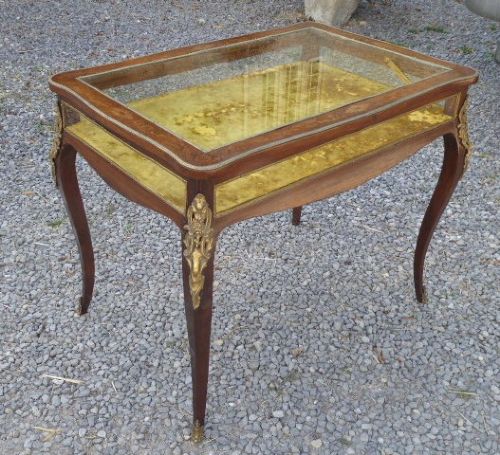
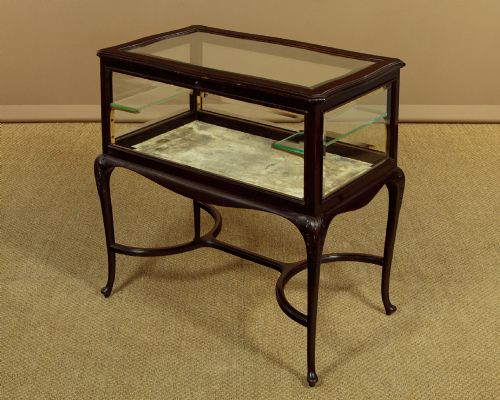
A cabriole leg bijouterie table combines a glazed display compartment with curved, sweeping legs rooted in historic furniture designs. These pieces function primarily as elevated display cases for personal ornaments, medals and trinkets, keeping delicate items visible yet secure.
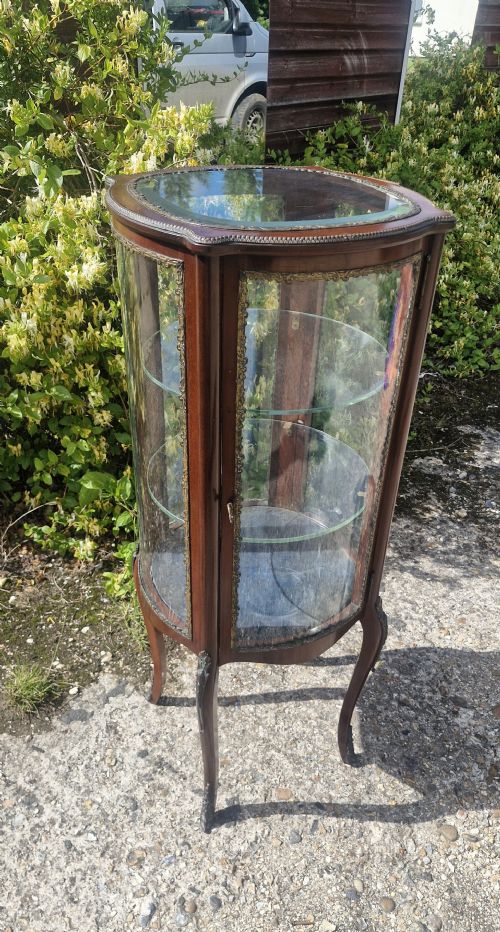
The selections span the Victorian, Edwardian and early twentieth-century periods, with numerous examples drawing on French Louis XV and Rococo revival styles. Common formats include rectangular display tables, vitrines and serpentine-shaped cabinets designed to sit neatly within a drawing room or parlour.
Mahogany, rosewood and kingwood form the primary timber framework for these display pieces, frequently elevated by curved supports. The inventory also includes pieces incorporating marquetry, inlay and shaped glass to maximise visibility from every angle.
Materials and construction methods
Cabinet makers utilised dense hardwoods such as mahogany, rosewood and kingwood as the structural foundation, often applying intricate marquetry or decorative veneers to the exterior surfaces. These timbers provided the necessary strength to support glazed compartments and curved legs.
Mounts made from brass, ormolu and gilt-bronze adorn many frames, cast and chased in decorative leaf and scroll motifs typical of revival styles. Glass panels are fitted into the hinged or glazed lids to create a clear viewing window into the velvet or fabric-lined interior below.
Listings feature pieces spanning from the mid-nineteenth century through the Edwardian period and into the 1930s, constructed predominantly in mahogany, rosewood and kingwood.
Distinctions in craftsmanship and design
The standard of a cabriole leg bijouterie table rests on the crispness of the bronze or ormolu mounts and the precision of the timber veneers. Finer examples display carefully matched grain patterns, hand-chased metalwork and tightly fitted glass enclosures.
Proportion and silhouette dictate the overall elegance of the piece, particularly the fluid sweep of the cabriole supports. Tables featuring complex serpentine shapes or higher-grade timbers like kingwood and rosewood represent the upper tier of period production.
The Cabriole Leg Bijouterie Glossary
- Cabriole leg
- A furniture support that curves outward at the knee and tapers inward toward the foot, inspired by the bounding leg of an animal. This form became a defining feature of eighteenth-century furniture and later revival styles.
- Bijouterie table
- A specialised display table featuring a glazed compartment designed for showcasing small valuable items, jewellery or curiosities. These tables typically include a hinged glass lid or lift-off top.
- Ormolu
- Gilded bronze ornamentation applied to the mounts and edges of fine furniture during the eighteenth and nineteenth centuries. The technique involves coating bronze with a mercury and gold amalgam before heating.
- Vitrine
- A glass-fronted or glass-topped display cabinet used for exhibiting porcelain, silver and small decorative objects. They protect delicate items from dust while maintaining all-round visibility.
- Marquetry
- Decorative patterns formed by the insertion of different coloured veneers into a solid wood ground. Artisans cut pieces of contrasting timber to create floral, geometric or pictorial designs.
Cabriole Leg Bijouterie: Frequently Asked Questions
What is a bijouterie table used for?
These tables were originally designed for displaying small personal treasures, portrait miniatures, fans and precious ornaments in drawing rooms. The glass top allowed guests to inspect delicate items without handling them directly.
Today, they serve a similar purpose in modern homes as specialised display surfaces for collections of small antiques, pocket watches or curiosities.
How do I date a cabriole leg bijouterie table?
Dating relies on identifying the timber veneers, metal mount styles and construction techniques characteristic of periods like the Victorian era or the Edwardian decades. Revival pieces often borrow decorative elements from eighteenth-century French models.
Examining the fixings, interior fabric lining and lock mechanisms also provides reliable clues regarding the exact manufacturing decade.
Where should I place a bijouterie table?
These display pieces suit living rooms, studies or hallways where natural light can illuminate the glass-topped compartment from above. They function well as standalone accent items or positioned beside seating.
Because the display surface is glazed, keeping them away from direct, harsh sunlight prevents fading on any fabric linings or sensitive interior objects.
What woods are typical for these tables?
Mahogany appears most frequently across the Victorian and Edwardian examples, offering a sturdy and dark reddish-brown framework. Finer pieces frequently utilise exotic timbers like rosewood and kingwood.
Cabinet makers often combined these dense hardwoods with decorative brass or ormolu mounts to highlight the curved lines of the structure.