


Oval Glass Display Table
An oval glass display table is a refined surface for showing treasured objects, combining timber frames with glazed compartments for domestic display.
Oval Glass Display Table
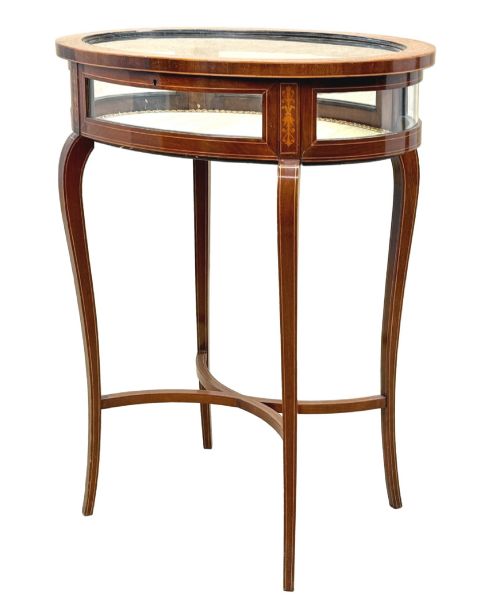
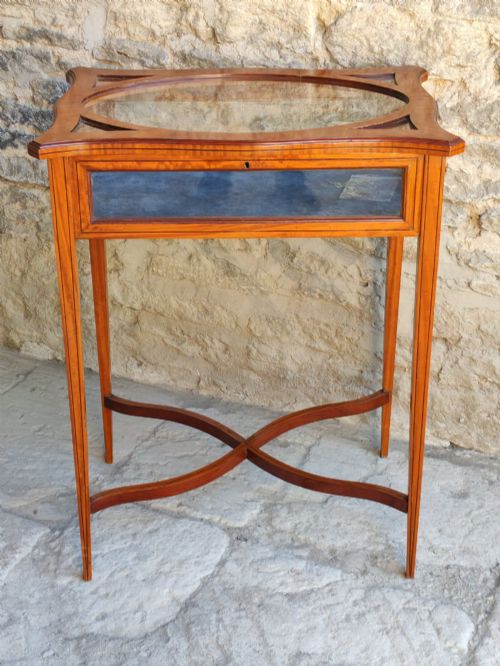
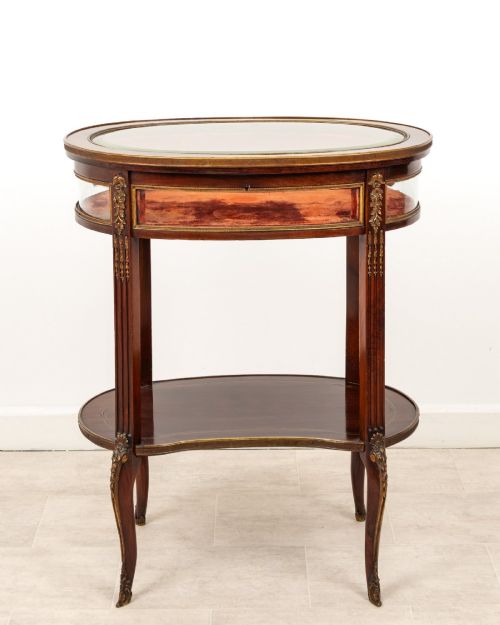
An oval glass display table serves to exhibit small collectables and jewellery within a glazed timber frame. These pieces appear in forms such as bijouterie tables, cabinets, vitrines, and occasional tables.
The selections available range from late Victorian and Edwardian examples to French Louis XVI style and colonial pieces. Mahogany, satinwood, and walnut form the primary structures for these glazed display surfaces.
Makers shaped these items with marquetry inlay, satinwood inlay, and ormolu mounts to elevate their decorative appeal. Most variations date between the late nineteenth century and the nineteen-twenties.
Materials and construction methods
Craftsmen built the carcases using dense hardwoods like mahogany and walnut, often applying satinwood veneers for contrasting grain patterns. Marquetry and intricate inlay work decorate the tabletops and aprons.
Glazing forms the top and sides of the display compartment, allowing light to illuminate the interior space. Ormolu mounts and brass fittings accent the mahogany and satinwood frames.
Textiles such as velvet and fabric line the interior floor of the display well to cushion items placed inside. Tray tops and raised edges secure the glass panels within the wooden structures.
Listings feature pieces spanning the late nineteenth century through to the nineteen-twenties, incorporating Edwardian and French Louis XVI styles.
Measures of distinction in construction
The refinement of the timber and the precision of the inlay separate finer examples from standard pieces. Rich satinwood details and crisp marquetry indicate superior workshop execution.
Cast bronze or ormolu mounts show varying levels of chasing and finish, with sharper details marking better output. The quality of the joinery in the oval frame dictates the overall stability of the glazed compartment.
The Oval Glass Display Table Glossary
- Bijouterie table
- A low table featuring a glass-topped compartment specifically designed for exhibiting small ornaments and jewellery. These pieces often lift open or slide to grant access to the lined interior.
- Ormolu
- Gilded bronze mounts applied to furniture for decorative effect. This technique was widely utilised in French styling during the nineteenth century.
- Marquetry
- Decorative veneer patterns formed by fitting together small pieces of different coloured wood. Craftsmen apply this technique to tabletops and cabinet friezes.
- Satinwood
- A durable hardwood with a natural golden sheen and smooth grain. It frequently serves as a contrasting inlay or full veneer on Edwardian and Victorian furniture.
- Vitrine
- A glass-sided cabinet or table built to display porcelain, curiosities, and precious objects. The design maximises visibility from multiple angles.
Oval Glass Display Table: Frequently Asked Questions
What goes inside a bijouterie table?
These tables are traditionally used to display small collectables, antique jewellery, medals, and pocket watches. The glass top protects these delicate items while keeping them visible.
Lined interiors of velvet or fabric provide a soft resting surface that prevents items from sliding or scratching against the wood.
How do I clean the glass?
Use a gentle glass cleaner applied to a soft cloth rather than directly onto the surface. This prevents liquid from seeping into the wooden frame or damaging the fabric lining inside.
Keep moisture away from any ormolu mounts and polished mahogany to protect the surrounding antique finishes.
Are these tables sturdy enough for daily use?
They are primarily designed for display and light domestic use rather than heavy weight-bearing tasks. Placing heavy books or ceramics on the glass top is generally discouraged.
Occasional tables with tray tops provide extra surface area, but the glazed display sections require careful handling.
How do I date an Edwardian piece?
Edwardian items typically date from the early twentieth century and often feature lighter satinwood finishes and delicate marquetry. Construction methods from this era combined traditional cabinetmaking with refined decorative veneers.
Comparing the style of the inlay and the framing against documented periods helps establish a reliable timeline.