


French Accent Display Table
These french accent display table examples bring continental elegance to a room, offering practical display surfaces shaped by nineteenth-century revival styles.
French Accent Display Table
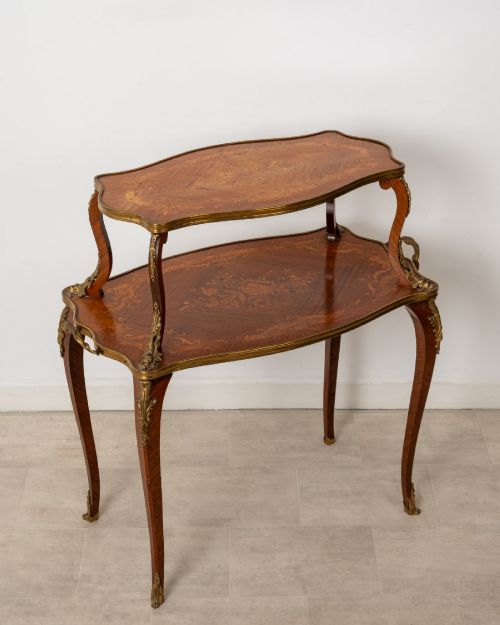
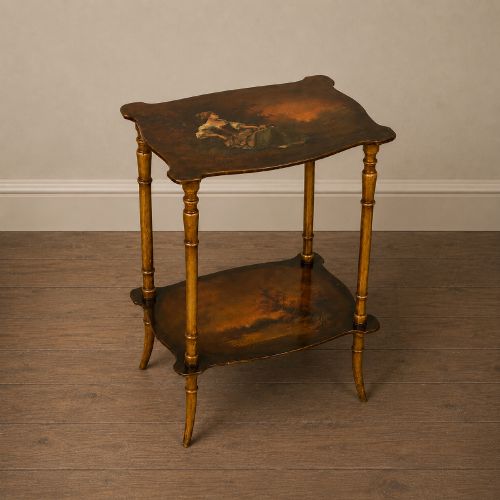
A french accent display table typically takes the form of a multi-tiered étagère, an occasional side table, or a specialised bijouterie cabinet designed for displaying small objects. These pieces emerge predominantly from nineteenth-century production, spanning Victorian, Edwardian, and specific revival movements.
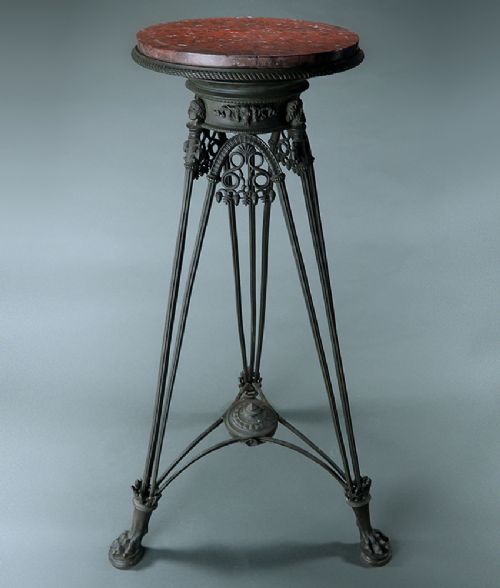
Makers adopt distinct continental silhouettes such as kidney-shaped surfaces, two-tier display stands, and marble-topped guéridons. Walnut, mahogany, and rosewood form the structural foundation for these occasional tables and plant stands.
Quality and execution
The sophistication of the marquetry inlay and the precision of the timber matching determine the distinction between standard and superior pieces. Finer examples display meticulous attention to grain alignment and complex floral or geometric patterns across multiple tiers.
The weight and finish of the applied brass or ormolu mounts dictate overall refinement, where cast and chased metalwork integrates seamlessly into the woodwork. Structural integrity in slender legs and tier supports further separates everyday utility from master craftsmanship.
One unexpected automotive-named piece links high-speed engineering heritage directly to traditional French walnut furniture production.
Edwards and Roberts·Gabriel Viardot
The French Accent Display Table Glossary
- Étagère
- A piece of furniture consisting of a set of open shelves for displaying small articles. These multi-tiered stands provide vertical display space while maintaining a slender footprint in a room.
- Guéridon
- A small circular table supported by one or more columns, originating in seventeenth-century France. Nineteenth-century interpretations frequently feature inset marble tops and classical revival motifs.
- Bijouterie table
- A glass-topped display table specifically designed for showcasing precious trinkets, medals, and jewellery. The glazed compartment often lifts or opens to allow access to the velvet-lined interior.
- Marquetry
- The art and craft of applying pieces of veneer to a structure to form decorative designs and patterns. Cabinetmakers utilise various coloured woods to create pictorial or geometric scenes on table tops.
- Ormolu
- Gilded bronze mounts applied to furniture and decorative objects during the eighteenth and nineteenth centuries. This decorative hardware enhances the corners, legs, and aprons of formal display tables.
French Accent Display Table: Frequently Asked Questions
What is an étagère?
An étagère is a multi-tiered shelving unit designed to display small decorative objects, porcelain, and books. These open structures provide several levels of surface area while maintaining a light visual presence in a room.
Cabinetmakers construct these pieces in various shapes, including oval, kidney-shaped, and rectangular formats. They serve as focal points in drawing rooms and reception spaces.
What is a guéridon table?
A guéridon is a small circular table supported by a central column or several uprights. Nineteenth-century examples often incorporate heavy marble tops and classical revival supports.
These versatile stands work effectively beside armchairs or in hallways as accent pieces. Their compact diameter allows them to fit into narrow corners.
How do I care for inlaid wood?
Inlaid wood surfaces require protection from direct sunlight and dramatic humidity changes to prevent veneer lifting. Regular dusting with a soft, dry cloth preserves the polished finish without introducing moisture.
Avoid placing damp items or unsealed plant pots directly on antique wooden surfaces. Periodic application of appropriate wax maintains the natural lustre of the timber.