


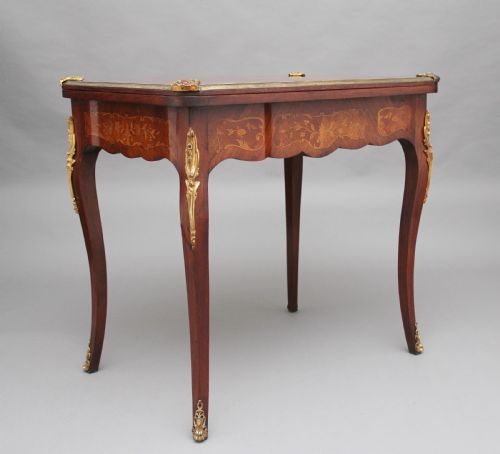
Victorian Kingwood Furniture
Victorian kingwood furniture brings richly figured timber and bright gilt mounts into a room, offering both decorative presence and everyday utility.
Victorian Kingwood Furniture
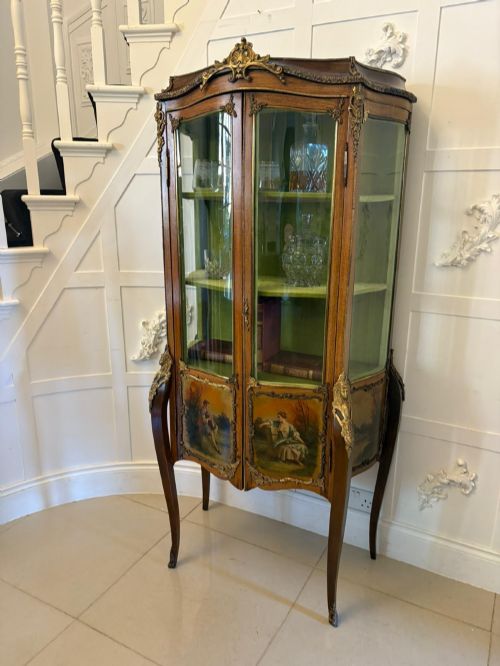
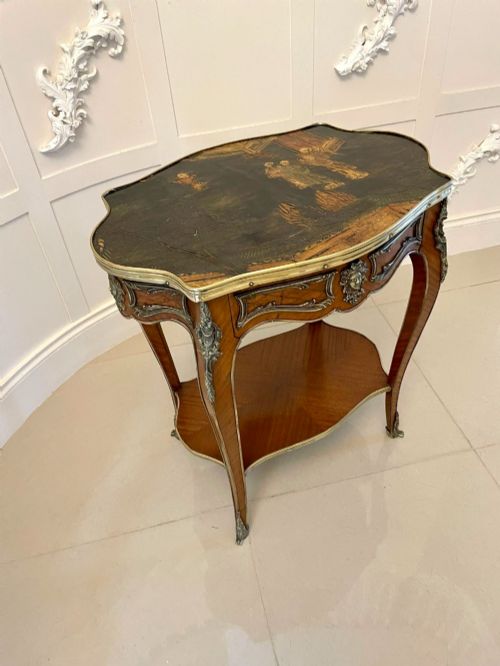
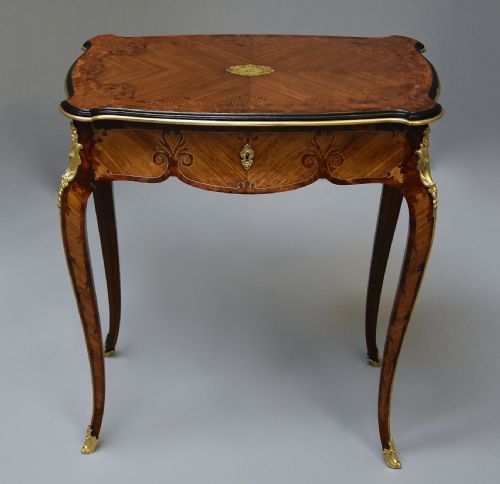
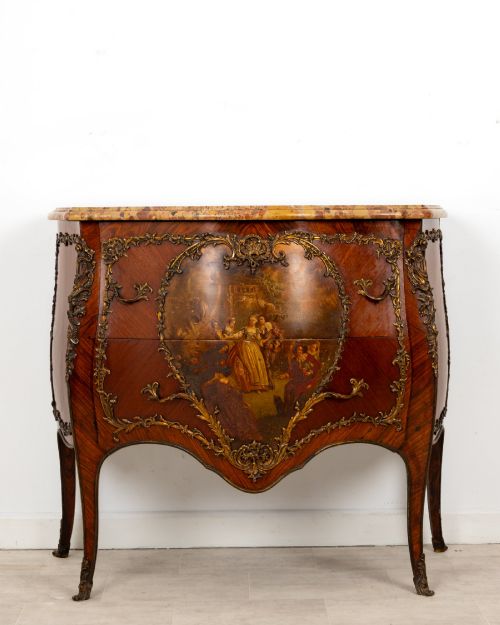
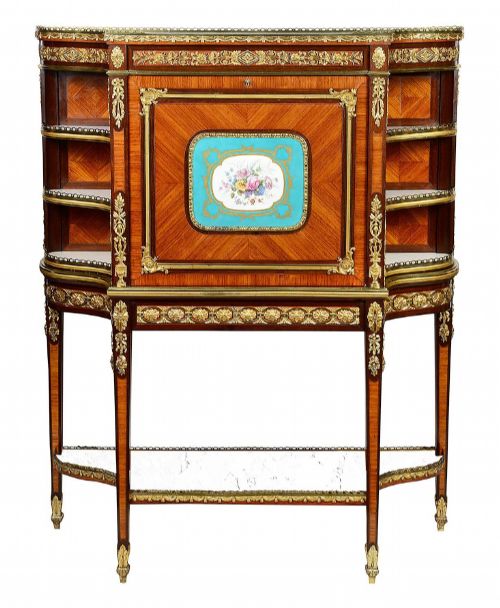
When you search for Victorian kingwood furniture, you are looking at nineteenth-century pieces that deploy dense, exotic veneers alongside contrasting mounts of ormolu or gilt-bronze. The examples you meet on this page lean heavily towards French Revival tastes, including Louis XV and Louis XVI styles imported or made in Britain during the Victorian era.
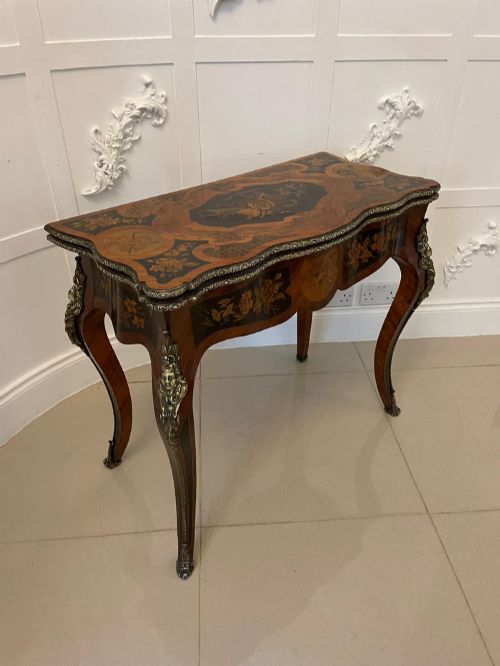
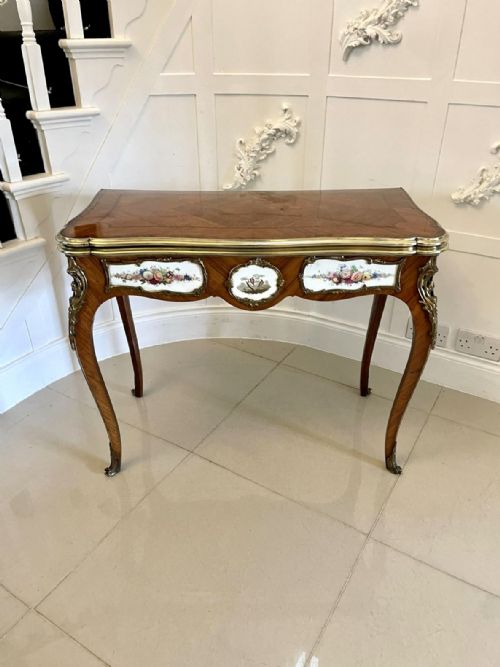
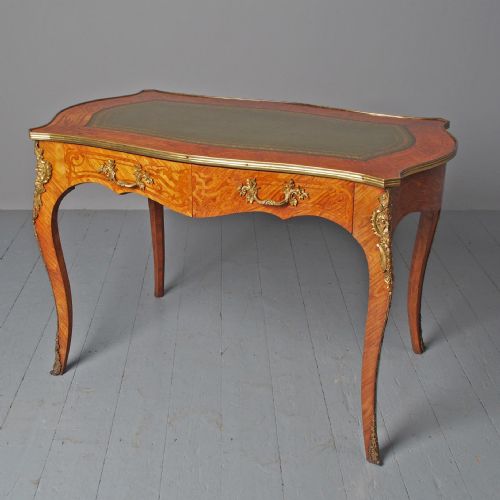
The forms span practical writing desks and commodes to display cabinets, vitrines, and occasional tables. Card tables and centre tables also appear frequently, often designed as freestanding centrepieces with intricate marquetry or floral inlay set into the rich brown timber.
Many of these items show direct connections to London workshops like those of G T Morant, Blake, and Collinson & Lock, alongside pieces originating in Paris. This mix reflects a nineteenth-century British appetite for continental cabinet-making techniques and flamboyant rococo outlines.
Assessing quality and execution
The distinction between ordinary and exceptional pieces rests on the crispness of the gilt-bronze mounts and the precision of the marquetry inlay. Finer examples display hand-chased ormolu with sharp definition, whereas lesser items rely on simpler, cast mounts with softer detail.
The sophistication of internal mechanisms also separates the tiers of production, seen in writing tables with complex folding actions or occasional tables featuring specialised pivoting tops. Timber selection dictates the visual depth of the piece, with tightly figured grain patterns commanding higher regard than plain veneer.
Objects range from miniature chests of drawers and occasional tables to large exhibition-quality display cabinets and secretaire abattants.
Blake·G T Morant·Collingson & Lock
The Victorian Kingwood Furniture Glossary
- Kingwood
- A dense, heavy South American timber showing distinct dark violet-brown stripes against a lighter golden-brown ground. It was favoured by eighteenth and nineteenth-century cabinet-makers for high-status veneered furniture.
- Ormolu
- Gilded brass or bronze mounts applied to furniture for decorative and protective purposes. The technique involves applying a gold amalgam to a bronze base and heating it to drive off the mercury.
- Marquetry
- The art of applying small pieces of veneer to a structural structure to form decorative pictures or patterns. Craftsmen cut contrasting timbers together to ensure tight joints.
- Vernis Martin
- A type of translucent, highly polished varnish used to imitate Japanese lacquer, often featuring painted pastoral scenes. It appears on French-influenced cabinets and commodes from the period.
- Commode
- A low chest of drawers, usually standing on relatively tall legs, developed in France and adopted by British makers. Victorian versions frequently incorporate curved fronts and heavy gilt-bronze mounts.
Victorian Kingwood Furniture: Frequently Asked Questions
How do I identify kingwood?
Kingwood is characterised by its heavy weight and distinctive violet-brown streaking over a golden-brown background. It takes a high polish and is almost exclusively used as a veneer rather than solid timber.
Examining the grain under a strong light reveals sharp, contrasting lines rather than the plain warmth of walnut or mahogany. On Victorian pieces, it is frequently paired with gilt-bronze mounts or intricate marquetry.
Where were these pieces made?
These items originate from both British workshops and Parisian cabinet-makers during the nineteenth century. Many London firms employed French styles or imported continental components to satisfy Victorian tastes.
Signatures or stamps on the carcase sometimes reveal specific makers, while construction methods often point to the traditions of London workshops or Paris ateliers.
How should I care for kingwood furniture?
Protect the veneered surfaces by keeping pieces away from direct sunlight and steady heat sources, which can cause the timber to dry and crack. Dust regularly with a soft, dry cloth without applying modern silicone polishes.
Occasional application of a suitable wax helps nourish the timber and maintain the lustre of the French polish. Take care with ormolu mounts to avoid abrasive cleaners that might strip the original gilding.