



Serpentine Mahogany Box
A serpentine mahogany box brings curved lines and rich wood grain into a room, offering both practical storage and traditional form.
Serpentine Mahogany Box
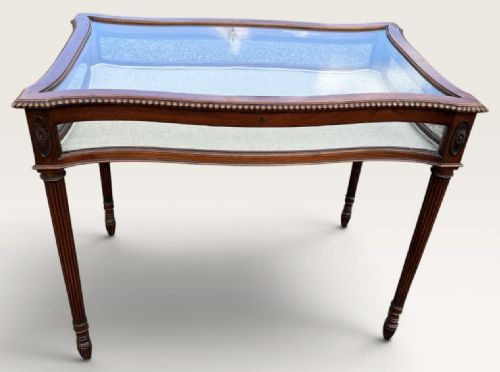
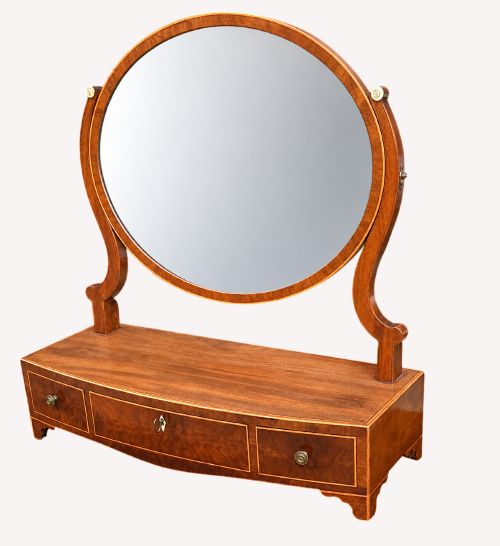
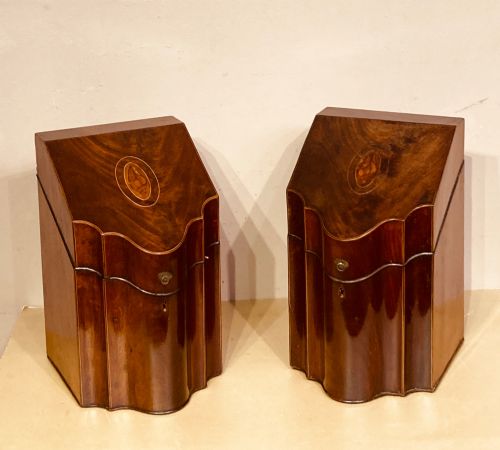
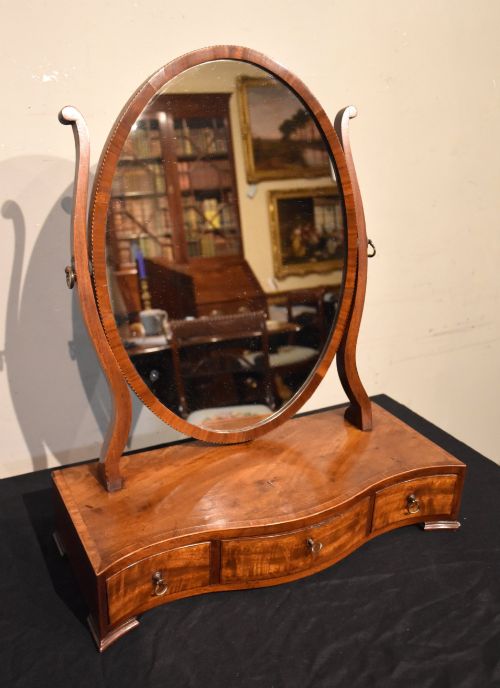
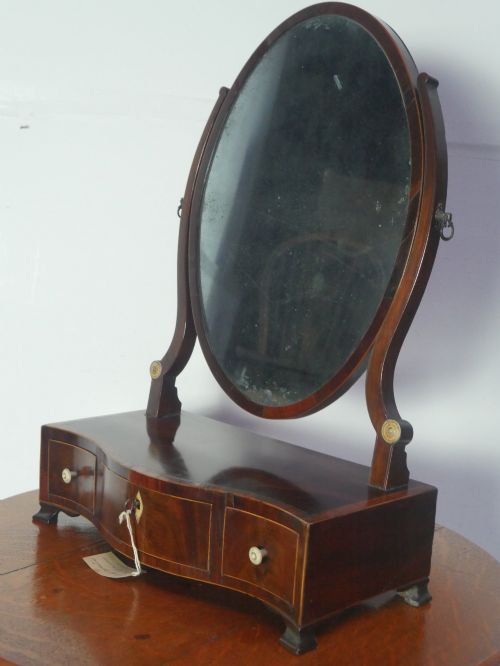
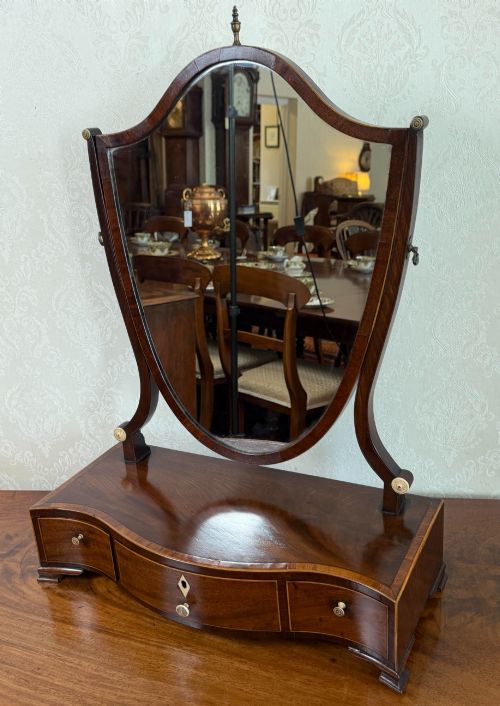
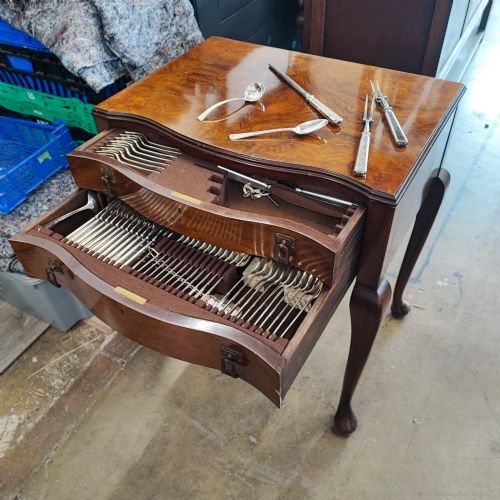
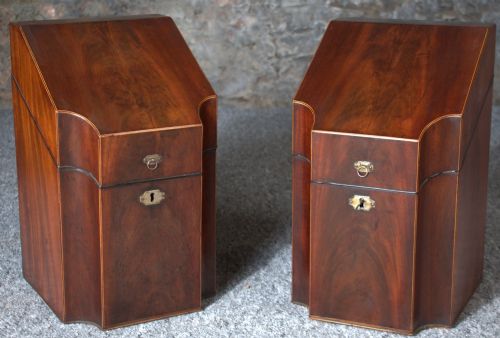
A serpentine mahogany box most commonly appears on this page as a dressing table mirror or toilet mirror, alongside specialised storage such as knife boxes and cutlery canteens. These pieces span the eighteenth and nineteenth centuries, including Georgian and Edwardian examples that reflect the shifting domestic needs of their periods.
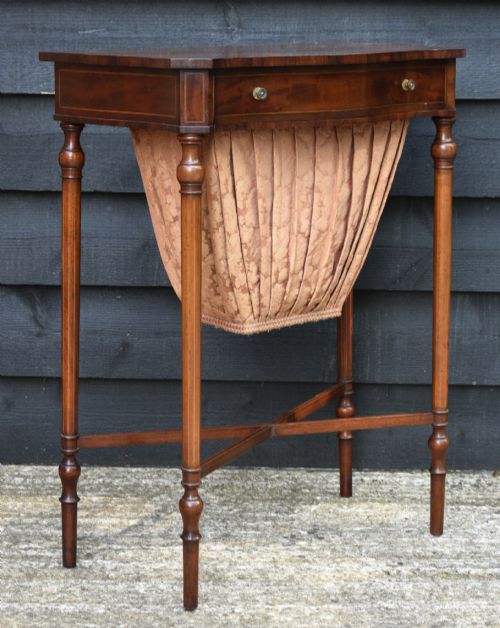
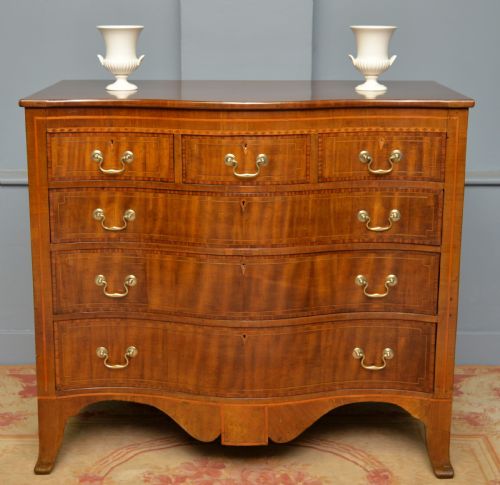
The characteristic undulating front shape defines the group, whether encountered in a compact box mirror with small drawers or a larger chest of drawers and sewing table. Makers from the Georgian era onwards utilised this flowing line to soften rectangular case furniture and add movement to dense timber.
Beyond mirrors and knife boxes, the evidence includes display tables and work tables configured with serpentine outlines. Each object reveals how domestic spaces accommodated personal grooming, dining preparation and needlework through carefully shaped wooden containers.
Judging Quality
Quality rests in the precision of the serpentine curve and the harmony of the timber selection rather than any single decorative flourish. Superior pieces display crisp lines along the undulating front where the woodworker controlled the saw and plane without losing the integrity of the grain.
The integration of secondary details, such as delicate boxwood stringing, matched veneers and original brass hardware, separates standard domestic items from those made for finer interiors. Proportion also dictates worth, as smaller or unusually configured examples maintain balance across their shaped profiles.
Some knife boxes retain internal dividers angled just enough to keep silver cutlery from rattling during transport between the pantry and the dining room.
The Serpentine Mahogany Box Glossary
- Serpentine
- A curved shape that undulates outward in the centre and recesses at the sides, creating a flowing front profile on drawers and boxes. This design requires skilled woodworking to maintain symmetry along the compound curves.
- Toilet Mirror
- A small mirror mounted on a box base or upright frame, designed to sit upon a dressing table or chest. Many examples incorporate small drawers within the base for personal items.
- Knife Box
- A tapered vertical container with a sloping lid, built to hold flatware on a sideboard during the eighteenth and nineteenth centuries. They frequently feature serpentine fronts and brass carrying handles.
- Stringing
- A thin inlay of contrasting wood, such as boxwood or satinwood, set into channels cut into the primary timber. This technique outlines panels and edges to frame the grain.
- Fiddleback Mahogany
- A figured variety of mahogany with a rippled grain pattern resembling the back of a violin. Craftsmen prized this timber for its optical depth under polished finishes.
Serpentine Mahogany Box: Frequently Asked Questions
What were serpentine mahogany boxes used for?
These pieces served practical roles in historic households, functioning as desktop grooming mirrors, tableware storage on dining sideboards, or compact containers for stationery and sewing equipment. Their enclosed spaces protected valuables and small personal items from dust and wear.
Over time, forms like knife boxes and toilet mirrors transitioned from active household utilities into decorative display items. Today, owners continue to use them on tabletops and chests for storage or simply as representative examples of period woodworking.
How do I tell an 18th-century piece from a 19th-century one?
Dating relies on observing construction methods, timber choice and hardware styles visible across the piece. Eighteenth-century examples often exhibit hand-cut dovetails, older secondary woods and patination developed through extended handling.
Later nineteenth- and early twentieth-century interpretations may show standardised fittings, machine-sawn elements or different veneer thicknesses. Comparing the specific curve of the serpentine front alongside the secondary timbers helps establish the likely period of manufacture.
Can I use a knife box for modern storage?
A historical knife box provides a deep, vertical cavity with a sloping lid that suits various contemporary uses on a desk or shelf. Many owners repurpose them to hold letters, documents or small collections.
The fitted interiors designed for flatware can be navigated easily, though some collectors prefer to leave them undisturbed as historical records of dining customs. Placing them in dry interior spaces protects the old mahogany and internal linings.
How should I care for antique mahogany furniture?
Maintenance requires keeping wooden surfaces away from direct sunlight and steady heat sources to prevent timber splitting and veneer lifting. A gentle dusting with a soft, dry cloth preserves the finish without building up heavy wax residues.
Avoid liquid cleaners and damp environments, as moisture damages the polished surface and brass fittings. Periodic inspections of hinges and joints ensure moving parts on mirrors and boxes remain secure.