


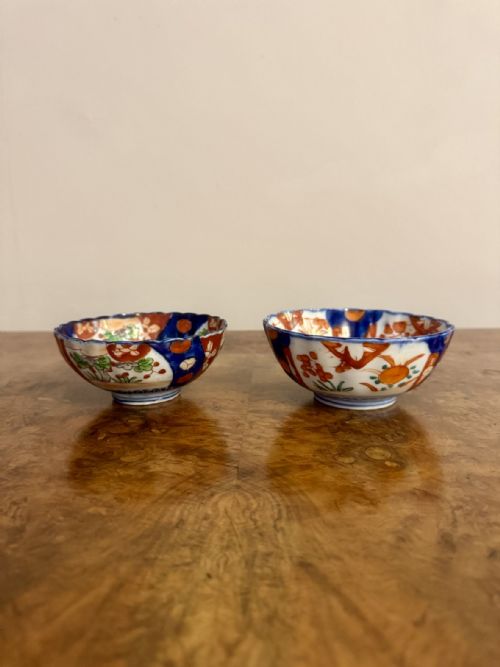
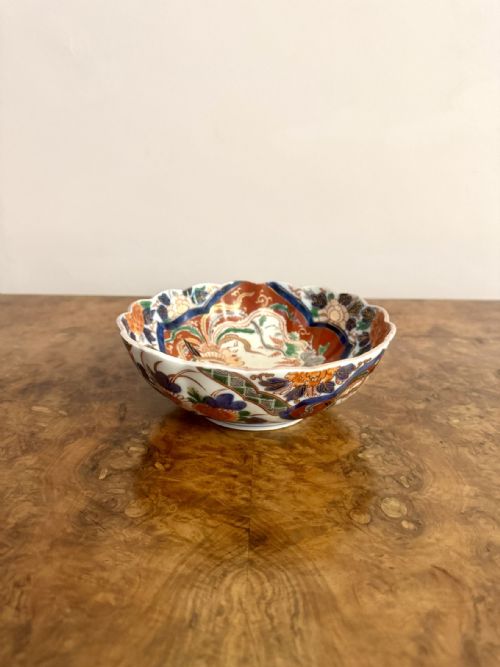
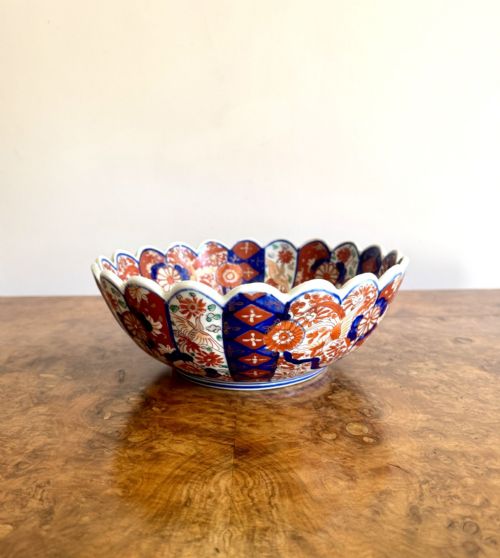
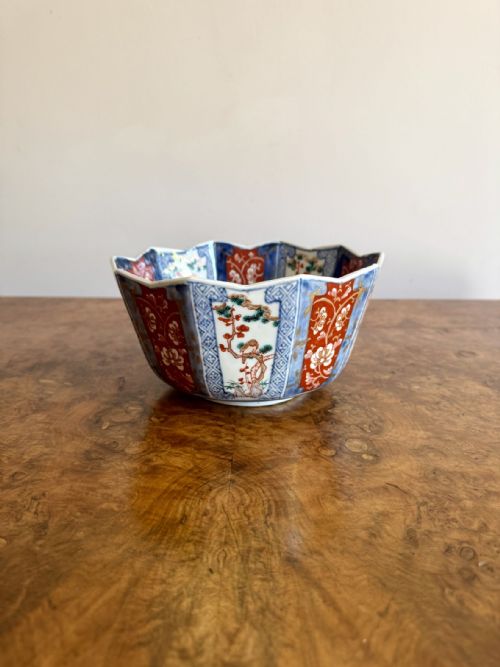

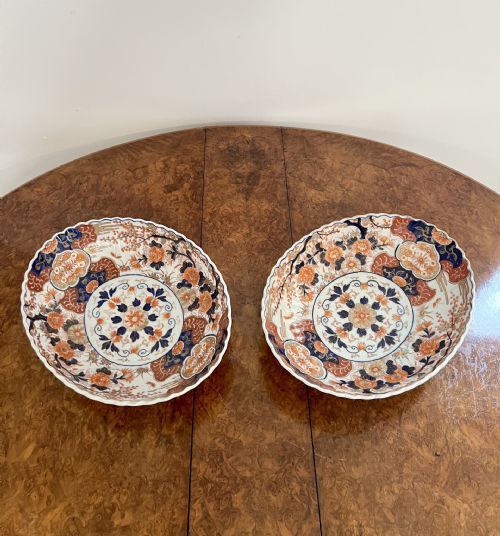


Scalloped Porcelain Bowl
A scalloped porcelain bowl brings a rhythmic, undulating rim to a table, combining a crisp ceramic body with decorative depth.
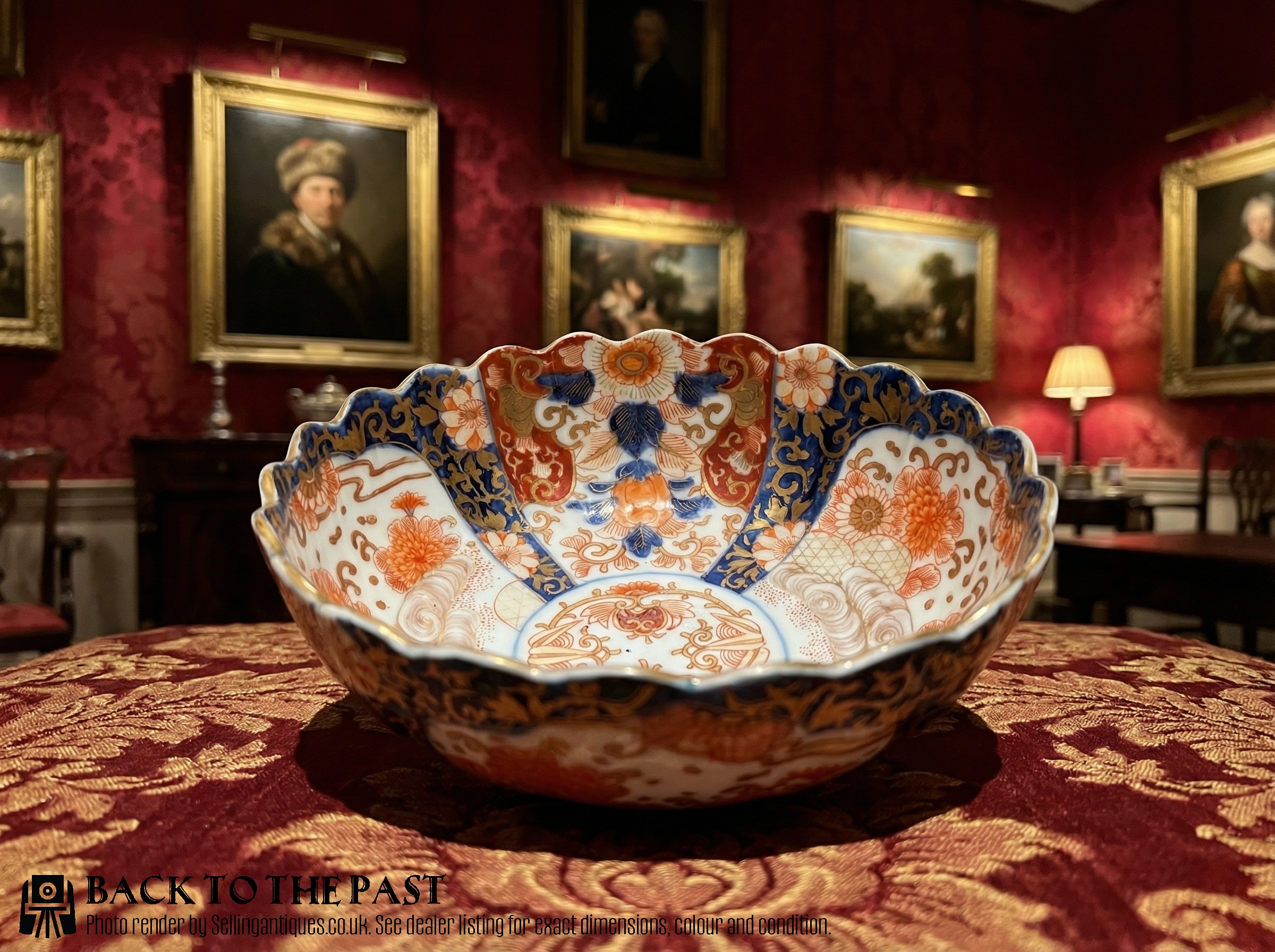
Scalloped Porcelain Bowl
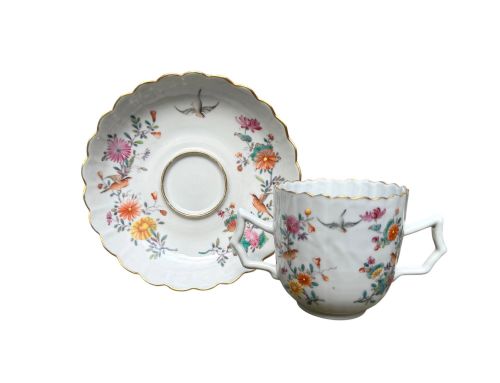
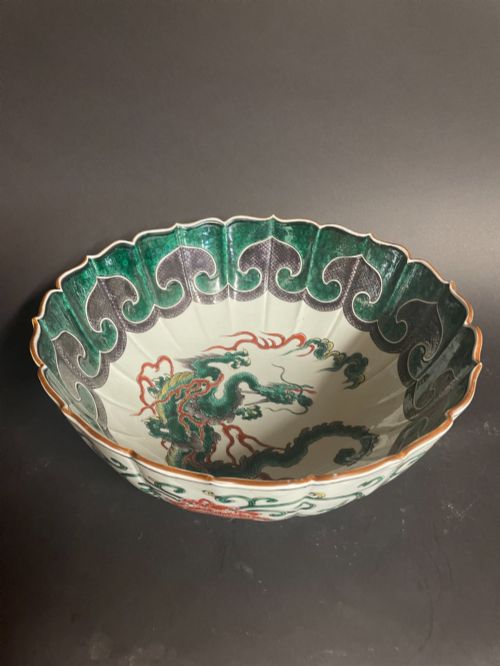
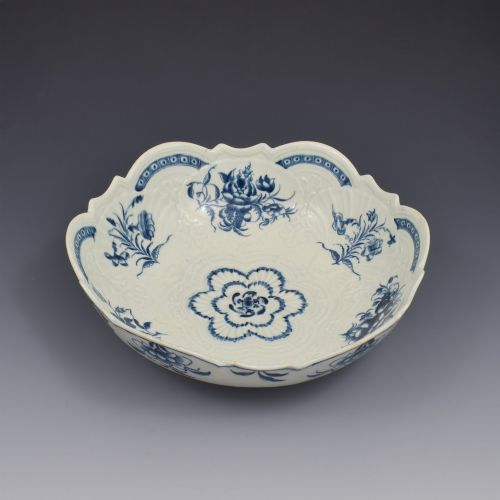
A scalloped porcelain bowl is defined by its shaped, lobed, or fluted edge, moving away from a simple circular profile to create movement along the rim. When you search for a scalloped porcelain bowl, you encounter pieces ranging from Japanese Imari production to English factory wares and Chinese export ceramics.
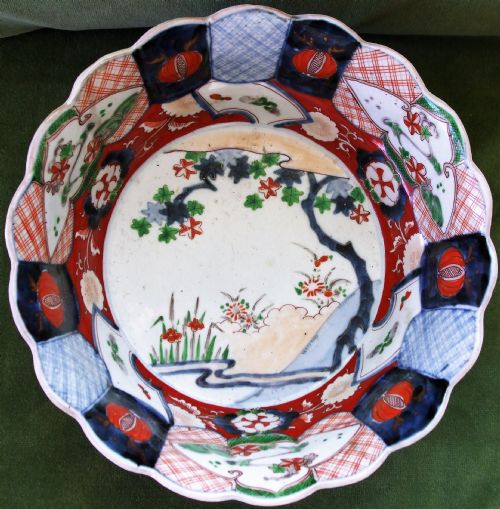
The versions most commonly met on this page date from the nineteenth century, with a strong representation of Japanese Imari pieces featuring characteristic panelled designs. Alongside these sit eighteenth-century English soft-paste examples and occasional continental porcelain dishes.
Forms vary from large display vessels intended for central placement to smaller decorative bowls and footed dishes. The shared characteristic across these objects remains the shaped or lobed rim that dictates the profile of the ceramic.
Materials and Techniques
The foundation of these pieces rests on porcelain, soft-paste porcelain, and bone china, fired at high temperatures to achieve a dense, vitrified body or a warm, absorbent paste. Glaze is then applied over the surface, sealing the ceramic and providing a smooth ground for subsequent decoration.
Decoration is achieved through underglaze blue painting, enamel colours, and the application of gold leaf or gilding. On Imari pieces, iron red and cobalt blue dominate the palette, often enriched with gilt highlights applied over the glaze and fixed in a second, lower-temperature firing.
Scalloped Porcelain Bowl Retail Price Guide 2026
Typical asking prices for scalloped porcelain bowl among the pieces listed under this phrase on Sellingantiques today, from the lower quarter to the upper quarter. They describe what is for sale here now, not the wider market.
A dragon hiding inside a compartment reminds us that a teacup can double as a tiny menagerie.
Assessing Quality
Quality in a scalloped porcelain bowl rests upon the crispness of the moulding at the rim and the precision of the hand-painted brushwork. Superior pieces display deep, saturated cobalt and iron red tones with cleanly defined gilt work that aligns accurately with the moulded lobes.
The weight and refinement of the porcelain body also distinguish the output of major factories from standard commercial wares. Finer examples exhibit an even thickness, controlled glaze finish, and balanced proportions that maintain their structural rhythm around the entire perimeter.
Hododa·Meissen·Chamberlain Worcester·Royal Worcester
The Scalloped Porcelain Bowl Glossary
- Porcelain
- A hard, white, translucent ceramic fired at high temperatures from kaolin and petuntse. It forms the durable body of the majority of bowls found here.
- Imari
- A Japanese export style originating in Arita, characterised by a palette of underglaze blue, iron red, and gilt. The style became immensely popular across Europe and informed numerous domestic imitations.
- Soft-paste porcelain
- An artificial porcelain mixture developed in Europe during the eighteenth century using glass and white clay. It yields a warmer texture and softer glaze than true hard-paste porcelain.
- Gilding
- The application of gold leaf or powdered gold onto the ceramic surface for decoration. It is frequently found accentuating the lobes and scalloped edges of these bowls.
- Junket dish
- A shallow vessel traditionally used for serving sweet curds or desserts. These dishes often feature shaped or fluted edges suited to presentation on a dining table.
Scalloped Porcelain Bowl: Frequently Asked Questions
What is an Imari scalloped bowl?
An Imari scalloped bowl is a Japanese export ceramic decorated in the traditional palette of iron red, cobalt blue, and gold. The rim is moulded into lobes or curves rather than forming a simple circle.
These pieces were produced in large quantities during the Meiji period and earlier for export to Western markets. They are recognised by their dense panelled patterns and vibrant surface colouration.
What is the difference between porcelain and bone china?
Porcelain is a traditional ceramic made from kaolin and china stone, fired until vitrified and hard. Bone china incorporates bone ash into the paste, resulting in a slightly warmer tone and high translucency.
Both materials provide a strong ground for the painted and gilded designs seen on these bowls, though bone china is primarily associated with later English production.
How are these bowls used today?
These bowls serve primarily as decorative objects for display on tables, sideboards, or within cabinets. Their shaped rims and painted surfaces make them suitable as standalone centrepieces.
Due to their age and delicate painted surfaces, contemporary owners generally use them for display rather than heavy everyday dining purposes.