





Scalloped Japanese Wall Chargers
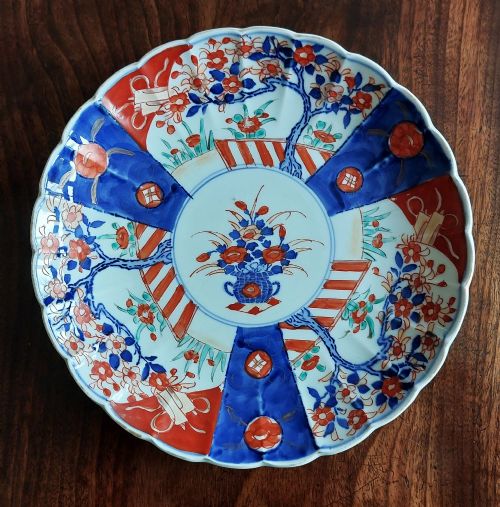
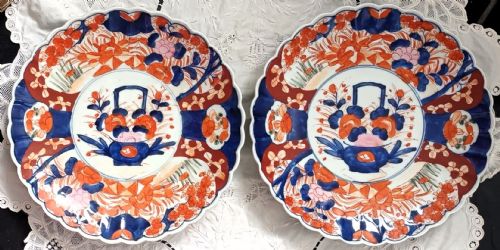
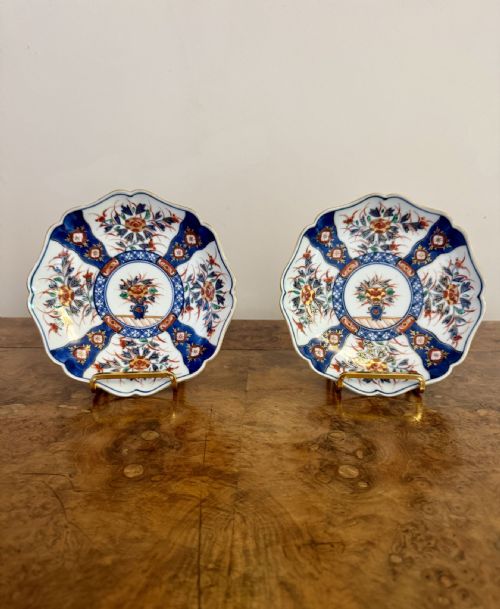
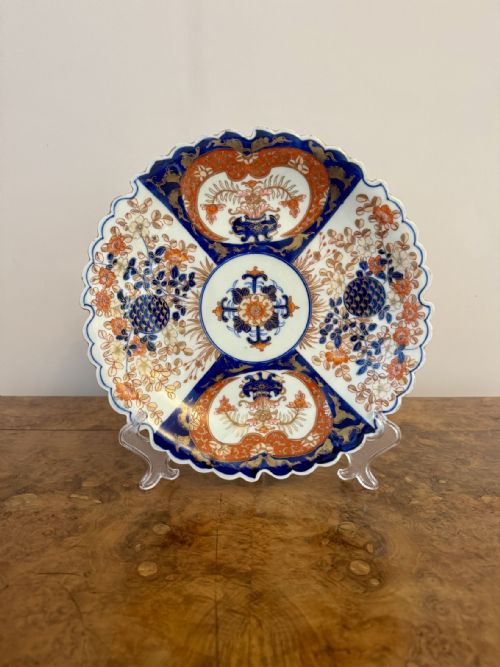
These scalloped japanese wall chargers and plates bring vibrant Meiji and Victorian interiors to life with traditional cobalt underglaze and iron red enamel.

Scalloped Japanese Wall Chargers
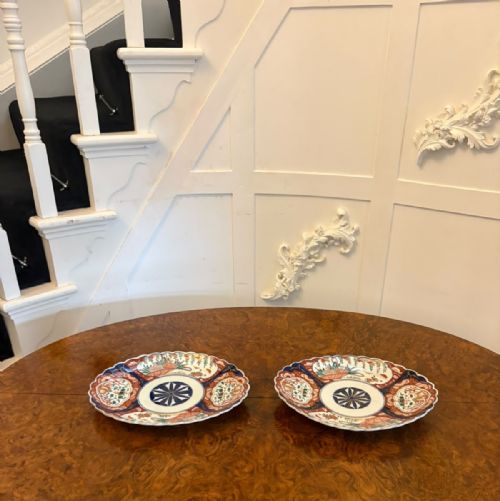
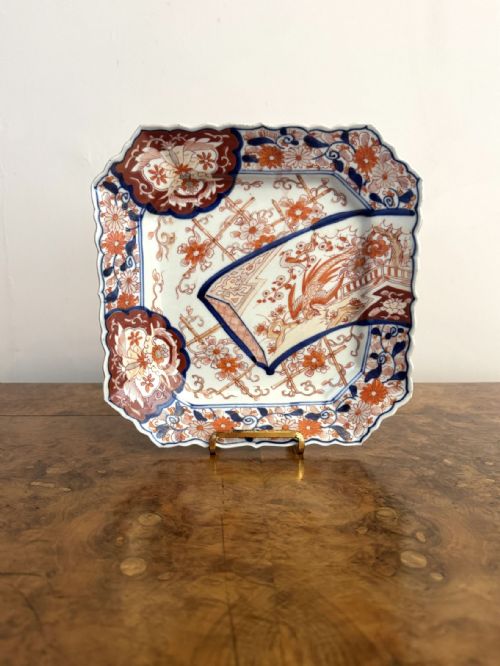
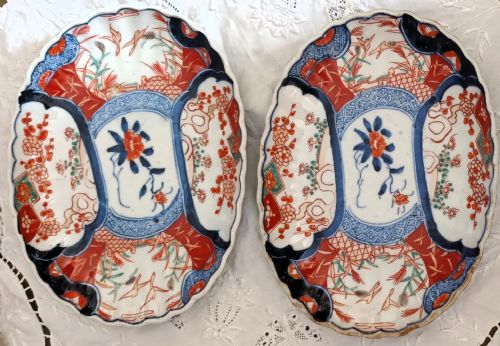
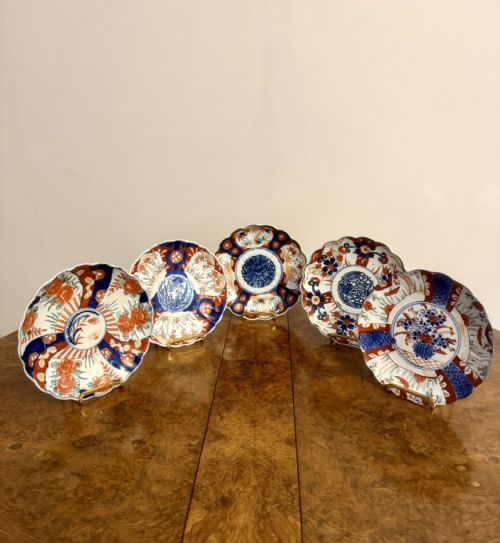
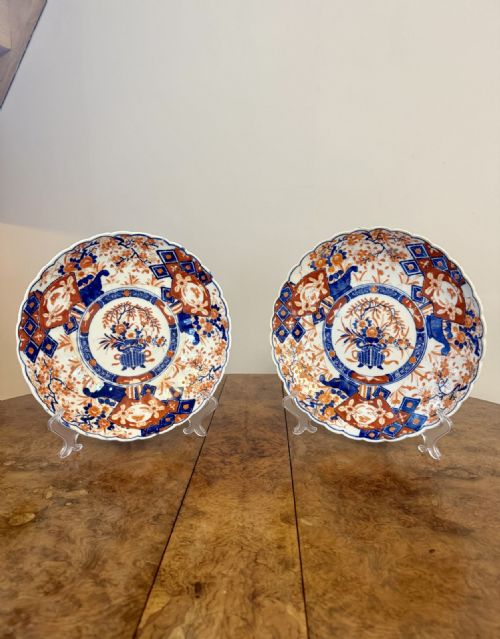
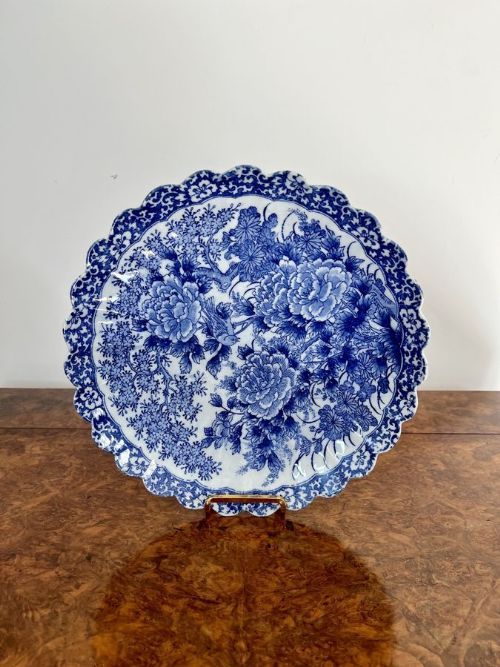
When searching for scalloped japanese wall chargers, collectors encounter porcelain decorative dishes and chargers originating from the Meiji period and nineteenth century. The selection contains circular, oval and square plates alongside large display chargers.
Most items on this page date from the late nineteenth century and around nineteen hundred, reflecting the height of Japanese export porcelain reaching Britain during the Victorian and Edwardian eras. These pieces often arrive in pairs or small collections.
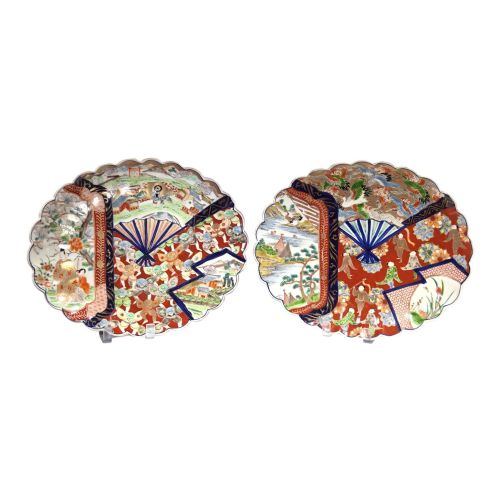
The forms range from standard round dishes with shaped rims to large wall chargers depicting traditional motifs such as the Seven Lucky Gods and exotic birds.
Materials and technique
Potters shaped these decorative plates from white porcelain and ceramic, applying cobalt underglaze pigments before the initial firing. Artisans then added rich enamel glaze, gilt, and gold leaf highlights in subsequent kiln runs.
The distinctive palette relies on iron red and cobalt blue, often contrasted with bright enamel colours to build complex patterns across the scalloped edges and central panels.
Listings span the nineteenth century and early twentieth century, featuring porcelain materials decorated in the Japanese Imari style.
What varies in quality
The standard of painting determines the tier of a charger, with crisp brushwork on motifs like exotic birds and deities separating superior examples from simpler production. The precision of the cobalt underglaze and the preservation of the gold leaf influence the overall visual impact.
Form also plays a part, as unusual shapes such as square plates or deeply scalloped edges require greater technical skill from the potter during shaping and firing.
The Scalloped Japanese Wall Chargers Glossary
- Imari
- A style of Japanese export porcelain decorated in underglaze blue, iron red, and gold. This style originated in the town of Arita and became immensely popular in Europe.
- Charger
- A large decorative plate intended for display on a wall or sideboard rather than for practical dining use. These items command attention through their generous diameter.
- Meiji Period
- The era in Japanese history lasting from eighteen sixty-eight to nineteen twelve, associated with a surge in fine export ceramics sent to Western markets.
- Cobalt Underglaze
- A blue pigment applied to raw porcelain clay before glazing and firing, producing a durable finish that resists fading over centuries.
- Enamel Glaze
- Coloured glass paste applied over fired porcelain and heated at a lower temperature to fuse vibrant reds, greens, and yellows to the surface.
Scalloped Japanese Wall Chargers: Frequently Asked Questions
How were these wall chargers displayed?
These large porcelain dishes were primarily intended for visual display in Victorian and Edwardian reception rooms rather than for serving food.
Owners often mounted them on walls or stood them upright on sideboards to showcase the intricate Imari patterns.
How do I identify a Meiji period piece?
Items from the Meiji period typically display the characteristic deep cobalt underglaze paired with iron red enamel and gold leaf.
The potting style reflects the late nineteenth-century export boom to Britain.
Can these plates be hung safely on walls?
Wall chargers and plates require secure, padded wire hangers specifically designed for heavy porcelain items.
Checking the stability of the rim and the weight distribution ensures safe display.
What subjects appear on these chargers?
Common motifs include exotic birds, floral arrangements, and traditional figures such as the Seven Lucky Gods.
These subjects were hand-painted onto the ceramic surface using layered enamel glazes.