




Underglaze Blue Imari Ceramics
Underglaze blue imari ceramics combine vibrant iron red and cobalt painting on porcelain, offering rich palettes that anchor traditional displays.

Underglaze Blue Imari Ceramics
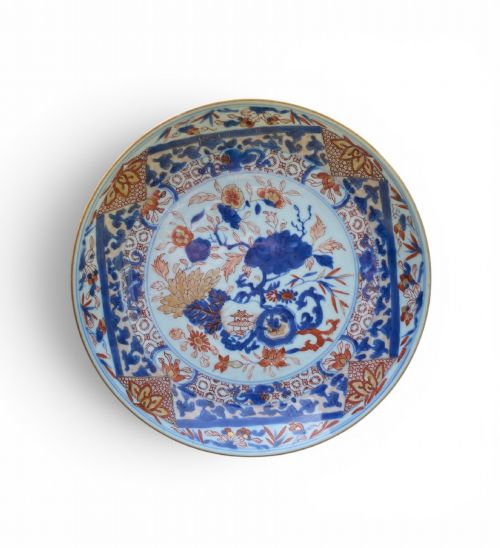
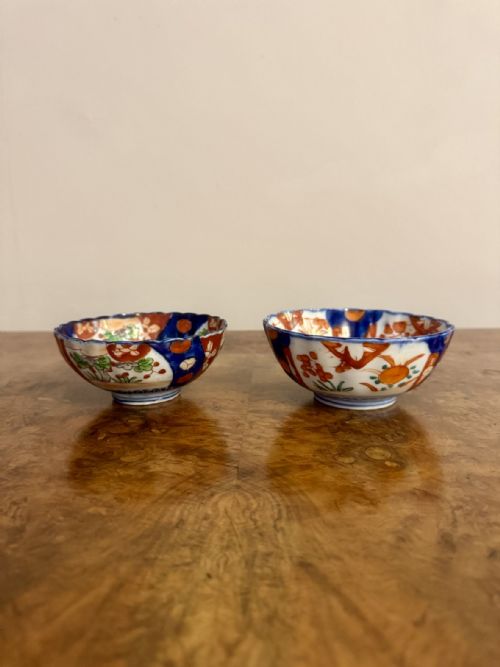
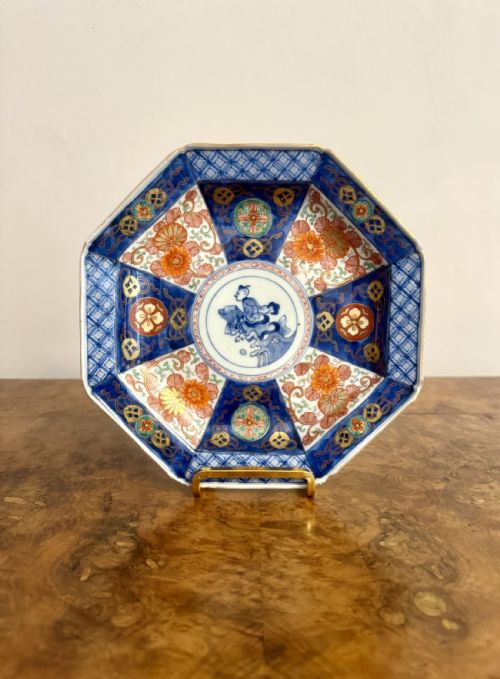
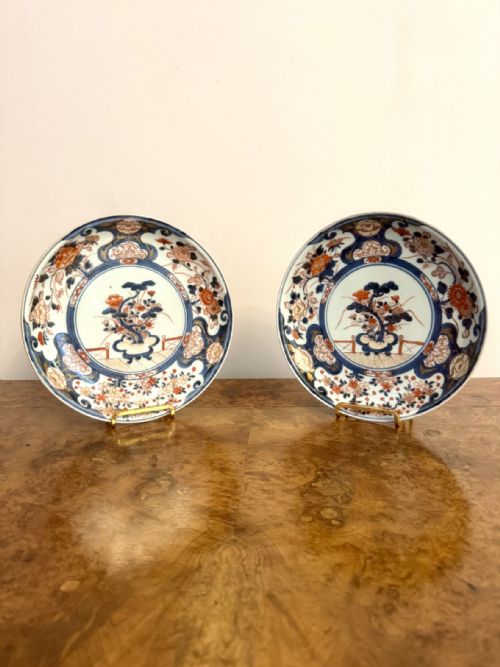
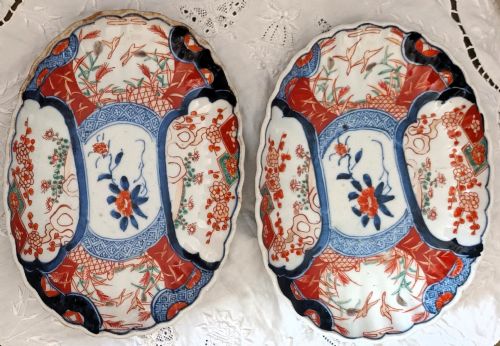
When searching for underglaze blue imari ceramics, buyers encounter decorative plates, chargers, bowls, and vases originating from Japanese and Chinese kilns. The selection spans the Edo and Meiji periods alongside eighteenth century examples, reflecting long ceramic traditions.
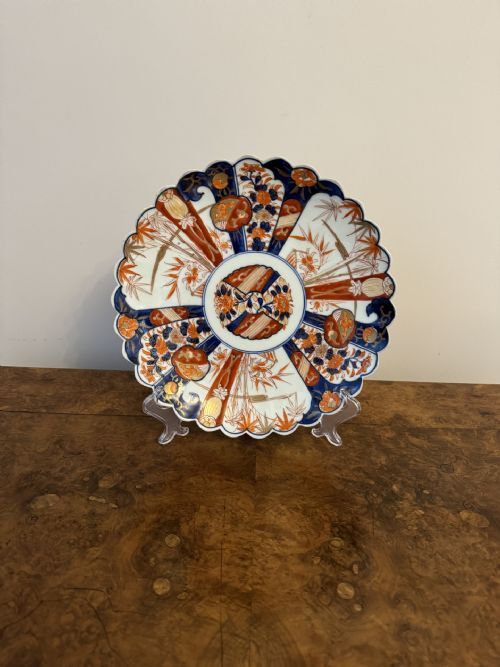
Most items met on this page date to the nineteenth and twentieth centuries, taking the form of scalloped plates, large chargers, and double gourd vases. These utilitarian yet ornamental pieces showcase distinctive motifs executed in cobalt blue, enamel, and gold leaf.
How they were made
Artisans applied cobalt blue directly to the ceramic body before glazing, firing the pieces at high temperatures to achieve a permanent underglaze decoration. Enamel colours and gilding were then added in subsequent low temperature firings to create the characteristic layered palette.
Porcelain paste formed the rigid foundation for these vessels, shaped either by hand or on a wheel before receiving intricate hand painted designs. A clear glaze sealed the surface, protecting the delicate interplay of cobalt blue and contrasting iron red pigments.
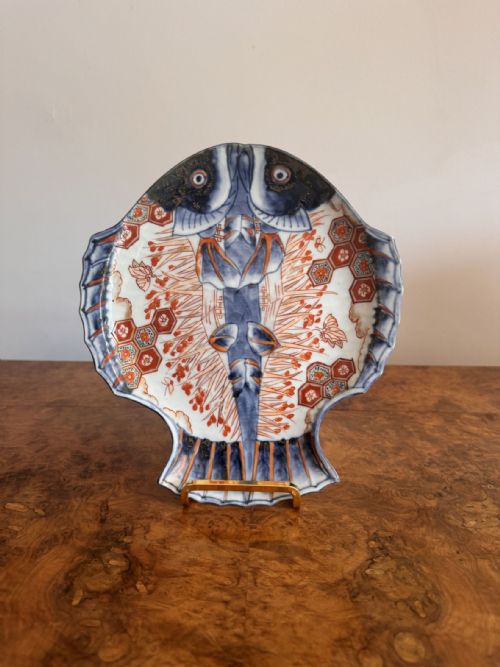
One remarkably shaped plate takes the literal form of a swimming fish, complete with painted scales.
What varies in quality
The precision of the brushwork dictates the refinement of each piece, distinguishing hurried production from careful artistry. Crisp cobalt outlines combined with evenly fused enamels indicate higher skill during the painting process.
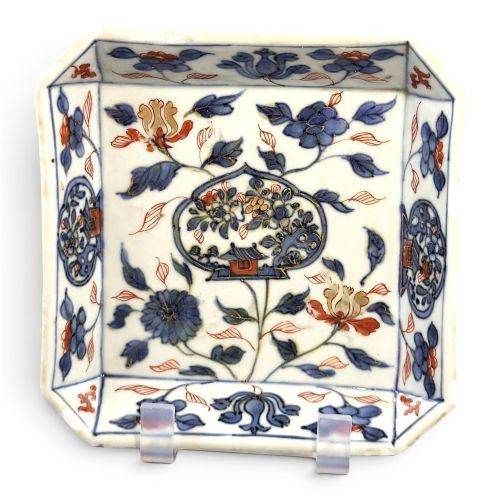
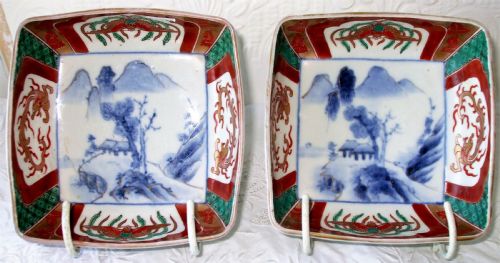
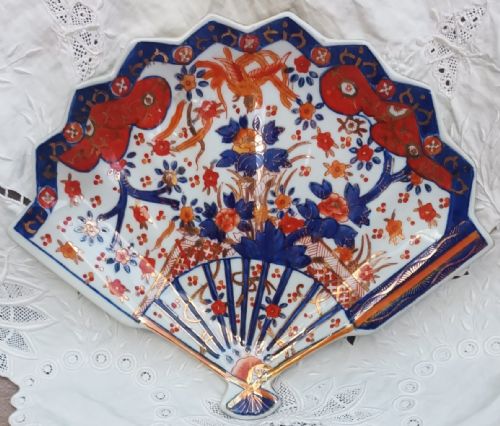
Form complexity also separates standard items from exceptional examples, as seen in unusual shapes like fish forms, hexagonal edges, and chamfered squares. The careful application of gold leaf and enamel overglaze adds depth that elevates the overall visual weight.
The Underglaze Blue Imari Ceramics Glossary
- Underglaze
- Pigment applied directly to the unfired ceramic body before the application of a transparent glaze and subsequent firing. This technique protects the blue colour beneath a glossy surface.
- Imari
- A style of ceramic originating from the port of Imari in Japan, traditionally featuring a palette of cobalt blue, iron red, and gold. It gained popularity across European export markets during the seventeenth and eighteenth centuries.
- Edo Period
- The period in Japanese history spanning from sixteen hundred and three to eighteen hundred and sixty eight. Ceramics from this era often display robust forms and traditional motifs.
- Meiji Period
- The era in Japanese history running from eighteen hundred and sixty eight to nineteen hundred and twelve. Pieces from this time show intricate detailing and expanded export production.
Underglaze Blue Imari Ceramics: Frequently Asked Questions
How do I identify underglaze blue imari ceramics?
Look for the characteristic combination of cobalt blue painted beneath the glaze, complemented by iron red and gold leaf overglaze details. The motifs typically blend floral, landscape, and animal elements across porcelain bowls, dishes, and chargers.
Examine the weight and translucency of the ceramic body to understand its period and origin. Japanese Arita wares and Chinese export pieces each display subtle differences in painting style and potting techniques.
Can I use these antique bowls and plates daily?
These decorative ceramics are generally intended for display rather than heavy everyday use. Hand washing with mild soap preserves the delicate overglaze enamels and gilding from premature wear.
Placing chargers on secure stands or utilising wall mounts safely displays larger pieces. Bowls and dishes benefit from stable placement away from high traffic areas.
How do I distinguish eighteenth century pieces from later ones?
Eighteenth century examples often exhibit softer cobalt tones and lighter porcelain bodies characteristic of early export production. Meiji period and later pieces tend to feature sharper pigments and denser decoration.
Examining the foot ring and glaze pooling provides further clues regarding the manufacturing date. Earlier wares show distinct potting quirks absent in mass produced twentieth century items.
What is the difference between chargers and standard plates?
Chargers are significantly larger decorative plates originally designed for ceremonial dining or sideboard display. They provide a broader canvas for intricate imari pattern work.
Standard plates appear in various geometric shapes, including scalloped, hexagonal, and fish forms. Both types utilise the same core underglaze blue and enamel techniques.