





Large Japanese Porcelain Platter
A large Japanese porcelain platter brings centuries of ceramic mastery and bold Imari colours directly to the dining table or display wall.

Large Japanese Porcelain Platter
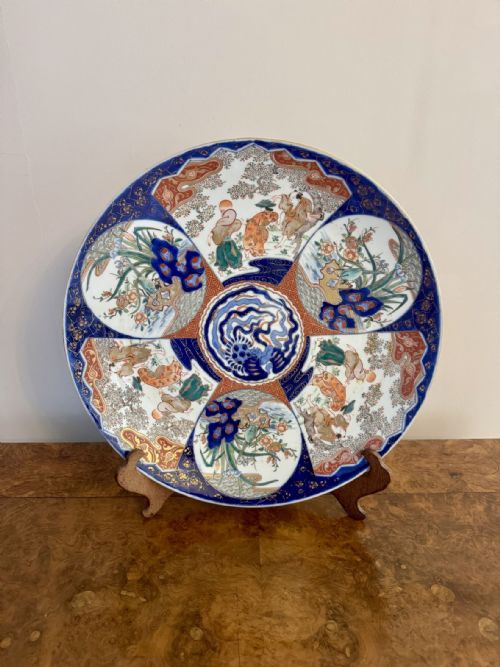
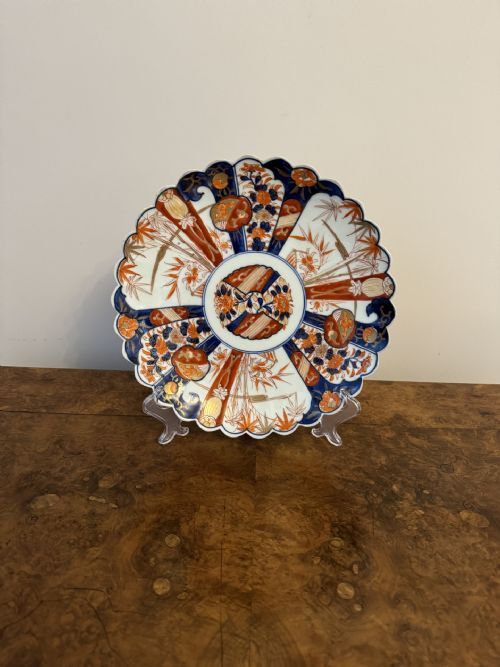
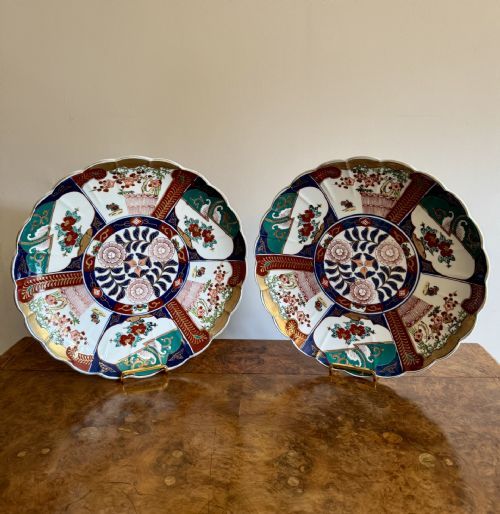
A large Japanese porcelain platter acts as a striking visual focal point, traditionally utilised for serving fruit or as a decorative charger mounted upon a wall. When searching for a large Japanese porcelain platter, collectors predominantly encounter robust Imari chargers and blue and white plates originating from the late nineteenth century and the Meiji period.
The forms span wide circular chargers, scalloped edge large plates, and occasional square plates measuring up to seventy-three centimetres in diameter. These substantial ceramic pieces display deep historical roots extending from the Edo period through to the Edwardian era, with several examples reflecting nineteenth-century Victorian taste.
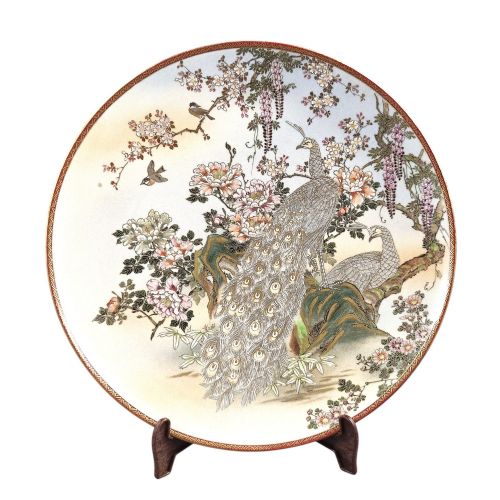
Originating primarily from traditional kilns in centres such as Arita, these chargers frequently depict classical motifs including koi carp, the Seven Lucky Gods, peacocks, wisteria, and peonies. The inventory also includes specialised wares like Totai Shippo cloisonne tree bark chargers and Satsuma moriage ceramics.
How they were made
Potters shaped high-grade ceramic clay into expansive circular or square plates before applying cobalt underglaze pigments for foundational blue designs. Kiln operators then fired the pieces at high temperatures to achieve a vitrified porcelain body.
Painters applied rich enamel colours and gold leaf over the glaze in intricate scrolling foliate borders and pictorial scenes. Certain specialist pieces incorporated cloisonne wire techniques directly onto ceramic or porcelain surfaces to imitate tree bark textures.
Several plates depict koi carp swimming with such vigour they appear ready to leap clean off the porcelain rim and onto your carpet.
What varies in quality
The distinction between standard commercial wares and exceptional pieces rests upon the precision of the hand-painted brushwork and the vibrancy of the enamel and gilt application. Superior chargers exhibit tightly controlled cobalt underglaze details alongside richly layered gold leaf and enamel highlights that retain their depth.
Signatures by the artist or workshop elevate a piece, indicating a higher tier of Meiji period craftsmanship. The complexity of the subject matter - such as multi-figure mythological scenes depicting the Seven Lucky Gods or detailed koi carp - separates ordinary decorative plates from masterwork chargers.
The Large Japanese Porcelain Platter Glossary
- Imari
- A traditional style of Japanese porcelain featuring a distinct palette of underglaze blue, iron red, and gilt highlights. This decorative scheme originated in Arita and gained immense popularity across Europe during the nineteenth century.
- Charger
- A large decorative plate or platter traditionally placed on a table or hung on a wall for display rather than used for daily dining. These pieces often measure over forty centimetres across.
- Totai Shippo
- An unusual technique where cloisonne enamel is applied directly onto a ceramic or porcelain body rather than metal. This method creates textured surfaces resembling natural materials like tree bark.
- Satsuma Moriage
- A type of earthenware or ceramic decorated with raised enamel dots and intricate gilt detailing. The resulting surface has a distinct three-dimensional texture that can be felt by the hand.
- Cobalt Underglaze
- A blue pigment applied to raw porcelain before glazing and firing, ensuring the colour sinks permanently beneath the glassy protective layer. It produces a deep, durable blue tone that resists fading over centuries.
Large Japanese Porcelain Platter: Frequently Asked Questions
How were large chargers displayed?
Victorian and Edwardian households routinely mounted these large ceramic chargers on walls using specialised wire hangers or displayed them upright on sideboards.
They served primarily as decorative showpieces during formal dinners rather than functional serving platters for daily meals.
What is the difference between Imari and Arita?
Arita is the Japanese town and kiln centre where the porcelain clay was actually mined, shaped, and fired.
Imari refers specifically to the port from which these wares were shipped to Europe, eventually becoming synonymous with the distinctive blue, red, and gold decorative style.
Can these platters hold food?
Most antique platters of this age function primarily as decorative art objects due to their historical value and delicate overglaze gilt work.
While robustly fired, modern usage with acidic foods can risk damaging the nineteenth-century enamels and gold leaf.
How do I identify Meiji period pieces?
Meiji period ceramics typically date between eighteen sixty-eight and nineteen twelve, aligning with the reign of the Japanese emperor.
Pieces from this era often feature highly intricate pictorial scenes, artist signatures, and a confident blending of traditional motifs with export-quality grandeur.