
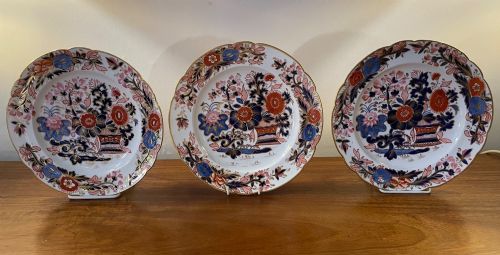

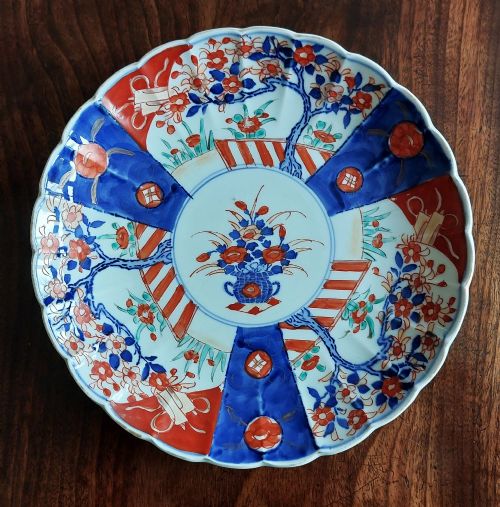


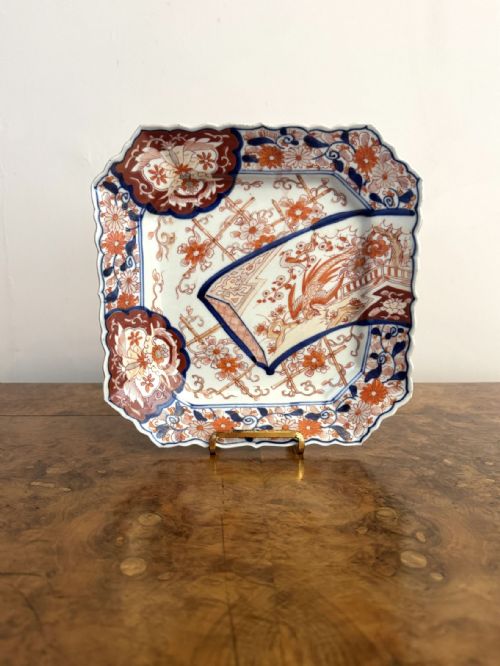



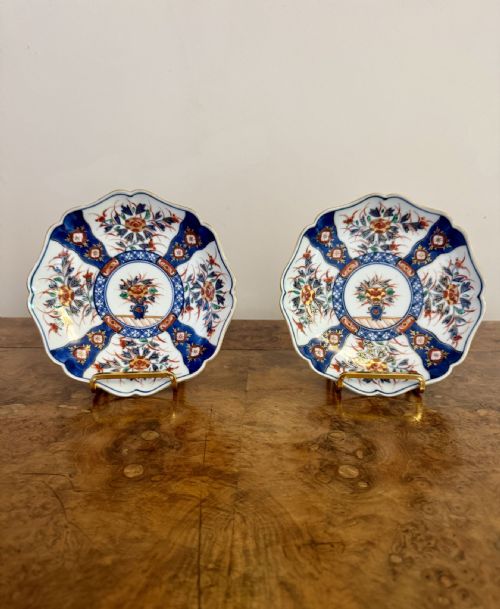
Scalloped Imari Wall Plates
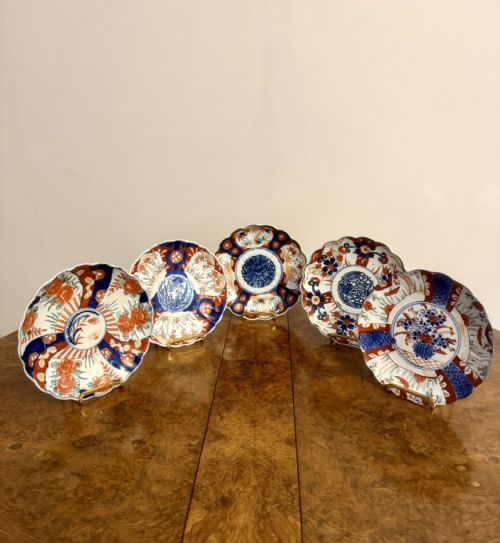
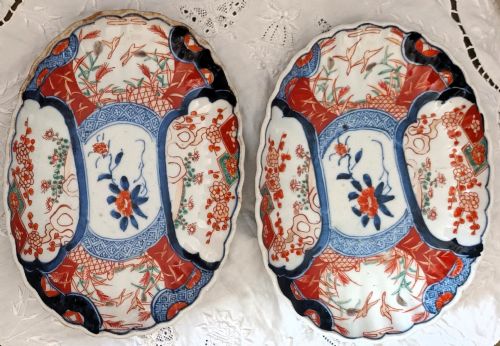
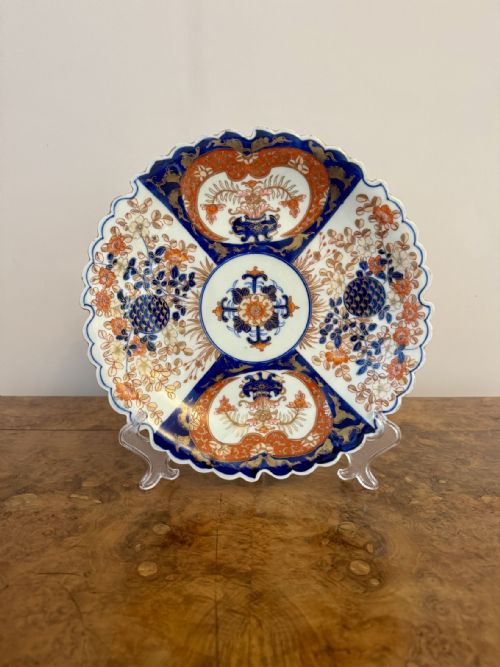
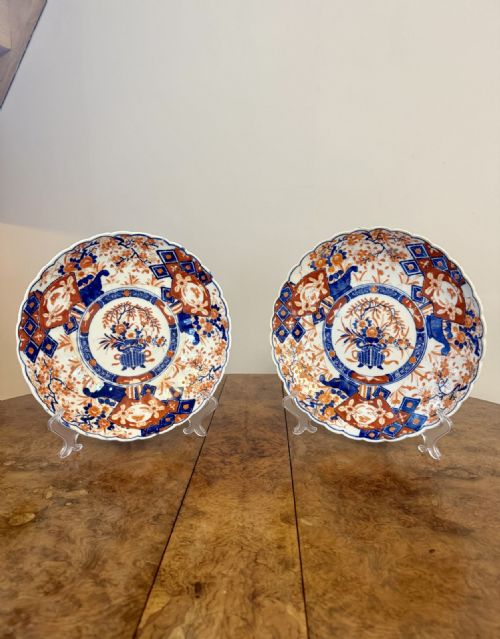
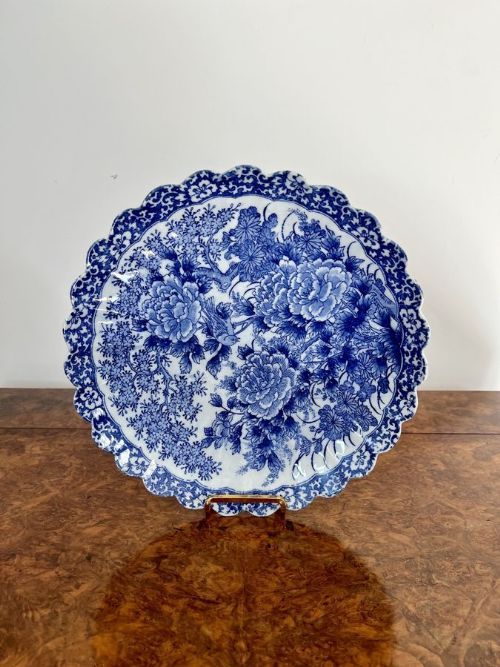
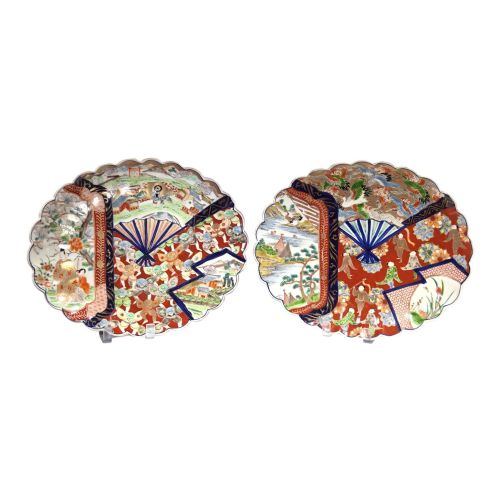
Scalloped imari wall plates bring vibrant panels of cobalt underglaze and iron-red enamel into the home.
Scalloped Imari Wall Plates
Scalloped imari wall plates combine traditional ceramic forms with distinctive painted palettes originating from Japanese workshops and occasional British iterations such as early nineteenth-century Staffordshire pieces. The selections on this page centre heavily on Japanese Meiji period examples, ranging from compact dishes to large decorative chargers.
Buyers encounter various geometric and organic outlines, including round, oval, square, hexagonal and shell-shaped variations alongside standard circular chargers. These items function primarily as decorative display pieces designed to mount on walls or rest on surfaces.
The decorative schemes frequently incorporate botanical motifs, exotic birds, and figures such as the Seven Lucky Gods. The palette relies on deep cobalt blues combined with rich iron-reds and accented by gold leaf.
How they were made
The foundation rests on white ceramic or porcelain shaped by hand or mould before receiving initial cobalt underglaze painting. Potters then apply clear glaze and fire the pieces at high temperatures.
Enamel glaze colours and gold leaf accents are added in subsequent decorative layers requiring secondary lower-temperature firings to bond the surface pigments.
Several plates depict the Seven Lucky Gods sharing space with exotic birds on scalloped porcelain.
What varies in quality
The crispness and registration of the cobalt underglaze painting dictate much of the visual success, alongside the precision of the hand-painted enamel and gilt details. Finer examples display meticulous brushwork on complex motifs such as exotic birds or figures.
Physical form contributes significantly to desirability, with unusual shapes like square, hexagonal and shell outlines commanding attention alongside sheer scale in large chargers.
The Scalloped Imari Wall Plates Glossary
- Imari
- A style of Japanese porcelain decorated in underglaze blue, iron-red, and gilt. It originated in the town of Arita and was exported widely through the port of Imari.
- Meiji Period
- The era in Japanese history spanning from 1868 to 1912. Pieces from this time often exhibit elaborate decorative ambition and high technical skill.
- Charger
- A large decorative plate utilised for display rather than dining. These substantial pieces provide a broad canvas for complex pictorial scenes.
- Cobalt Underglaze
- Pigment applied to the ceramic body before glazing and firing. This deep blue colour remains permanent and impervious to wear beneath the glass layer.
- Enamel Glaze
- Low-firing coloured glass paints applied over the initial glaze. These pigments sit slightly proud of the surface and supply the vibrant reds and greens characteristic of the palette.
Scalloped Imari Wall Plates: Frequently Asked Questions
How do I hang scalloped imari wall plates safely?
Use spring-loaded brass wire hangers designed specifically for heavy ceramic chargers and plates. Ensure the clips feature protective rubber sleeves to prevent chipping the delicate scalloped edges.
Verify that your wall fixing is anchored securely into a stud or uses a proper masonry plug. Inspect the wire and tension regularly to guarantee the plate stays firmly supported.
Can I use these plates for serving food?
Antique decorative wall plates are intended strictly for display and visual appreciation. The surface glazes and iron-red enamels on nineteenth-century pieces can suffer abrasion from cutlery.
Older ceramic bodies and surface pigments may contain trace materials unsuitable for modern culinary use. Keep them mounted on walls or displayed safely in cabinets.
How do I date a meiji period imari plate?
Examine the quality of the porcelain body, the brightness of the cobalt blue, and the crispness of the enamel work. Meiji production between 1868 and 1912 often shows exceptional decorative density.
Compare the motifs and weight against known nineteenth-century export standards. Subtle variations in the potting reveal the hand of late nineteenth-century artisans.
What is the difference between an imari plate and a charger?
Chargers are significantly larger in diameter than standard dining or cabinet plates, often measuring twelve inches or more across. They were made to dominate a sideboard or wall display.
Plates offer smaller, more intimate compositions suited to grouped collections. Both share the characteristic blue, red and gold colour scheme.