








Japanese Oriental Wall Chargers
These japanese oriental wall chargers bring rich Meiji period craftsmanship and bold decorative presence straight to your wall.
Japanese Oriental Wall Chargers
Japanese oriental wall chargers are large, decorative circular plates and plaques designed primarily for display rather than dining. When searching this phrase, collectors encounter substantial pieces spanning the Meiji period, Taisho period, and late nineteenth century.
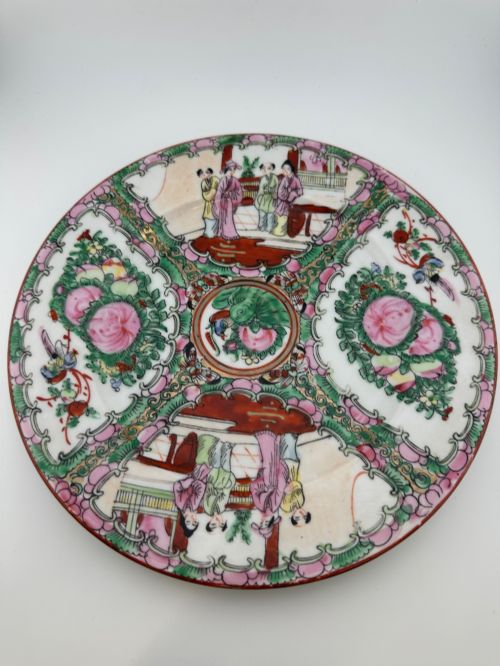
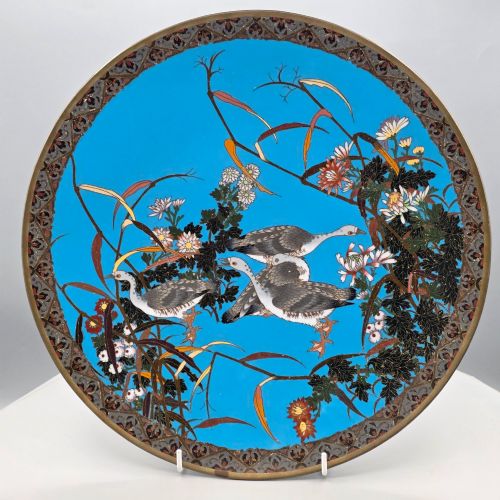
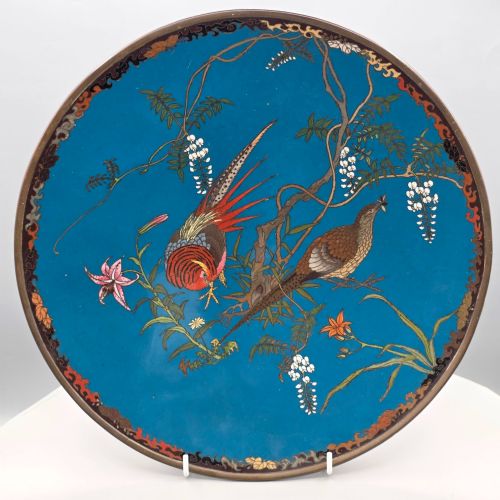
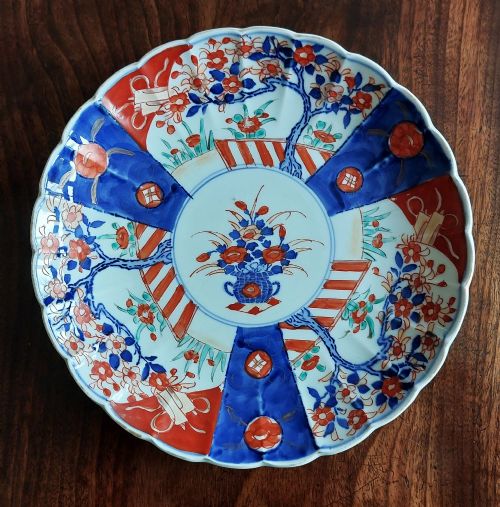
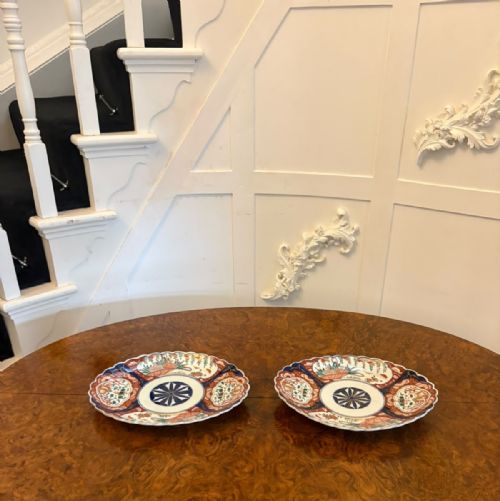
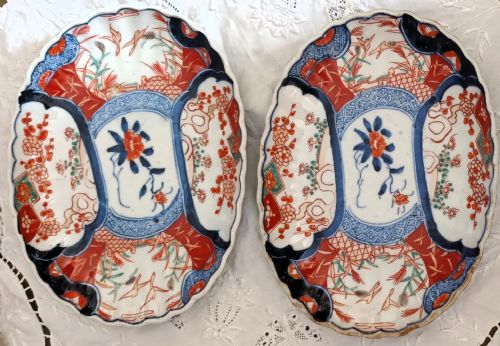
The forms on this page divide chiefly into two traditions: vibrant porcelain painted in Imari, Kutani, and Satsuma palettes, and intricate metalwork worked in cloisonne enamel, copper, brass, and patinated iron. These items range from medium plates to large chargers exceeding thirty centimetres in diameter.
Most examples originate from the late nineteenth and early twentieth centuries, reflecting the high output of Japanese kilns and metalwork studios destined for export. Buyers find both single display chargers and matched pairs featuring traditional motifs like birds, flowers, and landscapes.
How they were made
Ceramic pieces begin as porcelain bodies shaped on the wheel or in moulds, then painted by hand using mineral pigments and cobalt blue beneath transparent glazes. Many styles incorporate moriage, a technique of applying raised slip decoration to create textured surfaces before firing.
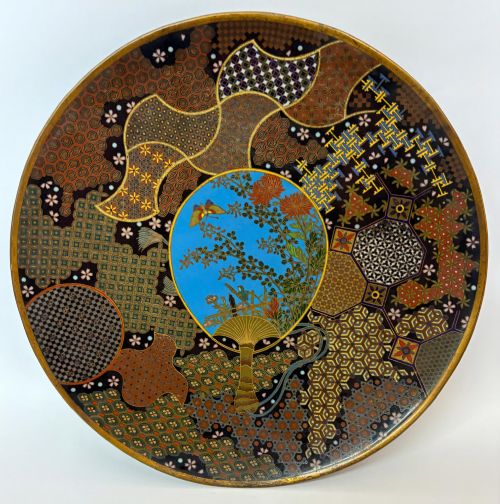
Metal vessels utilise copper or brass bases onto which fine wire cloisons are soldered to outline the design cells. Artisans fill these compartments with coloured enamel pastes before firing and polishing the surface to a smooth finish.
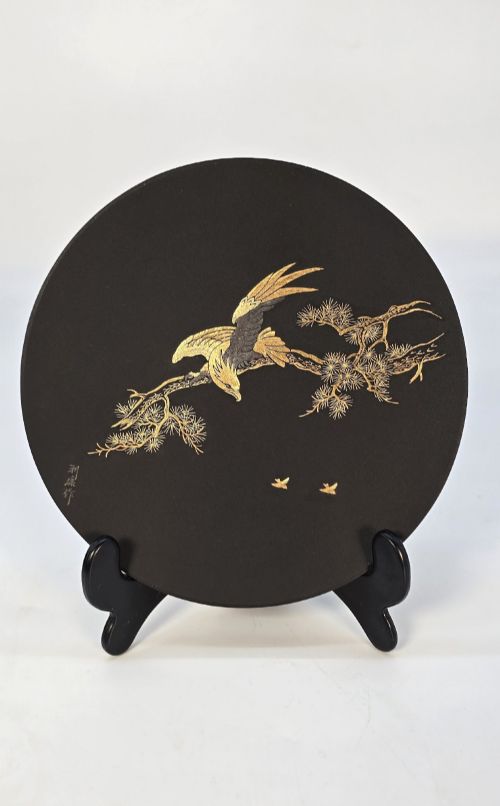
Iron plaques employ metalworking techniques such as patination and inlay, incorporating gold and silver foil to accentuate pictorial motifs like foliage and animals.
Several chargers feature fierce owls, leaping koi, and curious frogs staring back across the centuries.
What varies in quality
Quality rests upon the precision of the hand painting and the complexity of the composition across the surface of the plate. Finer pieces demonstrate meticulous control of brushwork in the depiction of feathers, florals, and landscapes without crowding the visual field.
In cloisonne enamels, excellence is shown by the thinness of the wirework and the flawless fusion of the glass pastes without pitting or cloudiness. Superior metalwork displays sharp definition in the engraved or inlaid details and a stable, even patina.
Koshida
The Japanese Oriental Wall Chargers Glossary
- Imari
- A style of Japanese porcelain decorated in underglaze blue, iron red, and gold, named after the port from which it was shipped.
- Cloisonne
- A metalworking technique where powdered glass enamels are fused within wire compartments soldered to a metal base.
- Satsuma
- A type of earthenware pottery with a crackle glaze, typically decorated with polychrome enamels and gilding.
- Moriage
- A decorative ceramic technique using raised slip to build up tactile relief patterns on the vessel body.
- Kutani
- A style of Japanese porcelain known for bold pictorial designs executed in strong colour palettes.
Japanese Oriental Wall Chargers: Frequently Asked Questions
How were wall chargers displayed?
These large plates were manufactured with pierced foot rings or mounted in specialised wire hangers to secure them safely against vertical surfaces.
In period interiors, they served as focal points on walls, cabinets, and over mantels to showcase fine craftsmanship.
What is the difference between Imari and Kutani?
Imari wares rely on a distinctive palette of cobalt blue and iron red, often heightened with gold on a porcelain body.
Kutani pieces utilise broader pictorial scenes with dense, multicoloured enamel applications often depicting figures and nature.
How do I care for antique enamel chargers?
Enamel and metal surfaces require gentle dusting with a soft, dry cloth to prevent accumulation of particulate matter.
Keep them away from direct sunlight and damp environments to protect the integrity of the metals and coloured pastes.
How do I date a Meiji period piece?
The Meiji period spans from eighteen sixty-eight to nineteen twelve, aligning with the reign of Emperor Meiji.
Stylistic shifts, export marks, and improving industrial techniques help narrow the production era of individual plates.