






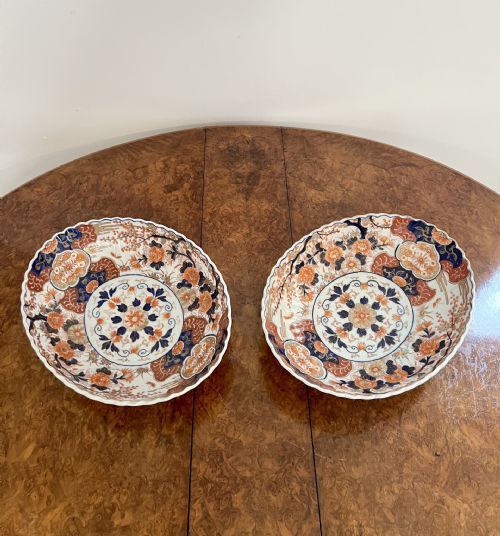


Scalloped Edge Imari Charger
A scalloped edge imari charger brings together traditional cobalt underglaze, enamel decoration and shaped rims in decorative porcelain designed for display.

Scalloped Edge Imari Charger
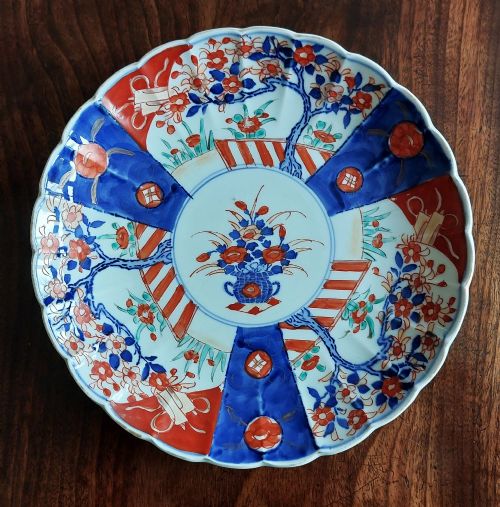
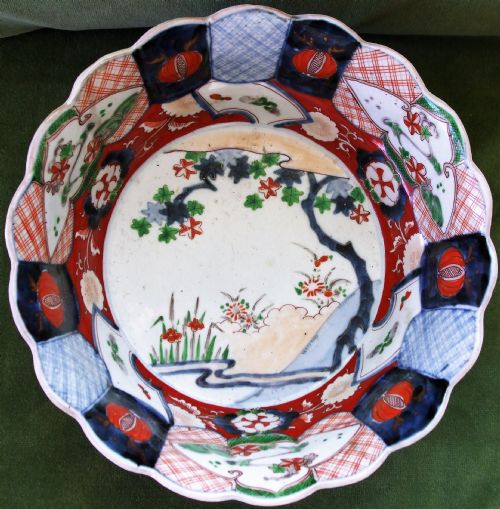
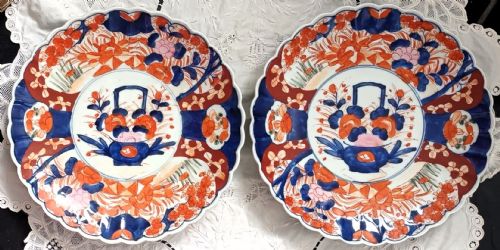
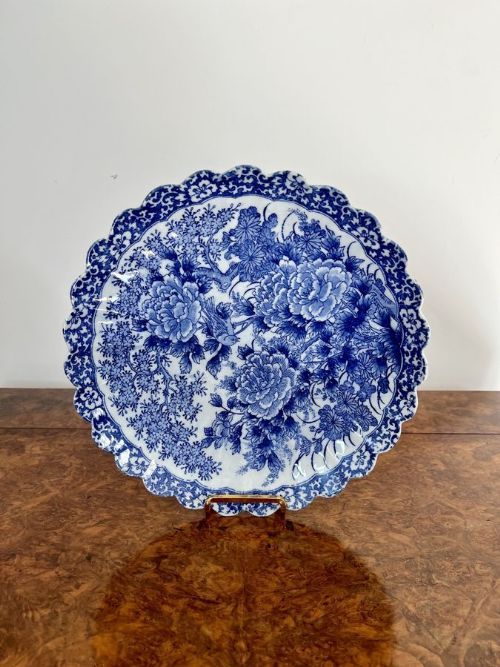
A scalloped edge imari charger is a substantial ceramic piece created for display, taking the form of large plates, bowls, platters and chargers with characteristic undulating rims. These objects originate from Japanese production encompassing the Meiji period, the Edo period and the 19th century, alongside Victorian and Edwardian examples.
The pieces appearing on this page span decorative plates, dishes and large display chargers, often featuring exotic birds or depictions of the Seven Lucky Gods. Buyers encountering this selection will find single items, pairs and collections sharing traditional Japanese aesthetics and shaped edges.

Materials and construction
These pieces utilise porcelain and ceramic bodies painted under the glaze with cobalt blue, combined with enamel and completed with gold leaf, gilt or gilding highlights. Hand painting techniques define the surface imagery, uniting ceramic bases with layered mineral pigments.
The characteristic rims are shaped during forming to create scalloped edges, framing the painted compositions of birds, deities and floral motifs.
Scalloped Edge Imari Charger Retail Price Guide 2026
Typical asking prices for scalloped edge imari charger among the pieces listed under this phrase on Sellingantiques today, from the lower quarter to the upper quarter. They describe what is for sale here now, not the wider market.
Listings span porcelain and ceramic bodies created across the 18th, 19th and early 20th centuries, including Victorian and Edwardian eras.
Assessing quality and execution
Quality separates standard production from superior examples through the precision of the hand painting and the clarity of the cobalt underglaze against the enamel and gilding. The depth of the porcelain body and the crispness of the scalloped rim execution dictate the standing of an individual charger.
The integration of complex pictorial subjects, such as figures of the Seven Lucky Gods or detailed exotic birds, requires greater artisan skill than simple geometric or floral layouts.
The Scalloped Edge Imari Charger Glossary
- Imari
- A style of Japanese porcelain decorated in cobalt underglaze blue, iron red and gold. This tradition originated in the town of Arita and was exported through the port of Imari.
- Charger
- A large decorative plate intended for display on a sideboard or wall rather than for serving food at table. These substantial pieces provide a wide surface for detailed pictorial designs.
- Meiji Period
- The era in Japanese history spanning from 1868 to 1912, associated with increased export of decorative arts to Western markets. Pieces from this period often combine traditional techniques with bold scale.
- Cobalt Underglaze
- A blue pigment applied directly to the ceramic body before glazing and firing, ensuring the colour remains permanent and protected beneath the glassy surface layer.
- Scalloped Edge
- A decorative rim shaped into a series of continuous curves or rounded teeth. This contour requires careful forming while the clay is soft.
Scalloped Edge Imari Charger: Frequently Asked Questions
How do I date a Meiji period piece?
Dating relies on stylistic markers, materials and documented periods such as the Meiji era between 1868 and 1912. Makers and exporters during this time produced distinctive porcelain for international markets.
Examining the glaze composition, the weight of the ceramic body and the pigments used helps place an object within the nineteenth or early twentieth century.
Where were imari chargers displayed?
Historically, large chargers were placed on sideboards, buffets or mounted directly onto walls in European and Japanese interiors. Their generous size and colourful enamel decoration made them focal points for reception rooms.
Today, collectors continue to exhibit them on plate stands or within dedicated display cabinets to protect the gilt and enamel surfaces.
Are these chargers hand painted?
The listings consist of hand painted Japanese porcelain utilising traditional brushwork for both the cobalt underglaze and the overglaze enamels. Artisans applied fine details by hand before the final firing stages.
Close inspection reveals subtle variations in brushstrokes and pigment density, distinguishing handmade execution from later transfer-printed wares.